
Moving Away from Normative Maternal Roles in the Catholic Church by Michele Stopera Freyhauf

FreyhaufEarlier this week, social media was all abuzz about the Pope’s investigation into restoring women to the diaconate. In the complete transcript of the Pope’s comments,  the traditional notion of women’s maternal role in the church is mentioned in relation to the Church.  Certainly this is nothing new.  Here the Pope describes important “maternal” work such as working with the marginalized, catechesis, and caring for the sick – once again, nothing new.

However, in the next sentence, a very subtle shift is seen when it comes to normative gender roles:

…. there are men who do the same [work as consecrated women], and it is good…..and this is important.

What does this mean – a change in language?  a laying of groundwork? or nothing at all?

imgres

It is no secret that cultural constructs of women as maternal and how a mother is defined as or even does has radically changed in today’s society; but, the Church continues to remain steadfast in normative roles between the priesthood and the “motherhood” of the Church (and therefore “motherhood” in general).
Continue reading “Moving Away from Normative Maternal Roles in the Catholic Church by Michele Stopera Freyhauf”

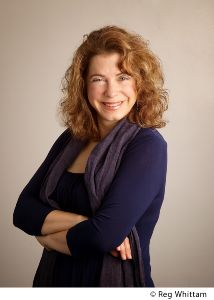
Voice of Wisdom: What Hildegard Means Now by Mary Sharratt

sharratt$mary_lresHildegard von Bingen (1098–1179) was a visionary abbess and polymath. She composed an entire corpus of sacred music and wrote nine books on subjects as diverse as theology, cosmology, botany, medicine, linguistics, and human sexuality, a prodigious intellectual outpouring that was unprecedented for a 12th-century woman. Her prophecies earned her the title Sybil of the Rhine.

Pope Benedict XVI canonized Hildegard on May 10, 2012—over eight centuries after her death. In October 2012, she was elevated to Doctor of the Church, a rare and solemn title reserved for theologians who have significantly impacted Church doctrine. Hildegard is the fourth woman in the entire history of the Church to receive this distinction.

But what does Hildegard mean for a wider interfaith audience today?  Continue reading “Voice of Wisdom: What Hildegard Means Now by Mary Sharratt”

The Vatican’s Spiritual Violence Against Women’s Ordination By Rosemary Radford Ruether

The Vatican has adopted what amounts to a “zero tolerance” policy against those Catholics who actively advocate for women’s ordination, particularly against anyone involved in the movement of Roman Catholic Womenpriests which, for the past three years, has ordained thirty-five women in the United States. This movement began in June, 2002, when seven women were ordained by some Catholic bishops in Austria. Later several of these women were ordained bishops by these same bishops. They, in turn, have ordained more women priests. From this has sprung an increasingly organized movement, which is developing the theological vision of church which they hope to generate and are laying down the formal rubrics for education and preparation for ministry of those aspiring to be ordained in their community.

The Vatican summarily excommunicated the initial seven women ordained in 2002. As more women were ordained it was at first silent and then decreed that anyone being ordained in this movement, as well as those supporting it, were automatically excommunicated. This saved them the trouble of addressing each of these women individually. However, they have escalated their campaign against women’s ordination in the last month in response to Maryknoll priest, Father Roy Bourgeois, who on August 9, 2008 in Lexington, Kentucky, concelebrated the mass where long-time friend, Sevre-Duszynska, was ordained. Father Bourgeois also preached the homily at this ordination mass, where he denounced the Church’s refusal to ordain women as a sin comparable to the sin of racism. “Sexism is a sin” he declared. Continue reading “The Vatican’s Spiritual Violence Against Women’s Ordination By Rosemary Radford Ruether”