

 I am a Protestant in large part because I like to read. Even after grappling with feminist critiques of patriarchal religions, a spirituality rooted in the Word (capital “W”) is very deep-seated in me. One reason I think of my faith as biblical is that a scriptural religion engages me in my favorite activity. At the same time, there are real connections between exclusive dependence on written records and the erasure of women’s history, as well as various ways in which women have been excluded from literary production. The opposition between text and world often becomes a manifestation of the hierarchy of mind and body that many feminists have seen as damaging. It’s like the question of “why are there no great women composers?” The problem with this question is not only that it ignores great women composers such as Hildegard of Bingen, Barbara Strozzi, Louise Farrenc, or Thea Musgrave. As feminist musicologists Marcia Citron and Suzanne Cusick have shown, the question reinforces a hierarchy in which composers, those who create musical texts, have precedence over those who perform and listen. It also relegates places where women’s contribution has been essential to the production of music – educating children, for example – to irrelevance. Continue reading “Textual Religion and the Marginalization of Two Huldas by Dirk von der Horst”
Author: Guest Contributor
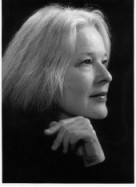
Mystery by Janine Canan
You are the living Goddess
and I bow to You.
All the crickets chant OM
and the moon glows.
Time lies down
in the corpse pose.
And the night births
hundreds of thousands of galaxies. Continue reading “Mystery by Janine Canan”
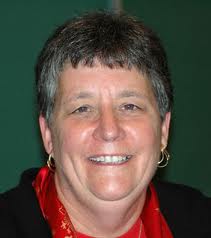
SPECIAL AAR SERIES Part I: Re-envisioning the Academy as ‘Open Source’ Community by Kate Ott with introduction and response by Mary Hunt

 Introduction:
This is one of four papers presented in Chicago at the Annual Meeting of the American Academy of Religion, November 17, 2012, in a session entitled “Feminism, Religion and Social Media: Expanding Borders in the Twenty-First Century,” organized by Gina Messina-Dysert and chaired by Rosemary Radford Ruether with Mary E. Hunt as the respondent. What follows is the general response followed by, after each of the contributions, Hunt’s appreciative analysis. Two of the papers will be posted here on Feminism and Religion and two will be posted on the Feminism in Religion Forum.
General Remarks by Mary Hunt:
The stated purpose of the panel is to discuss “how digital projects are remapping the feminist theological terrain and creating opportunities for a wide range of voices to participate in ongoing and new conversations related to feminist issues in religion.” These writers have done that and more. Continue reading “SPECIAL AAR SERIES Part I: Re-envisioning the Academy as ‘Open Source’ Community by Kate Ott with introduction and response by Mary Hunt”
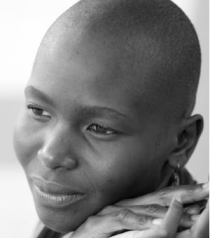
Monthly Highlight: Preaching Requires Boldness by Elizabeth J. A. Siwo-Okundi
This post is part of the 16 Days of Activism Against Gender Violence, a global campaign dedicated to ending gender-based violence.
Preachers. We preach sermons for people we often do not know, in times of great joy and deep sorrow, and in situations that can be challenging. Alliteration, allegories, hyperboles, metaphors, and rhyme never fail us. Even at our worst, we are more confident and more eloquent than the majority of the population who still consider public speaking its worst fear. Why, then, is it that on the issue of violence against women and girls, we preachers lack… boldness?
There is a story of two “ordinary” people who are arrested and sent to prison. The arresting officers order them to stop preaching, but the preachers reply that they “cannot” help but preach about what they have “seen and heard.” Though they appear confident, they have every right to be afraid—recently, their leader had been murdered! They themselves are threatened again and again. When they are finally released from prison, they return to their friends, share their story, and pray. They could have prayed for revenge or deliverance. But as their story unfolds in Acts 4 of the Bible [NRSV], they pray for… “boldness.” Continue reading “Monthly Highlight: Preaching Requires Boldness by Elizabeth J. A. Siwo-Okundi”
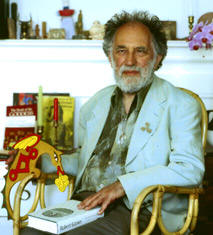
The Ferryman by Daniel Cohen
 She’s changeable in Her ways. She is power, love, justice, mercy, and also rage, anger, sometimes even despair and misery, and more besides. She once said, “I am all that is, was, and ever will be”.
~~~~~~~~~~
Would I like a change from rowing this ferryboat? No, sir, I would not, and you folks wouldn’t like it if I did change. Why wouldn’t you like it? I was created for this job when the first human being came into existence, and I’ll continue in it till the last human dies – the way you people go on that may not be long.
Yes, many people do think they are going to go a different way, but they all take this boat in the end. What about near-death experiences? Those people may have been near Death, but they hadn’t got far enough to be anywhere near me.
Do I mind that they used to bring money for me but have stopped doing so? No, sir, I do not mind – that was just their own idea, that all ferrymen should be paid. Still, it was a nice thought, but they might have considered that there was nowhere for me to spend the money. In fact, getting rid of it used to be a bit of a bother. Continue reading “The Ferryman by Daniel Cohen”
In Memoriam Patricia Monaghan: The Goddess Community Remembers and Mourns by Dawn Work-MaKinne
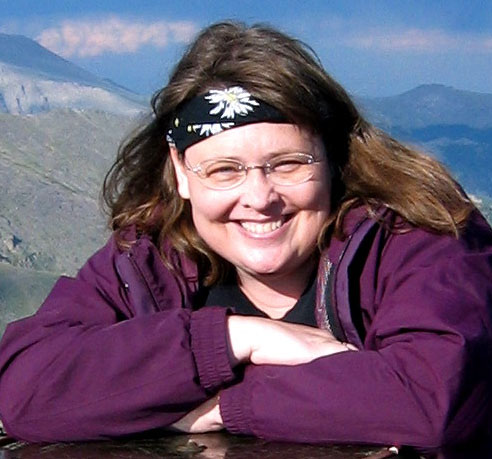 Patricia Monaghan, scholar, author, poet, activist, artist, visionary and vice-president of the Association for the Study of Women and Mythology died early on November 11, 2012 after a two year journey with cancer. Patricia was one of the Founding Mothers of the Goddess Spirituality community in the United States, and her loss is a profound one for our spiritual and scholarly communities.
I was a very junior scholar when I first met Patricia in the 1990s. I had long admired her work, especially O Mother Sun!, her comprehensive study on sun goddesses. We were at a regional gathering, and Patricia had been deputed to lead a table of discussion devoted to Goddess scholarship. When we introduced ourselves, she simply said that she was Pat, from Chicago. Our discussion was rolling along when recognition hit. As I remember, I broke into the conversation. “You’re Patricia! From Chicago! “ I enthused. “Your work has been so important to me!” One of Patricia’s key characteristics was her generosity, especially with young and emerging scholars. I left that gathering with her email address, and I thought I was the richest young woman in the world. In the ensuing years, she encouraged me all the way through my doctorate. We had a long and joyous journey together. Continue reading “In Memoriam Patricia Monaghan: The Goddess Community Remembers and Mourns by Dawn Work-MaKinne”
Why I am a Mormon Feminist by Emily U.
 I’m not a historian or sociologist, but I’ve noticed something about civilizations. They always seem to think they are more special than other civilizations. It’s not important to my purpose here to name names, but so many groups have had a superiority complex of one kind or another that I wonder if a need to feel more special is written into human DNA.
There may be biological explanations for why people draw distinctions and make rankings for each other, but I’m going to speculate about a psychological or spiritual one. I wonder if this hunger for superiority stems from a lack of security about one’s value as a human being. The first temptation of Christ started with the words “If thou be the son of God…” and if we are to believe Christ’s temptations were real it means that even Jesus must have, at least momentarily, been able to question his identity. He was tempted to believe the lie that he was not who he knew himself to be. We mere mortals experience that temptation not infrequently, and unlike Jesus, we sometimes succumb to it.
One strategy people have for dealing with insecurities about their identity is to artificially elevate themselves above others. As in, if I’m not special at least I’m more special than (fill in the blank). This has caused so much pain and injustice. And regardless of culture, time, or place, women seem to always be on the losing side of this equation. Continue reading “Why I am a Mormon Feminist by Emily U.”
Feminism + Catholicism = ? By Dawn DiPrince
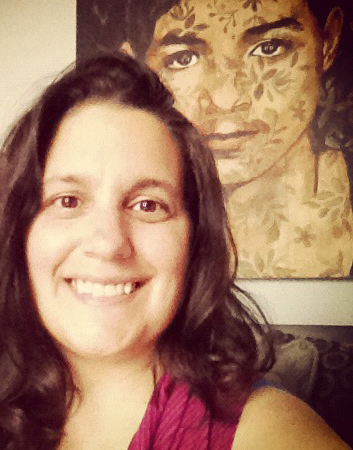
Oh, so many people cannot figure out why/how in the hell I can be a feminist AND a practicing Catholic. And, I must admit there are days when I, too, am perplexed.
For example, one recent Sunday after Mass I waited outside the Cathedral while my children ran and climbed and smelled flowers around a statue of St. Therese. After a few minutes, two modestly dressed women with clipboards walked up to me and asked: “Would you like to sign a pro-life petition?” I snappishly said no. (Still wishing I would have asked more questions. How do you define pro-life? What good will a petition do?)
I sensed a little surprise from them. I’m sure I was the picture of Catholic motherhood, if you didn’t notice the electric blue toe nails. Only about 30 minutes earlier, I was on the altar reading Scripture to the congregation — something I’ve done since I was 17, when I realized that was likely the closest I would get to priesthood. Also during Mass, my two older children were altar servers (the gender-neutral of “altar boys). And, we were waiting outside because my husband was washing chalices as part of his duties as Eucharistic minister. So, I certainly appeared to be someone who would gladly sign their petitions. Continue reading “Feminism + Catholicism = ? By Dawn DiPrince”
Death of a Priestess by Geraldine Charles
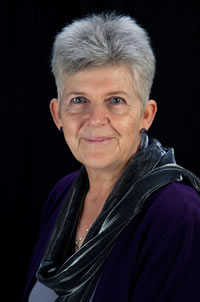 Dusk was falling and mist rising as I drove sadly across the Somerset Levels – a liminal place which once formed the huge marshy lake out of which the Isle of Avalon majestically rose. When I rounded a bend to see a large swan walking straight up the centre of the road in the same direction I was going, my first thought was for its safety. I expected it to take flight or veer off at any moment, but the swan continued on its path, seemingly determined to walk just where it was. The road was narrow and all I could do was respectfully follow until it widened a little, eventually managing to squeeze carefully past before starting to flash my headlamps at oncoming traffic to warn them of the swan’s unlikely presence.
Only later that evening did I remember the last time I saw such a stately walk in front of a moving vehicle – when a formally-dressed funeral director led off the hearse which carried my father from his home and on his last journey in this world. I was thunderstruck. Could the swan be marking this new loss, making me mindful and slowing me down? Continue reading “Death of a Priestess by Geraldine Charles”
Confessions of a Former Sex Worker by Anonymous
 Empowered? I thought so. At least sometimes. I was barely an adult when I entered the sex industry at the young age of eighteen. I had little life experience, was high school drop out, and was forced out on my own a year earlier. I quickly found that the fast food industry offered me little chance of survival. After working seven days a week (with 3-4 of those days being double shifts), barely making my bills, and living off of a tub of expired granola I took from work (and the one meal a day I was provided on the job), I could not help but be enticed by the idea of making hundreds of dollars a day for simply taking off my clothes.
It was a woman I worked with who introduced me to the idea. Her sister was a “stripper” and dating the manager of a local club and she suggested I audition to be a dancer. The wages were more than I had ever imagined earning and I was tempted on many levels to take her advice. Being able to support myself comfortably seemed the answer to my problems, even if it meant violating my moral code. Continue reading “Confessions of a Former Sex Worker by Anonymous”
 Feminism and Religion