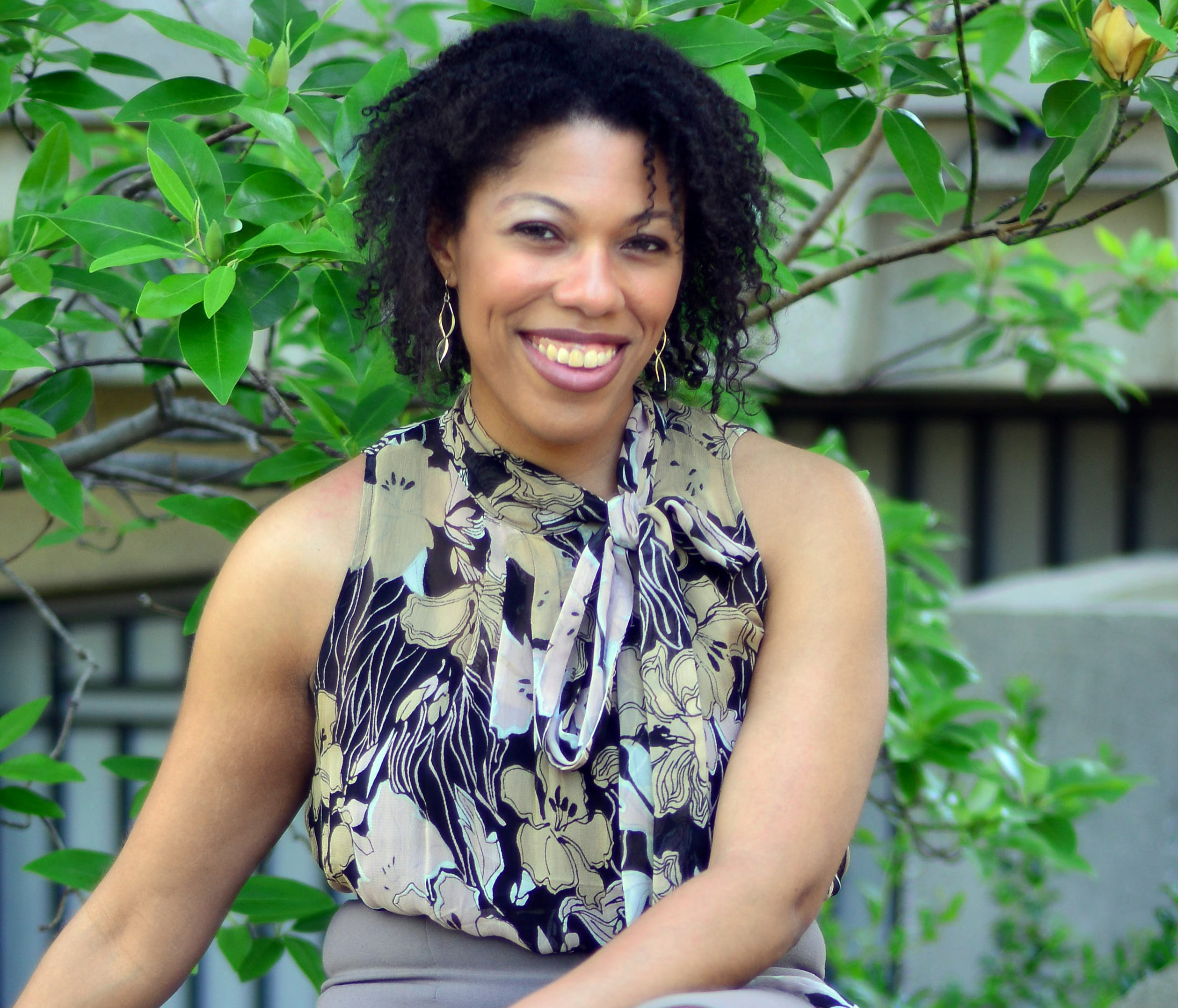
Of all the graduate institutions in the world, I chose the California Institute of Integral Studies (CIIS) in San Francisco because of its unique program in Women’s Spirituality. Only here could I integrate my love of the Goddess Tara, my spiritual practice of Tibetan Buddhism, and my passion to chant into a scholarly study titled “Invoking the Blessings of the Tibetan Buddhist Goddess Tara Through Chanting Her Mantra to Overcome Fear.”
I conducted my research in the summer of 2008. Fortunately, I was able to draw from the many academic, contemplative, and spiritual groups of my acquaintance in the San Francisco Bay Area to solicit study co-participants. Over the course of three months, we convened on six occasions to meditate, pray, and chant to Tara with the intention of overcoming a particular fear. Between our meetings, we chanted on our own and kept a journal about what we were experiencing. Continue reading “Invoking the Blessings of the Tibetan Buddhist Goddess Tara through Chanting Her Mantra to Overcome Fear by Karen Nelson Villanueva”
Last fall I undertook the Ariadne Goddess Pilgrimage to Crete and saw many wonders. Foremost for me was our descent into the Skoteino Cave, following in the footsteps of ancient Cretans who understood the cave to be the Source of Life, the womb of the Goddess, and a place of transformation. I ventured down tentatively taking very wary steps, protecting my two new hip replacements, determined to join our sacred ritual in the cave with my sisters. My hips called a stop to my descent half-way down. I perched perilously on a small rock ledge and there I confronted inner and outer darkness. It was indeed a profound transformation. Continue reading “Inner and Outer Darkness in the Skoteino Cave by Coleen Clare”
I am author, writing fiction and non-fiction. My short stories have been published in various magazines and I have won an international writing prize. When my work was first published, I wanted to write a best-seller and earn enough from my books to retire from my ‘day job’ and write full time. I know the formula: open fast and strong, pick up the reader and carry her along until the last page, action, action, action…
Instead I found myself writing about balance, about land in need of healing and about the people called to defend the balance. My stories are as much about meaning and value as about action, and the same themes cycle though: cooperation vs. domination, defending the Earth, being an integral part of the world around us, cooperation with the rest of Nature. Continue reading “Dreaming the dream on . . . by Kaalii Cargill”
For several weeks I have been reflecting on the idea of authority and how that word impacts us. I am always struck by the use of the word in Mark’s Gospel passage because I find it offensive and counterintuitive as a term used for Jesus, yes, especially when in my favorite image of him he is holding a lamb, a person of deep compassion, of stalwart forgiveness, and of deep understanding of the cosmos as interdependent, not lording over anything, not asking for a hierarchical word such as ‘authority.’ I cringe when I hear it, and when I see it in print; my physical reaction mirrors my interior twisting and turning as anxiety builds against the myriad meanings and interpretations of this word and what it represents in its broadest oppressive, dominant context. Questions arise as the physicality of it enters my brain and the sound permeates me, such as, – ‘He spoke with authority’, or ‘Listen as I am the authority’, or I have the authority to make that decision’. How do we respond to those who presumably ‘have authority’? What does it mean to ‘have authority’ to those who have it and those who do not? What is our own sense of authority? DO we have it or do we not? If not, how do we get it? Do we want it, even? What does it really mean to have it anyway? Is it given to us by others or do we grasp at it for ourselves? Continue reading ““And one spoke with authority” Mt. 7:29 by Janice Poss”
when god was a girl she loved
to play dress up with hydrogen
and nitrogen, she wiggled her hips
and blew kisses from her voluptuous
lips and wiggled her fingers to toss the stars~
she juggled them and tied ribbons on them
when she wanted to create new dimensions,
to open all the directions she hurled them like a salad
that no one told her not to play with, so she giggled
and played until all the ingredients stuck on the ceiling of sky,
but then she’d coax them back into action and let them decide
where to go and how far and when or if to land, and
she would go far out, way, way out to play
with her dolls, the gaseous, luminous balls of delight,
hold them in her cool hands for a millennial minute
to turn them into planets and things of that sort,
with what we call substance, solid stuff Continue reading “She Loves It All by Alla Renée Bozarth”
Earlier this month, nearly 150 women were turned away from listening to the leaders of their church. The first weekend of October in the Mormon (LDS) Church is set apart for church members world-wide to hear messages from their leaders. The conference takes place in 5 two hour segments of speakers and music. The Saturday evening segment is called the Priesthood Session–a meeting all priesthood holding men and boys aged 12 and up are expected to attend. This year a new demographic asked to attend the Priesthood Session. Ordain Women, an activist feminist group which is petitioning LDS Church leadership to prayerfully consider the ordination of Mormon women to the priesthood, arrived at the conference doors and respectfully asked for admittance. These women were turned away one by one until the doors were closed and blocked.
I threw Catholics under the bus at a book reading.
I didn’t mean to and, as a former Catholic, I felt awful about it. I was promoting my novel, Painted Hands, about dynamic, successful Muslim women in Boston. During the Q&A, someone asked why I’d converted to Islam. Pressed for time, I explained that I’d tried hard to be a Catholic feminist, referenced the fact that there was no Original Sin imputed to Eve in Islam, and admitted I’d struggled with the Trinity and welcomed a religion where Jesus was revered but not divine.
Afterwards, I fretted about the comparisons. “That was bad, wasn’t it?” I asked my husband. “Maybe,” he said gently, “stop at the fact that there are feminist interpretations of Islam. Maybe don’t say anything about other religions.”
Miriam of Nazareth, the fiery and courageous Jewish prophet who single-handedly enabled the incarnation of God/dess, is a profoundly ambivalent figure for Catholic feminists. Her racist and patriarchal deformation as a sexless European Barbie has often been used to club and control other women. Yet she refuses to be silenced or appropriated by oppressors, carrying the lost image of God/dess through the centuries and empowering women to know the sacredness of their own physical and spiritual life–giving labors in Her image. I composed this hymn to celebrate the feast of the brown and pregnant Guadalupe/Tonantzin, and to mark the Marian feastdays of the Assumption (Aug. 15) and Queenship of Mary (August 22). It reflects a long journey of exorcising the false misogynist Mary from my own mind and heart and claiming her as role model and mentor in my own call as thealogian, mother of four, and spiritual director. It may be used in ritual or republished with the inclusion of author and copyright information (Laura M. Grimes, copyright 2010).
My original inspiration, after the birth of my younger daughter, was the traditional Litany of Loreto. I came to love its eloquent images when I was studying in Rome and prayed it daily with the old Italian women who had the last liturgical word by leading it, in Latin and from memory, after each day’s mass. It also includes key scriptural passages about Mary and many of the traditional mysteries of the rosary. But the work’s gestation was incomplete until I became involved in an interfaith women’s spirituality church, the Goddess Temple of Orange County, and encountered the fourfold Goddess for the first time. Rev. Ava Park, Presiding Priestess, has been a leader in the recent movement to add the missing image of the wise and loving Queen to the traditional Maiden, Mother, and Crone as a celebration of midlife and a model for women’s leadership. The second through fifth verses of the hymn highlight Mary’s experience in each stage of women’s life and affirm every woman’s power and beauty as an icon of these four aspects of the Divine. The title will be recognized by many as a reference to Elizabeth Johnson’s groundbreaking book on Mary—criticized by traditionalists for a cover depicting her scripturally as the mother of a large family! Continue reading “Truly Our Sister by Laura Grimes”
My first thought after reading Gina Messina-Dysert’s post, “Feminism vs. Humanism: Continuing to claim a feminist identity” was, “Guess she missed that whole #SolidarityIsForWhiteWomen trend on Twitter last week.” Until I saw Gina’s bio signaling the end of the post, I thought she was building the foundation for a witty piece of satire. The feminism she wrote about was so ideal compared to humanism that I thought she was using irony to address feminism’s imperfections. She wrote that “humanism does not value diversity and difference,” which implied that feminism does, always or at least consistently. Humanism “reinforces western, privileged … values,” but feminism doesn’t? As in doesn’t ever? Is that what she meant to say?