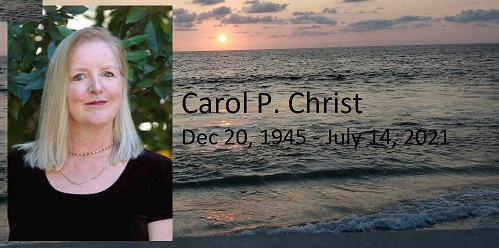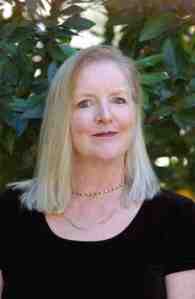
The Legacy of Carol P. Christ: What if Divine Feminine and Divine Masculine Are Not Oppositional Categories?

Moderator’s Note: The blog was originally posted May 18, 2015

A friend who is a spiritual teacher speaks often “bringing back the values associated with the Divine Feminine.” For her this has to do with helping women to understand the beauty of our bodies and the importance of ways of being such as giving and caring for others that have been associated with the undervalued so-called “feminine” side of the masculine-feminine polarity. Though she also speaks about the Goddess, I think she prefers the term “the Divine Feminine” because of the implication that men too have their “Divine Masculine.”

This friend has a wonderful husband who is a teacher in his own right and who often ends up spending a lot of his time among powerful women who enjoy talking about the Goddess. In these conversations he sometimes speaks of the need for men to “recover the Divine Masculine” if they are to become whole.

Continue reading “The Legacy of Carol P. Christ: What if Divine Feminine and Divine Masculine Are Not Oppositional Categories?”

The Legacy of Carol P. Christ: Who Is Jephthah’s Daughter? The Sacrifice of Women and Girls

Moderator’s Note: The was originally posted on January 20, 2014

Last week I reflected on Angela Yarber’s insightful essay and painting on Jephthah’s daughter. For those who did not read the earlier posts, the story of Jephthah’s daughter is found in the Hebrew Bible.  Jephthah’s daughter was sacrificed by her father after he swore in the heat of battle that if his side won, he would sacrifice the first person he would see on returning home.  Angela called us to reflect on who Jephthah’s daughter is in our time.

In my earlier midrash on the story, I invoked Daniel Cohen’s powerful retelling of the story of Iphigenia.  Cohen concludes that Artemis told Agamemnon that his ships would sail only if he sacrificed his daughter not because she wanted him to do it—but because she hoped this challenge would induce him to realize that the costs of war outweigh any possible gain.

Continue reading “The Legacy of Carol P. Christ: Who Is Jephthah’s Daughter? The Sacrifice of Women and Girls”

The Legacy of Carol P. Christ: “MERMAID, GODDESS OF THE SEA”

This was originally posted on November 4, 2013

On the recent Goddess Pilgrimage to Crete, I visited the Historical Museum in Heraklion where I saw a beautiful embroidered silk panel of a mermaid identified only as having come from Koustogerako, a village in western Crete. As it is unlikely that a man in a Cretan village would have been talented in embroidery, in this case “Anonymous” most definitely “was a woman.”

In this thread painting a mermaid surrounded by fish is holding the anchor of a ship in one hand and a fish in the other. In Greece the mermaid is the protectress of sailors. In a well-known legend, a mermaid said to be the sister of Alexander the Great, emerges from the sea in front of a ship during a storm and asks: “Is Alexander the Great still living?” If the sailors answer, “Yes, he lives and reigns,” the ship is saved.

Continue reading “The Legacy of Carol P. Christ: “MERMAID, GODDESS OF THE SEA””

The Legacy of Carol P. Christ: Our Mother Whose Body Is The Earth

This was originally posted on March 11, 2013

This prayer came to me recently in waking sleep:

Our Mother whose body is the Earth,

Blessed are you,

And blessed are all the fruits of your womb.

You give us this day our daily bread,

And we share it with others.

Our Mother whose body is the Earth,

We love you with all our hearts,

And our neighbors as ourselves.

“Our Mother Whose Body Is the Earth” is a creative synthesis of elements of the Hail Mary, the Lord’s Prayer, Jesus’ two great commandments via Charles Hartshorne, Hebrew blessings via Marcia Falk, process philosophy, and the central principles of earth-based religions, gratitude and sharing, that I discovered on Goddess Pilgrimages to Crete.

“Our Father who art in Heaven” becomes “Our Mother whose body is the Earth.”  Transcendence of the earth and the body are replaced with immanence, suggesting that the earth and the body are good.  Our mothers’ bodies are the source of our lives.  Our Mother’s body is the Source of all life on our planet. The earth as the body of the Mother is a very ancient conception.  Process philosopher Charles Hartshorne says that the earth as the divine body is the best rational model for understanding the intimate relationship of God to the world.

Continue reading “The Legacy of Carol P. Christ: Our Mother Whose Body Is The Earth”

The Legacy of Carol P. Christ: Sappho Chose Love Not War, What Will You Choose?

This was originally posted on November 12, 2012

We have been taught to speak of war and the heroes of war in hushed tones. We have been told that evil Helen’s choice was the cause of the Trojan war.  2600 years ago Sappho, known as the greatest lyric poet of ancient Greece, spoke truth to power and unmasked the lies told at the beginning of western tradition.

*

In a poem addressed to Anactoria, Sappho writes:

            Some say a cavalry corps
            some say infantry, some, again,
            will maintain that the swift oars
            of our fleet are the finest
            sight on dark earth …

Here, Sappho invokes the heroic tradition celebrated in the epic poems of Homer that shaped the values of ancient Greek culture and all the cultures that followed it, including our own.  This tradition tells us that to serve in a war and to be remembered as a hero is the highest goal to which a man can aspire.  Sappho does not agree:

             …but I say
             that whatever one loves, is.

Continue reading “The Legacy of Carol P. Christ: Sappho Chose Love Not War, What Will You Choose?”

Patriarchy As An Integral System of Male Dominance Created at the Intersection of the Control of Women, Private Property, and War, Part 3 by Carol P. Christ

carol p. christ 2002 colorPatriarchy is a system of male dominance, rooted in the ethos of war which legitimates violence, sanctified by religious symbols, in which men dominate women through the control of female sexuality, with the intent of passing property to male heirs, and in which men who are heroes of war are told to kill men, and are permitted to rape women, to seize land and treasures, to exploit resources, and to own or otherwise dominate conquered people.

As the discussion of patriarchy* I began last week and the week before shows, patriarchy is not simply the domination of women by men. Patriarchy is an integral system in which men’s control of women’s sexuality, private property, and war (including violence, conquest, rape, and slavery) each play a part. These different elements are so intertwined that it is impossible to separate one as the cause of the others.  Patriarchy is an integral system of interlocking oppressions, enforced through violence, and legitimated by religions.

The model of patriarchy I have proposed argues that the control of female sexuality is fundamental to the patriarchal system.  This explains why there is so much controversy about the “simple matter” of access to birth control and abortion in the US today. It also explains why so much vicious anger is directed at single mothers by politicians and commentators.  Any woman who dares to control her own sexuality is questioning the foundations of the patriarchal system. Continue reading “Patriarchy As An Integral System of Male Dominance Created at the Intersection of the Control of Women, Private Property, and War, Part 3 by Carol P. Christ”