Exploring the F-word in religion at the intersection of scholarship, activism, and community.
Author: Mary Sharratt
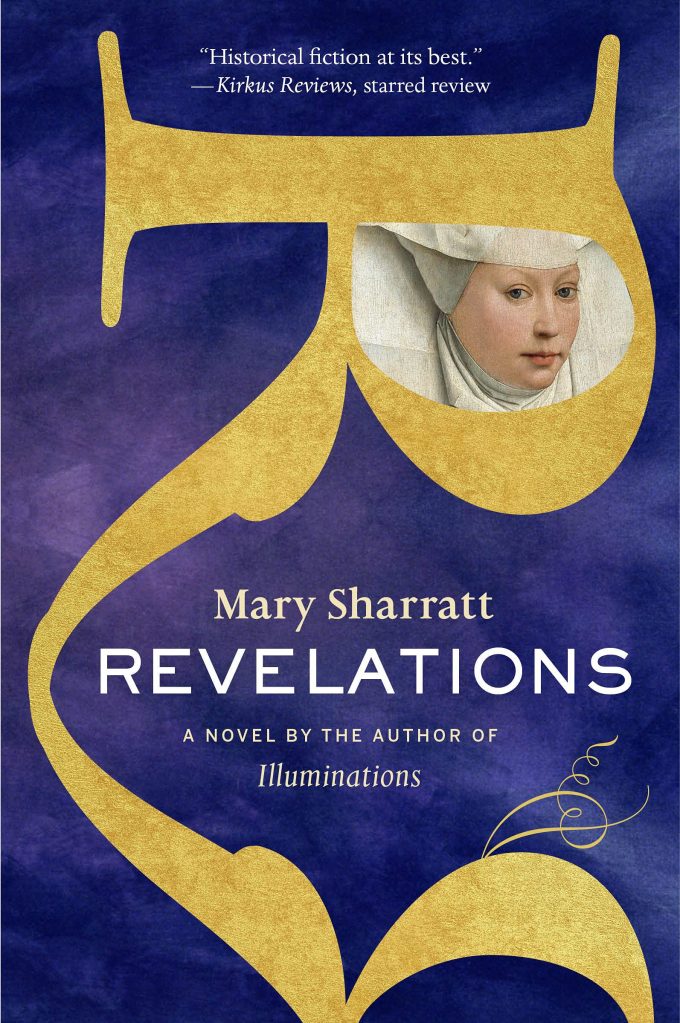
Mary Sharratt is on a mission to write women back into history and is the author of eight acclaimed novels, including ILLUMINATIONS, drawn from the life of Hildegard von Bingen, and REVELATIONS, which delves into the intersecting lives of Margery Kempe and Julian of Norwich, two mystics and female literary pioneers who changed history.
Visit her website: www.marysharratt.com
According to Juvenal, politicians in ancient Rome discovered they could get the downtrodden masses to abdicate their rights and accept shocking degrees of oppression merely by giving them enough bread to eat and circuses to distract them.
Meanwhile, in our modern age, we have this thing called Mother’s Day. Never mind how overworked and burned out many mothers are, balancing fulltime employment with the lioness’s share of childcare and housework. Never mind that the possible overturning of the Roe vs. Wade would outlaw abortion and force a whole generation of women and girls in the United States to become mothers against their will.
We’re supposed to dismiss all of the above from our pretty heads because, for ONE DAY A YEAR, we celebrate motherhood with a proliferation of sentimental greeting cards, hothouse flowers, and overpriced restaurant meals served by waitresses who are themselves overworked, burned out mothers.
I think we need to call out hypocrisy here.
A culture that truly honored motherhood would do a lot more than offer one day of saccharine appeasement. It would provide paid parental leave for both parents and urge fathers to put in equal time in parenting and housework. It would provide excellent subsidized childcare, following the Scandinavian model, along with a shorter working week, creating an even playing field for women and men to pursue their careers while still having downtime with their families. A culture that truly celebrated motherhood would insure that motherhood was a freely-elected CHOICE and provide sex education, birth control, and abortion with no discussion or handwringing.
Motherhood in a culture that is toxic to mothers and to women in general can be a fraught experience. Generations of unspoken pain, repression, and deep-lying trauma get passed down from mothers to daughters. Some women I know have made the decision not to have children in order to end this long chain of hurt. Just imagine if every woman refused to reproduce until we could dismantle the chains of patriarchal oppression.
Mother’s Day can be a contentious holiday for both mothers and daughters, especially those who have suffered abuse, neglect, or trauma.
An older friend of mine is haunted by the beatings her mother gave her back in the day when the kind of physical punishment we would now view as child abuse was considered acceptable. Her mother even used to joke about these incidents at family gatherings, as if it were some amusing anecdote, and she seemed to remain steadfastly oblivious to her daughter’s deep pain and trauma. One can only wonder what was going on inside the mother. Did her repressed anger or her own unhealed trauma move her to smack the hell out of her little girl? Had she herself been beaten, shamed for her tears, and ordered to laugh it off?
As the saying goes, hurt people hurt people. I would go further by saying that hurt mothers hurt their daughters.
This is the crux of how patriarchy divides and conquers women. How it trains mothers to cut their daughters down to size, just as they were cut down.
The greatest gift we can give mothers on Mother’s Day, or on ANY day, is our own healing and strength, co-creating a world where every woman, whether she is a mother or not, is respected and whole. Where hurt mothers can be healed and heard, without passing the pain down to the next generation. Where the whole insidious cycle of abuse can end once and for all and we can live inside our power.
Mary Sharratt is committed to telling women’s stories. Please check out her acclaimed novel Illuminations, drawn from the dramatic life of Hildegard von Bingen, and her new novelRevelations, about the mystical pilgrim Margery Kempe and her friendship with Julian of Norwich. Visit her website.
My novel Revelations, based on the intertwined lives of female mystics Margery Kempe and Julian of Norwich, will be released in paperback on April 19. You can order HERE.
“All shall be well, and all shall be well, and all manner of things shall be well.”
These words of Julian of Norwich, taken from her masterpiece of visionary theology, Revelations of Divine Love, seem almost tone deaf against our current backdrop of war and the ongoing pandemic. In a world like ours, with war criminals like Putin calling the shots, it’s so tempting to fall into either hardened cynicism or hopeless despair.
But Julian of Norwich was no naïve simpleton. Although an anchoress who had taken vows as a fully cognizant adult to wall herself into a cell built on to the back of Saint Julian’s Church in Norwich, England, she wasn’t living in some airy-fairy cloistered bubble. Her own age was riven by plague, war, and religious intolerance, which saw the burning of many perceived witches and heretics. Saint Julian’s Church (she took the name of the church, not the other way around) was located in a rough part of town near the river and the stinking tannery district where prostituted women and girls plied their trade.
Far from walling herself off from the world’s woes, Dame Julian had a window in her anchorage wall facing out into the street. Anyone might seek her counsel. She was famous throughout Britain for her sage advice. One of the many who poured her soul out to Julian was a desperate housewife and mother of fourteen children, who had finally plucked up the courage to walk away from an abusive marriage. This woman was none other than Margery Kempe, the heroine of my novel.
Margery had been experiencing sensual, visceral images of the divine for over twenty years. Now she had reached a crossroads in her life. She wanted to walk the mystic’s path and travel as a pilgrim to Jerusalem and Rome. But her choice to leave her family and travel the world as a solo woman was even more controversial and downright dangerous in her age than in ours.
It would have been so easy for a spiritual counselor to parrot the voice of conventional wisdom and tell Margery that her dream of pilgrimage was a self-indulgent folly and that her true calling was to serve her children as a conventional wife and mother.
Instead, Julian did something unheard of. She empowered Margery to trust herself, to trust the voice of spiritual wisdom within her own heart. She told Margery to set all her trust in the divine and not to worry too much what the world thought of her choice–if some people disliked Margery, perhaps that meant Margery was doing something right.
Julian didn’t promise Margery–or us, the readers of Revelations of Divine Love–an easy ride. In one of her searing visions, Julian received the message, “You shall not be overcome.” She wrote in her book, “Our Lord did not say, ‘You shall not be tormented, or troubled, or grieved’ but ‘You shall not be overcome.'”
Julian received her divine revelations around the age of thirty when she was deathly ill and thought she was going to die. Instead, she survived and dedicated the rest of her life to being a living witness to the exquisite divine love she had experienced.
We don’t have to be anchoresses or travel to Jerusalem to experience this deep love and wisdom. The deepest pilgrimage of all is the journey into the depths of our own hearts where divine love dwells eternally, in each one of us, regardless of our faith or spirituality. The sacred inside us can never taken from us.
The heart will always be there for us and it is only from the heart that we can bring peace and justice to our fractured world. By bringing our information-overloaded brains inline with the deep wisdom of the heart. By bringing our speech inline with the heart. By bringing all our deeds inline with the heart.
May we all be witnesses to the Divine Love within us.
“All shall be well and all shall be well, and all manner of things shall be well.”
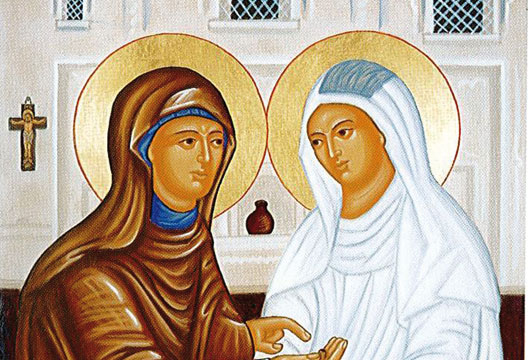
Julian of Norwich (left in her Benedictine habit) counsels Margery Kempe, who dressed all in white to mark her vocation as a mystic and pilgrim.
Mary Sharratt is committed to telling women’s stories. Please check out her acclaimed novel Illuminations, drawn from the dramatic life of Hildegard von Bingen, and her new novelRevelations, about the mystical pilgrim Margery Kempe and her friendship with Julian of Norwich. Visit her website.
In the past months, Luiza has been generous enough to introduce me to some local folk festivals that celebrate key moments in the wheel of the solar and agricultural year. With their deep Earth-based roots, these festivals have endured under an overlay of Catholic observance and are integrated into the calendar of saints’ feast days in the liturgical year. Underlying established religious observance, there is an unbroken stream of syncretized folk religion and folk practices that connect the people to the heartbeat of the numinous Earth on which they live.
Unfortunately, since I moved to the Oeste region of Portugal in July 2020, the Covid pandemic has seen many of the local festas temporarily canceled, but as 98% of the local population is now triple-vaccinated, we’re seeing a slow resurgence of these gatherings.
Usseira, the farming and fruit-growing village where I live, has an annual festival of Santa Luzia, held between December 7 to 13 in most normal years. During the height of Covid, the festivities were canceled, but in December 2021 the festa was celebrated, although it was a much smaller, more low-key affair than before the pandemic.
Celebrating Santa Luzia in 2019, before the pandemic.
We gathered at night in front of our small chapel dedicated to Santa Luzia, our village’s patron saint. An enormous bonfire was lit and people gathered around to share grilled meat and sardines, prepared on site. Much local wine was passed around. Nobody officially charged money for anything. You just donated what seemed fair.
Gathering in the light and warmth of the enormous bonfire with my Portuguese neighbors and trying my best to communicate with my limited Portuguese was a challenge, but the universal language we all spoke was happiness and goodwill. The bonfire blazing on the dark winter night seemed symbolic of a sense of community life returning after the constrictions of lockdown and social isolation.
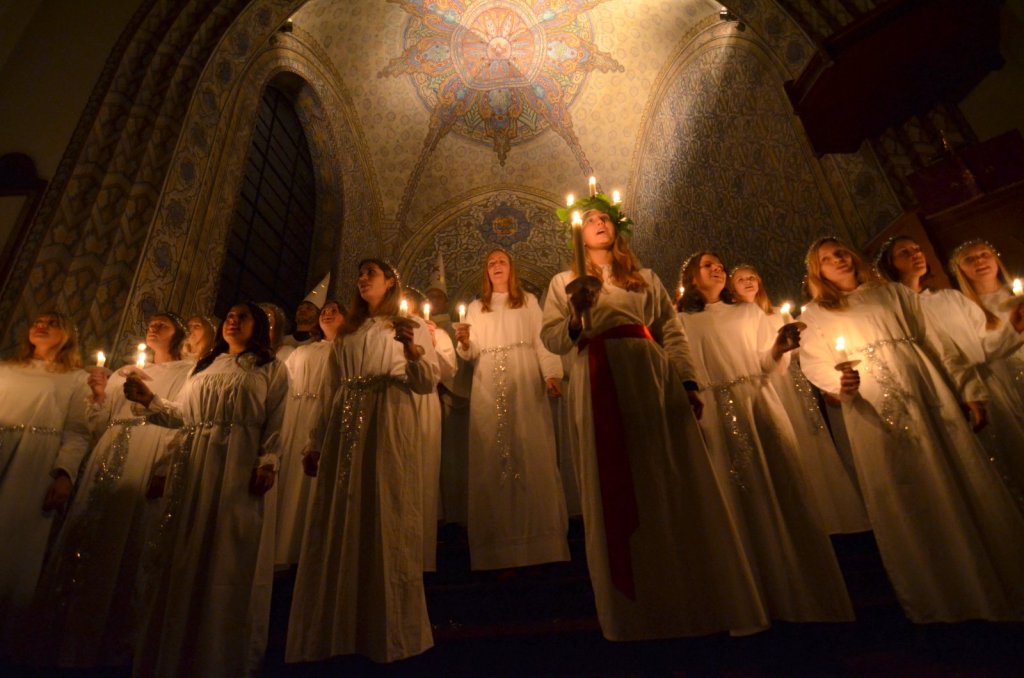
The root of Luzia’s name is luz, which means light. Across Europe, from Scandinavia to Sicily, Saint Lucia is honored as a bringer of light to the midwinter darkness. Luiza Frazão explained that before the Gregorian calendar reform altered the old Julian calendar, Luzia’s feast fell directly upon the Winter Solstice. John Donne’s 1627 poem “A Nocturnal upon St. Lucia’s Day, being the shortest day” bears witness to this fact—the Gregorian calendar wasn’t adopted in Britain until the 18th century!
Celebrating Santa Lucia in Sweden
Meanwhile, back in Portugal, Luiza and I met again around one month later, on January 17 for the Festa of Santo Antão, traditionally celebrated in an old hermit’s chapel on a hill outside the medieval town of Óbidos. This festa is traditionally a very large gathering, attracting thousands of people from far and wide in what the newspaper Caldas Gazeta describes as a pilgrimage for Christians and Pagans.
The Festa of Santo Antão in January 2020, before lockdown and all the rest
This festa, which is celebrated in the daylight, comes around the time of Imbolc in the old Julian calendar, Luiza explained. It celebrates the steadily increasing daylight and the promise of spring and new growth. It is also a feast focused on healing and blessing the animals that are so important in rural communities.
Santo Antão was a hermit who lived in the Egyptian desert. He is the patron saint and protector of animals. In the old days, farmers would bring their livestock to be blessed at this festa. But nowadays people are offered special blessed ribbons to take home to their animals. Traditionally a Mass is held in the chapel and there’s a market on the hilltop. However, in January 2022, the festa was officially canceled due to a spike in Covid infections. But that didn’t stop people hiking up the hill in small groups.
Our small group shared a picnic of the traditional grilled sausage along with halloumi, since I’m vegetarian. We lit candles outside the locked chapel and then raced down to Óbidos to get our blessed ribbons from the Church of Saint Peter before they closed at 5pm. As we left the hilltop, other people were hiking up with their picnic baskets and wine bottles. In previous years, the celebrations continued until early the following morning.
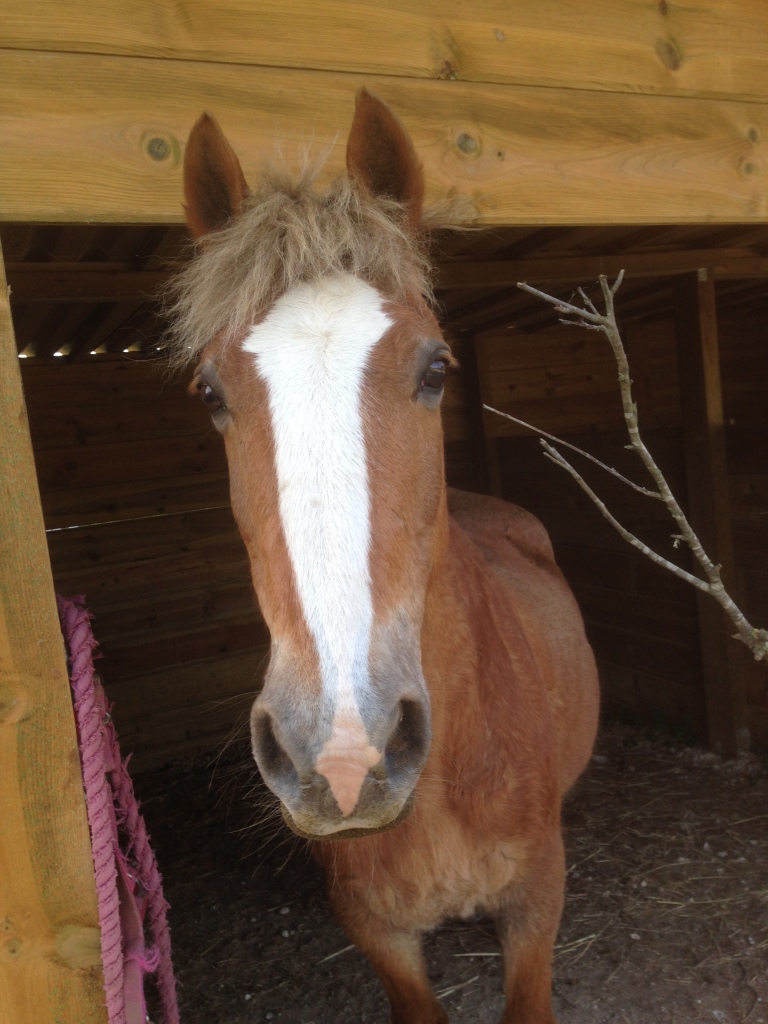
When we reached the church in Óbidos, five minutes before closing, I took two ribbons for my horses in exchange for a small donation. Back at home, I tied the pink ribbons in the horses’ manes, but the beasts had other ideas and rolled in the mud. So I rescued the ribbons and tied them to the field shelter instead.
Protected!!!
As the Spring Equinox approaches, I look forward to discovering more local festas.
Mary Sharratt is committed to telling women’s stories. Please check out her acclaimed novel Illuminations, drawn from the dramatic life of Hildegard von Bingen, and her new novelRevelations, about the mystical pilgrim Margery Kempe and her friendship with Julian of Norwich. Visit her website.
Your ex-boyfriend gave you a solid brass Buddha, one foot high. You hate to think what he had to pay for it. Not knowing what else to do with it, you place it on your bookcase. You must admit that it’s a beautiful object, that it inspires a certain peace. But it leaves you cold, just like the crucifix hanging in your parents’ bedroom always left you cold.
Your ex-boyfriend gave you a solid brass Buddha, one foot high. You hate to think what he had to pay for it. Not knowing what else to do with it, you place it on your bookcase. You must admit that it’s a beautiful object, that it inspires a certain peace. But it leaves you cold, just like the crucifix hanging in your parents’ bedroom always left you cold. Only when you sit in your dead grandmother’s chair and rock yourself into a trance can you reach your world of wonder, that green and gold place where May sunshine washes through newly unfurled birch leaves, where shadow and light dance on the white bark you peel off like onionskin. Long ago, you think, people worshipped their ancestors.
You wake up to cold and gray, to a day so drab that it hurts like a permanent migraine. On the bus ride to the office, the commuters in their career clothes are scrying into their phones. No free seats so you grab the handrail and gaze out the window. Instead of city buildings and dirty snow, you see an old farmhouse at the edge of an apple orchard. A gaggle of geese guards that house. They rush towards you, flapping their wings and hissing. But you walk resolutely on until you reach the veranda, and then the front door, propped open by a pair of gardening shoes. Stepping into the hall, you breathe in the mixture of baking bread and boiled coffee. A woman comes to you, a woman like your grandmother, but older. Her thin silver hair reaches her knees. Her face is so wrinkled, you can hardly see where her glittering eyes end and her crow’s feet begin.
Cocking her head, she says, “What took you so long?” And taking your hand, she marches you into her kitchen where a cat sleeps on the windowsill. She sits you down and serves you elderflower wine in an old jam jar. You take one sip and the kitchen reels around you.
You hear a rushing sound, a pounding, and then you are alone on a beach holding a piece of driftwood shaped like a goose in flight. A strange new weight pulls at your shoulder blades. Craning your neck to investigate, you see the wings sprouting there, blue-black crow wings. Of their own volition, they stretch and flap until you are airborne. Heading out over the waves, the tips of your bare toes graze the water.
“You dream too much,” your ex informs you. “You live on another planet. When’s the last time you watched the news? When’s the last time you voted? You can’t just spend your whole life with your head in the sand.”
Your ex is an activist. He majored in queer theory. He worked on Bernie Sander’s election campaign. He buys everything organic and volunteers one day a month at the soup kitchen. You are humbled by his social engagement, but when he sends you links to articles and videos overflowing with the world’s misery, the weight is too heavy for you to bear. You find yourself wondering how many homeless people he could have fed for the price of that solid brass Buddha.
Your grandmother lived until she was ninety-nine. She quarreled bitterly with everyone who came to visit and expressed concern about the farm falling into disrepair around her. She told them she just wanted to be left in peace. Then one day she died of a stroke while chopping wood on that old farm where she had lived alone for fifty-six years. She died instantly—no lingering pain, hospital gowns, or stench of bedpans or disinfectant. That’s how it is on your mother’s side of the family—the women are widowed early and seem to live forever until the day they suddenly drop dead.
After her death, her children sold her farm to a developer, who tore down her Victorian house to build rows and rows of condos. They left only three of her apple trees standing. Those trees are as old and gnarled as she was when she died. Like old women, they no longer bear fruit but stand and bear witness to what once was, but is no longer.
You pack the brass Buddha away in old newspapers, stick it in a cardboard box. You’ve decided to donate it to a drug rehabilitation center. Maybe it will bring the people there peace and clarity. Then you brew a pot of tea and sit in the rocking chair, huddled in an afghan your grandmother crocheted before you were born. You close your eyes and you are far out over the ocean, sometimes floating, sometimes flying. A blast of salt wind fills your shiny black wings, lifting you even higher. Opening your beak wide, you cackle and caw.
Mary Sharratt is committed to telling women’s stories. If you enjoyed this short piece, please check out her acclaimed novel Illuminations, drawn from the dramatic life of Hildegard von Bingen, and her new novelRevelations, about the mystical pilgrim Margery Kempe and her friendship with Julian of Norwich. Visit her website.
Moderator’s note: This marvelous FAR site has been running for 10 years and has had more than 3,600 posts in that time. There are so many treasures that have been posted in this decade that they tend to get lost in the archives. We have created this column so that we can all revisit some of these gems. Today’s blogpost was originally posted March 6, 2019. It is paired with a new guest post abut Margaret Fell which will be posted tomorrow. You can visit the original post here to see the comments.
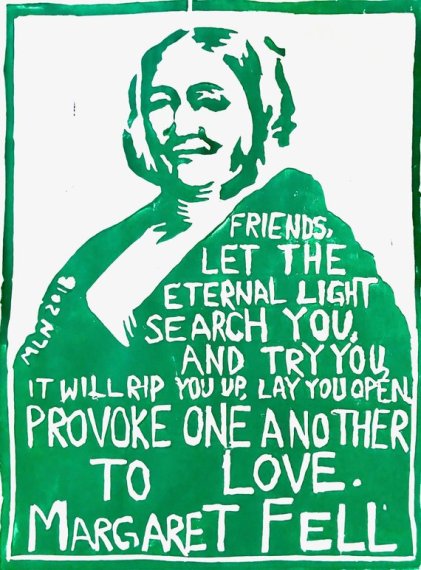
This linoprint of Margaret Fell can be orderedhere.
Pendle Hill will forever be associated to the Pendle Witches of 1612 who live on in the undying soul of the landscape and its folklore and who inspired my 2010 novel, Daughters of the Witching Hill. Pendle Hill also gave birth to the Quaker movement.
In 1652, George Fox, a simple weaver’s son and cobbler’s apprentice turned dissenting preacher, wandered across England on a spiritual quest. When he climbed Pendle Hill, his revelation came to him—an event that would change both Fox and the world forever. He envisioned a “great multitude waiting to be gathered.”
We are hard-wired to frame our experience in stories. Almost anything we endure, no matter how painful, can take on a deeper meaning if we see it as one chapter in an overarching narrative. Stories give coherence and meaning to our often fragmented and chaotic lives.
Georgia O’Keeffe lived way beyond Act One!
We live in a youth-obsessed culture. The cosmetic industry pushes wrinkle creams and hair dye on us while celebrities resort to fillers and surgery to preserve an illusion of eternal girlhood. Advancing age, once a mark of honour, has become a source of shame. Popular fiction, literary classics, television, and movies celebrate young heroines, from Elizabeth Bennett to Katniss Everdeen. But where are the stories about older women and why do we all need to hear them?
We live longer than ever before. Women’s lives don’t play out in one act, even though our culture programs us to think that way. It almost seems a travesty to imagine an older Elizabeth Bennett grown bored of Darcy and yearning to reinvent herself and embrace some new adventure.
Old-school male authors were really big on killing off their young heroines so they couldn’t even dream about maturing into women with agency. Shakespeare merrily committed femicide on Juliet, Ophelia, and Desdemona, to name just a few of his hapless heroines.
Ophelia drowning. Don’t try this at home.
Why have so many authors, past and present, refused to let their heroines age? Why this reluctance to write about seasoned female protagonists who have been around the block more than once? Perhaps because too many people, even today, consider experienced women threatening. Since the time of witch burnings and scold’s bridles, male-dominated culture has been petrified of older woman who seize their power. That’s why stories about young women with a certain cut-off date are much cosier and less threatening.
But coming-of-age stories can only take us so far. We need to imagine lives beyond Act One, beyond a vague glimmering on the horizon. We need signposts to help us navigate our long and unavoidably complicated modern lives. We live in an age of divorce, blended families, and many of us pursue several careers and many paths of discovery over the course of a single lifetime. Contrary to cultural expectations, women do have exciting, juicy lives after forty and beyond. Contemporary fiction should explore and celebrate this.
Yes, there have been break-out books about older women—Elizabeth Strout’s Olive Kitteridge, and even literary classics, such as Virginia Woolf’s Mrs. Dalloway—but these are the exceptions that prove the rule. In the publishing marketplace, stories about older women remain a hard sell. Which is bitterly ironic, considering that most fiction is purchased by women over the age of forty.
Yet it’s not just an older audience that needs to read about older heroines. I would argue that girls and young women are in even greater need of literary role models to guide them way beyond a self-limiting Act One.
As a teenager, I was hungry for such stories. Some proof that I had something to look forward to beyond the awfulness of high school (not the best years of my life). Like Holden Caulfield, I was caught in a web of angsty adolescent nihilism which cast everyone from the cheerleaders to the teachers as a chorus of fakes and phonies. I needed a gutsy female role model to pull me out of this miasma.
Eventually I found my heroine, not in the pages of a novel, but in Blackberry Winter, Margaret Mead’s memoir. I was electrified by this strong woman who didn’t give a fuck about preening for the male gaze and yet still had an amazing love life. Born in 1901, in an era when women were programmed for domesticity, she became a pioneering anthropologist and feminist icon. Her memoir, subtitled “My Earlier Years,” is not cut off at Act One, but only ends when she becomes a grandmother. Well into old age, Mead remained a mesmerizing and magnetic presence for being authentically herself.
Mead’s memoir is a rare jewel of female self-confidence in an ocean of women’s self-censorship and self-effacement. In Writing a Woman’s Life, Carolyn G. Heilbrun observes how both biographers and autobiographers have suppressed the truth about lived female experience to force it to conform to society’s script of how a woman’s life should be.
Heilbrun then discusses the Mother of All Female Memoirs, the first to appear in the English language. The Book of Margery Kempe (c. 1436–38) reveals the escapades of a woman mystic who wasn’t enclosed in a cell, but was literally all over the map. Kempe’s call to adventure unfolded amid the bitter disillusionment of midlife. She was forty, a desperate housewife, a failed business woman, a mother of fourteen children, and trapped in an abusive marriage. Marital rape was her lived reality—a fifteenth child might have killed her.
Her story completely exploded my every stereotype of medieval womanhood. Her life choices seem absolutely radical by the standards of our time as well as hers.
Since divorce was not an option, she seized back control by setting off on the perilous pilgrim’s path to Rome, Jerusalem, and Santiago de Compostela. She literally walked away from her unhappy marriage and blazed her trail across Europe and the Near East in an age when very few women traveled, even in the company of their husbands.
Alas, Kempe’s independence and eccentricities drew suspicion. When she returned to England, she found herself on trial for heresy. A guilty verdict would have seen her burned at the stake, yet she kept her spirits high by regaling the Archbishop of York with a parable of a defecating bear and a priest.
Most significantly, the spiritual mentor who stood by Kempe as she made her unorthodox choices was a woman in her seventies, the anchoress Julian of Norwich. Before leaving on her monumental pilgrimage, Kempe sought Julian’s counsel. This was an exceedingly vulnerable time in Kempe’s life. In leaving her husband and children, she had broken all the rules and was filled with self-doubt and uncertainty. Julian’s advice to trust her inner calling and not worry too much about what other people thought seemed to have a profoundly empowering impact on her. While Julian had chosen to wall herself into a cell and live as a religious recluse, she gave Kempe her blessing to wander the wide world.
Kempe’s story would have been lost to history if she hadn’t recorded it in her autobiography, a tremendous act of foresight and courage that made her a literary pioneer. She dictated her story to a priest, who copied it down for her and whose ecclesiastical authority gave gravitas to her narrative.
We are hard-wired to frame our experience in stories. Almost anything we endure, no matter how painful, can take on a deeper meaning if we see it as one chapter in an overarching narrative. Stories give coherence and meaning to our often fragmented and chaotic lives.
Margery Kempe’s story proves that even in the Middle Ages, women had the power to re-invent themselves in midlife and beyond. If Act One disappoints, time to dive feet first into Act Two. We can continually re-vision our own narrative.
Our culture likes to pit women against each other. Divide and conquer. Popular tropes cast young women and older women as rivals or even enemies. In fairy tales a young maiden’s coming of age involves going out into the wild forest to encounter the scary old witch who acts as a foil to the maiden’s youth and innocence.
But if we look past the patriarchal smokescreen, we see that youth and aging are mirrors reflecting one another. The maiden and the witch are not enemies. The true coming of age unfolds when the maiden seeks out the witch who ultimately empowers her. Who teaches her to be fierce and not suffer fools.
As we mature, we are gifted with the superpower of seeing through the false scripts that consumer society hands us. We can see just how absurd it is to kill ourselves to emulate airbrushed fashion models. We understand that the greatest lover in the world can’t fulfill us until we are at peace with ourselves. And so we can let ourselves go, whatever our age. Paint the pictures we’ve always longed to paint. Learn French and travel the world. Dance under the stars and see visions. Offer our own song to the vast symphony of life.
We need stories that honor the entire sweep of womanhood, not just Act One. What would our literary canon and popular culture look like if it truly reflected the depths and breadth of our authentic, lived experience as women and girls today?
This essay was originally published in Literary Hub.
Mary Sharratt is on a mission to write women back into history. Her acclaimed novel Illuminations, drawn from the dramatic life of Hildegard von Bingen, is published by Mariner.Her new novelRevelations, about the mystical pilgrim Margery Kempe and her friendship with Julian of Norwich, is now available and will be released in paperback in April. Visit her website.
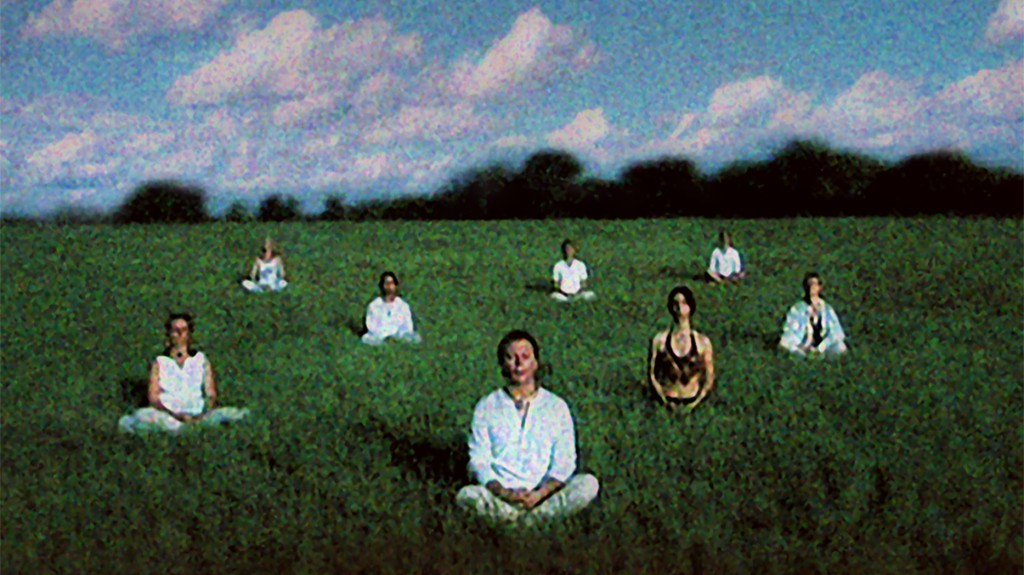
A still from Will Allen’s 2016 documentary “Holy Hell.”
Many, many moons ago, when I was still living in England, my husband and I thought it would be a wonderful idea to join a local meditation group.
Meditation, after all, is rightly praised for conferring countless benefits for body, mind, and soul. Renown teachers such as Pema Chodron, Jon Kabat-Zinn, and Jack Kornfield have popularized the idea of Buddhist-inspired meditation being just what stressed Western people need to live more joyfully and mindfully.
Alas, Pema Chodron, Jon Kabat-Zinn, and Jack Kornfield were all on the other side of the Atlantic. In this pre-Zoom age we had to make do with what was available to us locally. So, we went to a free taster evening led by a Western Buddhist monk who seemed like a kind and well-spoken young man. The venue was pleasant, the participants were friendly and welcoming. The meditation practice itself, a visualization of breathing white light into the heart space and breathing out the gunky stuff, created a heightened mood and expansive state of mind. In this altered state, we listened to the monk speak about Buddhist philosophy. I didn’t agree with everything he said—he was a bit too ascetic and world-denying to my taste. Even so, the meditative experience itself was so enjoyable that we became regulars and befriended the other regulars. Not only did we attend the weekly meditation sessions, but we also joined the group activities, such as fundraising walks and other events.
Fast forward a few months. Our teacher asked if I would lead a few sessions, as he had teaching commitments elsewhere. At first, I was honored. But then as I understood this was meant to be a regular thing and not the one off, it began to seem very strange. In most traditions, students study meditation for considerably longer than a few months before they are asked to lead classes. I wasn’t even an actual Buddhist and had never taken refuge vows.
Yet not only was I asked to lead the meditation, I was expected to lecture on Buddhist philosophy. I was told to purchase a book by the monk’s spiritual leader, study each chapter, and talk about the message. I learned that in this school of Buddhism, people were only allowed to read books written by their spiritual leader and not by other Buddhists of any other school. Some of the stuff in this book just seemed off. Any act of self-assertiveness or personal agency was denounced as “self-cherishing,” supposedly a dangerous obstacle to enlightenment. However, shame was celebrated as good thing as it helps herd a straying student back to the One True Path. This caused my alarm bells to go off big time.
I also learned that this branch of Buddhism preached a fanatical opposition to the Dalai Lama. They worshipped a protector deity called Dorje Shugden, shunned as a malevolent spirit by other schools of Tibetan Buddhism. My teacher was urging people to picket and protest the Dalai Lama’s upcoming visit to the UK.
My head exploded. To think that my innocent desire to practice meditation in community had landed me in some bizarro spirit-worshipping, Dalai Lama-hating cult!
The NKT is a new brand of pseudo-Buddhism, made in the United Kingdom. Very keen on fundraising, they have opened numerous meditation centers and residential centers across the UK and across the world. Tibetan Buddhists from actual lineage traditions won’t go near them.
An NKT advertizing flyer. It might look innocent, but . . .
I was lucky. By the time I learned how toxic this group was, my husband and I could get out unscathed. We had invested some time and money, but weren’t deep into the organization. Others weren’t so fortunate. Seduced by the feel-good meditations and the lure of enlightenment, flattered to be asked to teach, other people got roped into opening residential centers, volunteering their time as cooks at the NKT cafes, or even making monastic vows to the organization. The last option is a poverty trap. The monks and nuns subsist on social benefits from the UK state while spending all their time volunteering to teach, fundraise, and run the residential and retreat centers.
If I had it to do over again, I would have done my online research before attending the first class. This is what I now recommend to everyone joining a spiritual group or even a harmless-sounding meditation evening. Google the name of the organization or the leader and then add the words “cult,” “controversy,” or “criticism” in the search box and see what comes up.
Uma has created a comprehensive 13-point checklist of warning signs to let you know when you have accidently stumbled into a toxic group. You can access the list below. If I’d had this list way back when I joined that meditation group, I would have been able to extricate myself a lot earlier.
Meditation and Yoga can and should be liberating in every sense of the word. Let’s work together to ensure that the world of Yoga and meditation is a safe refuge for every seeker.
Happy Holidays!
Mary Sharratt is on a mission to write women back into history. Her acclaimed novel Illuminations, drawn from the dramatic life of Hildegard von Bingen, is published by Mariner.Her new novelRevelations, about the mystical pilgrim Margery Kempe and her friendship with Julian of Norwich, is now available wherever books and ebooks are sold. Visit her website.
For many years, I suffered from Seasonal Affective Disorder. As soon as the clocks went back in autumn and the nights grew dark, I’d fall into a contracted space. The days seemed too impossibly short to get things done. Even though I still had the same 24 hours as I had in summer, the encroaching darkness seemed to make everything shrink and dwindle into a tiny dark point.
In autumn and winter, my energy levels are lower. I seem to need more sleep and I can’t pack as many things into a day as I can in summer. I came to dread winter as some kind of energy-sucking blackhole I fell into every year.
Katherine May’s luminous memoir Wintering addresses this whole conundrum with deep wisdom. She points out that the fallow seasons of winter and autumn are when nature rests and repairs itself. If we force ourselves to go against nature, we cause endless suffering to ourselves and others. So when the nights darken early, why not just go with the seasonal flow and accept the divine invitation to rest, reflect, and slow down?
Humans, like other living beings, evolved as cyclical creatures. The monthly cycles of menstruation synch female bodies with the cycles of the moon and the tides. Similarly, the arc of a woman’s life from menarche to possible pregnancy and birth-giving to menopause and the post menopausal years contains its own seasons of growth, ripening, and resting in our hard-won wisdom. Deep in our psyches, we long to surrender to the ancient rhythms of planting, growth, ripening, and lying fallow.
But our dominant culture teaches us to suppress our cyclical rhythms. We’re programmed to live our lives as though it were spring and summer all the time. We are expected to always be in the productive mode of being, bringing forth the blossoms and the fruit. Always doing and accomplishing. But being in summer mode all the time is exhausting. To be healthy and functioning, we need the energies of autumn and winter. The energies of releasing, quieting, and letting go.
As well as the outer seasons, we have inner seasons that play out in our psyches, regardless of what stage of life we’re in. For example, after the death of a loved one, you might be experiencing an inner winter. This long pandemic has plunged us into a deep collective winter.
When we go through an inner autumn or winter, sometimes we feel that there’s something wrong with us. Why can’t we just snap out of it, get over it, and move on? We might feel mired in grief or simply “stuck” and burdened with the sense that nothing is happening. Our culture trains us to believe that something should be happening all the time.
But our times of descent and inner darkness are filled with profound potential. They take us into the fertile darkness of replenishment and restoration. If we surrender to the velvet darkness, it heals us inside out. What if we allowed ourselves to just rest in the sweet dark mystery?
Western culture views time as a very linear construct, but the seasons are cyclical. We might think that the season we’re in is going to last forever. But the wheel keeps turning, no matter what. We can learn to trust that everything comes full circle in the fullness of time.
What happens if we learn to pay reverent attention to the rhythms of our day, our week, and the moon and sun cycles? Trusting the great cycles of the seasons opens us to recognize every moment as a divine invitation, a doorway into the timeless and eternal.
Mary Sharratt is on a mission to write women back into history. Her acclaimed novel Illuminations, drawn from the dramatic life of Hildegard von Bingen, is published by Mariner.Her new novelRevelations, about the mystical pilgrim Margery Kempe and her friendship with Julian of Norwich, is now available wherever books and ebooks are sold. Visit her website.
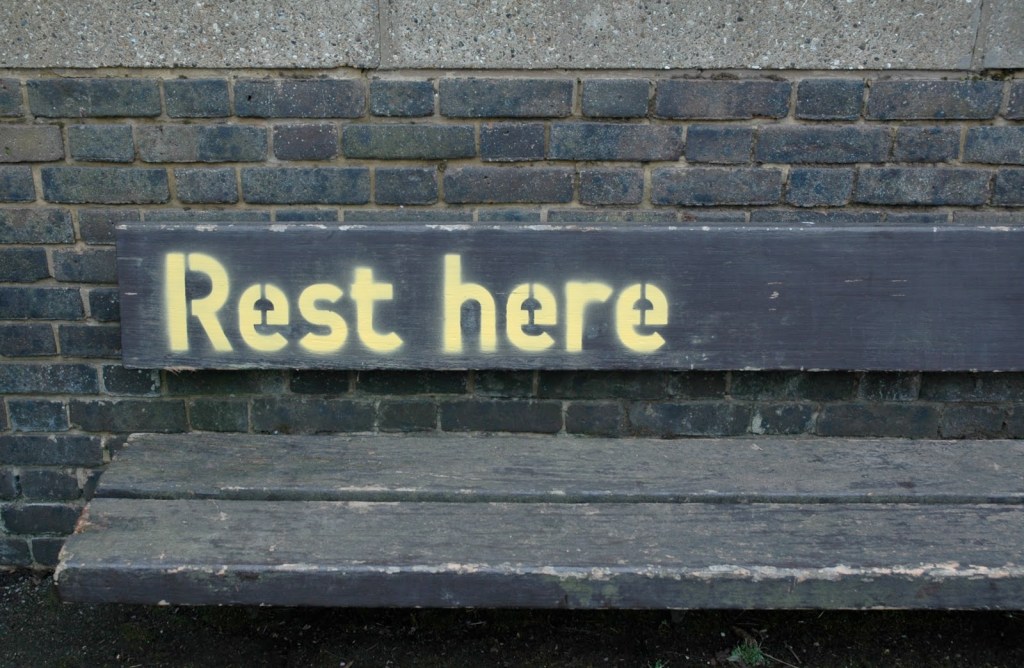
“Rest is resistance,” journalist Cassady Rosenblum wrote in her recent essay in the New York Times , entitled “Work is a False Idol.”
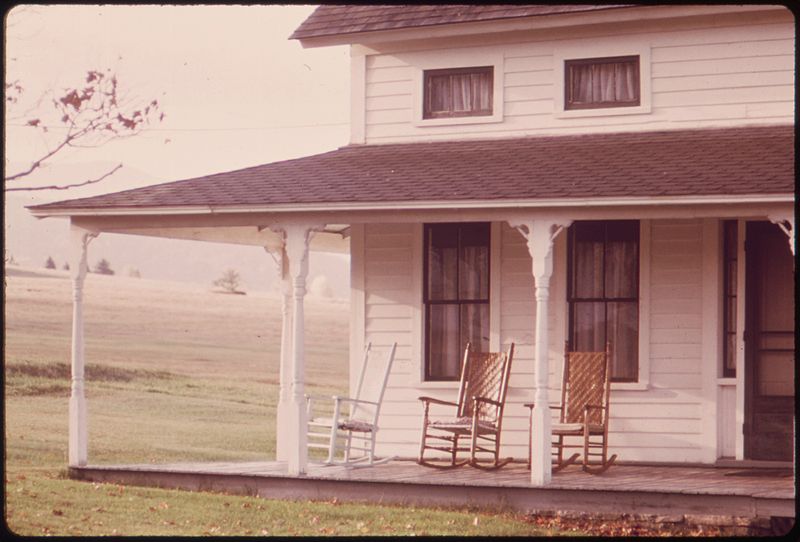
This statement completely undermines our American work ethic that elevates productivity to the highest altar. Rosenblum, a journalist who left a high stress job, wrote lyrically of the happiness she discovered just sitting on her parents’ porch in West Virginia. Some of her readers were up in arms—how dare she hang out on a porch when she could be working? Who does she think she is? Rosenblum received such a bashing in the comments section, you’d think she was Marie Antoinette torturing puppies.
Rest is a four-letter word, as un-American as Communists were in the 1950s. If you want to provoke the rage of strangers on the internet, publicly praise the joys of taking a sabbatical.
Recently the variation of this sentiment that’s making the rounds is, “The hardest thing is showing up.”
While many people I respect have used this phrase at some time or other, I think it’s perhaps bandied about too much. It’s become an all purpose way of blaming ourselves when things aren’t going the right way–we’re told we just need to show up and things will get better. We will succeed. We might even end up running the world!
However, I’ve reached the point in my life where every easy, feel-good cliché needs to be unpacked and re-examined.
Don’t get me wrong.
I’m actually pretty good at showing up. It’s the path of least resistance, thus helping me avoid the guilt of not showing up. When I commit to something, I COMMIT! Without commitment, I wouldn’t have written eight novels. I wouldn’t have been married for 32 happy years and counting.















 Feminism and Religion