Sanctioned Ignorance and the Theological Academy By Egon Cohen

Namsoon Kang writes that dislocation can be a theologically transformative process of self-discovery, using the metaphor of the “homeless traveler . . . leaving home for Home.” Kang also states that one’s identity—one’s location as traveler—is necessarily influenced by one’s position along axes of identity such as race, religion, ethnicity, class, gender, ability, and sexuality. And it is at this interstice that I, and many other liberationist theologians, grapple with issues of privilege. We are committed to traveling with the marginalized, but our luggage is packed with advantages denied to our companions. Indeed, as individuals with the luxury of pursuing advanced theological studies, most academic theologians operate within a space of significant privilege.

In this regard, I have observed four main typologies of response: (1) denial, (2) guilt, (3) cataloguing, and (4) instrumentalizing. It is hard to constructively engage the first type of response within the present discussion—the existence of such institutionalized privileges is one of my implicit operating premises, so I will bracket this analysis for another occasion. Similarly, I believe that the constructive/transformational capacity of guilt for or detailed acknowledgment of privilege is quite limited. So the question becomes, how do white and/or male and/or heterosexual and/or “first world” theologians instrumentalize our privileges for and (more importantly) with our “fellow travelers”? Continue reading “Sanctioned Ignorance and the Theological Academy By Egon Cohen”

A Next Wave of Scholarship By Kwok Pui Lan

I came to the United States in 1984 to begin my doctoral studies at Harvard Divinity School. It was an exciting time to do feminist theology and religious studies. Womanist ethics just began to emerge, as Dr. Katie Geneva Cannon has just completed a dissertation on the subject at Union Theological Seminary in 1983. I count it as a blessing that she was teaching at the Episcopal Divinity School, just on the other side of the Cambridge Common.

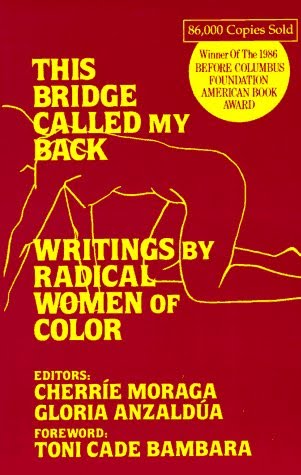
The mid-1980s saw the paradigm shifts in feminist studies in religion, as womanist, mujerista/Latina, Asian and Asian American women began to articulate their own theological understanding. If Womanspirit Rising (1979) was a reference text for our field, which contained essays by white women, we had the first reader by radical women of color, This Bridge Called Our Back(1981).

We began to discuss multiple oppressions and multiple identities, and the need to integrate race, class, and gender into our analyses. We challenged white women who have universalized their middle-class, white experience as if women were all the same. Continue reading “A Next Wave of Scholarship By Kwok Pui Lan”

CELEBRATING THE BEGINNING OF THE AQUARIAN AGE by Sara Frykenberg, Ph.D.

Looking back, it’s interesting to think of myself as a young woman learning in a time of transition from the Piscean Age to the Aquarian Age.  According to Yogi Bhajan, the man known for brining Kundalini Yoga to the West, 11/11/91 marked the beginning of the last part of the Piscean age and on 11/11/11 the Age of Aquarius officially began.  So, welcome all to the Age of Aquarius!  This change of course, entails a significant paradigm shift that is supposed to affect our attitudes, consciousness and all of our relationships.  The beginning of the Aquarian age, like the end of the Mayan calendar and other overlapping prophesies of change, tends to inspire our apocalyptic imagination.  We may anticipate a breaking of our world.  I tend to imagine the pressure of the Aquarian transition like an event horizon of a black hole: a movement through extreme gravity that feels crushing and inescapable.  However, recently I’ve been struck by how the seeds of this new age, have been blossoming in my own experience and in the world around me.

According to my Kundalini teachers, the attitude of the Piscean age can be summed up as, “I believe.”  The attitude of the Aquarian Age is, “I know.”

As a child I desperately wanted to believe enough.  My evangelical Christian upbringing taught me that all I needed to do was believe that as God, Jesus Christ died for me and saved me from my sins.  If I did this, then I could go to heaven with my family.  Plus, Jesus would take me with him when he came back—that is, I wouldn’t have to go to hell or suffer the trials and tribulations of the apocalypse… this last part really stuck with me.

I thought I believed.  I wanted to believe.  I did “all the right things,” to somehow prove or provoke the kind of unquestioning belief I thought was necessary to be a “real” Christian.  But, the fact of the matter was I doubted.  As a little child (and I’ll admit, into my teens) I was sometimes struck with a sudden and horrifying fear that my family had been raptured and Jesus had left me behind.  I would literally panic until I found someone; but I’d also hide this fear because I didn’t want anyone to think that I didn’t believe enough.

I now know this extreme fear of god and His (sic) wrath was a part of my abusive relationship to what I thought was god.  I also know that our doubts can lead us towards renewed life.  I know that it is not my beliefs that make me valuable: wholeness is inherent in our connection to “a larger creative existence.”  We express this wholeness and our value, “with each committed action.”[i] Continue reading “CELEBRATING THE BEGINNING OF THE AQUARIAN AGE by Sara Frykenberg, Ph.D.”

Pushing Boundaries: Learning to be a Reformer By Jared Vázquez

When I consider the role of women in the social reforms of the late 19th century and early 20th century, I am struck by the boldness of those women in a society that is often essentialized as a quintessential model of patriarchy where all the women were too busy swooning under the pressure of corsets into the hands of handsome gentleman callers. But if we take the time to read closely about what activist women did during the late 19th century I believe that it becomes apparent that they developed much of the model by which we not only operate but also judge social reform; those reforming women set the standard by which we measure change. The reforming women of the 19th and 20th centuries altered the landscape of theU.S.in the way that they challenged the status quo of acceptability for the roles that women could play, both in the home and in public, and in the way that they challenged normative gender roles. In these we not only see the impact that was affected on their own societies, but also the legacy that has guided and continues to guide women and men who work for social reform today.

The women of that era challenged gender roles in various ways, in both public and less public ways. Utopian orders, for instance, that began to form in the mid 19th century were not only founded by women, like the Shakers, but were also directed by them and women enjoyed equal status with men in all affairs. The Salvation Army is another group in which women reinterpreted ‘womanly’ behavior in order to advance what they saw as their call to mission and evangelizing  and took to the streets, going into areas that were “unsuitable” for women. The reforming women of the second half of the 19th century were boldly questioning and challenging the notions of social ordering that dictated the ways in which women were “allowed” to behave. Reading the contemporary responses of non-Protestant faiths in the ways that they sought to “properly feminize” their own female membership gives clues to the level to which the challenge on gender roles had reached. Continue reading “Pushing Boundaries: Learning to be a Reformer By Jared Vázquez”

A Reflection of What Influences and Controls My Ideologies: An Examination Of Althusser’s Ideological State Apparatus By Michele Stopera Freyhauf

 Michele Stopera Freyhauf:  Feminist scholar, activist, and graduate student in religion and biblical studies at John Carroll University, Michele is the student representative on the Board for Eastern Great Lakes Biblical Society (EGLBS) and author of several articles including “Hagia Sophia: Political and Religious Symbolism in Stones and Spolia.”  Her research interests involve Feminism, Sexuality, the influence of Goddess imagery, Myth, and Rhetoric especially in the Old Testament, Ancient Egypt and Early Christianity.  She also focuses her research in feminism, migration studies, and genocide as it relates to women, especially in the Middle East and Latin America.

Exploring the new world of historiography this semester has been an adventure.  In my studies, I came across an interesting person named Louis Pierre Althusser.  He is considered a structuralist Marxist and in 1970, he wrote an essay titled Ideology and Ideological State Apparatuses (Notes towards an Investigation).  The basis of his argument explores how various institutions control the working class.  We have our ideas taken from or given to us because we were essentially molded by various institutions that are being controlled by an agency of power, like government or church.  Someone has told us what it is to be moral and ingrained that definition.  Someone has influenced our idea of what it means once you graduate from high school then college.  Someone else has defined the benchmark for wealth and happiness or when we have enough “stuff.”  Ideologically we are controlled by so many outside factors.  It is this point that I want to reflect an explore as a Feminist, a mother, a graduate student, and part of the proverbial 99%. Continue reading “A Reflection of What Influences and Controls My Ideologies: An Examination Of Althusser’s Ideological State Apparatus By Michele Stopera Freyhauf”

ADI SHAKTI! : A MEDITATION ON A MANTRA BY Sara Frykenberg, Ph.D.

Aaadee shaktee, namo, namo: I bow to the primal power (which is female and divine).

My Kundalini yoga teacher training required that each student complete a 30 minute daily meditation for forty days straight at some point during our course.  Great!  No problem.  After all, I signed up for teacher training partially because I believed in the physical-spiritual-mental healing powers of meditation.  I chose the Adi Shakti meditation specifically, so I might better understand and embrace myself as a woman and creative being.  My own self-definition of womanhood had been very wounded in my past, so I aimed to embrace this fantastic opportunity.

Aadee shaktee, namo namo—I will bow to the primal female power that I have within me!  I was excited!  I was even eager to do this meditation; but somewhere along the way I discovered that I had underestimated how painful this process would be.  I underestimated my scars and I ultimately found this meditative experience somewhat excruciating.

Aadee Shaktee, namo, namo: I am humbled by her power.

Sarab shaktee, namo, namo: I bow to the all Encompassing Power and Energy.

My initial meditations were fun, exciting and led me to contemplate my sister’s pregnancy.  I enjoyed the mantra and the physical movements the meditation involved.  Very quickly, however, the movement itself became increasingly uncomfortable.  I was sore.  I joked in my journal, “no wonder the mantra engages female creative power; it really targets the abdomen and hips.”  I expected this, as many meditative postures are not exactly “comfortable.”  My response was normal. Continue reading “ADI SHAKTI! : A MEDITATION ON A MANTRA BY Sara Frykenberg, Ph.D.”

Leadership As Risk And Open Dialogue By Xochitl Alvizo

Regardless of the context, leadership is too often simply an imitation and implementation of business management strategies that are designed to ‘lead’ people toward a predetermined goal. In business the goal is to maximize profits, minimize cost, and increase production, and as long as it is serves that purpose, employee satisfaction is sought and minimally maintained. I reviewed Ronald A. Heifetz classic text on leadership, Leadership Without Easy Answers, which does take the discussion of leadership into a different direction. And although it does not fall in the direction I want to eventually go, it does offer a solid place to start this conversation on leadership. [1]  Continue reading “Leadership As Risk And Open Dialogue By Xochitl Alvizo”

Sister Wives, The Terrible Taboo, and Agency by Xochitl Alvizo

A couple of weeks ago I watched a handful of Sister Wives episodes; it was the start of the new season and the network was having a marathon. I was absolutely fascinated. It was my first time watching the show, and interestingly,  I had actually seen the family in person in Boston before I ever saw them on TV. They had been in town in September for a panel discussion that one of my friends was hosting and all I knew about the Sister Wives show was that it was about a polygamist family with three wives and one husband. I never imagined myself intrigued. But seeing the women sitting there, hearing them talk about their lifestyle and how much they love their sister wives, getting to witness their family dynamics and their different personalities, I found that my first reaction to them was not  judgment. Instead I found myself increasingly curious, particularly about the sister wives’ relationship with one another.  Continue reading “Sister Wives, The Terrible Taboo, and Agency by Xochitl Alvizo”

Hands Off By John Erickson

This post is written in conjunction with the Feminist Ethics Course Dialogue project sponsored by Claremont School of Theology in the Claremont Lincoln University Consortium,  Claremont Graduate University, and directed by Grace Yia-Hei Kao.

John Erickson is a doctoral student in Women’s Studies in Religion at Claremont Graduate University.  His research interests involve an interdisciplinary approach and are influenced by his time as the director of a women’s center and active member in the GLBTQ and women’s rights movements.  His work is inspired by the intersectionality of the feminism, queer identity, and religious political and cultural rhetoric.  He is the author of the blog, From Wisconsin, with Love and can be followed on Twitter at@jerickson85.

I find it little ironic that I am writing about Mary Daly’s formidable “anti-male” book Gyn/Ecology.  I remember reading the book when I was a sophomore in college and I owe much to Daly and her opus because they helped me to identify as a radical.

I know my position in feminism is sometimes misunderstood.  I have often found myself on the defensive end when someone asks me the question: “Why are you a feminist?”  However, although my identification as a feminist is always changing and growing, the label “RADICAL” is one I proudly wear on my chest everyday.   Continue reading “Hands Off By John Erickson”

Mary Daly: My Springboard Into Critical Feminist Thought By Katie Driscoll

This post is written in conjunction with the Feminist Ethics Course Dialogue project sponsored by Claremont School of Theology in the Claremont Lincoln University Consortium,  Claremont Graduate University, and directed by Grace Yia-Hei Kao.

Katie Driscoll is pursuing an MA in the Applied Women’s Studies Program at Claremont Graduate University and is participating in the Feminist Ethics Course Dialogue project.

Mary Daly, a professor of theology at Boston College, is known as a radical feminist, one who is widely understood to have epitomized the stereotypical “man-hating femi-nazi.”  Daly earned the latter title as the result of a dispute with Boston College concerning her supposed refusal to grant male students admittance into her classes.  This dispute ultimately resulted in Daly’s retirement from Boston College in 1999.  Somehow, Daly remained a presence on campus, attending panels and other events for years to follow.  I had the privilege of meeting her twice while attending BC between 2002 and 2006.  I cannot claim that she was particularly warm or personable.  She was actually quite cold and demanding.  While I was never close to Mary Daly, I feel that I owe her my deepest gratitude for her role in my Self-discovery. I would like to take this opportunity to reflect upon her influence in my life and, utilizing the insights of some of Daly’s former colleagues and students, to set the record straight regarding her alleged refusal to allow men into her classes. Continue reading “Mary Daly: My Springboard Into Critical Feminist Thought By Katie Driscoll”