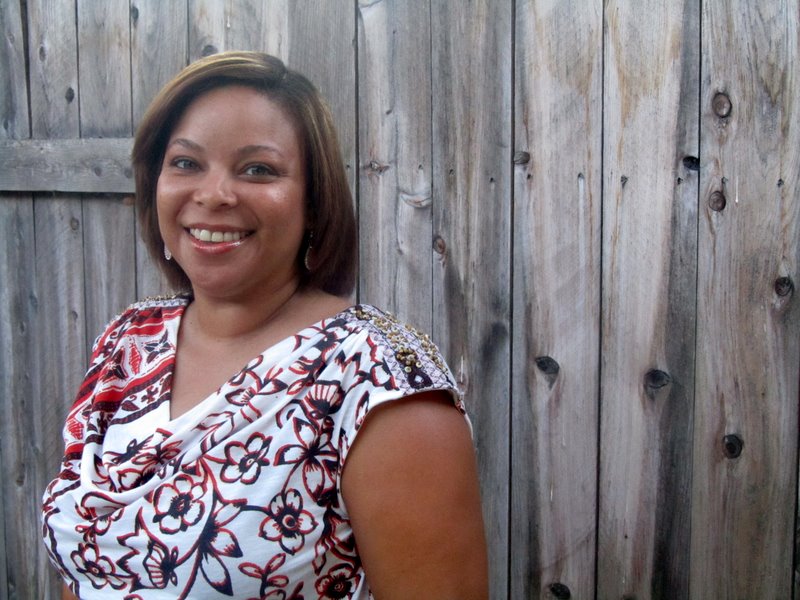
At the Intersection of Gender, Religion, and Race by Jameelah X. Medina

Since 9/11, many Muslim women in the USA are in a similar predicament as what African American and Chicana women found themselves in decades ago during the Black Power and Chicano Power Movements. African American and Chicana women stood along side African American and Chicano men to fight against oppression and injustices against them by the power structure and the people in positions of power. In both movements, women’s issues were relegated to the sidelines; they were only visible in the periphery of decision-making. Both African American women and Chicanas decided that they had to stand up for themselves and call it like they saw it—they were being oppressed and marginalized in mainstream society because of their race and ethnicity and also within their racial group because of gender.  Continue reading “At the Intersection of Gender, Religion, and Race by Jameelah X. Medina”

Presumed Guilty by the Sin of Silence: U.S. Nuns, Network, and The Congregation for the Doctrine of the Faith by Cynthia Garrity-Bond

In 1965, the Council document Perfectae Caritatis, Decree on the Adaptation and Renewal of Religious Life, encouraged women religious to situate themselves and their vocations in the social milieu to which they belonged.  Each religious community adjusted rules and customs to accommodate the needs and demands of particular ministerial vocations. For those communities that embraced Perfectae Caritatis entered into a complete paradigm shift in thinking that changed forever how they understood themselves and their chosen vocations. I recall vividly the morning, when, in 1968, Sister Mary DePatzie entered our classroom clad in a shorter habit and dress revealing the startling fact she 1) indeed had brilliant, beautiful red hair; and 2) rather shapely legs even in her sensible shoes.  Continue reading “Presumed Guilty by the Sin of Silence: U.S. Nuns, Network, and The Congregation for the Doctrine of the Faith by Cynthia Garrity-Bond”

Feminists Be Silent! Making a Stand in Solidarity with our LGBT Friends Against Bullying and Harassment By Michele Stopera Freyhauf

“A Day of Silence” occurs tomorrow, April 20th.  Created in 1996, University of Virginia students wanted to raise awareness of the bullying and harassment of issues that LGBT students faced on campus.  Since then, A Day of Silence makes a statement against those who have tried to silence LGBT teens and young adults in school through harassment, bias, abuse, and bullying. Participating students, led by GLSEN, will hand out cards that read the following:

“Please understand my reasons for not speaking today. I am participating in the Day of Silence, a national youth movement protesting the silence faced by lesbian, gay, bisexual and transgender people and their allies in schools. My deliberate silence echoes that silence, which is caused by harassment, prejudice, and discrimination. I believe that ending the silence is the first step toward fighting these injustices. Think about the voices you are not hearing today. What are you going to do to end the silence?”

Family Picture (wikipedi.com)
Family Picture from wikipedia.com

The issue of bullying LGBT teens resonated with the world when Tyler Clementi took his life in 2010 after his roommate secretly transmitted via webcam Tyler’s sexual encounter with someone of the same sex. Tyler’s suicide brought national attention to the issue of bullying and harassment that LGBT people face.  To my chagrin, while writing this article, another victim fell.  Kenneth Weishuhn, Jr., a 14-year-old gay teen, committed suicide because of the intolerable harassment and bullying he dealt with at school.

To really understand the magnitude of this issue, I wanted to examine the statistics surrounding bullying. The numbers are staggering. However, when adding the LGBT component to that same teen, the numbers escalate.  Continue reading “Feminists Be Silent! Making a Stand in Solidarity with our LGBT Friends Against Bullying and Harassment By Michele Stopera Freyhauf”

A MEDITATION ON A MIDRASH: “ABRAHAM’S DAUGHTER” BY ARCADE FIRE by Sara Frykenberg

The wages of the sin of sacrificing our children is their death, whether the sacrifice is to some supposed higher order, to absolute obedience or to appear to be the “good Christians” we are “supposed to be”…

Maybe its because I enjoyed the books more, or because of my sister’s all too expectation-garnering reviews or even, because I’d seen this theme before, in an amazing yet gruesome Japanese movie, Battle Royal, I left the theater unsatisfied after watching The Hunger Games. I did however, LOVE the song that played at the end of the movie, which I downloaded before we left the theater.  I listened to it in the car on the way home.  I listened to it the next day, the day after that and for days after that… I listened and listened, and I found surprise, power, anger, sorrow and a channel for grieving that I had needed in the Midrash “Abraham’s Daughter” by Arcade Fire. 

Abraham took Isaac’s hand and led him to the lonesome hill

While his daughter hid and watched, she dare not breathe

She was so still.

I discovered the practice and potential power of Midrash from my teachers in graduate school.  The idea of an “extra-biblical” story that might help to expound upon Biblical passages that are all too often unexplained or unsatisfactory to (my) feminist consciousness was very appealing to me—and it is still appealing to me.  But I have to admit that the feminist Midrash I read in my classes seemed too positive and did not resonate with me.  The pieces were too much like a tender hug or a mother hen covering my wounds with her wings.  I wanted to hear a story of Bible that could help me make sense of the violence I’d discovered in my childhood religion.  I needed a story of Bible that honored my violent struggle to counter the abuse within it and within me.

Like Isaac, I was too intimate with my abuser: unable to avoid walking hand and hand with him when pushed to do so.  Asked to create a prayer or Midrash for a class once, I wrote about the way I would turn the radio in my car up when I started to hear ‘God’ speak to me.  I didn’t know how to listen and tune out the abusive maxims that played over and over again in my head (maxims that surfaced every time I even thought about the divine).  Continue reading “A MEDITATION ON A MIDRASH: “ABRAHAM’S DAUGHTER” BY ARCADE FIRE by Sara Frykenberg”

Do Man-Made Laws Trump the Authority of Jesus? Reflecting on the Meaning of Humility, Priestly Service, and the Issue of Women’s Ordination by Michele Stopera Freyhauf

Maundy Thursday – the imitation of Jesus’ act of service and submission is re-created.  Controversy surrounds the “disciples” – must they be all men?  Are women allowed?  Who steps into Jesus’ role?  Men, women, or both?  Why, when it comes to imitating the act of  humility and priestly service (rooted in our baptismal call), does a distinction of gender need to made at all?

As I progressed towards the intersection, I looked up to witness a grand procession of men dressed in white albs with stoles that often contained subtle hints of gold, worn in a manner to distinguish their role as priests and deacons.  They moved slowly down the sidewalk entering the Cathedral to begin their celebration of the Chrism Mass – a celebration of priesthood and priestly service within the Diocese where all priests and deacons gather to celebrate and re-affirm their commitment to ministry and service to the Church.  It is also during this Mass that the oils used in sacramental celebrations, used by each church, are blessed by the Bishop.

As I continued to watch, I could not help but search the processional line for those with a hair color other than gray.  I wanted to see  how many young priests were in that processional line.  What I found was no surprise –  an aging group of men with the sporadic appearance of younger priests.   The numbers stood as a staunch reminder that we, as a Church, may be faced with a severe shortage of priests in the future.  Something already known and planned for by the Diocese in its campaign to consolidate and close parishes.

Another sad observation was put on public display  –  the absolute absence of women. Continue reading “Do Man-Made Laws Trump the Authority of Jesus? Reflecting on the Meaning of Humility, Priestly Service, and the Issue of Women’s Ordination by Michele Stopera Freyhauf”

The Feminist Toolbox by Marie Cartier

Photo of Marie Cartier by Lenn Keller

This spring I am teaching “Feminist Ethics” at California State University Northridge. For the students’ midterm and final we are doing an innovative project that we want to share with the “Feminism and Religion” blogging community. My students have been asked to find a problem in the public world, or their private world, that they wish to interact with and provide a solution for. The solution can solve the problem or a piece of the problem. They must deconstruct the problem and then construct the solution for the midterm. For their final they actually must *do* the solution.

In creating their solution, they must address and use the tools in what I call “the Feminist Ethical Toolbox.” These tools are ones we have been extracting from the class readings (so far we have read the anthologies Feminist Theological Ethics, and Feminist Ethics and Social Policy, and Carol Gilligan’s philosophical treatise on the patriarchy, In The Deepening Darkness, and the students have been using the toolbox and its accumulated (and accumulating) tools throughout the class, in their own lives, and interacting with the toolbox in the reading response journals in terms of looking at wider world issues.

The tools in what my students call “Cartier’s Toolbox” are as follows: Continue reading “The Feminist Toolbox by Marie Cartier”

My Feminist Perspective of Authority – Part 1 by Elise M. Edwards

I make a distinction between power and authority.  Authority is a personal characteristic based on a relationship of trust between me and a text, a person, or their work.  Power, on the other hand, is operative with or without trust.

This past weekend, I had the honor of participating in a workshop on Living Texts: Celebrating Feminist Perspective and Theo/alogy, Authority, and the Sacred in the Academy.  The workshop was organized for the Women’s Caucus of WECSOR, a regional association of national organizations who study religion.  I was delighted to connect with new friends, mentors and sisters interested in feminism and religion, including some of my co-contributors on this site –Theresa Yugar, Sara Frykenberg, and Corinna Guerrero .  There were two panels that shared our reflections about authority from either student perspectives or diverse professional perspectives.  I shared my experiences as a student.  This workshop was a gathering where women scholars in religion could discuss the challenges and promises of our voices in the academy.  Because our dialogue was so inspiring to me, I thought I’d continue the discussion here. Continue reading “My Feminist Perspective of Authority – Part 1 by Elise M. Edwards”

The Legacy of Original Intentions: The Non Violence of Wonder Woman by Nick Pumphrey

What would a superhero comic be without Pow, wham!, Zap, and even a Boom! (insert your own campy sound bites from Batman).  Oddly enough, when psychologist William Marston created the character of Wonder Woman, he did not intend for her to be a violent character.  When villains shot their mere bullets, she simply would deflect them with her indestructible bracelets.  Instead of stooping to the level of her attackers, she would wield the lasso of truth, capture her foes, and force them to admit their malevolent deeds.  Meanwhile, creator William Marston was actually developing the first polygraph using changes in blood pressure as exemplified in Wonder Woman’s lasso.  Wonder Woman was not the first female superhero; however, she was the first non-violent one.  While other writers like Siegel and Shuster (Superman’s creators) were using their religion as inspiration, Marston drew on the women of his life as example.  He intended to have a peaceful, warrior woman, who was more than equal on grounds of “sex,” and could stop the tyranny created by war and hatred (i.e. men) without having to embrace it.  He wanted an example for young girls to idolize and a way for boys to embrace feminine power.   Continue reading “The Legacy of Original Intentions: The Non Violence of Wonder Woman by Nick Pumphrey”

Is Baptism a Male Birthing Ritual? By Michele Stopera Freyhauf

Quite a number of years ago I had a conversation with one of my professors, a feminist theologian, who posed the question “Why do I need a man to purify my baby with the waters of baptism?  Is there something wrong or impure about the blood and water from a mother’s womb – my womb?”  Before you jump and shout the words Sacrament or removal of original sin, this question bears merit in exploring, especially in today’s world where women are taking a serious beating religiously, politically, and socially.  In today’s world, violations and rants are causing women to stand up and say STOP!  This is MY Body.  This outcry was provoked by chants of ethical slurs against women– Slut! Prostitute! Whore!  The cry got even louder when the issue of religion and government was raised in the fight of healthcare coverage of contraception. The cry got even louder with the enactment of the laws in Virginia and Texas (and many other states to follow suit) that forces women to undergo transvaginal ultrasounds in early stage abortions.  The mandatory insertion of a wand into a woman’s vagina (mandated by the government, mind you), is a violation and has women crying RAPE!

The memory of this conversation did not re-appear by chance, it was prompted by a book I read for my History of Sexuality Class – Imperial Leather: Race, Gender, and Sexuality in the Colonial Context by Anne McClintock who addresses the notion of baptism through origins, property, and power.  So many things are currently being taken away from women and reading McClintock’s assertion regarding male baptism is perplexing.  She believes that male baptism or baptism by a man takes women’s role in child bearing and diminishes it.  These are the same men who historically treated and regarded women as vessels.  She further asserts that this act is a proactive removal of creative agency with respect to a woman’s ability to have the power to name.  That is, the last name of the child belongs to the husband.  A point that supports the notion that patrimony marks the denial of women.  Anyone doing genealogy encounters a perplexing struggle to identify mothers because their names are essentially erased from memory and rarely attached to a child’s name. Continue reading “Is Baptism a Male Birthing Ritual? By Michele Stopera Freyhauf”

Beyond “Liberal” Female Piety or “Women Read the Qur’an Too” by Amy Levin

I’m a teacher’s assistant for an undergraduate course at New York University called, “What is Islam?” The other day in class, my professor asked the students whether or not the Qur’an is considered a “book”. Fraught with anxiety over inheriting such a problematic scholarly tradition of defining and delineating what “religion” is, I kept quiet. While my professor was aiming more for something sounding like, “a book is read, while the Qur’an is recited,” I kept thinking about the physicality and sacrality of the Qur’an (among other authoritative religious texts) and the way it is handled, revered, preserved, loved, an constantly under interpretation. It was about a week later when news broke out that U.S. soldiers in Afghanistan were guilty of burning several copies of the Qur’an on their military base, followed by an unfortunate slew of casualties including at least 30 Afghan deaths and five US soldiers. Continue reading “Beyond “Liberal” Female Piety or “Women Read the Qur’an Too” by Amy Levin”