
The Time of Your Life by Mary Sharratt

Kicking back and enjoying life in the Englischer Garten in Munich, Germany.

Between the ages of 24 and 36, I made my home in Munich, Germany where I taught English to professional adults and began my writing career. My first novel, Summit Avenue, was published in May 2000 when I still lived in Grafing, a market town at the end of the light rail line heading east from Munich.

What I remember most fondly about my Munich years was how much time everyone seemed to have. I had time to teach, write novels, enjoy an active social life, and travel the world from French Polynesia to Namibia. We had eight weeks of paid vacation a year plus numerous public holidays.

During this time, inspired by Julia Cameron’s wildly popular self-help book The Artist’s Way, I took weekly “Artist’s Dates.” I took the train to Munich, got off at the Ostbahnhof, and set off on long aimless walks. Whole short stories would be created in my head during these solo jaunts. I became a flaneur and learned to carry a notebook so I could find a park bench, or, in winter, a table inside a café, to write out the story that unfolded organically during these serene, unrushed afternoons. Continue reading “The Time of Your Life by Mary Sharratt”

Bridgerton: The Next Wrong Thing in Misogynist Television


Why can’t we have nice things? Because the porn industry has infected media, that’s why.

I have read several of Julia Quinn’s fanciful romance novels. They contain entertaining and sympathetic stories about the economic and social pressures on gentlewomen of early 19th century Britain. The females are creative, courageous, intelligent, and honorable. The males are… well, they are somewhat sexist, of course, but no more sexist than most men I know. The books do a mediocre job of challenging gender roles or stereotypes (especially in their cookie cutter portrayals of male heroes), but they directly challenge overt sexism and misogyny. Quinn calls herself a feminist. Continue reading “Bridgerton: The Next Wrong Thing in Misogynist Television”

Another Bow to Hestia by Carol P. Christ

I am not big on New Year’s resolutions, but this year I have vowed to change one of my habits. I have always been house-proud and love using my artistic flair to decorate my home in beauty. I have had a cleaning lady most of the time for many years, so my homes have been relatively clean. The living room and dining room have always been ready to receive guests. But I didn’t always do the dishes or clean the surfaces in the kitchen right away, clothes I had worn often sat on chairs before I hung them up, and I didn’t make the bed every day.

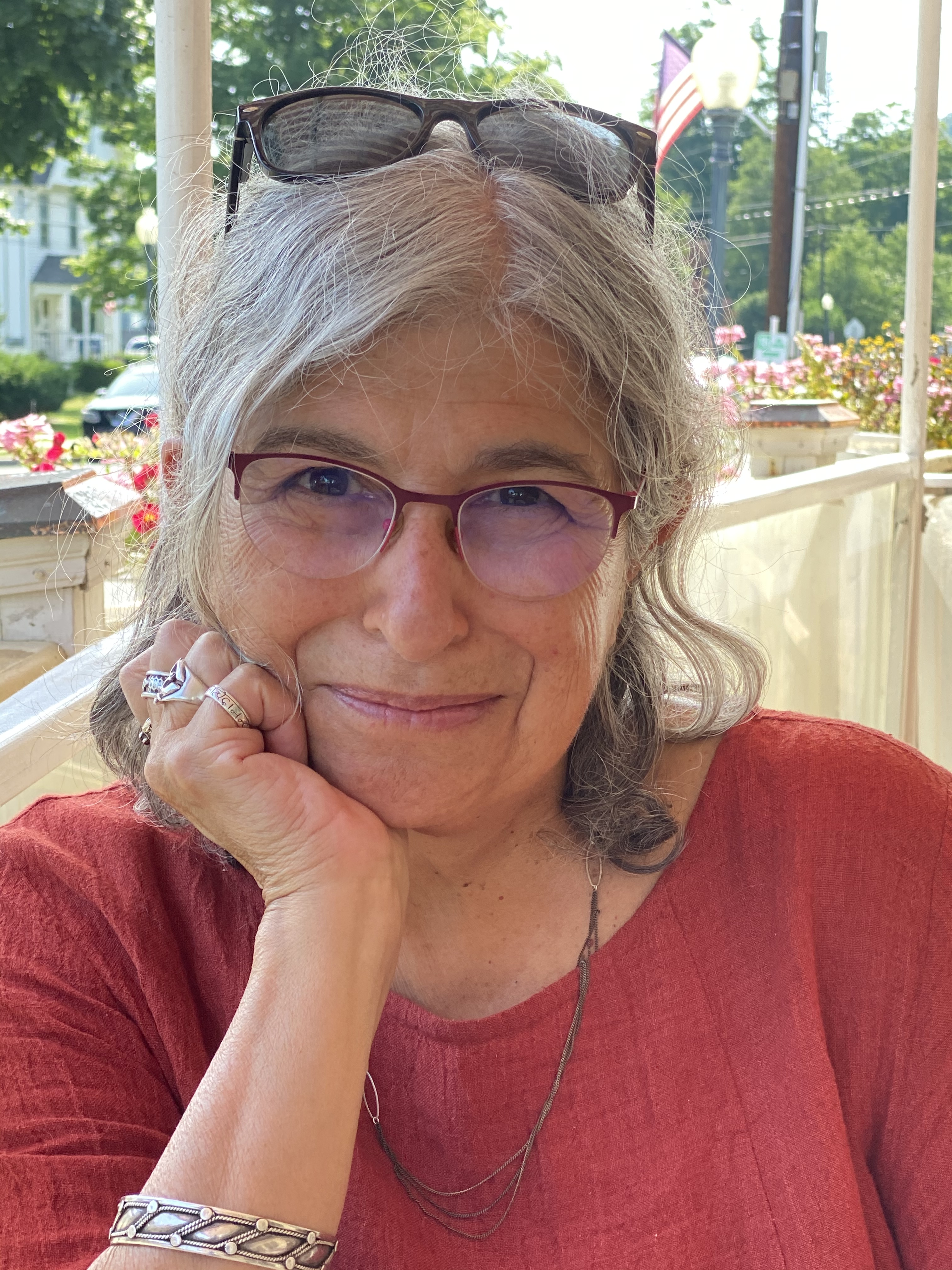
Now that I think about it, this habit goes back to my childhood and teen-age years, when my not picking up things in my bedroom was a bone of contention between me and my mother. Joyce Zonana wrote recently about how she rejected her mother’s role as homemaker and “dutiful” wife when she was young. Only now during the Covid crisis, she writes, is she beginning to enjoy the traditional women’s work of cooking regularly and knitting.

When I was a teen-ager, I sewed all of my clothes (both because we didn’t have a lot of money and because, as I was very tall and very skinny, most ready-made clothes didn’t fit). I was a second mother to my baby brother. For me, those were the fun parts of women’s work. But I hated washing dishes and cleaning the house, and I did not learn how to cook. I suppose I recoiled from the repetitiveness of those tasks. I was also aware that my father ruled the roost, and though I would never have criticized him, I knew that one of my mother’s jobs was to please him. Laura Montoya’s meditation on her grandmother’s life in a recent blog reminds us that the failure of homemakers to meet their husbands needs or wants can lead to violence.

When I went away to college, I learned to disparage all of women’s work, including the parts of it I had loved. I was taught that the “life of the mind” was the highest pursuit and that the “life of the body” was secondary. I now see this aspect of university culture as brainwashing of the highest order. Continue reading “Another Bow to Hestia by Carol P. Christ”

It’s Time to Revisit A Christmas Carol By Barbara Ardinger

Scrooge … became as good a friend, as good a master, and as good a man, as the good old city knew…. Some people laughed to see the alteration in him, but he let them laugh, and little heeded them; for he was wise enough to know that nothing ever happened on this globe, for good, at which some people did not have their fill of laughter….. His own heart laughed: and that was quite enough for him. … It was always said of him, that he knew how to keep Christmas well, if any man alive possessed the knowledge.

You no doubt recognize this as the conclusion of A Christmas Carol by Charles Dickens, who wrote the book in six weeks in 1843 because the holidays were coming and he was nearly broke. He had to earn some money. The book was so immediately successful that it went into a second printing right before Christmas and has been in print ever since. There’s a memorable movie called The Man Who Invented Christmas (2017), starring Dan Stevens as an unstable Dickens. As the movie tells the story, most of the characters in the novel turn up in Dickens’ “real life” and either inspire or force him to write the book. Scrooge (Christopher Plummer) follows him all over London and forces him to confront his childhood. The climax is both dramatic and satisfying. Continue reading “It’s Time to Revisit A Christmas Carol By Barbara Ardinger”

A Thank You Note by Laura Montoya Cifuentes

My grandma passed away two weeks ago. It was an opportunity for my family to gather and be grateful for her life and company. We enjoyed being together and sharing stories about her influence, love, and service for each one of us. She taught me to grow potatoes, to take care of every single living creature, to cook wonderful soups, and to spend the money I have on the ones I love. She was generous and always took care of her husband, four sons, three daughters, six grandsons, and six granddaughters, brothers, sisters, and in-laws. She was a committed Christian who knew exactly every name of every single flower and plant in her garden, God’s most perfect creation. She was lovely and fought against an invasive disease for eighteen years. She was strong and beautiful like no other.

Grandma’s garden.  

Continue reading “A Thank You Note by Laura Montoya Cifuentes”

Homebound by Joyce Zonana

When my parents left Egypt, they left behind everything they’d grown up with, all the objects that carried their deepest associations and memories. They taught me to scorn such “things”—what others value as mementos or souvenirs—rightly reasoning they can be lost in a moment. But while we have them, it is lovely, I’m learning, to let the spirits embedded within them, the memories and feelings they evoke, surround and comfort us. As I move through this house, I feel bound to my own and others’ histories, embedded in a rich and complex life that nurtures and sustains me. And as I sit still and knit, I sense that I am knitting (knotting) up the by now long, loose threads of my own life, shaping them into a coherent and satisfying whole.

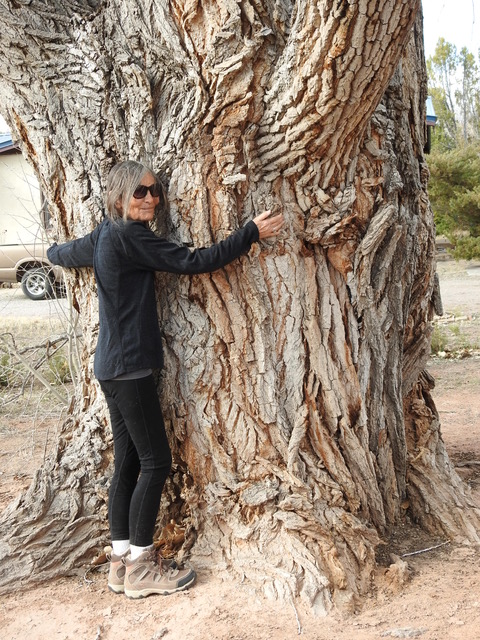
Joyce ZonanaWhen I was growing up, home was the last place I wanted to be. It’s not that ours was an abusive or angry household: both parents loved me and my mother labored to create a calm, clean space to contain us all. It’s just that I felt suffocated.
Part of the problem was that we were immigrants. My parents were struggling to find their way in an alien culture, and, with little else to hold onto, they clung to their customs and traditions. I wanted to be “American,” to mingle with classmates, to venture into the vastness (New York City!) just beyond our door. The Middle Eastern culture from which we hailed had strict rules for women and girls, and my mother expected me to follow them. She herself was an excellent cook, a creative seamstress and scrupulous housekeeper, a devoted and dutiful wife. I rejected all of it, refusing to cook, ripping out seams, balking at my weekly chores of dusting and vacuuming and ironing. Instead I dreamt of life as a writer, a renegade, an outlaw. My role models were hobos and witches and gypsies; more than anything, I yearned to be free, longing to “walk at all risks,” like Elizabeth Barrett Browning’s Aurora Leigh.

Continue reading “Homebound by Joyce Zonana”

Mary’s Return by Sara Wright

Yesterday I learned (NPR) that a third of the oak trees in this country will be dead within 50 years; I also read that our sugary harbingers of spring, the Maples, are dying confirming my own observations. I try to imagine what fall will be like without fire on the mountain.
When I heard that pink dolphins, those denizens of the fresh waters of the Amazon are going extinct, I remembered their gift to me, grateful that I had been present as a receiver. On the last day of a three – year research journey (early 90’s) I was with my guide returning to a place on the river that I loved. It was absolutely calm; my guide and I drifted along a serpentine tributary curtained and dripping with scarlet passionflowers, when a circle of pink dolphins surrounded the dugout.

“I love you,” I repeated the words over and over in a trance-like state glued to the rippling brown water.

Round and round they came surfacing inches away from the side of the boat. Flippers splashing shades of pink and gray.

The Circle of Life was being inscribed in the water.

Now, many years later I am saying goodbye to an enduring friendship with a species I adored…

Around the world, and especially here in the ‘United’ (?) States the virus continues to spike and another strain has been identified, more contagious than the first. Two million people are dead…

Continue reading “Mary’s Return by Sara Wright”

What I Celebrate at Christmas by Carol P. Christ

Though I have not been Christian for many years, I love to decorate my house for the holidays. I have many decorations that I have collected over the years, including a Hummel angel gazing at the Christ child that was my father’s mother’s and a small crocheted Christmas tree given to me by my mother. My Christmas tree is a living one in a pot, and I usually manage to keep it alive on the balcony or outside for several years. One of my hobbies is collecting ornaments for the tree. Among my favorites are glass icicles and snowflakes crocheted by my friend Alexis many decades ago. There are white doves and brown birds that land on the tree branches and glass balls that have come into the stores again in recent years.

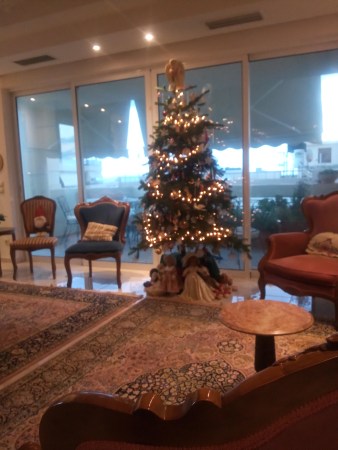
Christmas tree and newly laid carpets

During the years I lived in Lesbos I was always invited to my friend Birgitt’s for a German Christmas Eve dinner with many of her friends. The meal began with fresh cured salmon (gravadlax) with dill sauce prepared by Swedish Christina, followed by meat and and all the trimmings—once it was wild boar and another time venison, but more often beef or turkey. I always brought a spinach salad with pomegranate seeds and special dressing from the Silver Palate cookbook. For dessert there was German Christmas cake called stollen made with nuts, spices, and candied fruit, covered with powdered sugar, as well as a variety of German Christmas cookies and chocolates. On Christmas day, I often went out to a restaurant on with other friends and feasted on Symrna style lamb stuffed with rice, raisins, pine nuts, and parsley, sweetened with orange juice.

Among my most treasured childhood memories are holiday meals at mother’s mother’s house. Continue reading “What I Celebrate at Christmas by Carol P. Christ”

Paying Homage to Hestia by Sara Wright

This morning I was kneeling in front of my new wood stove kindling a fire from hot coals when I felt the presence of the Greek Goddess Hestia, Lady of the Hearth moving through the house. The goddess manifests as a crackling wood fire, and when I kneel before my wood stove to coax coals into flames I feel as if I am paying homage to her.

I have spent two winters without a wood stove, and have missed this ritual fall lighting of the fire, and the knowing that I am participating in ancient practice that extends back far beyond the Patriarchal Greeks to the dawn of humankind. Continue reading “Paying Homage to Hestia by Sara Wright”

May Love Rest You Merry this Solstice, As Darkness Holds Us in Her Grace


I grew up with a beautiful Solstice tradition: the Blue Christmas service. Each year, on or near the darkest night, our churches would offer a ceremony to remember those who had passed that year and hold space for the specific pain of holidays without loved ones we so sorely miss. Christmas itself named a broader pain, of injustice, of our many earthly wounds, and it offered a word of hope, of healing: a vision and promise of justpeace for all Creation. But Blue Christmas was different.

Blue Christmas said, sure – there is much work to do. If we really want to be vessels of a mighty Spirit of Love, we’ve got to roll up our sleeves and get to work! But… not tonight. Tonight, our work is to pause. To look away from the holy preparations of Advent, from the festive and the merry, and from the coming cruciform Birth. To be still. To turn toward pain we do not want to face. To allow ourselves to rest a moment, in Mighty Arms of Love. And to light a candle.

Continue reading “May Love Rest You Merry this Solstice, As Darkness Holds Us in Her Grace”