Running for the President of the American Academy of Religion By Kwok Pui Lan

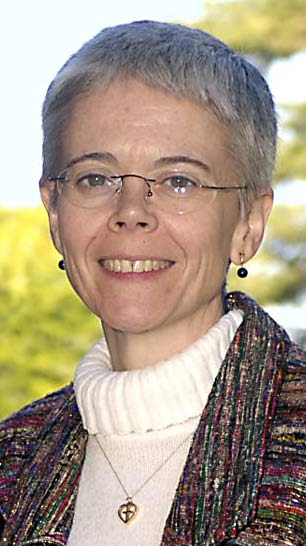
Dr. Kwok Pui-Lan is an internationally recognized scholar and pioneer in Asian feminist and postcolonial theology. She teaches at the Episcopal Divinity School and is the 2011 president of the American Academy of Religion. Dr. Kwok has published extensively and is the co-editor of two volumes Off the Menu: Asian and Asian North American Women’s Religion and Theology (Westminster) and Empire and the Christian Tradition: New Readings of Classical Theologians (Fortress). Her other publications include Postcolonial Imagination and Feminist Theology (Westminster), Discovering the Bible in the Non-Biblical World (Orbis), and Introducing Asian Feminist Theology (Pilgrim).

“Pui Lan, would you be willing to run for the Vice-President of AAR?” the chair of the Nominations Committee of the American Academy of Religion (AAR) called and asked me back in April 2008.

The AAR, with 10,000 members, is the world’s largest professional organization of scholars in religion. The majority of its members are from the U.S., but approximately 17 percent are international scholars from over 70 countries.

It was a great honor to have been nominated—for the Vice-President would be in line to become the President in 2011. The problem was that there would be an election and I would have to compete with another candidate, who happened to be a professor at Harvard University.

I thought, “If I win, that’s good. But what happens if I lose?”  Continue reading “Running for the President of the American Academy of Religion By Kwok Pui Lan”

The Intersection of Care Theory and Public Policy By Christopher Carter

This post is written in conjunction with the Feminist Ethics Course Dialogue project sponsored by Claremont School of Theology in the Claremont Lincoln University Consortium,  Claremont Graduate University, and directed by Grace Yia-Hei Kao.

Christopher Carter is a Ph.D. student in Religion, Ethics, and Society at Claremont Lincoln University, and the Senior Pastor at Compton First United Methodist Church. His interests include Ecotheology, Critical Race Theory, and Christian Social Ethics.

“George Bush doesn’t care about black people!” Music artist Kanye West made these scathing remarks during the NBC telethon “A Concert for Hurricane Relief.” West’s anger toward George W. Bush was the result of the frustration that many people had regarding the lackluster federal response to Hurricane Katrina. Five days after Katrina West was asked to lend his star power to the relief effort. In those five days West, like many of us, watched the news broadcasts incessantly hoping to hear something positive; believing that our country – the United States of America – would not abandon any citizen in their time of greatest need. With the help of news broadcasts that portrayed the displaced African Americans of New Orleans as scavengers at best and criminals at worst, whatever hope the African American community had in our government had faded away.  Thus we arrive at West’s assertion that “George Bush [i.e. the government] doesn’t care about black people.” As much as I agreed with this statement at the time it was made, reevaluating it in light of Nel Noddings seminal work Caring: A Feminine Approach to Ethics and Moral Education (1984) has caused me to reverse my opinion. Indeed, George W. Bush through the actions of the Federal Emergency Management Association (FEMA) showed the world that he did care about black people. Continue reading “The Intersection of Care Theory and Public Policy By Christopher Carter”

RESTORE THE REVENUE STREAMS! By Charlene Spretnak

Charlene Spretnak is one of the Founding Mothers of the Women’s Spirituality movement. She is the author of eight books, including most recently Relational Reality. She is a professor in the Women’s Spirituality graduate program in the Philosophy and Religion Department at the California Institute of Integral Studies. For further information about her books, see www.CharleneSpretnak.com. 

In the 1990s a broad coalition of Christian organizations and development NGOs mounted a successful international campaign known as Jubilee 2000, which pushed for a just resolution to a moral issue: the crushing interest payments on “Third World” development loans that had been forced on those countries in ways that had enriched the Northern banks and drained the South for decades. The campaign resulted in the Heavily Indebted Poor Countries (HIPC) initiative, which provides systematic debt relief for the poorest countries as well as new safeguards to assure that aid money is actually spent on the alleviation of poverty, and also the Multilateral Debt Relief Initiative (MDRI), which offers 100% cancellation of multilateral debts owed by HIPC countries to the World Bank, IMF, and African Development Bank. Continue reading “RESTORE THE REVENUE STREAMS! By Charlene Spretnak”

On the Murders in Norway: The Need for a Multicultural Vision By Starhawk

The following is a guest post written by Starhawk, lifelong activist in peace and global justice movements, a leader in the feminist and earth-based spirituality movements, and author or coauthor of ten books, including The Spiral Dance, The Fifth Sacred Thing, Webs of Power: Notes from the Global Uprising, and her latest, The Last Wild Witch.

Cross posted at Dirt Worship.

This summer has been a whirlwind of teaching permaculture and working on making a movie from my novel, The Fifth Sacred Thing.  But a few days ago I took a break to attend a performance of Guys and Dolls put on by SF Arts Education, in which my fifteen-year old Goddess-child Kore was singing and dancing. SF Arts Ed runs a wonderful program where students from middle schools and high schools put on Broadway musicals, complete with singing, dancing, and a full jazz orchestra.  We had balcony seats behind the stage, so I was looking down on these bright and beautiful young people of all different backgrounds and ancestry, reflecting the multicultural nature of San Francisco itself.   They are a talented bunch, but I also know how hard they work, how much time they rehearse and the discipline they develop.  What a gift it is to have such wonderful youth growing up in our city! Continue reading “On the Murders in Norway: The Need for a Multicultural Vision By Starhawk”

What about “the final frontier?” Saying goodbye to the Space Shuttle Program By Sara Frykenberg

The following is a guest post written by Sara Frykenberg, Ph.D., independent scholar and graduate of the Women Studies in Religion program at Claremont Graduate University.

“It all started when they messed with Pluto,” my husband joked to me as we listened to the NPR report last week about the end of NASA’s Space Shuttle Program.  I imagined a slighted god of the underworld smiting our exploration of the heavens!  “How dare you tell me that Pluto doesn’t count,” he yells, dragging our shuttles out of the sky.  But joking aside, I am really, truly bummed about this new “development” is US space exploration.  The idea that human beings have the ability to travel in outer space is a great source of hope and inspiration for me— but why?  And why am I so bummed?  I decided that I needed to examine these feelings from both a feminist and a spiritual dimension.

Does feminism care about the Space Program?  That is a question, because I really don’t know.  I know particular feminists do.  I know some don’t. Continue reading “What about “the final frontier?” Saying goodbye to the Space Shuttle Program By Sara Frykenberg”

The Sisterhood of the Traveling Pantsuits By Gina Messina-Dysert

Last week Cynthia Garrity-Bond shared a post about Michele Bachmann and the misuse of the word feminism to describe her.  Commenter Kate Barker noted that Bachmann does not self-identify as a feminist, a very important point I think.  It led me to wonder whether there are any women in politics who self-identify as feminist, and while there may certainly be some or even many, I cannot think of any who do so publicly.

During the Democratic National Convention in 2008, Hillary Clinton spoke of working towards women’s rights around the world, putting 18 million cracks in the glass ceiling, and being a member of the “sisterhood of the traveling pantsuits,” but did not directly identify herself as a feminist.  I found Clinton’s membership to this “sisterhood” an interesting method of feminist self-identifying without employing the label.

It seems to me, to call oneself a “feminist” in the world of politics today would be to commit career suicide.  This term has joined the likes of “communist” or “socialist” and is utilized to create fear.  “Feminism” has become the new “F-word” and to self-identify as such, in politics, in religion, and in other spheres, often leads to marginalization. Continue reading “The Sisterhood of the Traveling Pantsuits By Gina Messina-Dysert”

Feminism in Disguise By Cynthia Garrity-Bond

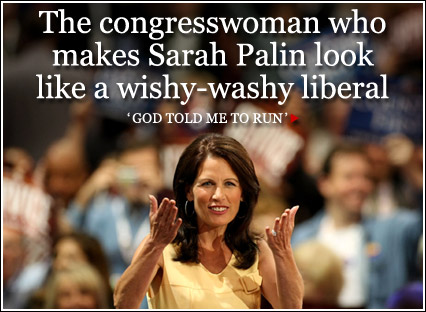
Recently CNN ran a feature article on GOP presidential runner Michele Bachmann, an extreme conservative congresswoman from Minnesota, whose political ideologies are shaped and endorsed by the Tea Party [http://politicalticker.blogs.cnn.com/2011/06/27/michele-bachmann-evangelical-feminist/.]  The article raised the question if Bachmann, like Hilary Clinton, could be considered a feminist icon, with the distinction of Bachmann as an “evangelical feminist.”  While the article gives a brief history of evangelical feminism, starting with the appointment of Christian conservative Elizabeth Dole during the reign of Ronald Reagan, a huge assumption is made by not clarifying what, exactly, is a feminist and what makes one a feminist?  This sin of omission thus renders the term “evangelical feminist” as a binary coupling that locates feminism to a 1970’s reformist notion of women’s equality with men, but men in their shared social status. While Bachmann may object to being identified as a feminist, I find it interesting that the writer for CNN has no difficulty (or sense of clarity) with the consideration of her as a feminist.  What, I wonder, in Bachmann’s political trajectory is considered “feminist”?

In Feminism is for Everybody, author bell hooks takes to task what she identifies as “lifestyle-based feminism” which hooks argues, “suggest[s] any woman could be a feminist no matter what her political beliefs.” Enter Michele Bachmann and her beloved Tea Party. Admittedly the Tea Party is all over the map in their ideology, yet a few constants can be teased out.  For example, they overwhelmingly disapprove of President Obama’s policy of engaging with Muslim countries.  They support Arizona’s immigration laws, feel gay and lesbian couples should not be able to marry, global warming is simply made-up, the repeal of the Health Care legislation, repeal of minimum wage, and reduction or elimination of reproductive rights for women and men.  All of which begs the question, can an individual who invest in a political ideology of extreme nationalism while further excluding those on the margins through racist immigration laws, homophobic fears, classist response to the poor and sick while promoting a misdirected Biblical position of dominance of the earth and its limited resources be consider a feminist?

Recall in the last post Rosemary Radford Ruether’s understanding of feminism as “a critique of patriarchy as a system that distorts the humanity of both women and men.” One form of distortion arises when patriarchy co-opts feminism as power gained through the exploitation and oppression of others.  In what hooks identifies as “power feminism” of the 90’s, wealthy white heterosexual women became the icons of feminist success by appropriating feminist jargon while sustaining their commitment to Western imperialism and transnational capitalism. Which goes back to my initial point, we must clarify what we mean when we use the word feminist or feminism.  Is it a chameleon-like identity or a political movement that seeks to end sexism, exploitation and oppression of women and men? Continue reading “Feminism in Disguise By Cynthia Garrity-Bond”