Getting Tenure, Part I: It Took a Village by Grace Yia-Hei Kao

 “[T]he many sacrifices made for my career have not been borne by me alone….Here are some of the ‘villagers’ to whom I owe a debt of gratitude.”

On December 1, 2011, the full professors at Claremont School of Theology unanimously recommended two of my colleagues and me for tenure. Provided that the Board of Trustees approves their recommendation and two extremes never come to pass (either “financial exigency” compels my institution to start laying off people willy-nilly or I do something professionally or morally egregious enough to be dismissed “for cause”), I now have a job for life! :)  Continue reading “Getting Tenure, Part I: It Took a Village by Grace Yia-Hei Kao”

KARAI KASANG: Rebirthing the Non-Patriarchal Image of God in Kachin Culture by Zau Sam

This  post is written in conjunction with the Feminist Ethics Course Dialogue project sponsored by Claremont School of Theology in the Claremont Lincoln University Consortium,  Claremont Graduate University, and directed by Grace Yia-Hei Kao.

Zau Sam is a first year MA student in Feminist Studies with interests in process theology, ecotheology, feminist and ecofeminist theologies.  He is ethnically Kachin (Jinghpaw) and from Myanmar (Burma). Zau is a minister at Yangon Kachin Baptist Church (in Myanmar) and Academic Dean of the Church-based Bible School there.  

Throughout our Feminist Ethics class, I have been thinking about Mary Daly’s concept of “Goddess” in her Gyn/Ecology: The Metaethics of Radical Feminism.  I don’t believe that there is any sound theological argument that the term “God” itself represents patriarchy. Theologically speaking, if we study the Bible systematically, particularly Genesis 1:27, it is unquestionable that God is associated with both feminine and masculine imagery.  God is imaged as both mother and father. In contrast to this nature, Mary Daly does not merely seek to erase masculine imagery from the term “God,” but the word “God” itself.  However, “Goddess” without the masculine imagery can no longer be the Perfect Goddess, just as “God” without the image of the feminine also remains imperfect.

Continue reading “KARAI KASANG: Rebirthing the Non-Patriarchal Image of God in Kachin Culture by Zau Sam”

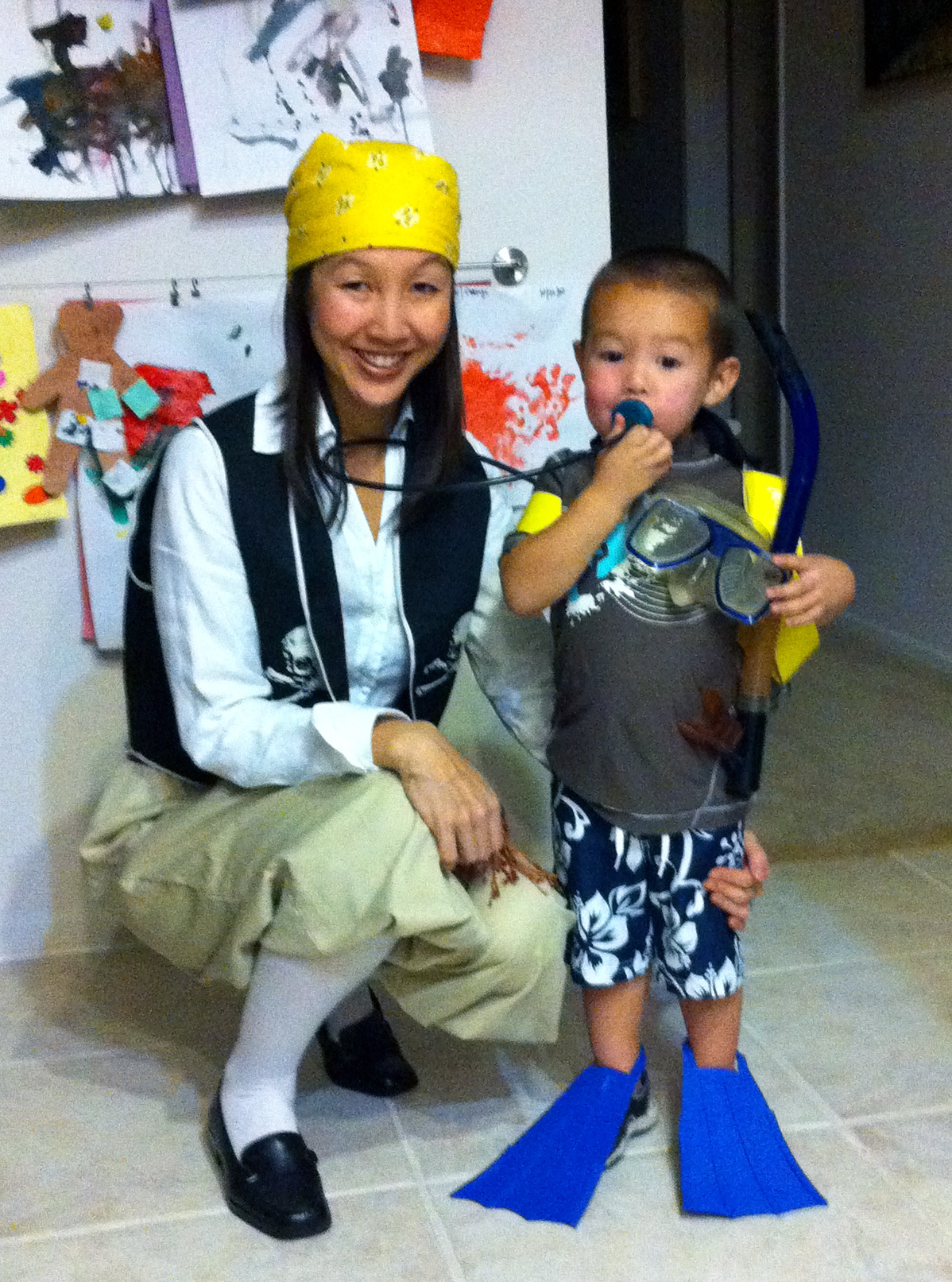
Halloween Matters: An Immigrant Family, Christian, and Feminist Parenting Perspective by Grace Yia-Hei Kao

“I had realized that my parents legitimately had more important things to do than to carve pumpkins or buy costumes. But as a young child, I equated participating in the cultural phenomenon that is Halloween with being an American. I, as a daughter of immigrants, just wanted to fit in and join the fun.”

Continue reading “Halloween Matters: An Immigrant Family, Christian, and Feminist Parenting Perspective by Grace Yia-Hei Kao”

Telling the Truth By Ellen Blue

Ellen Blue, Ph.D., is the author of St. Mark’s and the Social Gospel: Methodist Women and Civil Rights in New Orleans, a story of white Southern women who worked for racial understanding in the early 20th century.  She teaches at Phillips Theological Seminary. 

In And the Gates Opened, a film about the first US women rabbis, one commented that women’s presence in the rabbinate has allowed questions to be raised that went unspoken before. One example was how miscarriage should be ritually observed. A colleague told her he had been in the rabbinate for many years, and no one had ever asked him that question.  She responded that although she had been a rabbi only a few years, she had already been asked several times. The presence of women makes space for the speaking of certain “unspeakable” things and questioning what God might have to do with them, precisely because it is women to whom such things happen.

Women willing to speak openly in other public forums also matter. When Betty Ford died, many voiced gratitude for her helping to dismantle the cultural norm that “nice” women didn’t talk about breast cancer or addiction.     Continue reading “Telling the Truth By Ellen Blue”

The Intersection of Care Theory and Public Policy By Christopher Carter

This post is written in conjunction with the Feminist Ethics Course Dialogue project sponsored by Claremont School of Theology in the Claremont Lincoln University Consortium,  Claremont Graduate University, and directed by Grace Yia-Hei Kao.

Christopher Carter is a Ph.D. student in Religion, Ethics, and Society at Claremont Lincoln University, and the Senior Pastor at Compton First United Methodist Church. His interests include Ecotheology, Critical Race Theory, and Christian Social Ethics.

“George Bush doesn’t care about black people!” Music artist Kanye West made these scathing remarks during the NBC telethon “A Concert for Hurricane Relief.” West’s anger toward George W. Bush was the result of the frustration that many people had regarding the lackluster federal response to Hurricane Katrina. Five days after Katrina West was asked to lend his star power to the relief effort. In those five days West, like many of us, watched the news broadcasts incessantly hoping to hear something positive; believing that our country – the United States of America – would not abandon any citizen in their time of greatest need. With the help of news broadcasts that portrayed the displaced African Americans of New Orleans as scavengers at best and criminals at worst, whatever hope the African American community had in our government had faded away.  Thus we arrive at West’s assertion that “George Bush [i.e. the government] doesn’t care about black people.” As much as I agreed with this statement at the time it was made, reevaluating it in light of Nel Noddings seminal work Caring: A Feminine Approach to Ethics and Moral Education (1984) has caused me to reverse my opinion. Indeed, George W. Bush through the actions of the Federal Emergency Management Association (FEMA) showed the world that he did care about black people. Continue reading “The Intersection of Care Theory and Public Policy By Christopher Carter”

Reflecting on the Construction of Race as our National Identity Shifts By Helene Slessarev-Jamir

The following is a guest post written by Helen Slessarev-Jamir, Ph.D., Mildred M. Hutchinson Professor of Urban Studies at Claremont School of Theology.  Her research focuses on the character of religiously inspired justice work in response to globalization and American empire.  Helene is a member of the Board of Directors and writes for Sojourners; she has authored multiple articles and books including most recently published Prophetic Activism: Progressive Religious Justice Movements in Contemporary America.

Today my son Stephan celebrates his 31st birthday. In the year Stephan was born he was one of very few bi-racial children in the U.S. I personally knew of no one else who had a bi-racial child. His father and I agreed that given the racial realities of the U.S. in 1980, he needed to be raised as an African-American because that was how he would be perceived. We consciously constructed Stephan’s identity as black.

We lived on the Southside of Chicago in an all-black neighborhood. Yet, when he was ready to enter elementary school, I was advised to register him as “white” so that he would have a better chance of being admitted into the local public magnet school. Having resisted any significant plans to desegregate its public schools, the Chicago Board of Education used racial diversity as one of the main criteria for admission into their magnet schools. As a result, Stephan became one of the “white” children in his 1st grade classroom even though all the faces in his school photo were varying shades of brown. Continue reading “Reflecting on the Construction of Race as our National Identity Shifts By Helene Slessarev-Jamir”