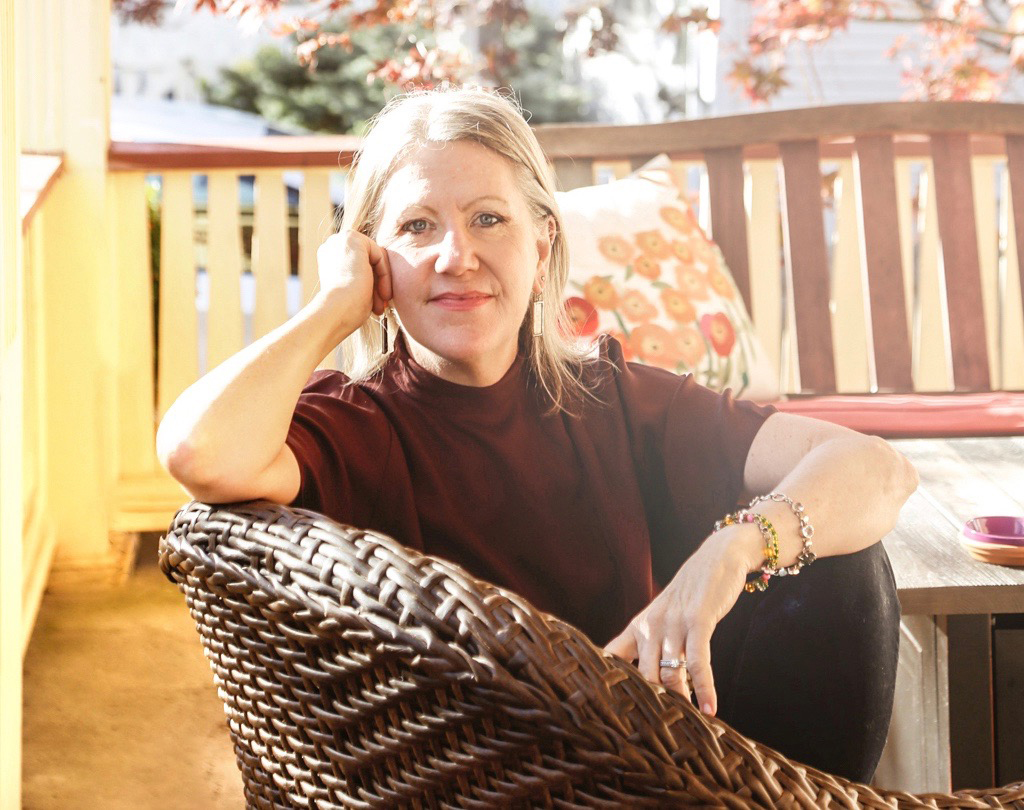
Turning Towards the Light by Sara Wright

I won’t walk in this fog bound soup – the air is so toxic it’s literally not breathable – let’s hope this is not a prelude to the rest of the summer like it was last year. The solstice marks a turning of the wheel in ancient cultures – a process (more than an event) that is still celebrated by countryfolk and by those who are attached to the land.

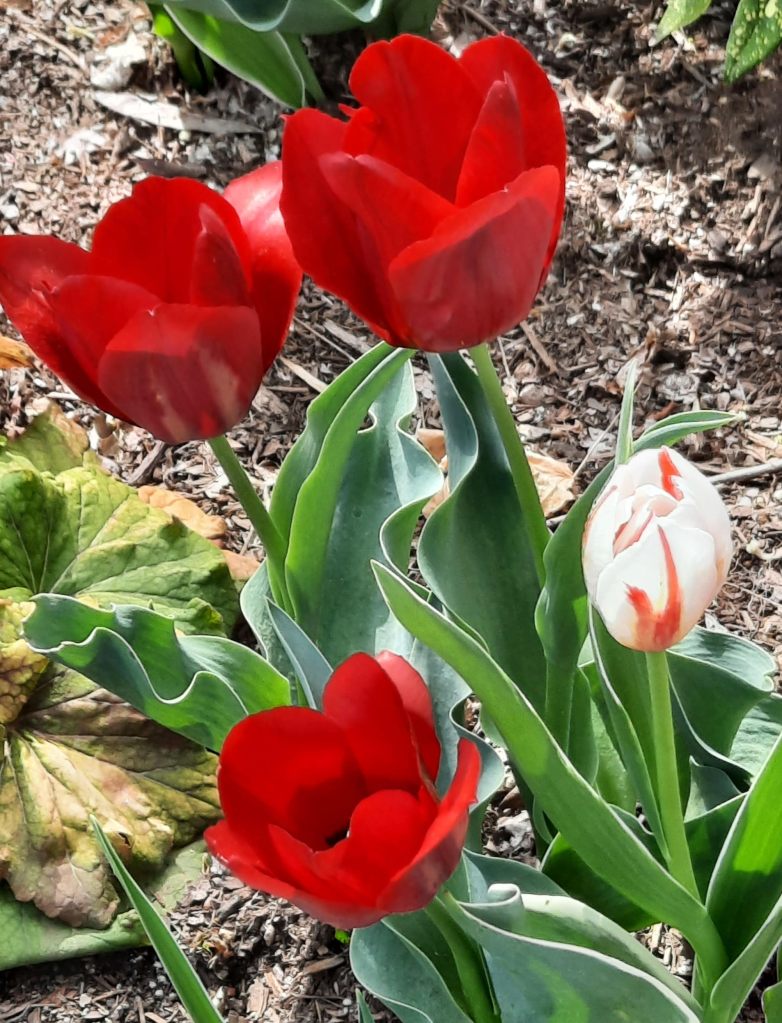
As we move deeper into the first days of summer many (most) wildflowers are seeding up even as the sun’s heat intensifies around the longest, days of the year… As I walk through the woods and around my home, I note the first yellowing leaves dropping from fruit trees, others are shriveling, insect ridden. My beans are spiraling skyward … Overall, a vibrant deep green canopy appears to replace luminous lime, and for a moment luminous fireflies light up the night…gardens are overflowing. Tadpoles are birthing back legs, and within the month a radical transformation will have occurred as miniature froglets begin their adult lives in seeps, brooks. ponds or greenery…  a miracle of Becoming. There is a poignancy to this turning for me. The birds are fledging, birdsong is somewhat muted. Summer heat and fierce thunderstorms mark the season ahead…cold clear waters and forests are calling…

Continue reading “Turning Towards the Light by Sara Wright”

Legacy of Carol P. Christ: RAPE CULTURE IN THE MILITARY AND “TURNING BOYS INTO MEN”

This was originally posted on June 17, 2013

Rape is not something that “just happens” in the military. It is an inevitable product of military training. Unless and until we understand this and change the way soldiers are trained, we will never be able to stop rape in the US military or any other military system.

Propaganda-Poster-Masculinity

The right to rape women of the enemy has been considered one of the “prerogatives” of warriors since the beginning of warfare.  Could “military training” which “turns boys into men” by calling them “girls” or “women” or “gay” in order to break down their self-esteem and remold their “character” as soldiers be one of the reasons rape is such a pervasive problem in the military? Are “boys” being taught that the only way to “prove” their “manhood” is to replace “identification” with women—their mothers, sisters, girlfriends, wives—with a new “identity” as a “dominant male” who “dominates” women and weaker men?  I fear that if we fail to address the “core issue” of “military training,” we will never get to the root of the rape culture that pervades the military.

Continue reading “Legacy of Carol P. Christ: RAPE CULTURE IN THE MILITARY AND “TURNING BOYS INTO MEN””

Priestesses of the Shtetl? The Jewish Women Spiritual Leaders of Eastern  Europe by Annabel Gottfried Cohen

‘Four thousand years ago, in the ancient Near East, women were poets, drummers, scholars, dancers, healers, prophets and keepers of sacred space.’ In The Hebrew Priestess (2015), Rabbi Jill Hammer argues that as the Israelite cult became more centralised, leadership roles were restricted to men and women’s spiritual leadership was gradually repressed. Yet, as Hammer and co-author Taya Shere demonstrate, ‘the remnants of the priestesshood remain for those who seek them out.’ Combining a close reading of biblical and rabbinic texts, alongside other contemporary sources and archaeological evidence, Hammer has identified thirteen models or netivot of feminine Jewish leadership, which she argues persisted, albeit in altered and marginalised forms, into the medieval, early modern and even modern periods. My own research supports these conclusions, suggesting that Hammer’s netivot framework provides a useful lens by which to better understand Jewish women’s traditions that, in a patriarchal culture, have often been marginalised.

Continue reading “Priestesses of the Shtetl? The Jewish Women Spiritual Leaders of Eastern  Europe by Annabel Gottfried Cohen”

Women’s Spirituality in the Film Classroom by Freia Serafina

Freia presenting at Princeton Theological Seminary for the American Academy of Religion, Regional Conference

Recently tasked with the co-creation of a film ethics course, I thought extensively about what material would best serve film acting students in a New York City Conservatory. I wanted to include films that would focus on diversity, story inclusivity, and encourage them to wonder if what they saw on screen impacted or influenced their reality. In a course centered on ethics, religion and spirituality tend to enter the conversation. This entrance provided me with the opportunity to introduce a plethora of women’s visionary films that would be used to examine the spiritual lives of women and how religion and spirituality impact the film narrative. Women’s visionary films can be defined as films that are “written, directed, and/or produced primarily by women and share women’s vision of realities. The sacred themes of these films, in diverse cultural contexts, engage women’s self-reflective use of the arts to convey greater insight into the colors, shapes, emotions, and spirituality of women’s lives—women’s imagination, suffering, hopes, beliefs, and dreams.” (Mara Keller, 2018)

Continue reading “Women’s Spirituality in the Film Classroom by Freia Serafina”

MATILDA JOSLYN GAGE: IN HER NAME, AMERICAN WOMAN WRITER AND ACTIVIST (1826-1898), part 2 by Maria Dintino

part 1 appeared yesterday

Leila Brammer in her book Excluded from Suffrage History: Matilda Joslyn Gage, Nineteenth-Century American Feminist, explains the long-term impact of the dismissal of Gage:

“The loss of Matlida Joslyn Gage from the history of the woman suffrage movement and her ideas from the intellectual history of feminism speaks to the influence of exclusionary processes in social movements as well as their unfortunate consequences…we must remember that Joslyn Gage was intricately involved in the movement, wrote in newspapers and magazines, and published a book, but all these activities and her significant feminist thought had to be re-created and rediscovered nearly a century later”(120).

Continue reading “MATILDA JOSLYN GAGE: IN HER NAME, AMERICAN WOMAN WRITER AND ACTIVIST (1826-1898), part 2 by Maria Dintino”

MATILDA JOSLYN GAGE: IN HER NAME, AMERICAN WOMAN WRITER AND ACTIVIST (1826-1898), part 1 by Maria Dintino

Moderator’s Note: We are pleased to announce that we have formed a co-operation with The Nasty Women Writers Project, a site dedicated to highlighting and amplifying the voices and visions of powerful women. The site was founded by sisters Theresa and Maria Dintino. To quote Theresa, “by doing this work we are expanding our own writer’s web for nourishment and support.” This was originally posted on their site on January 5, 2021. You can see more of their posts here. 

A few weeks back, I came upon a term I had not heard before, the ‘Matilda Effect’. It’s defined as: a bias against acknowledging the achievements of those women scientists whose work is attributed to their male colleagues (Wikipedia). This term was coined by science historian Margaret W. Rossiter in 1993, in her essay The Matthew Matilda Effect in Science.

The Matthew Effect, labeled in 1948 and credited to Robert K Merton, and later to Harriet Zuckerman as well, refers to the way that: eminent scientists will often get more credit than a comparatively unknown researcher, even if their work is similar; it also means that credit will usually be given to researchers who are already famous (Wikipedia).

Continue reading “MATILDA JOSLYN GAGE: IN HER NAME, AMERICAN WOMAN WRITER AND ACTIVIST (1826-1898), part 1 by Maria Dintino”

Gift From the Beyond, part 2 by Sara Wright

Part 1 was posted yesterday

Trillium Rock

My friend Lise sent me some words on the eve of Davey’s birthday (unbeknown to me until the 6th) that reminded me of how often I spoke to him during those months.

The reason I pray to the dead is I trust their timing. They have all the time in the world, after all, and they also see the big picture and the long story. I pray to the dead because, I admit, how little I know, how little I can understand, and how vast the mystery is of the soul.

Let me circle myself with the living who can hold both, with the dead who can hold it all. We are entangled souls…. We are all praying together, with the flowers, the trees, with all that is.” (I substitute talk for pray because that is what I do)

Continue reading “Gift From the Beyond, part 2 by Sara Wright”

Gift From the Beyond, part 1 by Sara Wright

The words came unbidden “go outdoors”. It was dark but I felt my way to the door. I always listen when Nature calls.

Trillime

I had just re -membered that Davey’s birthday was the next day. ‘Happy birthday Beloved’. My little brother would have been 75. I calculated the years with difficulty imagining what it would have been like if he had lived…

Dead at 21 from a self – inflicted gunshot wound, part of me died with my Gemini Twin. I failed him at the end, turning into a parent who was incapable of being emotionally present to listen to a young boy on the verge of adulthood at a time of desperate need. Instead, I parroted my parents’ script, not having developed one of my own…

”You have everything to live for,” I screamed when Davey tried to tell me that he was tired of living.

I no longer blame myself for my inadequacy, but regrets linger on just the same.

It would be eleven years before I was able to begin grieving. Catapulted out of my body at the time of my brother’s death I felt nothing for years as I self- medicated with alcohol and a dreary round of boyfriends while being unable to be emotionally present for my own young children. To feel one must inhabit a body but mine was overflowing with anguish and abandonment. Too dangerous to go there. Isolated and alone, I huddled in my house in silent torment, an absentee mother following the parental script with children of my own.

Continue reading “Gift From the Beyond, part 1 by Sara Wright”

Legacy of Carol P. Christ: Deciding To Leave the Religion of Your Birth–Or Not

This was originally posted on April 29, 2013

What factors are most important in the decisions of spiritual feminists to leave or to stay affiliated with traditional religions? My friend Jewish feminist theologian Judith Plaskow and I discuss these questions in our forthcoming book, Goddess and God in the World. In this excerpt I speak to Judith about our different choices.

For me no longer identifying with Christian tradition had a great deal to do with belief. At some point I came to the conclusion that I did not believe in Christianity’s “core doctrines” of Trinity, incarnation, and salvation through Christ. Yet these doctrines are expressed in the Nicene Creed, which is accepted by all Christians. In an interview at a Christian seminary early on in my career, I was asked to define and defend my Christology or theory of salvation through Jesus Christ. My answer that feminism had put a question mark over all doctrines for me was not considered acceptable.

Continue reading “Legacy of Carol P. Christ: Deciding To Leave the Religion of Your Birth–Or Not”

Bible Believing Church Sign by Michelle Bodle

A dear colleague is retiring from ministry this year. As I often do at times of celebration, I think about the most meaningful conversations, questions, and impact that person has offered my life. As I was thinking of this colleague in particular, what came to mind was a statement that made to him that sparked a conversation that has been ongoing between us for almost a decade: “That church is not for me.”

            My friend talked about driving his motorcycle down a well-traveled highway and seeing church after church. If you know churches, you know that church signs can be anywhere from enjoyable to problematic. Some church signs try to convey witty messages, but they often miss the mark. Other times, a church speaks of its beliefs or current sermon series, using insider churchy language that does not hit with those whom the sign may be trying to reach in the first place. But church signs do exist for a purpose – to catch the eyes of travelers, which was undoubtedly the case with my colleague. 

            “I was driving down this road, and the sign that caught my attention said, ‘Bible Believing Church,’ and I’ve been thinking about that repeatedly,” he stated. I replied that I didn’t need to think about that sign; I knew exactly what it was trying to convey—that I was not welcome there. 

Continue reading “Bible Believing Church Sign by Michelle Bodle”