Sleeping Solo in a Stone Circle by Eline Kieft

What twenty years of pilgrimage taught me about ritual, place and the slow cultivation of perception

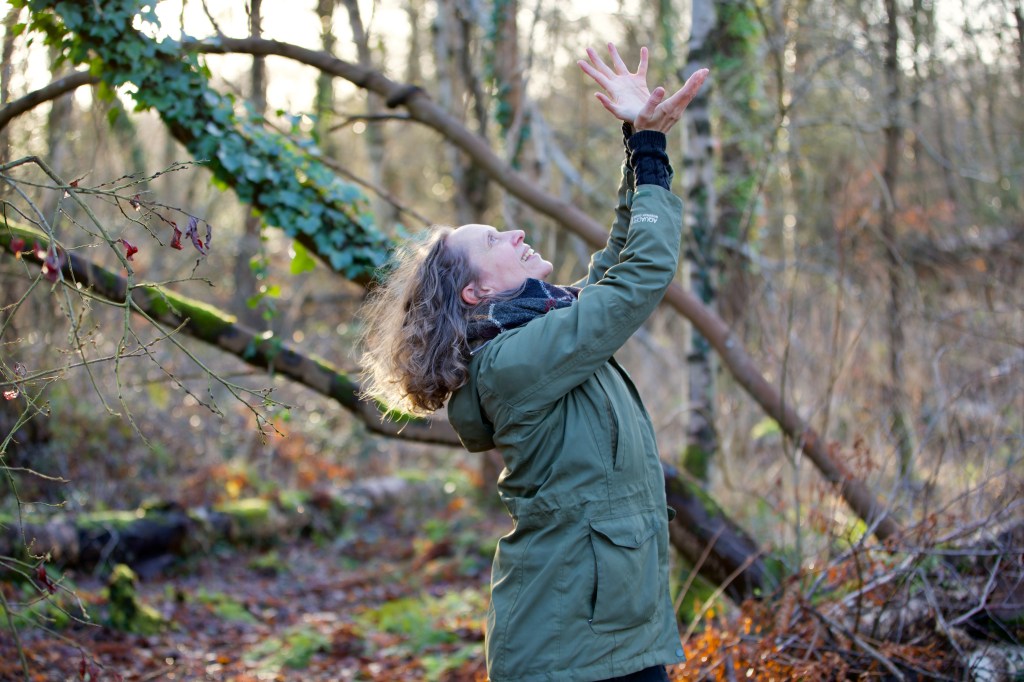
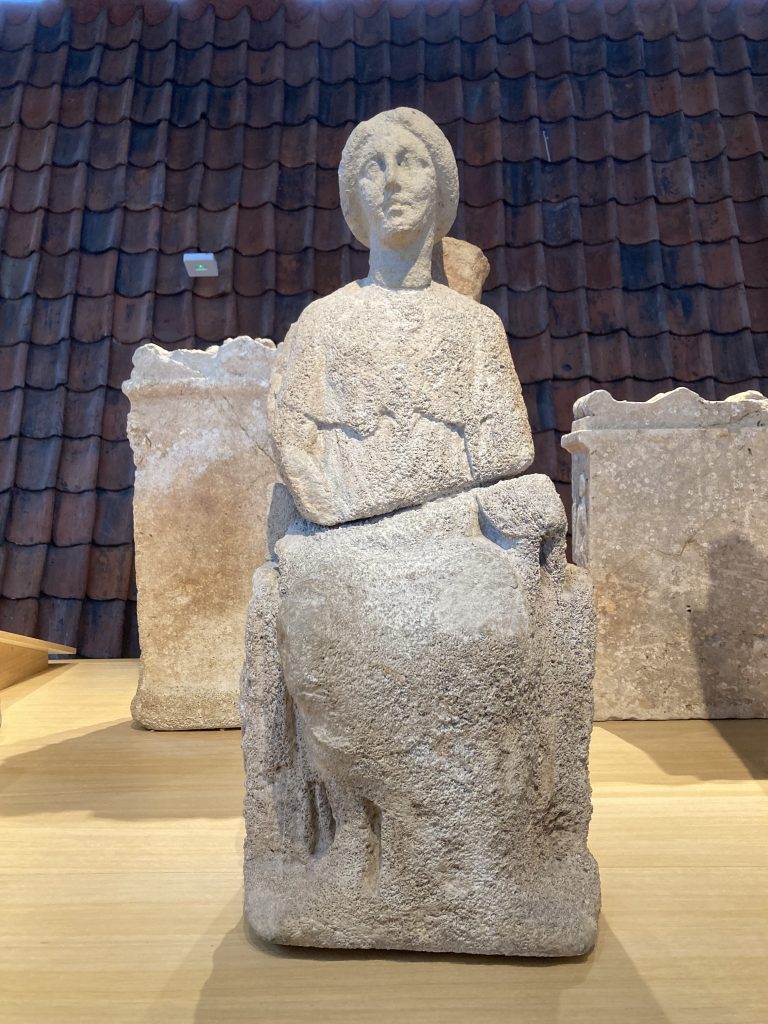
Ever since my first shamanic training in the UK and in Sweden in 2005, I felt called to seek out prehistoric ritual landscapes. Over the past two decades I slept in Neolithic burial chambers, welcomed the dawn from Bronze Age stone circles, wandered among standing stones on remote islands, and returned to certain places often enough that they became companions on my journey.

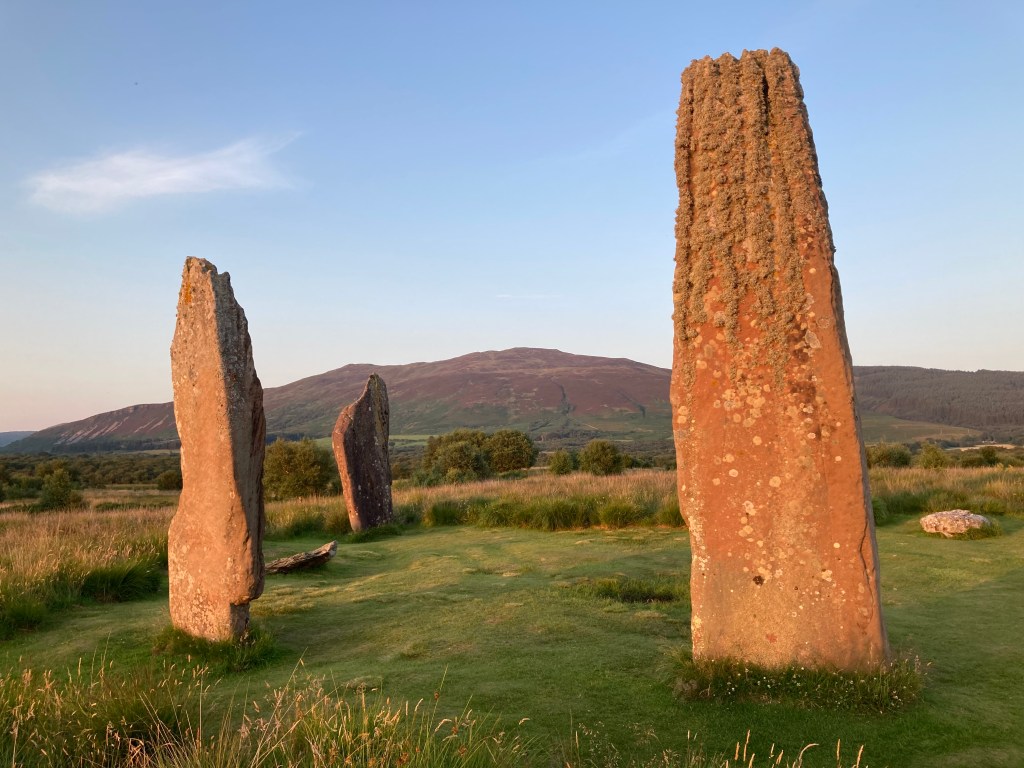
In this post I share some images and insights from my latest overnight solo adventure at the sacred site of Machrie Moors, on the Isle of Arran, Scotland, and how my practice of spontaneous immersion grew into a deep way of listening.

Going to Machrie Moor

Unlike the better-known circles of Avebury or Callanish, Machrie rarely appears in guidebooks outside Scotland, and perhaps because of that, it retains a remarkable intimacy. Sheep wander freely between the stones, the wind rolls in over the hills, and the landscape seems content in itself.

Set between sea and the dramatic outline of Goat Fell (which in the morning light appeared like a reclining goddess, see image below), the Machrie Moor complex consists of six stone circles in open moorland. There are also several other smaller menhirs that seem strategically placed like signposts leading into the site, which you can’t see from very far because it’s in a valley.

Continue reading “Sleeping Solo in a Stone Circle by Eline Kieft”

She Changes Everything She Touches: A Reflection on Love and Loss, part 2 by Sara Wright

part 1 was posted last week, you can read it here.

How much I like clipping by hand. Surprised by this realization I feel satisfaction rising. I was bored by this task as a child. I am delighted to meet a bevy of fat nubbly toads who appear out of the overgrown ground covers and in between sun warmed stones. Both child and ‘old woman’ feel happy that none will get mowed down by a polluting gas guzzling machine. The Peace of this Land that we belong to steals over us. Less is more. I’ll tackle the patch of bracken later, or maybe not until tomorrow. In this weather   accomplishing one simple chore a day is enough.

Well not quite. I am creating a serpentine path of fieldstone that stretches from my front door to meet the path that climbs the hill. My original intention was to have someone ‘more professional’ do the work, but they were too busy so here I am, an almost eighty-one-year-old woman, creating a mosaic out of cracked stone! ‘I am the artist’ I say, as I carry a few more irregular rocks down from the huge pile sitting in front of the garage eyeing the mosaic for the perfect fit. Illumination strikes when wind hits the stones. Blowing seeds, withered crabapple bits, pine needles and leaves into the cracks I see what is happening. Small plants like violets, creeping charlie, ground ivy, and catmint will find niches in the soil that is being created before my eyes.  Mosses will follow in the shade. Ah, Nature is going to help me craft a unique and imaginative fieldstone floor. Each time it rains the stones flatten out becoming more stable. That same feeling of satisfaction steals over me again. Vaguely I think that I may be doing something else besides laying stones in an artistic way and trusting that Nature will fill in the cracks, but I am not clear just what this might be. All I know is that it doesn’t matter how long this project takes. Process has taken precedence. This much feels just right.

Continue reading “She Changes Everything She Touches: A Reflection on Love and Loss, part 2 by Sara Wright”

Nature and the Body Were Never the Enemy

Reflecting on the contradictions of modern life, this essay explores how both wilderness and female embodiment became culturally suspect within Western thought. Drawing on themes of estrangement, relational ontology and kinship, it considers how practices of attention, presence and nature connection may help us return to a deeper sense of belonging.

Continue reading “Nature and the Body Were Never the Enemy”

On Active Waiting, Counting the Omer, and Our Connection to Nature.

We wait.  We wait for the bus.  We wait for the spring to return. We wait for our first cup of coffee (or tea?  Do people actually wait for tea?) in the morning.  We wait at traffic lights.  We wait for test results.  We spend a lot of our lives waiting.

We also can’t wait.  To be 5 and a half.  To be an adult.  To start the school year.  To spend time with our friends.  To go on vacation.  To find a (new) (better) job.  We wait for a better world.  Waiting can be fraught with anything from nervous energy to debilitating anxiety.

This waiting happens for both seemingly insignificant but also profound reasons.  However, waiting does not mean inaction.  It does not mean that we sit around hoping something will happen for us or to us.  Yes, there are some aspects of life we cannot change or hurry the results.  Yet, there are many parts of waiting that require our active participation.

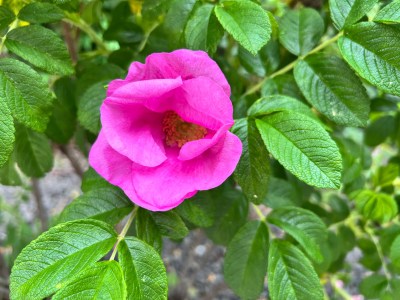
Author’s photograph of a rose.
Continue reading “On Active Waiting, Counting the Omer, and Our Connection to Nature.”

From the Archives: Fireless Altars and Crone Encounters By Barbara Ardinger

This was originally posted on Nov 10, 2021

We’ve just entered November, the beginning of winter, the season of darkness. Twenty-odd years ago, I led a group of students through the Wheel of the Year in a class I called Practicing the Presence of the Goddess. (I also wrote a book with the same title.

At Imbolc (February 1), we held a divination party at Louise’s house. At Beltane (May 1), we met at Rose’s house, painted our faces, created wreaths of fresh flowers to embody our summer wishes, and then carried our wreaths of flowers through the streets of Huntington Beach to the ocean, where we cast them into the tide. At Lammas (August 1), we harvested our gardens and cooked a feast in my kitchen.

Continue reading “From the Archives: Fireless Altars and Crone Encounters By Barbara Ardinger”

Hospicing Hope Continued by Sara Wright

Part 2, You can read last week’s post here.

Lucy relaxing

Walking over to Hope’s gravestone early the next morning, I immediately noted the passionflower was still open. Very Unusual. But then, crucifixion and abandonment by someone this dog loved characterized the last two months of Hope’s life, the dark side  associated with the mysterious power that permeates this wild vine and flower. When this passionflower started blooming profusely in the house months before ki’s time, I felt the threat looming…

A few minutes later after the sun cast her fire over the hillside where Hope’s body lay, masses of golden swallowtails dipped and soared around her grave. Oh, that’s when I felt Hope surrounding us with love. I am well she told me and flying with the butterflies as you can see…

 The earth moved beneath my feet.

  One month later swallowtails continue to fly around Hope’s grave.

Continue reading “Hospicing Hope Continued by Sara Wright”

Hospicing Hope by Sara Wright

9/30/2012 – 6/11/2025

  6/12

Part One

Hope in March 2025

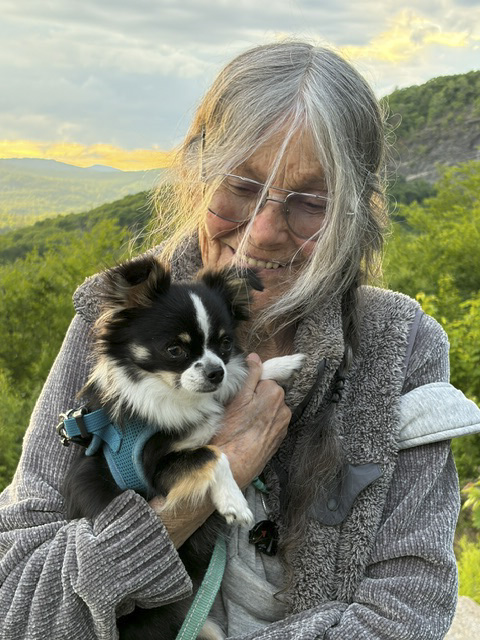
Hope’s black eyes pierced my soul- body as she stood staring through me, ears erect. It was time. Are you sure? Yes. She lay back down. I immediately got up.

 Walking helps me to process what I must do. A half an hour later I called.

A numbing drive, walking into a room lit with three candles, and a brief wait before the two kindly women appeared.

Hope washed my tearful face as I held her, reminding me that we would never be separated. For thirteen years she had showered me with kisses beginning each day and again at night before we slept. A long low sigh, before Hope took her last breath. Her body suddenly felt limp, heavy in my arms. I didn’t need anyone to tell me that her heaped up overflowing heart had ceased to beat.

  Lucy, her twelve year old adopted sister peered anxiously at me as I looked down at her, eyes perplexed. Seconds later Lucy’s pencil thin tail went limp as the knowing seeped in. As usual we conversed beneath words.

A blurry drive home.

Continue reading “Hospicing Hope by Sara Wright”

Legacy of Carol P. Christ: What Was Your Childhood Religious Tradition And Do You Still Follow It?

This post was originally published on Nov. 26th, 2012

Recently, in an interview with the Women’s Living History Project of Claremont Graduate University, I was asked: What religious tradition did you identify with as a child and how did it impact your childhood? and: Is your tradition the same today that you had when growing up?

I was surprised that the interview questions didn’t ask anything about feminism, experiencing exclusion in patriarchal religions, or belief.  My religious and political convictions, which are intertwined, have alienated me from family members.  Therefore, I was suspicious of questions that seemed to have been formulated by someone for whom religion and family go together, and for whom believing or not believing (!) did not seem to be an important issue.

After expressing criticism of the questions, I agreed to work with them.  My answer to the first question was that I did not have a single religious tradition as a child. I had four.  Continue reading “Legacy of Carol P. Christ: What Was Your Childhood Religious Tradition And Do You Still Follow It?”

Pedukei: A Complex Interplay of Human, Divine, and Nature.


The Torah portion for March 29, 2025 was Pekudei.  Quite often this parshah is read with Vayakhel.  In fact, I have written about the double parshah Vayakhel-Pekudei before, but focused on only Vayakhel.  Now, it is Pekudei’s turn.  

Like parshot Vayakhel and Terumah as well as other parts of the book of Exodus, Pekudei focuses on haMishkan, the Tent of Meeting or Tabernacle.  We read about calculations concerning the costs of the constructions, instructions for the high priest’s garb, ritual washing of hands and feet, when to construct and when to deconstruct the traveling tent, and the divine presence as cloud and fire.  In Pekudei, we have no mention of women and no mention of any Israelite men barring the religious elite: Moses, Aaron, and Aaron’s sons.  Therefore, in this commentary, I want to discuss contradictions in the text that speak to (1) a consistent divine presence that seems to argue against animal sacrifices and (2) the ways in which the natural world and Israelite religion went hand-in-hand.

Continue reading “Pedukei: A Complex Interplay of Human, Divine, and Nature.”

On Terumah: (Eco)Feminist Reflections on the Tent of Meeting.

The Torah portion for March 1, 2025 is Terumah, consisting of Exodus 25:1-27:19. Terumah in Hebrew means contribution, and the parshah begins with the deity requesting donations from the willing hearts of men (yes, only men) of precious metals and stones as well as dyes, linens, wools, and skins.  Terumah then provides the instructions for how to build the Tent of Meeting and all of its components.  In this post, I want to focus on four aspects of the post from the perspective of ecofeminism and feminism: beauty; the misuse of nature, the concept of home, and the indwelling or immanence of the divine.

Continue reading “On Terumah: (Eco)Feminist Reflections on the Tent of Meeting.”