Feminist Ethics and Corporate America By Sharon Andre

This post is written in conjunction with the Feminist Ethics Course Dialogue project sponsored by Claremont School of Theology in the Claremont Lincoln University Consortium,  Claremont Graduate University, and directed by Grace Yia-Hei Kao.

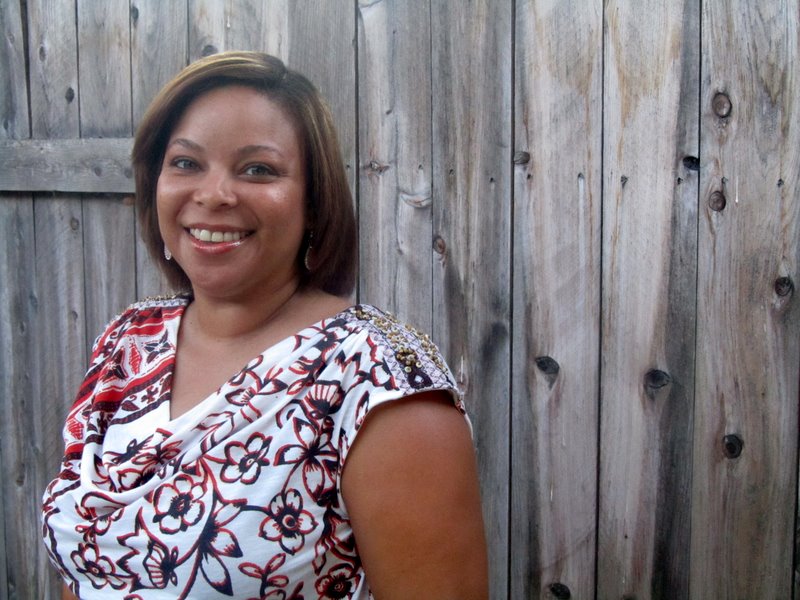
Sharon Andre is completing her Master of Arts in Spiritual Formation  at Claremont School of Theology.  Her interests include biblical studies, business organization and computer science.

Many thoughts, feelings and realizations are being triggered inside me as I listen, read and learn about Feminist ethics.  I sense that my CST deconstruction is in full swing with no end in sight!   This is my first course at CST following twenty-five plus years in Corporate America, and just about everything is new to me.  I’m a white gay Mennonite woman raised Catholic with formal education in computer science and business.    Continue reading “Feminist Ethics and Corporate America By Sharon Andre”

Playing Safe: BDSM & The Ethics of Justice and Care By Angelina Duell

This post is written in conjunction with the Feminist Ethics Course Dialogue project sponsored by Claremont School of Theology in the Claremont Lincoln University Consortium,  Claremont Graduate University, and directed by Grace Yia-Hei Kao.

Angelina Duell is a 3rd year Masters of Divinity candidate whose focus is Religious Education. Her hope is to become the Director of Religious Education at a Catholic parish and to develop curriculum that emphasizes developing the skill sets to find your own answers rather than providing dogmatic answers. She also loves horror movies and baking. 

It is Wednesday night and I am alone in the house. It’s dark; the only light is from my computer screen. A bead of sweat rolls from my brow as I delicately tap the keys of my keyboard until two words stare back at me, “BDSM feminism.” With bated breath, I press enter.

Just kidding.  Continue reading “Playing Safe: BDSM & The Ethics of Justice and Care By Angelina Duell”

The Black Horse: Our Bodies, Our Selves By Carol P. Christ

Carol P. Christ is a founding mother in the study of women and religion and women’s spirituality.  Her books include  She Who Changes , Rebirth of the Goddess, and the widely used anthologies she co-edited with Judith Plaskow, Womanspirit Rising and Weaving the Visions.  She has been thinking about the black horse in relation to the online course she is teaching on Ecofeminism in the Women’s Spirituality Program at California Institute of Integral Studies.

“The driver…falls back like a racing charioteer at the barrier, and with a still more violent backward pull jerks the bit from between the teeth of the lustful horse, drenches his abusive tongue and jaws with blood, and forcing his legs and haunches against the ground reduces him to torment.  Finally, after several repetitions of this treatment, the wicked horse abandons his lustful ways; meekly now he executes the wishes of his driver, and when he catches sight of the loved one [i.e. his master] is ready to die of fear.”

I can’t seem to get this image from Plato’s Phaedrus quoted in Val Plumwood’s Feminism and the Mastery of Nature out of my mind or my body these days.  The other day I tried to read the above passage to a friend and my body became so tense that I accidentally cut off the phone connection—twice.  Now while I am writing my muscles are tight, and I am beginning to get a headache.  I cannot get the image of the black horse out of my mind because “she” (I know that Plato’s horse was a “he”) has lived in my body for as long as I remember.  She probably first took root in my body when I began to fear my father’s discipline.  She became bigger and stronger every time someone or something in culture told me that my body and the feelings of my body were bad, that I as a girl or woman was unworthy, that the things I cared about were not important, that my thoughts were wrong.   Continue reading “The Black Horse: Our Bodies, Our Selves By Carol P. Christ”

Telling the Truth By Ellen Blue

Ellen Blue, Ph.D., is the author of St. Mark’s and the Social Gospel: Methodist Women and Civil Rights in New Orleans, a story of white Southern women who worked for racial understanding in the early 20th century.  She teaches at Phillips Theological Seminary. 

In And the Gates Opened, a film about the first US women rabbis, one commented that women’s presence in the rabbinate has allowed questions to be raised that went unspoken before. One example was how miscarriage should be ritually observed. A colleague told her he had been in the rabbinate for many years, and no one had ever asked him that question.  She responded that although she had been a rabbi only a few years, she had already been asked several times. The presence of women makes space for the speaking of certain “unspeakable” things and questioning what God might have to do with them, precisely because it is women to whom such things happen.

Women willing to speak openly in other public forums also matter. When Betty Ford died, many voiced gratitude for her helping to dismantle the cultural norm that “nice” women didn’t talk about breast cancer or addiction.     Continue reading “Telling the Truth By Ellen Blue”

I’m Back and Writing About Loss By Monica A. Coleman

The following is a guest post written by Monica A. Coleman, Ph.D., scholar and activist committed to connecting faith and social justice. An ordained elder in the African Methodist Episcopal Church, Coleman has earned degrees at Harvard University, Vanderbilt University and Claremont Graduate University.  Coleman is currently Associate Professor of Constructive Theology and African American Religions and Co-Director of the Center for Process Studies at Claremont School of Theology in southern California. She is also Associate Professor of Religion at Claremont Graduate University.

This post was originally posted on the Beautiful Mind Blog.  Be sure to check in there and follow Monica’s journey.

If you’ve been following my blog, you’ve noticed that I’ve been really quiet lately. Like all summer lately. What’s up with that? Well, part of the challenge of writing about depression is that it’s hard to write when depressed, and, well, depression happens. Continue reading “I’m Back and Writing About Loss By Monica A. Coleman”

The Real “Affirmative Action”: Musings on Race, Class, and Gender in the Religious Academy By Egon Cohen

Egon Cohen is completing a Master of Theological Studies at Brite Divinity School in Fort Worth, Texas. His research focuses on gender, sexuality, ethics, hermeneutics, and the intersection of liturgical praxis, politics, and BDSM. Egon likes riding motorcycles and eating Haribo gummibears. He is secretly still 10.

According to the Association of Theological Schools, about 1,100 students enroll in Ph.D. programs at divinity schools and seminaries in theU.S.each year. And hundreds more enroll in graduate religion departments at public and secular universities. However, job postings on theAmericanAcademyof Religion, Society of Biblical Literature, and Chronicle of Higher Education websites suggest that in any given year there are only around 200 tenure track openings in the field. Needless to say, those of us who are pursuing academic careers in religious studies/theology are a bit nervous (and if we aren’t nervous, we should be).

So, when we’re not discussing all the fun God stuff, grad students in theology often spend our time talking about our (lack of) job prospects. And there’s a common refrain that almost invariably surfaces. My friend, Mr. X, put it rather eloquently the other day: “My dad told me that I need to work extra hard—after all, I’m a white male trying to get a job in theology.”  Continue reading “The Real “Affirmative Action”: Musings on Race, Class, and Gender in the Religious Academy By Egon Cohen”

Sex as a Weapon of Sustenance By Cynthia Garrity-Bond

In a recent news post, Filipino women went on a sex-strike in order to bring peace to their rural village. “If you keep fighting,” warned Aninon E. Kamanza, of the Dado Village Sewing Cooperative, “you’ll be cut off.”  It seems their cottage business of sewing made delivery of goods impossible due to road closures brought on by the violence.  Dado, the small village of 102 families mostly affected, is a town caught in the middle of conflict involving clan feuds and land disputes. The ultimatum worked. Vis-a-vie the threat of no sex, the violence has stopped, the roads are open, the women can transport their goods and the men can breath a sigh of relief.  What I find so compelling about this story is the resourcefulness of the women. Understanding the nature of their men, they used the withholding of sex to accomplish their goal of making money in order to care for their families.  But what about the reverse? What about women who also use sex to care for their families but as sex workers?  Can we applaud their resourcefulness and commitment to family as well?   Continue reading “Sex as a Weapon of Sustenance By Cynthia Garrity-Bond”

The Intersection of Care Theory and Public Policy By Christopher Carter

This post is written in conjunction with the Feminist Ethics Course Dialogue project sponsored by Claremont School of Theology in the Claremont Lincoln University Consortium,  Claremont Graduate University, and directed by Grace Yia-Hei Kao.

Christopher Carter is a Ph.D. student in Religion, Ethics, and Society at Claremont Lincoln University, and the Senior Pastor at Compton First United Methodist Church. His interests include Ecotheology, Critical Race Theory, and Christian Social Ethics.

“George Bush doesn’t care about black people!” Music artist Kanye West made these scathing remarks during the NBC telethon “A Concert for Hurricane Relief.” West’s anger toward George W. Bush was the result of the frustration that many people had regarding the lackluster federal response to Hurricane Katrina. Five days after Katrina West was asked to lend his star power to the relief effort. In those five days West, like many of us, watched the news broadcasts incessantly hoping to hear something positive; believing that our country – the United States of America – would not abandon any citizen in their time of greatest need. With the help of news broadcasts that portrayed the displaced African Americans of New Orleans as scavengers at best and criminals at worst, whatever hope the African American community had in our government had faded away.  Thus we arrive at West’s assertion that “George Bush [i.e. the government] doesn’t care about black people.” As much as I agreed with this statement at the time it was made, reevaluating it in light of Nel Noddings seminal work Caring: A Feminine Approach to Ethics and Moral Education (1984) has caused me to reverse my opinion. Indeed, George W. Bush through the actions of the Federal Emergency Management Association (FEMA) showed the world that he did care about black people. Continue reading “The Intersection of Care Theory and Public Policy By Christopher Carter”

RESTORE THE REVENUE STREAMS! By Charlene Spretnak

Charlene Spretnak is one of the Founding Mothers of the Women’s Spirituality movement. She is the author of eight books, including most recently Relational Reality. She is a professor in the Women’s Spirituality graduate program in the Philosophy and Religion Department at the California Institute of Integral Studies. For further information about her books, see www.CharleneSpretnak.com. 

In the 1990s a broad coalition of Christian organizations and development NGOs mounted a successful international campaign known as Jubilee 2000, which pushed for a just resolution to a moral issue: the crushing interest payments on “Third World” development loans that had been forced on those countries in ways that had enriched the Northern banks and drained the South for decades. The campaign resulted in the Heavily Indebted Poor Countries (HIPC) initiative, which provides systematic debt relief for the poorest countries as well as new safeguards to assure that aid money is actually spent on the alleviation of poverty, and also the Multilateral Debt Relief Initiative (MDRI), which offers 100% cancellation of multilateral debts owed by HIPC countries to the World Bank, IMF, and African Development Bank. Continue reading “RESTORE THE REVENUE STREAMS! By Charlene Spretnak”

In the Beginning was . . . The Mother By Carol Flinders

The following is a guest post written by Carol Flinders, Ph.D.  Carol received her Ph.D. in Comparative Literature from the University of California at Berkeley and has authored multiple books including Enduring Grace: Living Portraits of Seven Women MysticsAt the Root of This Longing: Reconciling a Spiritual Hunger and a Feminist Thirst;  Rebalancing the World; and Enduring Lives. She has taught at UC, Berkeley, and at the Graduate Theological Union in Berkeley and gives workshops and lectures nationally and internationally. Carol is a Fellow of the Spirituality and Health Institute, Santa Clara University and is currently adjunct faculty at the Sophia Center in Culture and Spirituality, Holy Names University, Oakland, CA.

The word matrix  comes, of course, from the Latin root mater. Its literal meaning is “womb,” but it can also refer to the fine-grained portion of aggregate rock, the “glue” that holds the rest together.

It was probably this latter sense of the word that a resident of Littleton, Colorado, had in mind when she was interviewed after the Columbine shootings in 1999 and spoke about “the stunning erosion of our social matrix.”

When we get it right, she seemed to be saying, in the family, or community, or nation, an invisible container or force field comes into being that keeps everyone safe.  Something like this was implicit in the definition of matriarchy Peggy Sanday offered here a few weeks ago: “A balanced social system in which both sexes play key roles founded on maternal social principles.”  Continue reading “In the Beginning was . . . The Mother By Carol Flinders”