MATILDA JOSLYN GAGE: IN HER NAME, AMERICAN WOMAN WRITER AND ACTIVIST (1826-1898), part 2 by Maria Dintino

part 1 appeared yesterday

Leila Brammer in her book Excluded from Suffrage History: Matilda Joslyn Gage, Nineteenth-Century American Feminist, explains the long-term impact of the dismissal of Gage:

“The loss of Matlida Joslyn Gage from the history of the woman suffrage movement and her ideas from the intellectual history of feminism speaks to the influence of exclusionary processes in social movements as well as their unfortunate consequences…we must remember that Joslyn Gage was intricately involved in the movement, wrote in newspapers and magazines, and published a book, but all these activities and her significant feminist thought had to be re-created and rediscovered nearly a century later”(120).

Continue reading “MATILDA JOSLYN GAGE: IN HER NAME, AMERICAN WOMAN WRITER AND ACTIVIST (1826-1898), part 2 by Maria Dintino”

MATILDA JOSLYN GAGE: IN HER NAME, AMERICAN WOMAN WRITER AND ACTIVIST (1826-1898), part 1 by Maria Dintino

Moderator’s Note: We are pleased to announce that we have formed a co-operation with The Nasty Women Writers Project, a site dedicated to highlighting and amplifying the voices and visions of powerful women. The site was founded by sisters Theresa and Maria Dintino. To quote Theresa, “by doing this work we are expanding our own writer’s web for nourishment and support.” This was originally posted on their site on January 5, 2021. You can see more of their posts here. 

A few weeks back, I came upon a term I had not heard before, the ‘Matilda Effect’. It’s defined as: a bias against acknowledging the achievements of those women scientists whose work is attributed to their male colleagues (Wikipedia). This term was coined by science historian Margaret W. Rossiter in 1993, in her essay The Matthew Matilda Effect in Science.

The Matthew Effect, labeled in 1948 and credited to Robert K Merton, and later to Harriet Zuckerman as well, refers to the way that: eminent scientists will often get more credit than a comparatively unknown researcher, even if their work is similar; it also means that credit will usually be given to researchers who are already famous (Wikipedia).

Continue reading “MATILDA JOSLYN GAGE: IN HER NAME, AMERICAN WOMAN WRITER AND ACTIVIST (1826-1898), part 1 by Maria Dintino”

Gift From the Beyond, part 2 by Sara Wright

Part 1 was posted yesterday

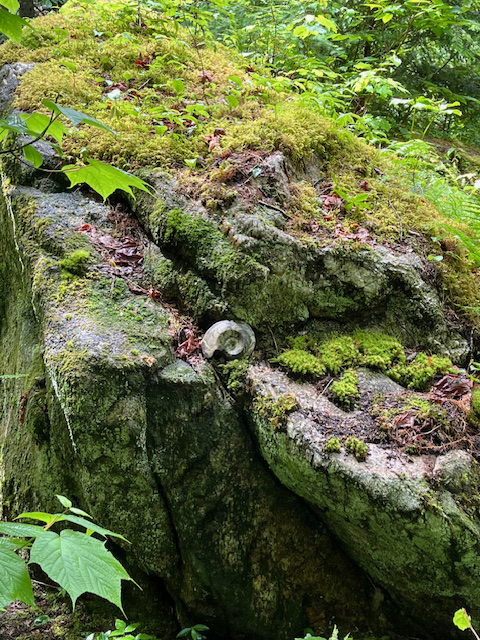
Trillium Rock

My friend Lise sent me some words on the eve of Davey’s birthday (unbeknown to me until the 6th) that reminded me of how often I spoke to him during those months.

The reason I pray to the dead is I trust their timing. They have all the time in the world, after all, and they also see the big picture and the long story. I pray to the dead because, I admit, how little I know, how little I can understand, and how vast the mystery is of the soul.

Let me circle myself with the living who can hold both, with the dead who can hold it all. We are entangled souls…. We are all praying together, with the flowers, the trees, with all that is.” (I substitute talk for pray because that is what I do)

Continue reading “Gift From the Beyond, part 2 by Sara Wright”

Gift From the Beyond, part 1 by Sara Wright

The words came unbidden “go outdoors”. It was dark but I felt my way to the door. I always listen when Nature calls.

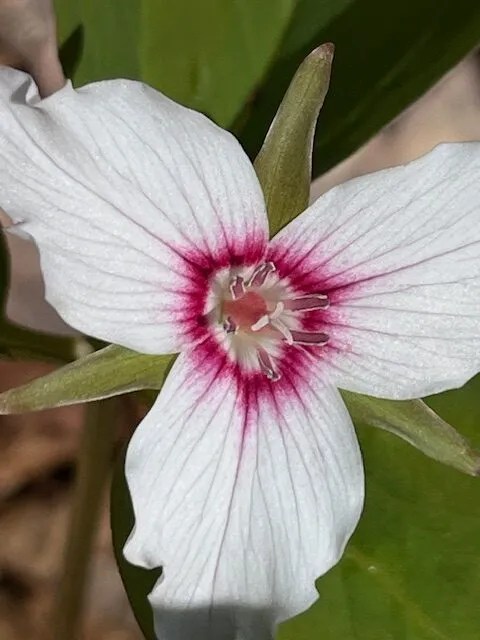
Trillime

I had just re -membered that Davey’s birthday was the next day. ‘Happy birthday Beloved’. My little brother would have been 75. I calculated the years with difficulty imagining what it would have been like if he had lived…

Dead at 21 from a self – inflicted gunshot wound, part of me died with my Gemini Twin. I failed him at the end, turning into a parent who was incapable of being emotionally present to listen to a young boy on the verge of adulthood at a time of desperate need. Instead, I parroted my parents’ script, not having developed one of my own…

”You have everything to live for,” I screamed when Davey tried to tell me that he was tired of living.

I no longer blame myself for my inadequacy, but regrets linger on just the same.

It would be eleven years before I was able to begin grieving. Catapulted out of my body at the time of my brother’s death I felt nothing for years as I self- medicated with alcohol and a dreary round of boyfriends while being unable to be emotionally present for my own young children. To feel one must inhabit a body but mine was overflowing with anguish and abandonment. Too dangerous to go there. Isolated and alone, I huddled in my house in silent torment, an absentee mother following the parental script with children of my own.

Continue reading “Gift From the Beyond, part 1 by Sara Wright”

Legacy of Carol P. Christ: Deciding To Leave the Religion of Your Birth–Or Not

This was originally posted on April 29, 2013

What factors are most important in the decisions of spiritual feminists to leave or to stay affiliated with traditional religions? My friend Jewish feminist theologian Judith Plaskow and I discuss these questions in our forthcoming book, Goddess and God in the World. In this excerpt I speak to Judith about our different choices.

For me no longer identifying with Christian tradition had a great deal to do with belief. At some point I came to the conclusion that I did not believe in Christianity’s “core doctrines” of Trinity, incarnation, and salvation through Christ. Yet these doctrines are expressed in the Nicene Creed, which is accepted by all Christians. In an interview at a Christian seminary early on in my career, I was asked to define and defend my Christology or theory of salvation through Jesus Christ. My answer that feminism had put a question mark over all doctrines for me was not considered acceptable.

Continue reading “Legacy of Carol P. Christ: Deciding To Leave the Religion of Your Birth–Or Not”

Bible Believing Church Sign by Michelle Bodle

A dear colleague is retiring from ministry this year. As I often do at times of celebration, I think about the most meaningful conversations, questions, and impact that person has offered my life. As I was thinking of this colleague in particular, what came to mind was a statement that made to him that sparked a conversation that has been ongoing between us for almost a decade: “That church is not for me.”

            My friend talked about driving his motorcycle down a well-traveled highway and seeing church after church. If you know churches, you know that church signs can be anywhere from enjoyable to problematic. Some church signs try to convey witty messages, but they often miss the mark. Other times, a church speaks of its beliefs or current sermon series, using insider churchy language that does not hit with those whom the sign may be trying to reach in the first place. But church signs do exist for a purpose – to catch the eyes of travelers, which was undoubtedly the case with my colleague. 

            “I was driving down this road, and the sign that caught my attention said, ‘Bible Believing Church,’ and I’ve been thinking about that repeatedly,” he stated. I replied that I didn’t need to think about that sign; I knew exactly what it was trying to convey—that I was not welcome there. 

Continue reading “Bible Believing Church Sign by Michelle Bodle”

Sojourner Truth: Part Two: The Speech and the Sojourner Truth Legacy Plaza by Beth Bartlett

Part one was posted yesterday.

Most of us are quite familiar with Sojourner Truth’s “Ain’t I a Woman?” speech as recorded by Frances Gage several years later, with its powerful “ain’t I a woman” refrain.  However, the actual speech as transcribed at the time by Marius Robinson, while similar in content, does not contain the refrain. Rather, Truth simply states that she is “a woman’s rights” woman.[i]  It is unlikely that she spoke in the southern dialect Gage used in her transcription, since Truth grew up knowing only Dutch, eventually learning English as spoken in New York, and probably spoke with a Dutch accent. Much of the content in the Gage version was fabricated – such as the statement that she bore thirteen children, when she only had five children, though she did cry out in a mother’s grief when she learned that her only son, Peter, had been illegally sold south to Alabama.[ii]

Continue reading “Sojourner Truth: Part Two: The Speech and the Sojourner Truth Legacy Plaza by Beth Bartlett”

Sojourner Truth: Part One: Her Life by Beth Bartlett

On May 29th, 1851, a striking, 6’ tall, African American woman rose to speak at the Women’s Rights Convention being held in Akron, Ohio. There Sojourner Truth gave her famous “Ain’t I a Woman Speech.” 

Originally named Isabella, and known as “Bell,” Truth was born into slavery in 1797, the second youngest of James (“Bomefree” – Dutch for “tree”) and Elizabeth (“Mau-mau Bett”) who were enslaved by a wealthy Dutch man, Johannes Hardenbergh, Jr., who had a large estate in Ulster County, New York, which was inherited by his son, Charles, when Truth was just an infant. Upon the death of Charles, at the young age of nine, she was sold at auction to John Nealy, where she “suffered ‘terribly-terribly’ with the cold”[i] and beatings. In her own words, “He whipped her till the flesh was deeply lacerated, and the blood streamed from her wounds – and the scars remain to the present day.”[ii] She prayed for deliverance, and soon after was sold to a fisherman and tavern owner, Martinus Schriver, where she led “a wild, out-of-door kind of life,” carrying fish, hoeing corn, foraging roots and herbs for beer.  Only a year later she was sold again to John J. Dumont, where she lived out the remainder of her enslavement until her emancipation by the State of New York in 1828. She described her life there as “a long series of trials” which she did not detail “from motives of delicacy,  . . . or because the relation of them might inflict undeserved pain on some now living”[iii] whom she regarded with esteem. Knowing the conditions of enslaved women, we can deduce what those trials entailed. Despite her affections for a man on a neighboring estate, who was beaten to death for visiting her when she was sick, she was forced to marry a much older man, Thomas, also enslaved by Dumont, with whom she bore five children. Because Dumont reneged on his promise to free her, she walked away with her infant daughter in 1827 and was taken in by the Van Wegener family where she lived for the next year. 

Continue reading “Sojourner Truth: Part One: Her Life by Beth Bartlett”

HOPE IS NOT OPTIMISM by Esther Nelson

Recently, I discovered a quote attributed to Seamus Heany, Irish poet and playwright (1939-2013), perhaps best known for winning the Nobel Prize for Literature in 1995. This is that quote:

“Hope is not optimism, which expects things to turn out well, but something rooted in the conviction that there is good worth working for.”

The origin of the quote, though, might be a paraphrase from a former president of the Czech Republic, Václav Havel (1936-2011), who reportedly said: “It [hope] is not the conviction that something will turn out well, but the certainty that something makes sense, regardless of how it turns out.” Heany seems to have used Havel’s conception of hope and voiced it poetically.

Regardless of the origin of the saying, I like Heany’s poetic expression.

Continue reading “HOPE IS NOT OPTIMISM by Esther Nelson”

Summer Emergence by Molly Remer

Sometimes I wonder what I do in a year. Then I remember that I watch nighthawks migrate and coneflowers go to seed. I find Monarch caterpillars small and brave on persistent milkweed. I travel over miles of stone and moss, sometimes on my knees, seeking mushrooms and cackling with glee. I kneel in the violets, purple and white and yellow, and inhale great breaths of wild plum. I keep dates with as many sunsets as I can. I walk and walk and walk, carry leaves of mullein, crow feathers, bits of chicory, coreopsis, evening primrose, and wild rose home to press into the pages of my prayers. I pick blackberries with the bees and feel butterfly tongues on the skin of my wrist. I reach for wild raspberries under both thunder and sun. I slide down hillsides with muddy feet and antlers in my hands. I make eye contact with hummingbirds and turtles and deer and raccoons. I watch both fawns and nestlings grow. I learn how woodpeckers talk to their babies and the purring sound crows make at the compost pile when they think they’re unobserved. I lose and recollect myself more times than I can count, hold myself steady and let myself dissolve. I create new things with a wild veracity of devotion that sometimes threatens to consume me. And, I learn over and over again every day, how much it matters to bear witness, to what means to sit with myself in the temple of the ordinary each day, calling my attention back, recommitting to being here for it all, settling back into center again and again, rebuilding and renewing, witnessing and weaving, losing and finding, laughing and crying, refusing to surrender my joy and trusting that somehow it matters to be here, to see everything I can.

Continue reading “Summer Emergence by Molly Remer”