Goddess Pilgrimage to Crete – Reborn! by Laura Shannon

Thirty years ago, Carol P. Christ founded her Goddess Pilgrimage to Crete, which she wrote about in her book A Serpentine Path: Mysteries of the Goddess (original 1995 title Odyssey with the Goddess) and in numerous posts on this site over the years. She led over 40 groups of women Pilgrims to encounter the history and sacred sites of the peaceful, egalitarian civilisation of Bronze Age Crete. 

Here, the Goddess-honouring culture of Old Europe survived the longest, when patriarchal Indo-Europeans were taking over in the ‘Kurgan waves’ Marija Gimbutas has described. The sophisticated artworks of ‘Minoan’ Crete show women in positions of honour and authority, and do not depict violence, slavery, or war. People celebrated at ceremonial centres, made offerings at cave and mountain shrines, and worshipped the Goddess in sacred trees and stones.

Snake Goddess, Knossos, Crete, ca. 1600 BCE [photo: Heraklion Archaeological Museum]

As many readers know, before Carol passed away, she asked me to take on the leadership of her Goddess Pilgrimage, and to serve as her literary executor and the director of her Ariadne Institute for the Study of Myth and Ritual. Deeply moved by her trust in me, and guided by very clear dreams I received around the time of her death, I accepted Carol’s request. In October 2022, after a three-year delay due to the pandemic, the Goddess Pilgrimage to Crete was reborn. 

Continue reading “Goddess Pilgrimage to Crete – Reborn! by Laura Shannon”

Remembering Carol Christ – and going forward in her footsteps by Laura Shannon

When I was 17, I left the US to live and study in Europe for a year, with Womanspirit Rising crammed into my backpack. This book, edited by Carol P. Christ and Judith Plaskow, gave me the solid ground of a feminist worldview which honoured women, the body, and the earth. My favourite chapter was the last one: Carol’s foundational essay ‘Why Women Need the Goddess’, where she writes, ‘The simplest and most basic meaning of the symbol of Goddess is the acknowledgement of the legitimacy of female power as a beneficent and independent power’. These words, indeed that whole essay, became the pole star for my journey through the world, helping me name what was missing in both the academic world and the world of dance.

Continue reading “Remembering Carol Christ – and going forward in her footsteps by Laura Shannon”

A Serpentine Path: The Dance Is About To Begin by Carol P. Christ

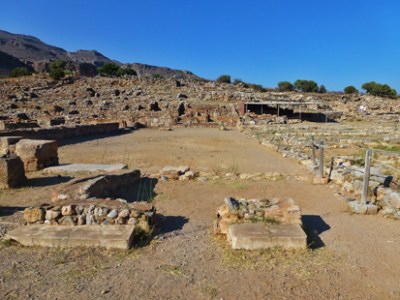
carol-p-christ-photo-michael-bakasEntering the archaeological site of Kato Zakros, which includes a Sacred Center and part of a town on a small hill above it, I felt too tired to continue with the others. As we passed a stone bench to the north and west of the open court, I lay down and closed my eyes. I don’t know if I actually slept, but when I opened my eyes, I was in a trance.

I could see the air vibrating, and as I looked up the hill, I could almost see women walking up and down the stepped paths. My eyes were fixed on the path where women I could not quite see with my eyes went about their daily tasks. After a while Cathleen joined me. “I don’t want to talk,” I said, “but if you sit quietly beside me, you will see women walking in the village. She sat down and said nothing, but smiled broadly and nodded when I asked her if she could see what I saw.

After a while, I moved and sat facing the Central Court. I could still see the vibrations of the air, and as I looked across the court, I felt a sense of anticipation. “The dance is about to begin,” I told Cathleen when she joined me a few minutes later. She nodded. It was an hour before sunset, and the ancient stones were bathed in the last light of day. Jana and Patricia were talking in the central shrine room, while the others leaned over the ancient cistern watching turtles and turtle babies dive into the water and emerge again. “The dance is about to begin,” I said again.
kato-zakros-central-court

Cathleen exclaimed, “I see the path of the dance rising up in the court. It looks like the Processional Paths we saw at Knossos, Phaistos, and Malia. Do you see it?” Though I did not “see” it, I was moved to the court, where I could “feel” it. I raised my arms, bent at the elbows, and slowly wove my way back and forth across the court, following a snakelike path I could feel with my feet. As I neared the center of the court, I almost lost my footing. Turning to face Cathleen, I gazed at her solemnly, sending energy through my palms. Cathleen raised her arms in greeting. I turned again, continuing to trace the snakelike path, back and forth, across the court. When I reached the south end of the court, I turned again to greet Cathleen and Robin who was sitting next to her. “The path you followed was exactly the path I saw,” Cathleen cried out with astonishment. “You were meant to stop at the center.” “It was an ancient path,” I said solemnly. 

Jana and Patricia, who must have been watching, entered from the northwest entrance to the court. Jana was leading, arms upraised, tracing another path, walking with the same slow rhythm in which I had been led. I turned and slowly walked towards Jana until I could sense the energy flowing between our palms, then we softly touched our upraised hands. Carol, Patricia, Cathleen, and Robin formed a circle around us, and stood, arms upraised one in each of the four directions. Sensing that we were meant to share the blessing with the others, Jana and I turned, walking slowly towards the women standing in the north and south, feeling the energy, then touching their palms. Back to the center, we turned to the east and the west, completing the ceremony. As we turned to face each other again, I whispered to Jana, “We were called to this dance. It was an initiation.”

. . .

[A few days later] thinking of the snakelike path I had traced on the ancient stones, my eyes fixed on the gold snake bracelet on my right arm. I reviewed the many meanings the symbol of the snake held in ancient cultures. Goddess temples were used for storing grain, the harvest returned to She who presided over it. Snakes were guardians of the temples, eating the mice and rats that came to take the grain. The coiled snake and the snake biting its tail are symbols of wholeness. Snakes shedding their skins are images of rebirth and regeneration. Snakes hibernate under the earth and are reborn. But there was more: the rhythm of the snake in movement. I picked up a pen and wrote: “a serpentine path.”

These words described our initiation in the dance at Zakros: the serpentine path is the path of life, a snakelike, meandering path, winding in and out, up and down, with no beginning and no end, into the darkness, into the light. There is no goal, only the journey.

A cycle was coming to completion in my life. Through hard work and amazing grace, I found my way back to the Goddess, to myself. The mystery that was revealed to me as my mother died was unfolding in my life. Love had never abandoned me and never would. The Goddess would be with me at every turn in the path, and in that knowledge. I could give up control and open myself to life.

***
a-serpentine-path-amazon-coverThis is an excerpt from A Serpentine Path, Carol P. Christ’s newly released, moving memoir of transformation. Order it now in paperback or on Kindle. Carol’s other new book written with Judith Plaskow is Goddess and God in the World: Conversations in Embodied Theology. Carol also wrote the first Goddess feminist theology, Rebirth of the Goddess.

Join Carol on a Goddess Pilgrimage to Crete in 2017. Save $200.

Read two more the chapters in the book: Mysteries and Dionysian Rites.

Thanks to Judith Shaw for the cover art “Downward Serpent.”

If the paperback is unavailable on Amazon, you can order it from Barnes and Noble.

 

FAR Press Publishes A Serpentine Path: Mysteries of the Goddess by Carol P. Christ

carol-p-christ-photo-michael-bakasThis is a great day for me as I announce the publication of A Serpentine Path: Mysteries of the Goddess. It is the first —but certainly not the last—book from the new FAR Press, directed by Gina Messina and Xochitl Alvizo, two of the founders of www.feminismandreligion.com. The release of my book is the fruit of friendship and collaboration that has been nourished in the blog community. I hope you will join with us in celebrating our joint venture by ordering the book, telling your friends about it, sharing it Facebook and Twitter (links below), reviewing it on Amazon, and letting Gina and Xochitl know if you can review in a magazine, journal, or blog.

Here is an excerpt from the preface to whet your appetite.

*

A Serpentine Path is a story that begins in despair and ends in rebirth and regeneration. It depicts a turning point in my life, a psychological and spiritual breakthrough that opened me to living the rest of my life in grace and joy. Though I am tempted to say it was a journey from darkness to light, that would be inaccurate, for mine was a journey into the darkness and out again. The path of life is never straight or narrow, and the circle of light and darkness is never-ending.

When I began the journey described in A Serpentine Path, I did not feel loved, I did not want to live, I could not write, and I believed the Goddess had betrayed my faith. As I completed the book, I knew I was loved, I wanted to live, I was writing, and I understood that the Goddess had never abandoned me. Though my life has had its ups and downs since then—as all lives do—I have never forgotten that I am loved, I have wanted to live, I have not stopped writing, and I feel the Goddess ever-present in my body, in my breath, and in my connections with the living and the dead. Though my story is deeply personal, my struggles with love and death, trust and control, are widely shared.

A story of finding the Goddess, A Serpentine Path is part of a growing genre that is developing as women explain to themselves and others why they left the patriarchal religions of their origins for a more nourishing spiritual vision that affirms both women and the earth. A Serpentine Path documents the first of the Goddess Pilgrimages to Crete I have been leading twice a year since then. For the women who have traveled with me, it will evoke many memories. For those who have dreamed of a pilgrimage to the Goddess, it offers an opportunity to imagine the journey. I now know a great deal more about ancient Crete, the folklore and customs of traditional Crete, and the rocks, trees and plants of Crete, than I did when I began. But I learned the mystery on my first pilgrimage. Because we are all deeply connected to each other, I know that the path to the mystery I discovered is not mine alone.


a-serpentine-path-amazon-coverBe among the first to order A Serpentine Path, Carol P. Christ’s moving memoir of transformation. Carol’s other new book written with Judith Plaskow is Goddess and God in the World: Conversations in Embodied Theology. Carol also wrote the first Goddess feminist theology, Rebirth of the Goddess.

Join Carol on a Goddess Pilgrimage to Crete in 2017. Save $200.

Read two of the chapters in the book: Mysteries and Dionysian Rites.

Thanks to Judith Shaw for the cover art “Downward Serpent”

A-mazing Grace by Carol P. Christ

carol p. christ photo michael bakasA few days ago I received a message out of the blue on Facebook:

Thank you for your accepting my friend request. I am fighting to find my way out of depression during a life transition as I move into retirement from my years of work as an educator. I look forward to your book this spring. I have long called myself a Goddess feminist having struggled with patriarchal Christianity since my youth, but have felt abandoned by the Goddess for many years now. I’m not sure how I found you today. I stumbled onto a blog from you on your book while googling something else. Your words gave me a spark of hope. Laurel

In my blog I said that when I began to write A Serpentine Path, I felt abandoned by the Goddess. I wrote back, hoping that sharing what I had learned on my journey would be helpful.

The short answer is that the Goddess has never abandoned any of us. However, She does not have the power to make everything turn out as it could be or should be or we wish it would be. Hers is the power to inspire but not to control. If you have been unhappy, She is with you, She understands your pain, and She will be with you as you seek to find your way. I hope this doesn’t sound too preachy. It is from the heart of my experience. Take care of yourself.

I immediately received an answer back.

Thank you. Those were just the words I needed to hear with my heart. I am “too much in my head,” having spent a life in academia.

This interchange got me thinking about how we import toxic ideas from traditional theologies into what we believe are new religious worldviews. In this case the toxic idea is omnipotence—the idea that the Divine Power is in control of everything. It follows from this that the Divine Power can answer our prayers. If the Divine Power does not answer our prayers, there must be a reason. The reasons we give are many, including: because we are sinful and unworthy or because the ways of God are not our ways. We sometimes conclude, as Laurel and I did: the Divine Power simply does not care about me.

The prominence of magic in Wicca, the most widely known form of contemporary Goddess religion, can contribute to this feeling of abandonment. The Western occult or magical tradition teaches that there are practices, including rituals and spells, through which we can manifest our wills and achieve our deepest desires. In Goddess practice rituals and spells are directed to or through the Goddess. In this situation, it can feel logical to blame the Goddess when, after working very hard and doing every ritual and spell we can think of, our will or desire is not manifested. “Why me,” the child within us asks. “Why has the Goddess abandoned me?”

In the story I tell in A Serpentine Path, I felt precisely that. What I learned was that the Goddess had never abandoned me. She had been with me all along. Where I went astray was in believing that the world could become as I wanted it to be.

The world is made up of a multiplicity of wills, including my will and the will of the Goddess, but also the wills of every other individual, human and other than human, who has lived or is living now. If individuals, human and other than human, have the power to affect the world, then even the Divinity cannot have all the power. This means that Her power (and our power) is the power to influence the world, but not to determine or control it. This is one of the key metaphysical insights of process philosophy, but it is also an existential truth.

The Divine Power is not omnipotent. And neither am I. It may seem odd to put these two statements together. Yet they are mirror images: both ideas deny the reality that a multiplicity of wills have shaped and continue to shape the world we experience. The world really is not at my beck and call. Not even the Goddess gets that.

I would never have said that I believed that the world revolved around me. Stating it so baldly makes it clear how silly idea that idea is. For me “enlightenment” came when I realized—really understood—that the world is not “about me.” Once I gave up having to have what I thought I needed to have, I found, felt, and experienced love and beauty all around me. This truly is a-mazing grace. To feel love and beauty is not to deny suffering. Yet much of our suffering is caused by ideas about how life should be, as Laurel recognized, by living too much in the thoughts of our heads.

Email from Laurel Tangen-Foster, Ph.D.

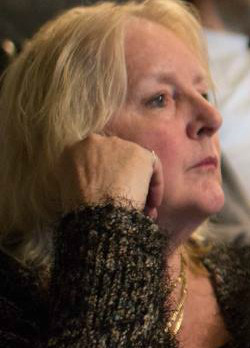
Carol P. Christ is author or editor of eight books in Women and Religion and is one of the Foremothers of the Women’s Spirituality Movement. She leads the Goddess Pilgrimage to Crete in Spring and Fall. Photo of Carol by Michael Bakas.

A Serpentine Path Cover with snakeskin backgroundA Serpentine Path: Mysteries of the Goddess will be published by Far Press in the spring of 2016. A journey from despair to the joy of life.
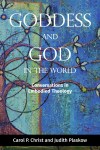
Goddess and God in the World: Conversations in Embodied Theology with Judith Plaskow will be published by Fortress Press in June 2016. Exploring the connections of theology and autobiography and alternatives to the transcendent, omnipotent male God.

Announcing A Serpentine Path: Mysteries of the Goddess by Carol P. Christ

carol p. christ photo michael bakas“The serpentine path is the path of life, a snakelike, meandering path, winding in and out, up and down, with no beginning and no end, into the darkness and into the light.”

As the year draws to a close, I am putting the finishing touches on A Serpentine Path: Mysteries of the Goddess. In the spring of 2016 it will be published by the Far Press, founded by Gina Messina-Dysert.  A Serpentine Path is the original title of the memoir of my journey from despair to the joy of life on the first Goddess Pilgrimage to Crete. It was published in 1995 as Odyssey with the Goddess, a title chosen by the publisher.

A Serpentine Path marked a turning point in my life and in my career as a writer. During the time described in my memoir I had fallen into a deep despair, sparked by the end of a marriage, the end of a love affair, and disappointment in my career. Hoping to make a fresh start, I moved to Greece. Not surprisingly, my despair followed me there. Nonetheless, as I would learn, I made the right decision, for as my Greek therapist was to tell me, I needed to learn to live in my body, not my head, and Greece was the place to learn that.

I was at a crossroads in my spiritual quest. I left Christianity for Goddess feminism, yet I felt the Goddess had abandoned me. I had a contract to write the first Goddess thealogy, but as I said in a speech at I gave at Harvard Divinity School just before I made the decision to move to Greece, I was not sure of the meaning of the symbol of the Goddess. Is Goddess a personal being who cares about the world? Or the name we give to the cycles of birth, death, and regeneration in nature? My inability to answer this question led my editors to return draft of my Goddess thealogy with the comment that something was missing. Continue reading “Announcing A Serpentine Path: Mysteries of the Goddess by Carol P. Christ”

Dionysian Rites by Carol P. Christ

In today’s blog, I offer an excerpt from A Serpentine Path: Mysteries of the Goddess. The setting is Zaros, Crete, the time of year is mid-October.

We had a scrumptious dinner of fresh fish, salad, fried potatoes, local amber-colored wine, and tiny olives.  Later the two waiters, Themis and Nikos, bearing another pitcher of wine, sat down at our table.

They told us they were best friends and had just gotten out of the army. When they discovered that we were writers, the two young men were intrigued. “Our village has a very interesting history and many interesting customs,” they told us. “If you would like to come back and write about it, we will introduce you to all of the old people.” This conversation was in Greek, but I translated for Naomi. “This must indeed be a very interesting village,” I said to her, “because when they learn that I am a writer, most Greek men will say ‘write about me, I have a very interesting story.’ These men, in contrast, want us to write about their village.”

When we finished our wine, the young men offered to give us a lift back to our hotel on their motorbikes, suggesting we could have a coffee at the hotel bar. When we got to the hotel, they didn’t stop. “What happened?” I asked. “The bar wasn’t open at the hotel, so we’re looking for another place.” I wondered what Naomi, perched on the back of a motorbike and unable to speak Greek, must be thinking—especially since she was afraid of the unknown. We drove through the town and turned down a dirt road, arriving at the Zaros water factory. “We wanted to show you this,” they said sheepishly. “People drink our water all over Crete.” “O.K., “Naomi said, “but then you must take us back.” There were a few workers on the night shift, and the boys told us they had worked there too, before going into the army.

making rakiLeaving the factory, we continued down the dirt road heading away from the town. “Where are we going?” I asked, wondering what we had gotten ourselves into. “Just a minute,” Themis said, as he got off the bike in front of what looked like a small house in the middle of nowhere. “We need to go back,” Naomi said definitively. “Yes, I already said that,” I answered. “Come inside,” Themis beckoned. “We want to show you how they make the raki (the colorless alcoholic drink that had been offered to us in shot glasses us after meals). This is the still,” he continued, as he showed us into a small dark room with a glowing fire. “After the wine is pressed, they put the skins and stems into barrels like those you see in the corner. The mixture takes six weeks to ferment, and then they bring it to a still, where it is heated over a fire. The steam that rises is directed through long curved pipes, and comes out as raki,” he said, pointing to various parts of the mechanism. Continue reading “Dionysian Rites by Carol P. Christ”

Mysteries by Carol P. Christ

Savor an excerpt from A Serpentine Path: Mysteries of the Goddess:

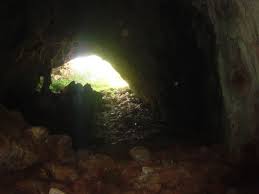
Finding ourselves together in Crete after attending a conference, four friends and I set out to visit the caves of Eilitheia in Amnissos and Agia Paraskevi in Skoteino. As we drove along the coast toward Amnissos, I recalled that caves have been understood as sacred from the dawn of religion. When people knew the earth as their mother, the cave, the opening in the earth was her vagina and womb, the passageway to her deepest mysteries, the secrets of birth and rebirth.

Eilitheia Cave entranceThe Eilitheia Cave is in the hills above the ancient port of Amnissos. We arrived in the morning, accompanied by the guard who came with us to unlock the gate. The cave has one large, long room, with a wide mouth, and a low ceiling. There is a belly stone near the entrance that women rubbed to insure conception. Near the center of the cave, in shadowy darkness, are two stalagmites, one squat and the other tall, surrounded by the remains of ancient walls that enclosed the sacred space. The guard told us that they were worshipped as the Mother, seated, and the Daughter, standing. Their heads were chopped off with the blow of an ax. In the back of the cave there are small pools of water, used for healing

Eilitheia Cave -- StalactitesAs our eyes adjusted to the darkness, we felt that we too had entered into the womb of the Mother. Naomi sat by the Daughter stalagmite, while I leaned against the Mother. We chanted to Her and sang, aware of the bemused but accepting presence of the guard, who retreated to the entrance of the cave. As we turned to leave, Mara crouched at the cave’s entrance to take a picture, her short, full body the image of the Mother Goddess, her wispy blonde hair capturing the light, crowning her like a halo. Slowly, we emerged from the cool depths, the place of ancient mysteries, into the light and warmth of the midday sun.

We visited the Skoteino Cave late in the day, after lunch and a refreshing swim in the sea. To reach the cave, we ascended into the mountains, passed through the small village of Skoteino, and turned right down a dirt road. Above the cave is a small church dedicated to Agia Paraskevi, the patron saint of eyesight. I had been to the cave eleven years earlier with my husband, Roger, on the saint’s name day, July 26th. That day the locals celebrated first in the church, where they decorated the icon of Agia Paraskevi with flowers and lit candles, and then in the cave, where they roasted lamb, sang, and danced. It is likely that this cave has a continuity of worship from ancient times to the present day.

The first time I visited the cave of Skoteino, which means dark, I thought it was a single, huge, high-ceilinged, cathedral-like room, adorned with stalagmites and stalactites. In the meantime, I had learned that beyond the first room, there are three more levels, the final one, totally dark. Mardy offered to lead the way. Two young German men, emerging from the depths, told us the way down was not easy, as there was no clear path.

Skoteino Cave EntranceMarie, unsure of her footing, stayed near the entrance. Naomi, afraid of the unknown, perched on a rock at the back of the first room holding her candle. Mara, Mardy, and I braved the descent. We did not know what awaited us in the dark. With candles and small flashlights, we climbed and slid, sensing a way down. The rocks were cool, damp in some places, but not slippery. There were no sharp edges because the rocks had been smoothed by water. Encouraging each other we reached a place where it looked like the next descent would be though a hole or narrow opening. We still had faint light from the mouth of the cave. The final passageway was unknown, frightening, inviting. We paused, eyes fixed on the dark opening. Mardy broke the silence saying that we should turn back because the sun was about to set.

I made the ascent more rapidly than the others, my body urging me on until I reached the first level. As I walked slowly up the path that meandered through the first large room, I could see two women before me with candles, and two behind me coming up from the depths. I could almost see Persephone coming up from the underworld, torch in hand. Surely it was in a place like this that the Eleusinian Mysteries began.


A Serpentine Path: Mysteries of the Goddess is available in kindle and paperback.  Carol P. Christ leads the life-transforming Goddess Pilgrimage to Crete. Her books include: Goddess and God in the World: Conversations in Embodied Theology, written with Judith Plaskow and She Who Changes and and Rebirth of the Goddess; also with Judith Plaskow, the widely-used anthologies Womanspirit Rising and Weaving the Visions.

Updated on December 26, 2016.