Cerridwen’s Brew; the Psychedelic Priestesses and the Theft of Indigenous Wisdom by Kelle Ban Dea

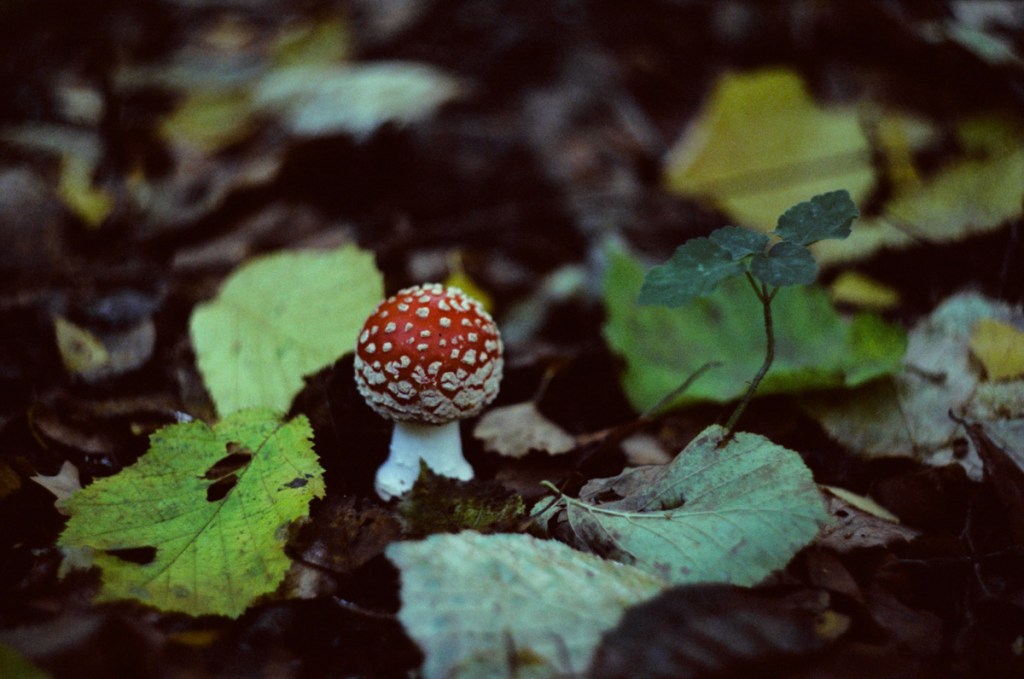
Katerina Shkribey, mushroom. Unsplash stock

Recently I wrote about how the story of Cerridwen and Taliesin is not a muse and hero tale but a tale of stealing from the goddess. Violating her priestesses and exploiting the land.

That is one reading of it. There is another though, which may have some grounding in historical fact and may be a warning to a particular issue gaining prominence today; the rise of the psychedelic industry.

Although neo-Druids, for whom this tale forms part of their core mythology, interpret the awen that Cerridwen brews in her cauldron as the ‘flowing spirit of inspiration,’ the original text makes it clear it is a potion. Cerridwen gathers ‘every kind of charm-bearing herb’ for the potion. Three drops of it turn the boy Gwion Bach into the shaman-bard Taliesin, but the rest is poison.

Continue reading “Cerridwen’s Brew; the Psychedelic Priestesses and the Theft of Indigenous Wisdom by Kelle Ban Dea”
Cerridwen’s Cauldron; Stealing from Old Mother Universe by Kelle ban Dea

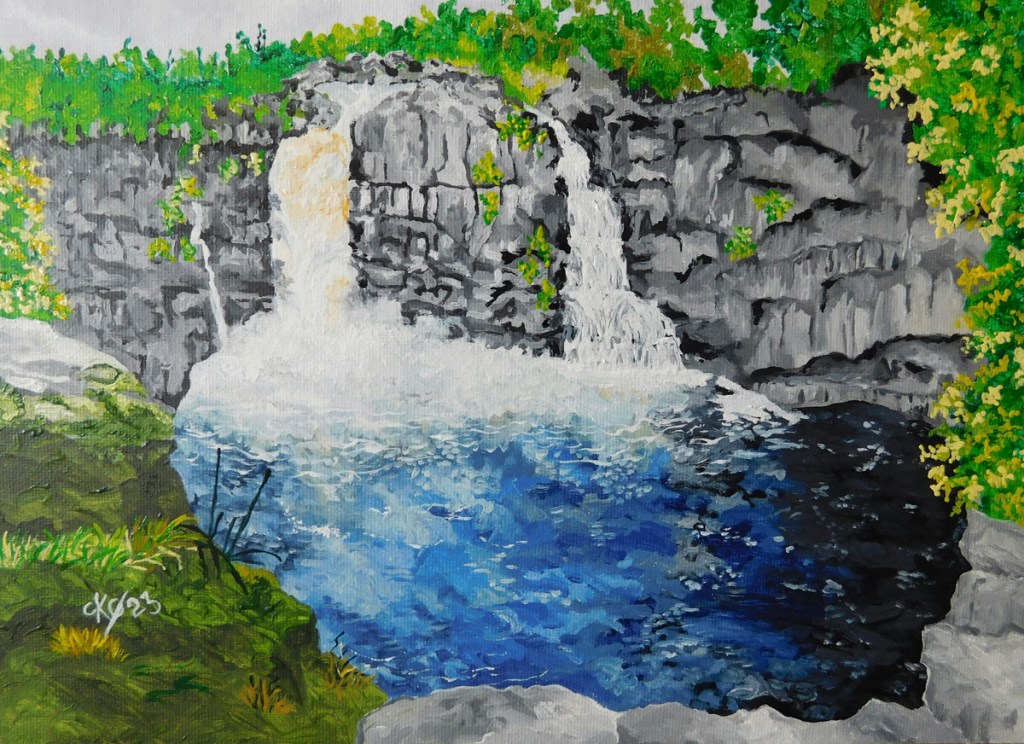
Catherine Kay Greenup, blue well
Unsplash stock

The story of how Cerridwen, the witch goddess, brews a magic potion full of awen (inspiration) which is then accidentally imbibed by the boy Gwion Bach, is well loved across the Western world, especially by neo-Druids. Gwion Bach is then reborn as Taliesin, the greatest bard in Britain. It is a typical heroes tale, with Cerridwen as the muse and initiatrix.

Or is it? This tale has always left a funny taste in my mouth, and when I recently read The Broken Cauldron by Lorna Smithers, I understood why. In the oldest version we have of this tale, Gwion Bach doesn’t accidentally taste the awen. He steals it.

Continue reading “Cerridwen’s Cauldron; Stealing from Old Mother Universe by Kelle ban Dea”

ART AND SOUL by Iona Jenkins

One day, during a holiday at the home of Italian friends in the province of Lazio, some forty-five minutes by train from the centre of Rome, I experienced a powerful impression of the Sacred Feminine. She came to me in the Vatican of all places, centuries old male stronghold, and power centre of the Roman Catholic Church.

         Even more surprisingly, her presence was more prominent in the Sistine Chapel, the Pope’s own place of prayer, where Cardinals sit in all male conclave. But there she was, shining through the restored colour on that famous ceiling through the brushstrokes of Michelangelo. I was picking up loud echoes immortalised for centuries through his art, tuning into the soul of the artist, seeing his inspiration in terms of angels speaking in colour and light. But then he was called after an Archangel whose name means Who is like God. God is creative, He created heaven and earth according to the scriptures, but now it was looking like She might have created it with him. Somehow over the years in Christianity, the real Sacred Feminine has been hidden away, negated, turned into a virginal statue with little visible life energy from earth.

Continue reading “ART AND SOUL by Iona Jenkins”

A Celtic Pilgrimage: Becoming a Bard by Trelawney Grenfell-Muir

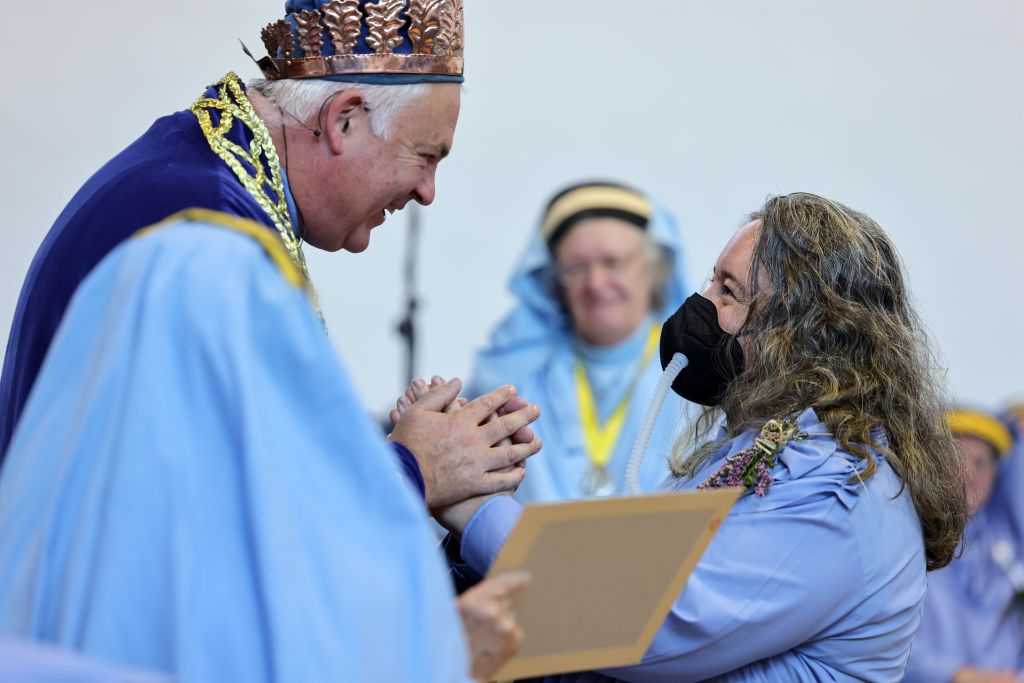
Trelawney at the moment of initiation. (Photo credit Greg Martin/Cornwall Live)

As I gazed up at Grand Bard Mab Stenak Veur, I could feel my eyes shining with joy, my gratitude, awe, love, and reverence for Kernow thrumming through me like the crescendo of a bright, glorious song. My whole world focused in that moment to the feel of his hands clasping mine — as though all Kernow were embracing me and holding me; the sight of his kind eyes and gentle smile— as though Kernow were lighting beacons to greet my homecoming; the sound of his voice proclaiming my new name, “Bleydh Ow Resek,”— as though Kernow herself were naming me to be her own child, come home at long last to my mother, who longs for me even as deeply and powerfully as I have always longed for her.

While I started learning Kernewek only four years ago, my journey to Bardhood started much earlier. I believe it began at birth, when my parents gave me the Christian name Trelawney, after the revered Cornish rebel leader who stood up against English oppression. Though no one in New England had heard of Kernow (Cornwall), my family’s joyful pride in our Cornish identity shaped my life. We were taught how my grandfather Jack left Kernow as a child because his parents responded to the call for more Methodist pastors to come to the United States.

Continue reading “A Celtic Pilgrimage: Becoming a Bard by Trelawney Grenfell-Muir”

Celtic Awen, Spiritual Homecoming, and Singing with Trees by Trelawney Grenfell-Muir

Does your name have a special meaning? Mine does. In fact, in one corner of the world, you would be very hard pressed to find anyone who did not know the significance of the name Trelawney and its history. They could probably even sing you a rousing song about it:

And shall Trelawny live? Or shall Trelawny die?

There’s twenty thousand Cornish here, will know the reason why![1]

But growing up in New England, no one had ever heard the name Trelawney before, or the name “Cornwall,” the land of Trelawney. If I said “Celtic,” they would finally nod.

Then with the internet came affordable communication “across the pond” to Britain, and my earliest internet explorations connected me with Cornwall, where my grandfather came from. I taught myself Cornish folk songs, I found folktales, recipes, and a more richly detailed cultural nourishment than my Cornish grandfather had managed to pass along to us. A lifelong mystic and Methodist minister, but if you ever asked my grandfather his religion, he would reply, “Druid,” with just that hint of mysterious twinkle in his eye.

Continue reading “Celtic Awen, Spiritual Homecoming, and Singing with Trees by Trelawney Grenfell-Muir”