Hope is the Thing with Feathers by Beth Barlett

Hope is the thing with feathers . . .
Emily Dickinson

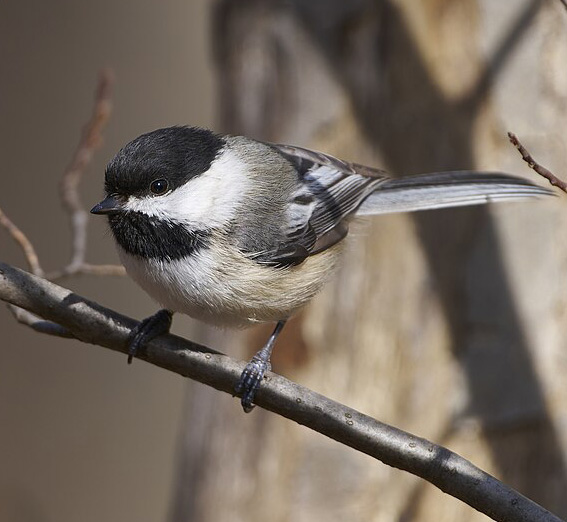
Chickadee

I awoke this morning to bird song, and for a moment I was lifted beyond the despair that has caught me in its grip — despair for the country, for the earth, for loved ones whose lives are increasingly tossed into the chaos, for the future  The disappearance of persons into labyrinths of prisons in this country, Guantanamo, and the tortuous CECOT prison complex in El Salvador has broken what was left of my spirit. Then this morning I heard a report that the State Department has changed what it considers to be human rights abuses in order to align with recent Executive Orders, deleting critiques of such practices as retaining political prisoners without due process of law, restrictions on free and fair elections, violence against LGBTQ persons, threats against people with disabilities, restrictions on political participation, coercive medical or psychological practices, and extensive gender-based violence. Ostensibly these changes are to lift restrictions on sanctions toward other countries, but I fear they portend clearing the way for such abuses in the US as well. 

My heart is heavy in ways I have not previously known, so I am grateful for that brief moment of delight in the early morning.  Later in the day, I found myself wondering whether those who suffered and died in concentration camps, whose despair certainly was beyond comparison with my own, found any solace in the sight and sound of birds who flew freely over the walls of the camps in ways they could not. The daughter of survivors of Auschwitz, Toby Saltzman, recalled that her mother, who often suffered bouts of despair over the Holocaust, found her spirits lifted by the songs of birds. When Toby later visited Auschwitz, she was greeted by flocks of birds.  Upon her return, she reflected, “I left Auschwitz feeling a surge of triumph that my parents survived, and gratitude to the birds that gave my mother spiritual sustenance and hope.” We are sorely in need of such sustenance in these times.

Continue reading “Hope is the Thing with Feathers by Beth Barlett”

Ancestor Wisdom by Sara Wright

Photo by Gay Bradshaw

“The wisdom of our ancestors is clear about this: If we do not take the journey inward to discover who we are, the creative potential within us will implode and we will destroy ourselves and the world”.
 Betty Kovacs 

Jesus said something similar in one of the Gnostic Gospels: If you bring forth what is within you it will save you – if you do not bring forth what is within you, it will destroy you.

 (no wonder the Gnostic Gospels are ignored)

Continue reading “Ancestor Wisdom by Sara Wright”

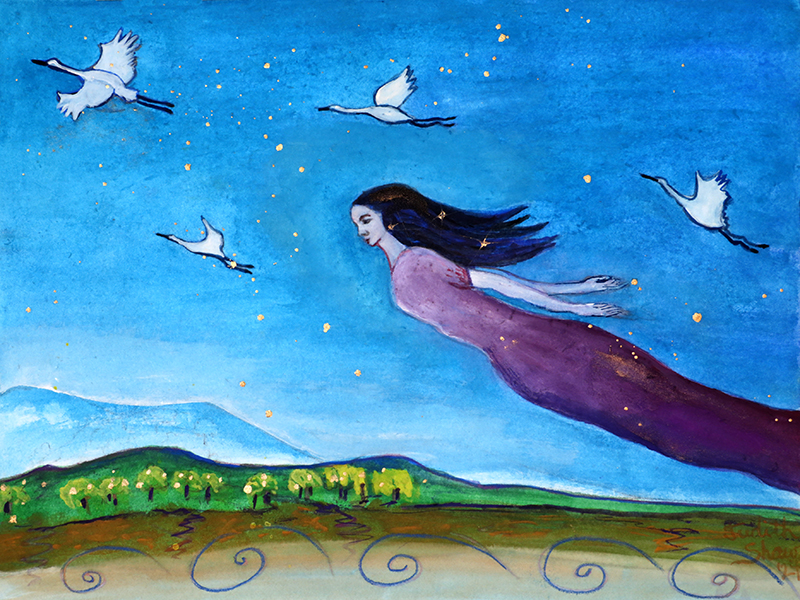
Women Fly Free by Judith Shaw

Artists tend to develop their own visual language over the course of a career, returning again and again to certain motifs. That’s certainly the case for me with trees, women and goddesses, doorways and passages, ancient symbols, flowers, and animals — in particular birds — emerging again and again.

Flying Free by Judith Shaw
Continue reading “Women Fly Free by Judith Shaw”

Legacy of Carol P. Christ: Why Should We Care About Birds?

This was originally posted on Feb. 6, 2012 with updates added later.

I believe that we should we care about birds because it is right to do so.  If we do not, we will contribute to extinction of species, and we will leave a diminished world to those who come after us. We must not give up hope that we can save the world for birds, for other wildlife, and for our children’s children.

On February 2, 2012, the International Day for Wetlands, the Greek government signed into law a Presidental Directive mandating protection of the small wetlands of the Greek islands.  There is no assurance that this law will be enforced.  There are still no measures in effect to protect most of the larger wetlands in Greece, even though this is required by the European law Natura 2000, which requires all of the countries in the European Union to protect bird and wildlife habitats.

When I became a birdwatcher, I could not have told you what a wetland is.  Now I know that wetlands are fragile bodies of water shallow enough for wading birds from flamingoes to sandpipers to stand in “without getting their bottoms wet” while feeding on shrimp, small fish, frogs, and other watery treats.  Wetlands often take the form of pools near the sea, but they also include the deltas at river mouths and seasonally flooded fields.  In the twentieth century and today many wetlands were designated “swamps” and drained.

Continue reading “Legacy of Carol P. Christ: Why Should We Care About Birds?”

Black Bird Ballet by Sara Wright

Wikimedia Commons

In September I was patient. My beloved birds were having a good year seeking food in natural places like my field I reminded myself over and over as they remained absent from my feeders until I fell and was hospitalized for weeks.

After November’s first snow storm the grouse arrived and I had high hopes that she would stay. I occasionally flushed her in thickets but did not see grouse’s plump brown body feasting on the remainder of the berries from the crabapple or see her hieroglyphs in the snow.

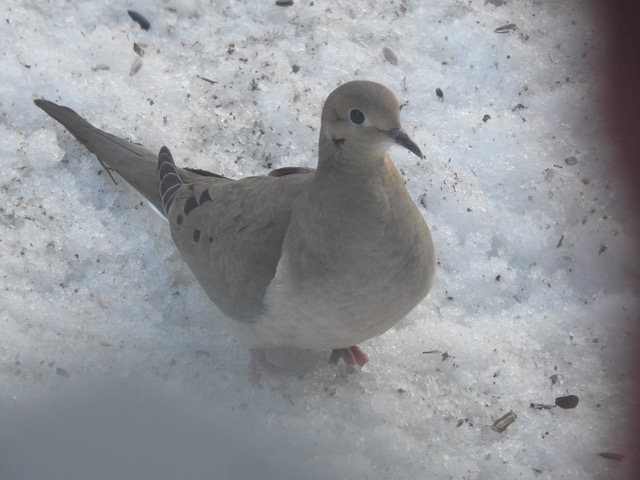
The turkeys remained absent. When I walked through my young pine forest where chickadees chirp even on windy days, the musical whirring wings of mourning doves tore into the grief I felt and didn’t want to own. Sometimes I called out “I love you” to those birds who chose to converse with me because I know they know.

 In late November when the snow piled up bowing trees to the ground it also brought in the first winter cold; this time the brook almost froze solid. A few birds did visit the feeder for a day or so: titmice, chickadees, one female cardinal, a few juncos, goldfinches, but the absence of abundance was overwhelming. Two days later nothing.

Continue reading “Black Bird Ballet by Sara Wright”

The Natural History of Starlings by Sara Wright

Last week Sara wrote about her and her family’s personal connection to starling. You can read it here. 

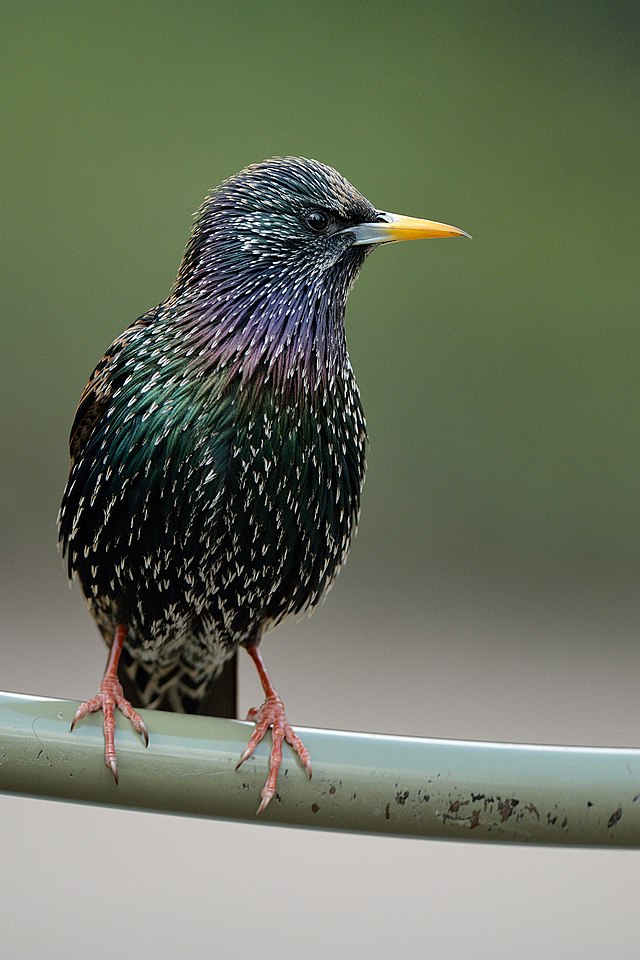
Wikimedia Commons

Amazingly, all the European starlings in this country descended from 100 birds that were deliberately set loose in New York’s Central Park in the 1890’s by colonists who wanted to see the birds they missed after immigrating to the US. Soon there were more than two million birds that ranged from Alaska to Mexico. All are closely related.  Sometimes if a female misses the first nesting she will try to lay an egg in other bird’s nests. They are wonderful mimics learning the calls of up to 20 species of birds like the pewee, killdeer, wood thrush, red tailed hawk and robin to mention a few.

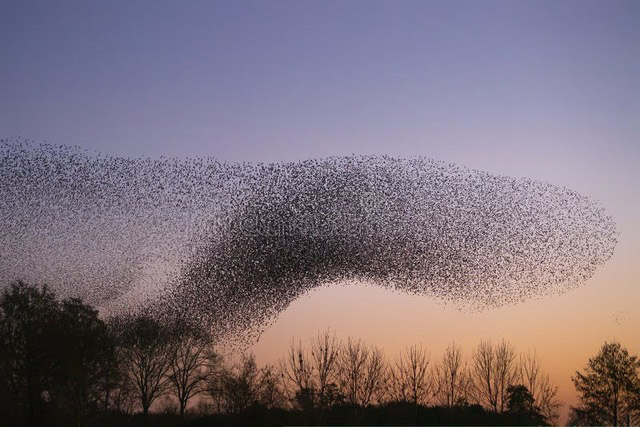
Starlings turn from spotted and white to glossy and dark each year without shedding their feathers. The new feathers that grow in have white tips. These are the spots that disappear by spring as the feathers turn dark and glossy. These birds are incredibly strong fliers as is evidenced by the extraordinary starling murmurations that still occur throughout the fall and winter all over Europe.

Continue reading “The Natural History of Starlings by Sara Wright”

The Sky Dancers by Sara Wright

December is a poignant month for many people, including me. Although I find the darkness comforting, winter stillness a gift, I do not celebrate the season as others do.

I begin December by bringing in the dawn each morning (if it’s clear) by standing outdoors in the cold watching Sirius, the dog star fade…Some mornings the sky turns rose, tangerine, or gold as clouds slide over the horizon or billow up like cottony balls of fluff. The air is fresh, fragrant, and clean. I listen for the first birds, the female cardinal’s chirp, the chickadees, and doves have yet to appear – these daily ‘morning mysteries’ are spontaneous and acted out in gratitude without thought.

 This month is a time of remembrance …  I think of people I loved, some I did not, those I lost…  

Continue reading “The Sky Dancers by Sara Wright”

Feeding the Birds by Sara Wright

In most cultures white is the color of death. No wonder brides wear white.

When I finally stepped into my life at 39, I entered a mythic world. I married myself to the serpent of life, a creature who is now wrapping itself (both male and female) around the earth four times and squeezing the life out of Her, according to Mythologist Martin Shaw (see Emergence magazine). The serpent, once life bringer for feminists now courts death.

I will always remember Marion Woodman, a Jungian analyst (and personal friend), who stated that every symbol carries both light and dark, and one side of the symbol will always shift into the other… She was speaking metaphorically but my mythic education and life experience as a naturalist have taught me/and continue to teach me that symbols like the serpent that were once holy beings are also living beings that were worshipped by Pre-Christian cultures, and then demonized by Christianity, recovered, and reverenced by feminists. Until now. Today the dark side of serpent has risen again and is swallowing us whole.

Continue reading “Feeding the Birds by Sara Wright”

The Ancestor Story by Sara Wright

During the last few years I have spent hours listening to the haunting cries of Sandhill cranes, awaiting them at the river, stunned each time as I glimpsed a flock float to the ground, great gray wings extended to break their fall as talons touched earth, attended to enthusiastic family greetings and muted conversations, felt a sense of devastating loss when these birds circled overhead to say goodbye each year before heading north to breed (while I lived in New Mexico), and then discovering to my joy that they live and breed here in Maine. I still experience the same hunger to glimpse families in Fryeburg each October and lose time watching their loving family dynamics. I continue to feel intense grief and loss at crane leave-taking remaining baffled by the intensity of my own responses. In the last week I think I have finally uncovered the roots of the story behind the cranes and me…

 These birds are prehistoric in origin and have the strongest family ties. The families never break up and when separated greet each other joyously even after a few hours as small groups fly to different feeding areas. Incredibly poignant. There is always one that stands watch at night, a protector, so the others can sleep in peace, one leg extended, usually in water. I am in love with these birds but until a few days ago did not understand the powerful pull their presence exerts over me.

Continue reading “The Ancestor Story by Sara Wright”

The Bang Bang Boys by Sara Wright

Mad wolf boys bay
a waxing solstice moon 
to Bloom

PTSD 
Violence
is the Gateway
Nowhere to hide

Bang Bang

Warblers sing on


Fright
fragments
innocence
Nerves strung too tight
contract
Guns batter
Forest Peace

Bang Bang

Continue reading “The Bang Bang Boys by Sara Wright”