

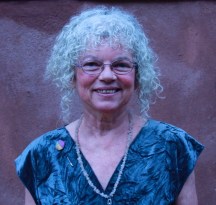
 The term ‘PaGaian’, which became the title of my work, was conceived in at least two places on the planet and in the opposite hemispheres within a year of each other, without either inventor being aware of the other’s new expression. It was some time before they found each other … one party in Australia, myself having published a book with PaGaian in the title; and the other party, Rob Blake – in the UK having registered the domain pagaian.org as the term seemed to him to express a cosmology constellating in his mind. The term PaGaian was actually conceived by my partner Taffy Seaborne in late 2003, enabling the book to manifest: heretofore the body of work developed there took six lines to express.
This reaching for a new word, was the reaching for a language, which is a power; to bring together an Earth-based – ‘Pagan’ – spiritual practice indigenous to Western Europe, with recent Western scientific understandings of the planet as a whole living organism – ‘Gaia’ as it has been named, and which by its name acknowledged resonance with ancient Mother Goddess understandings of our Habitat, as an alive sentient being. So, the term ‘PaGaian’ splices together Pagan and Gaian, and it may express a new autochthonic/native context in which humans find themselves: that is, the term may express for some (as it did and does) an indigeneity, a nativity, in these times, of belonging to this Earth, this Cosmos. For myself, the new expression consciously included and centralised female metaphor for sacred practice: that is, practice of relationship with the sacred whole in which we are, and whom I desired to call Mother, and imagine as the Great She. Continue reading “Reaching for New Language for the Sacred by Glenys Livingstone”
 Originally, in ancient Greek, ‘sphere’ simply meant ‘ball.’ Though its grammatical gender varied, it was primarily a feminine noun. It is in that sense and with that gender that it bounces into Western literature in the episode of the Odyssey where Nausicaa and her companions are playing catch on a beach (
 Feminism and Religion