November is the month when the veil is thin and permeable and it is possible to engage with the ancestors …I recently received information that for me November’s moon belongs to the grandmothers, and the liminal space in between and not to the hunter/killers. How is it that what seems so obvious was wrapped in the shroud of my unknowing?
On all hallows I crossed a threshold when the hunters moon transmuted from male to female. trusting my senses, I called up the archetypal grandmothers while grieving my lost connection to my own grandmother. I honored these elders as a powerful force of nature… and left it at that.
Are you planning to gather with family or friends to celebrate during the holiday season? For many, this idea elicits joy, but for others, it evokes tension, dread. Some may even think, “Ugh, I don’t want to deal with the drama.” The reaction is real. Elucidating a psychological concept related to such dread sheds light on this “drama” and may help you manage tense and potentially provocative situations over the holidays.
Stephen Karpman developed the concept of the drama triangle in his 1968 essay, Fairy Tales and Script Drama Analysis. He looked at the stories that cultures tell, considering how these stories instill images, roles, and demeanors in the social imagination, which then manifest in individual and group behavior. The narrated plot lines work on the unconscious to provide attractive stereotypes: the helpless (as a human) mermaid Ariel makes a deal with a Sea Witch for legs; she becomes human but loses her voice in exchange – a voice restored due to the true love of a prince. Cinderella, the stepdaughter working amidst the ashes for the evil stepmother, wishes for more, and viewers watch as a prince eventually arrives. Stereotypical Barbie faces an existential crisis; she, like Ariel, finds power in human form, and corrects the wrongs of patriarchal society against both doll and owner. Every drama presents a triangle.
At Thanksgiving and the solstice holidays many of us are reminded that we are the “black sheep” of our families. In my case this means that I am too “assertive,” too “aggressive,” too “demanding,” too “political,” too “willing to upset my father,” too “opinionated,” too “feminist,” and so on.
“In the English language, black sheep is an idiom used to describe an odd or disreputable member of a group, especially within a family. The term stems from the genetic effect in sheep whereby a recessive gene occasionally manifests in the birth of a sheep with black rather than white coloring; these sheep stand out in the flock [emphasis added] and their wool was traditionally considered less valuable.” (Wikepedia, “Black Sheep”)
Remembering to be thankful may just be a privileged illusion that individuals in positions of power get to write about in the December of each year to self-congratulate themselves about being actually able to be able to be thankful. It may just seem like people who write about being thankful are complaining or pontificating that being thankful is in itself a chore.
With the holidays just around the corner and the frazzled, crisp ping of anxiety, rush, and panic take over the air around us, it is easy to forget to stop and “smell the roses.” In times where teaching positions continue to shrink and more universities switch to adjunct labor, fees and class costs continue to rise, or just simply life becomes a little more complicated, due to the nature of balancing life, activism, work, friendships, or relationships, remembering to remind myself to be thankful is another task, I find adding to the never-ending list of stuff I always seem I have to do.
However, remembering to be thankful, scheduling it into one’s daily schedule are vital to our success as new and emerging faculty or activists or just in general because being thankful reminds us that we have aspects of our lives that are worth being thankful for. Remembering to be thankful proves that we are in some way, connected to a larger sense of life that, at times, grants our wishes, wants, or desires, brings us despair, and then allows us to get through it, or even makes us feel alive.
As I sit back and look at the personal and professional landscape around me I understand that I have a lot to be thankful for both consciously and unconsciously. Most recently at AAR, I participated on a panel in response to Bernadette Barton’s Pray the Gay Away. During the course of our panel, the conversation of chosen vs. biological families came up. Most recently, my mentor and panel moderator, Dr. Marie Cartier, talked about the same topic here on FAR and the difficulties many of us experience in regards to our chosen families vs. our biological families. With the holiday season all around us, and regardless of what or if, you celebrate it or not, it is quite hard to get away from it all without realizing who your “family” is and whether or not you’re close or connected with them can be traumatizing during these times where we’re taught or expected to be with them.
After our discussion on the panel and then at the hotel bar, people discussed the pains and traumas in relation to not having a biological family to go home to during the holidays. Sitting there and listening to the conversations, I realized that, for once in my life, I had nothing to say. Continue reading “Remembering to Be Thankful by John Erickson”


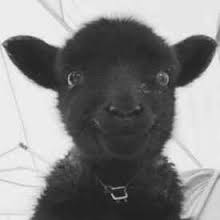 At Thanksgiving and the solstice holidays many of us are reminded that we are the “black sheep” of our families. In my case this means that I am too “assertive,” too “aggressive,” too “demanding,” too “political,” too “willing to upset my father,” too “opinionated,” too “feminist,” and so on.
 Feminism and Religion