

 In a previous article, I have described the devastating consequences of five years of austerity in Greece: soaring poverty, hunger, unemployment, infant mortality, pensioner deaths, malnourishment, sickness, and suicide.
Unemployment has exploded to over 25%, nearly 60% for young people. In contrast to other European nations, Greece provides virtually no unemployment benefits , and national healthcare is only available to those with a job.
The resulting humanitarian catastrophe, ruthlessly and knowingly imposed by Greece’s creditors, the IMF, EU and ECB, is unequaled by anything in European history in peacetime. People have only managed to survive thanks to the intrinsic values of Greek culture and civilisation: generosity, hospitality, connection, positivity, sustainability and mutual support.
These are the values which brought me to live in Greece; they are also the values of the traditional circle dances I have spent my life researching. And they are directly descended from the values of Old European culture as articulated by Marija Gimbutas, Carol P. Christ, and Riane Eisler.
When the economic crisis first struck in 2008, worsening every year since, I saw firsthand how deeply these values are embedded in Greek society.
Here, networks of families, neighbours and friends help one another, even when everyone is desperately struggling; this is how Greeks have managed to survive the terrible effects of the man-made ‘crisis’ until now. As family members have lost jobs, homes, businesses and prospects, often crucial support for the whole family is provided solely by one grandparent’s meager pension.
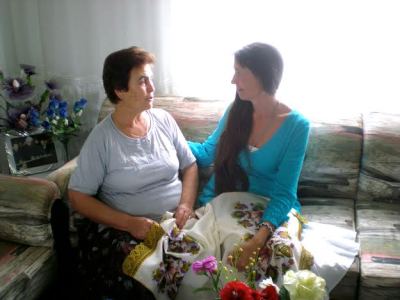
This picture of grandparents helping support their children and grandchildren throughout their lives is quite alien to western and northern Europeans, and yet it is firmly at the heart of Greek society. Elders are almost universally cared for within the family; old-age homes are extremely few. Like the sacred hospitality offered to guests and strangers since ancient times, elder care is considered a sacred responsibility, and elders themselves are universally treated with great respect.
This respect for elders is at the heart of the Greek resistance to further cuts to pensions. For the same reason, Greece does not wish to consider raising VAT (sales tax) on medicines and electricity bills, two further measures on which the lenders continue to insist, which will of course hit these vulnerable elderly the hardest. Continue reading “The Greek Crisis: Grandparents on the Table? by Laura Shannon”


 Feminism and Religion