Author’s note: I first published this piece on June 12, 2016. Last week, I returned from a three-week stay in Isreal. After everything I saw and experienced there, I agree with this piece even more; Israel needs to exist. As does peace and safety for all the inhabitants of the land. I will write more about my experiences there and in Jordan soon.Until then, I hope you find this piece thought-provoking.
The BBC just ran a story about white supremacist and neo-Nazi groups targeting Jews by signaling each other to their presence on various social media sites through the use of (((this symbol))). Of course, this is all based on the assumption that a “typically” Jewish last name signifies the bearer is also Jewish. Through a Google app (since removed) that could recognize patterns such as ((())), these Jewish people began to receive anti-Semitic comments. There has been a general outcry of disgust among Jews and other minority groups as to the problematic targeting of Jews in this fashion.
The same cannot be said about the BDS movement and people’s willingness to call it out for what it is. This to me is hypocritical! According to its website, the BDS movement, or Boycott, Divestment and Sanctions, seeks to end what it understands to be the colonialism, apartheid and oppression of Palestinians in Israel through various financial, commercial and international means. It accuses Israel of human rights violations, genocide, ethnic cleansing and other war crimes as well as illegal occupation (of the Palestinian lands, not just the occupied territories).
This post is a follow-up, in a way, to the post I published here on September 11, 2016, entitled “Continuing Pre-Christian Traditions in the Czech Republic,” and will be a combination photo essay* and elaboration on one of the rituals mentioned in that first post. On April 30th, I was in the small village where my partner’s family has their summer house. Yes, that same village that has inspired posts like this. There, we celebrated Čarodějnice, or Witches. This holiday seems to be related to what is called May Day or Beltane in other countries. What is unique about this tradition isn’t necessarily the májka (May Pole) although it is different than other places May Pole, but the burning of the witch.
Throughout the day, everything is gendered. The women and girls have certain tasks; the men and boys have too. The women and girls create and decorate. First, they create a witch to be burned on a large bonfire; the construction and shape of both can vary. After creating the witch, the women and girls (although it should be virgins – but no one really follows that tradition) decorate the top of a cut-down, very tall pine tree with strips of brightly colored fabric and crepe paper, tying them on to create what will become vertical streamers blowing in the wind, thus creating what is called a májka.
Author’s note: This post was originally published on April 19, 2019.
In “Time Telling in Feminist Theory,” Rita Felski suggests that there are four main ways feminists discuss and use time: redemption, regression, repetition and rupture. They are aptly named as they behave similar to their labels. Redemption is the linear march of time, hopefully progressing step by step towards a redeemed, or at least better, future even if sometimes things get momentarily worse. Regression is the want to go back in time or at least return to idyllic and/or imagined pasts: to matriarchy or to a time before patriarchy’s violent arrival. Repetition is a focus on the cyclical nature of time in bodies, in daily chores, in seasons and so on. Rupture posits a break in time in a way what was before no longer makes sense or doesn’t exist. Think utopia or dystopia.
This week’s Torah portion is a double one, Vayak’hel-Pekudei (Exodus 35:1 – 40:38 and Exodus 12:1-20). Vayak’hel covers the construction of the Mishkan, or the temple that traveled with the Israelites while in the desert, and Pekudel outlines the requirements for Pesach, particularly the sacrificial lamb, the blood on the doorposts, and the requirement to eat unleavened bread. For this post I will focus on Vayak’hel as it is the only portion that makes direct mention of women. It reminds us of the ways in which religion and religious institutions would not be possible without the contributions of women.
Vayak’hel centers on the construction of the Mishkan beginning with the general assumption that everyone (here men and women) will donate the items needed to construct the Mishkan. The text also contains verses in which women are specifically mentioned. They donate their gold jewelry (35:22) and mirrors (38:8) as well as spin wool and linen into yarn to be used for the Mishkan’s copious amounts of curtains (35:25-26).
Mishpatim (Exodus 21:1 – 24:18 and 30:11-16) is the Torah portion for February 18, 2023. Its name, mishpatim, means laws or ordinances, and the portion is essentially just that – a list of laws to be followed. It is not the easiest parshah to follow as it jumps around, backtracks numerous times, and sometimes contradicts itself, particularly in the sections with Moses.
That being said, there are two main themes in Mishpatim; both of which I have discussed in past blogs. First is the death penalty. There is an overabundance of crimes that result in the death penalty in this parshah. Way, way too many. Another theme is idolatry. In many ways, that is a theme in the Torah itself. For more on these themes from my feminist perspective, see here: Sh’lach; Ki Tisa; Shofetim ; and on b’tzelem Elohim.
Author’s note: Originally published on January 8, 2017, this post still speaks to me 6 years-to-the-day later. Now, when I teach ecofeminism, I dedicate a week to religion as we cannot deny the way in which Western patriarchy and religion have coexisted and often fed off each other. The only distinction I would add to this original post is that not all religions are equal when it comes to patriarchy and its misdeeds. Christianity has had more power and influence than others. However, Christianity is not the only religion to hold patriarchal views. That needs to change. May the New Year bring more of that needed change.
“Why is religion important to ecofeminism?” A student, in the Master’s course I teach at Charles University, asked this as we began the class session dedicated to the topic. Given the overwhelming presence of atheism in the Czech Republic, I wasn’t too surprised by the inquiry. Nonetheless, the idea has been at the back of my mind ever since: what does religion have to do with ending patriarchy and bolstering the health of the planet? While I may take the connection as obvious, it is clearly not for many feminists out there. Here is how I understand it.
This week’s Torah portion is Vayeishev, Genesis 37:1-40:23. The portion covers too much information to address it adequately in one post. Therefore, in this post, I will examine, from a feminist perspective, Joseph, the women in his life, and dreams. While the women in Vayeishev leave much to be desired, its dreams point to an important connection between humanity, divinity, and nature.
Vayeishev starts with the raw jealousy that some of Jacob’s sons have for Joseph. This jealousy is so great that it sends Joseph all the way to Egypt. As a feminist, I have always found it both comforting and completely realistic the way the Torah delves into emotion. Since even the lofty patriarchs are jealous, no superhuman behavior is expected of us. Despite this comfort, I am not happy that it is once again men and boys who take centerstage. We know that these men and boys also had women and girls in their lives.
The parshah for November 26th is Toldot, Genesis 25:19-28:9. In it, we have the struggles of Isaac and Rebecca to conceive, the relations between Abimelech and Isaac’s family, the birth of Esau and Jacob, and the loss of Esau’s birthright and his father’s blessing. As we will see, this is a tricky portion from a feminist perspective because of Rebecca, yet, from an ecofeminist perspective, I find the way in which the portion discusses the interconnection between the water, the land, and divinity helpful.
Let me begin with the water and then we will look at Rebecca. Toldot takes place in and around the city of Gerar in Philistine territory, while Abimelech ruled. Isaac and his family travel through the land quite a bit between verses 26:16 and 26:32. Most of this section pertains to them moving and then digging new wells, the covering of wells, and the finding of water. What I find particularly interesting here is the way in which water and peace seem to go together. For example, in 26:20-21, Isaac and his family have constructed a well but it is causing them to have troubles with the locals. Isaac seeks peace and thus leaves. In verse 26:26, Isaac is visited by Abimelech and eventually a formal peace is declared. This is followed in 26:32 by Isaac’s servants finding water in a freshly dug well. In other words, Isaac is willing to uproot his family time and again to cultivate peace; he is not willing to go to war over what in the desert really is a quite limited resource.
I attended a number of High Holy Days services (online) over the past couple of weeks. In one of them, one of the rabbis said that the divine is the unknowable unknown. I cannot remember what the Rabbi said to contextualize or explain their train of thought; I think I was too intrigued by the idea that I got lost in my own thoughts. In fact, I have been thinking about the unknowable unknown ever since.
As I write this, I’ve come to this conclusion: if the divine is present among us and the world around us, then there is much we can intuit. In addition, there is much that we can experience the more we interact with other humans and nature. On the other hand, if the divine is understood as a detached, distant being of a completely different essence than humanity, of course, what can we really know about such a divinity? How would we even know if that divinity even existed? We probably wouldn’t. Here is the difference between a feminist understanding of the divine as this-worldly and empowering and a patriarchal conception of a distant divinity wielding power-over. Yet, interestingly, even the most patriarchal image of the divine has insisted on being relatable to human beings. Nonetheless, how we imagine the divine does matter.
In her book, Models of God: Theology for an Ecological, Nuclear Age, Sallie McFague argues that the words and ideas we use to describe the divine are important. She advocates for the use of metaphors to describe the divine, stating that we can only describe what the divine is like, not what divinity actually is. In fact, she warns the reader of long-lasting models for the divine as these can lead to idolatry, an understanding that limits divinity and, because of this, is essentially untrue. She writes on page 99 that, “[i]f we use only the male pronoun [for the divine], we fall into idolatry, forgetting that God is beyond male and female…” In other words, we are limiting the divine and furthermore speaking an untruth.
This talk makes we wonder if she too is of the camp that we cannot understand divinity; that the divine is quite different from us. I mean if we cannot and should not have any long-standing model for the divine but only use shaky fleeting metaphors, our understanding of the divinity is genuinely limited and amorphous. Yet, there is a difference between some knowledge and experience of the divine and the idea of the divine as the unknowable unknown, isn’t there?
That being said, I find much of what she has to say extremely helpful when it comes to traditional understandings of divinity. In her book, she implicates as problematic the long-standing models of divinity as Father and King, among others. These out-dated models move us further and further away from the divine because they are thought to definitively explain who the divine is in relation to us.
Let us look at Yom Kippur, the Day of Atonement, as an example of this in Judaism. Here, we have a day in which we are highly vulnerable as we reflect on the ways in which we have not always treated ourselves, others, the world around us, and the divine as we should (had hoped to). Yet, we enter the synagogue and repeatedly address the divine as Avinu Malkeinu (Our Father, Our King). Why is the understanding of divinity that we approach one of judge, strict parent, and ruler over us? Does that not drive a wedge of sorts between divinity and humanity? Does that not make being inscribed in the book of life seemingly impossible unless we are non-human-like?
Contrary to what we often hear in shul, Judaism recognizes some 70 diverse understandings, or names for the divine. These names range from Hashem (the Name) and Shalom (Peace) to Shechinah (the in-dwelling) and Kadosh Israel (the Holy One of Israel). And there are many, many more.
Returning to our example again, instead of the umpteen rounds of Avinu Malkeinu, what would it be like on Yom Kippur if we approached the divine as Shaddai (Comforter), Hamakon (the Present One, literally the Place), or YHWH-Rapha (The One Who Heals)? These understandings seem to offer the compassion we need on a most vulnerable day. How much easier would it be to connect to divinity that understands us? Perhaps we could learn a little more about divinity in that case, and we could in the process become much closer to the holy? And, isn’t that the point of Judaism? To be holy like the divine is holy? I think so.
From a feminist perspective, how we understand the divine has real-life consequences which can shape how we understand ourselves and the world around us. Just imagine what Yom Kippur would feel like, if we called on the divine that day as the comforter, the present one, and the one who heals. It would feel totally different, and for very good reasons.
Who would have thought that some three weeks ago or so, I would have heard a phrase about the divine that still has me in a quandary? I mean, in the end, I suppose there are ways in which the divine is unknowable. Importantly, though, that does not make the divine wholly unknown. Rather, it is often the language we use about the divine that puts distance between us and divinity, that makes divinity less and less known.
Ivy Helman, Ph.D.:A feminist scholar and faculty member at Charles University in Prague, Czech Republic where she teaches a variety of Jewish Studies, Feminist and Ecofeminist courses.
Grounded in an ancient theodicy, Ki Tavo (Deutoronomy 26:1-29:8), the Torah portion for September 17th, is an emotional rollercoaster. In it, the Israelites find their lot in life directly linked to their own behavior. Follow the commandments to gain blessing; ignore them at your own peril. While the commandments listed here are laudable from a feminist perspective, the deity’s response to non-concompliance is problematic. It is full of victim-blaming and empty of compassion. Furthermore, Ki Tavo’s portrayal of divine expectations leaves no room for human nature to actually be anything other than complete perfection. This is unacceptable.
As should sound familiar to the reader by now, Ki Tavo speaks to a specific historical context: the Babylonian exile. As we are aware, the typical theodicy of the Babylonian exile places blame for the Israelites’ lot in life on the Israelites themselves, specifically on how their behavior (or their ancestors’ behavior) has warranted divine punishment. In other words, the Isrealites have not observed the commandments and thus deserve what is happening to them. This justifies an understanding of the divine as vengeful, spiteful, jealous, and victim-blaming.
That being said, what exactly happens in Ki Tavo? Ki Tavo, also like many Torah portions, discusses commandment observance. From a feminist perspective, the portion rightly focuses its description of the commandments on justice and fairness within the community (27:16-25) as well as care for the widow, stranger, orphan, the poor, and the disenfranchised (26:12-13, 27:18-19). Its interpretation of the commandments seem to be truly about how, according to its time, a community, that puts the downtrodden and outcast first, should function. These are generally good principles.
Taken by author.
Ki Tavo then lists, in varying degrees of specificity, what happens to the Israelites when and if they observe the commandments. If they heed the commandments, they receive abundant blessings. These blessings focus on material, this-worldly rewards (28:3-13). Most offer abundant crops, flowing, deep rivers, good bread, fertility of human and animal, and rain, while, unfortunately, there are a few which mention blessings in terms of gaining power-over and, thus, influence. (Here it is impossible to give specific verse references as many verses have a combination of material blessings and less tangible, power-focused ones.)
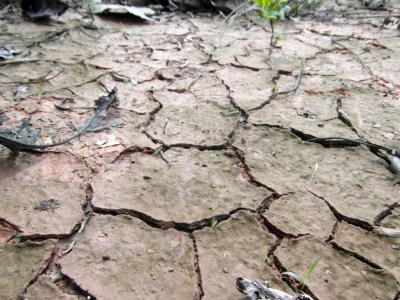
When the Isrealites fail to heed the commandments, they incur divine wrath. This is depicted in Ki Tavo as curses or cursing. The curses are sometimes quite mundane and other times absolutely disturbing. There are the typical droughts (28:22, 24), plagues (28:22, 38-39, 42), diseases (28:22, 27-28, 35, 59-61), wars (28:49-53) and so on.
And, then, there are some not-so-common curses. One intriguing curse is exile, which forces the Israelites to practice idolatry (28:36). Interestingly, here idolatry is not a breaking of the commandments, but a punishment for doing so (28:36). Exile signifies the physical breakdown of the group, while idolatry distances that same group from their covenantal relationship with their chosen deity (28:64). They are not a people any longer as they live in foreign lands and worship different gods.
The uncommon curses go one step further and remove any semblance of the Israelites’ humanity through cannibalism. In Ki Tavo, this is a result of war. The deity wages a vicious war against the disobeying Israelites, using other humans (28:57). Their cities are so mercilessly besieged to the point that the people completely run out of food. With nowhere else to turn, they are forced to resort to cannibalism (28:53). Even the most gentle and well-behaved man and woman becomes, when this happens, cannibals (28:53-55), eating their own children to survive.
Yet, who is to blame for the death of their community and their own inhumanity? The deity who punishes? No. Ki Tavo makes it clear that it is the Isrealites themselves. By punishing the Israelites’ non-observance, the deity is only being faithful to the established covenant to which both parties freely agreed. This victim-blaming might have made sense of the Babylonian exile for those who were living through it, but it is also clearly a product of patriarchy. Back then victim-blaming justified war and disease. Now, it condones such practices as domestic violence, rape, and various manifestations of power-over. It is problematic because it does not acknowledge who is most often truly at fault: other, more powerful, humans.
Ki Tavo also paints a one-sided picture of divine understanding when it comes to good and evil. There is either goodness (in Ki Tavo, observance) and blessings or evil (non-observance) and curses. There is no middle ground, no explanation, and certainly no compassion.
This lack of divine compassion is what bothers me the most in Ki Tavo. Even though humans are divine creations, the writers of the Torah have depicted the Creator as so disconnected from creation that there is no compassion and no understanding of humanity, only sheer anger and divine wrath. According to Ki Tavo, our Creator is more than willing to shattered the community, our relationship with the divine, and even our own humanity than practice forgiveness and mercy.
Thank goodness that the Jewish tradition’s understanding of the divine does not stop at Ki Tavo. Rather, Jewish tradition teaches us that we, in the covenant, have partnered with the divine who understands us, showers us with compassion and mercy, and does indeed forgive us (when we don’t always behave as we should). We have a faithful deity who is abundant in goodness and rarely upset or disappointed. We can put our hope and our faith in the goodness of the Holy.
As we enter the High Holy Days, may Ki Tavo’s understanding of the divine as wrathful, angry, destructive, and vindictive stay in the past where it belongs. In this new year, may Compassion embrace us, gifting us with a sacred empathy for others and also for ourselves. May mercy and goodness be with us this year and all the days of our lives. And, may the world and our hearts be at peace.
L’shana tova umetukah! (For good and sweet year!)
Ivy Helman, Ph.D.:A feminist scholar and faculty member at Charles University in Prague, Czech Republic where she teaches a variety of Jewish Studies, Feminist and Ecofeminist courses.





 Feminism and Religion