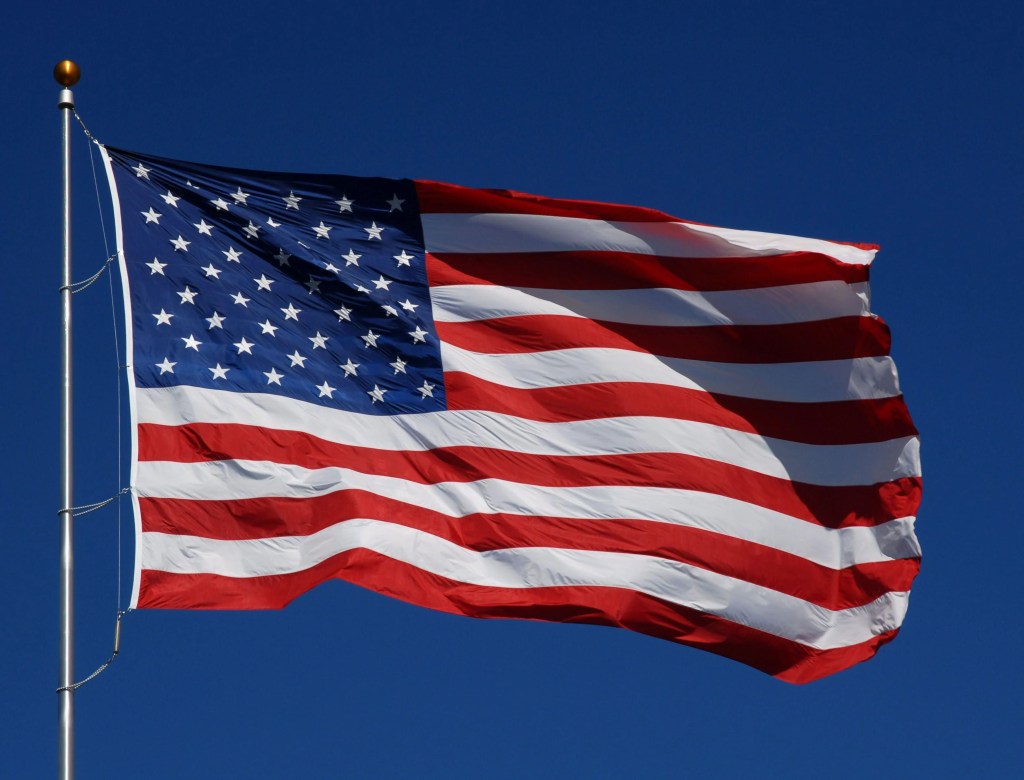
I am an American.
I am proud to be an American.
I am not proud of everything America does—
But I am proud of democracy—
of the idea of democracy.
And I do not want to waste my shot, either.

I am an American.
I am proud to be an American.
I am not proud of everything America does—
But I am proud of democracy—
of the idea of democracy.
And I do not want to waste my shot, either.

Well, you may ask, who said I should?
My grandparents, mother, father, sisters, aunts, uncles, cousins, nieces, nephews, godparents, a good many teachers, childhood friends, a former therapist, myriad internet strangers who felt compelled to try to divert the flames approaching my immortal soul, an astrologer I met once, innumerable people encountered on public transportation and sidewalks, all of my exes’ parents, and, of course, the Roman Catholic Church — an institution of such enormous weight as to have crushed frames far sturdier than my own.
Continue reading “I Don’t Want Jesus by Katherine Rose Wort”
Every morning I write a little meditation with attached images that in some way reflects what’s going on in my life. I do this for three reasons. To experience gratitude for something I have learned, to share my thoughts with others and to consciously align myself with LIFE while participating, albeit unwillingly, in a death destroying culture.
As a naturalist my focus is usually on some gift received resulting from my reciprocal relationship with nature. But I wrote this meditation to articulate one of the most important aspects of relating to other humans – perhaps the most important. Forgiveness. And I wrote it after experiencing the freedom and gratitude that followed a powerful act of forgiveness associated with a long-term friendship.
Continue reading “A Story About Forgiveness by Sara Wright”
Despite halting attempts to live my life with hope, I’ve failed. My experience is not unique. We suffer. The recent pandemic, including its side effects of loss and displacement, is but one example. Suffering can leave a sense of hopelessness in its wake. One place I look for balm is in poetry.
As with most poetry, Emily Dickinson’s (1830-1886) work requires me to pause and ponder. What is being said? Not easy to tell, nonetheless, I often do find meaning in her poems. If I understand her thrust at all, much of the meaning I glean disorients me.
Continue reading “HOPE, PAIN, DESPAIR, AND JESUS by Esther Nelson”
The winter solstice is almost upon us just as the first heavy snow buries the forest and house under 28 inches of snow. I never look forward to this shift into the cold, ice, and snow, although I do wrap myself in peaceful silence, sitting by the fire dreaming as twilight turns to night. My Norfolk Island pine and tipped balsam wreath shimmer with tiny stars. The scent of balsam soothes my senses and purifies the air. This month above all others is my time to honor the trees… I am keenly aware that Bone Woman and Old Man Winter are rising with the moon, whipped up by Northwest winds.
My scientist and naturalist friend, a member of one of the seven Indigenous Sioux tribes agrees with me that winter solstice is a dangerous time, one of the reasons in the old European way that everyone is masked while acting out winter solstice stories. These tales may vary in content but all have the same root. Shadow is on the move. Masks protect the people, the risk of exposure to danger is minimized in this way.
Continue reading “Solstice Stories : Fire and Ice by Sara Wright”I’ve been thinking about willful women and feminist killjoys—two main guiding images in feminist scholar Sara Ahmed’s book Living a Feminist Life (Duke University Press 2017).
The idea of the willful woman (or willful girl, or willful person) is something I can easily get behind. The way I understand it, it has to do with women getting in touch with our own wills and being willing to speak and act and live out of our wills. Particularly if these wills turn out to exist in opposition to the things other people might will for us.
It’s about learning to stand up for ourselves, learning to affirm our full humanity in a world that often expects…less. It’s a way of consciously, intentionally being willing to be called “willful” as a negative thing—as in, stubborn, selfish, antagonistic, difficult—because the affirmation of our own wills is worth it.
I like all of this and find it helpful. Be willful. Expect pushback and penalties for it. Be willful anyway.
Continue reading “Willful Women, Feminist Killjoys, and Jesus: Reflections on Sara Ahmed’s Living a Feminist Life by Liz Cooledge Jenkins”
In recent conversations around abortion rights—spurred by a leaked draft of a Supreme Court decision that would overturn Roe v. Wade—everyone has opinions. The financially comfortable, often-white, often-evangelical women in my circles have opinions. And these opinions often involve the lives and choices of materially poor women and women of color.
In her recent book The Trouble with White Women: A Counterhistory of Feminism, Rutgers University professor Kyla Schuller profiles seven pairs of feminist activists over the last two hundred years. Each pair includes one woman who operated from a framework of white feminism—a framework that, according to Schuller, “consistently…wins more rights and opportunities for white women through further dispossessing the most marginalized.” And each pair includes a woman who embodied intersectional feminism—a feminism that “expose[s] sexism to be a powerful structure of systemic inequality and attempt[s] to untangle its deep threads with other forms of domination, while also building new practices of care, coalition, faith, and solidarity.”[1] This is not just history but a live tension in the present day.
Continue reading “I’m Not “Fit” to Judge Another Woman’s “Fit”ness by Liz Cooledge Jenkins”This was originally posted on June 21, 2017, you can read the original comments here.

For the last forty years, the Christian Right has influenced the conversation in American politics. Where is the Religious Left and how are they impacting our nation’s moral agenda? It is an important question, and now, more than ever, we need a progressive religious viewpoint in the conversation.
We are living in an era where the morality of our society is at stake and the soul of our nation is being bought by billionaires who have an insatiable appetite for money, power, and control. With an alt-right movement growing and nationalism becoming the Trump Administration theme, we are in danger of losing our humanity.
It is time for a serious response to the Christian Right. Why must we associate Christianity with bigoted policies? This ongoing movement has dominated our nation’s political agenda and led to the idea that you are either religious and conservative or liberal and atheist. Don’t get me wrong, every person’s belief system is their own and should not be judged. However, studies well demonstrate that many Americans are walking away from religion all together because of the Christian Right’s political influence. It is time that Christianity be recognized as more than a conservative movement seeking to highjack policies and victimize the disenfranchised.
The true message of Jesus is founded on love, inclusion, liberation, and social justice. No Christian Right position resembles this. In fact, they are in direct conflict. Rather than focusing on condemning those who are deemed “the other,” why not focus on caring for the poor, welcoming the stranger, and healing the sick?
Likewise, conservative Christian stances have been historically anti-feminist and anti-woman. Those clinging to such beliefs would rather elect a president that has openly discussed grabbing women by the “pussy” than risk giving up privilege.
As the Women’s March has challenged Trump and his policies on gender, an anti-feminist backlash has strengthened with Evangelical women arguing that feminists have created their own oppression by whining rather than taking responsibilities for themselves.
The Christian Right would be surprised to find out that Jesus’ politics and teachings mirror the values of feminism – calling for an end to all oppression and creating a society that is just and fair for every person regardless of gender, race, ethnicity, age, religion, etc. Jesus welcomed women to his community and women played a critical role in his ministry. Jesus not only had women disciplines; but also selected women as prominent recipients of his revelation. Most notably, Jesus chose women as the first witnesses of his resurrection. And while the apostles did not believe Mary Magdalene’s testimony, nevertheless, she persisted.
It is time not only for a resistance but a religious resistance where those who try to abide by the message of Jesus stand up to the Christian Right. I acknowledge that no one is a perfect Christian; we all fail. But what is important is that we recognize the message of the Gospels and keep trying. Thus, we must reject the oppressive regime of the Trump Administration and the bigoted claims of the Christian Right. We must reclaim the Christian faith in its true form and live out its message the way it was intended.
We are living in a difficult time, but let us claim this moment to energize and unify the Religious Left. In the name of the Lord, let us challenge those who manipulate the Christian message as means to claim power and privilege while oppressing everyone else. It is time to make humanity great again.

Slowly, yet systematically, women, men, and everybody else along the gender continuum, are losing access to a timely, legal, and safe abortion. This is not breaking news. Pushback in the United States against abortion “rights” has been happening in various state legislatures for decades. These days we find ourselves more and more constricted as laws across the country reflect a tightening of accessibility to what some people refer to as a “scourge” in the land.
My first-ever blog post on FAR (March 2014) wrestled with the subject of abortion. In that essay (one that’s still relevant), I suggest we broaden our thinking about a subject that has polarized Americans. Is abortion (a) right? Is it wrong? The two sides have become entrenched.
Continue reading “Abortion Rights (?) by Esther Nelson”

In keeping in line with my last month’s post, movies are on the docket, 2018’s Mary Magdalene. It’s fairly recent with not a lot of discussion around it. Here we go. The film written by two women, Helen Edmundson and Philippa Goslett, focuses on Mary of Magdala who encounters Jesus. The film stars American Rooney Mara as Mary Magdalene and Joaquin Phoenix as Jesus.
Continue reading “Let’s talk about Mary Magdalene and her new film by Anjeanette LeBoeuf”