
Nearly a year ago, almost to the day, I entered the sanctuary of an historic church in downtown Raleigh for the first time. Visiting a new faith community is nearly always at least a slightly uncomfortable social experience. In my case I’d grown quite accustomed to feeling like an outsider in these spaces as a significant portion of my work included traveling to congregations around the country. This particular Sunday, however, had me a more on edge than usual.
The church, as it turns out, was Baptist. I was Methodist. Sitting down in a Baptist Church for worship felt something akin to rooting for a rival sports team. It was simply not done.
I recall on several occasion the pastor of my hometown Methodist church, a soft-spoken and generally mild mannered man, would poke fun at Baptist preachers from the pulpit. If a worship service ran long as it often did on the Sundays we celebrated communion, my mother and I would half-jokingly lament that our favorite lunch spot would be filled with Baptists by the time we got there. One could argue it was all in good fun like any hometown rivalry. But even well-meaning jokes, if they are repeated enough, have a poisoning effect over time.
As I fidgeted in the pew that first Sunday waiting for the service to begin, a woman sporting black cat-eye glasses and fiery red lipstick leaned across the pew to greet my husband and me. “Is this your first time at Pullen?” she asked. I nodded my head and confessed quietly that I was struggling a bit with being in a Baptist church. “I’m Methodist,” I whispered to her. Without skipping a beat, she responded with a hint of a smile, “Well honey, I’m Jewish.”
Needless to say this Baptist Church was unlike the ones we’d joked about in my small town Georgia church. Pullen Memorial Baptist Church has been on the forefront of social justice movement for decades, much to the chagrin of certain other Baptist-identifying bodies. From affirming women and the LGBTQ community to standing against racism and Islamophobia, Pullen is committed to the work of dismantling oppressive systems.
Prior to my first Sunday at Pullen I’d tried desperately to find community in several local Methodist churches, but I could not in good conscience align myself with their theological values. Pullen, on the other hand, affirmed my spiritual sensibilities and challenged me to examine them critically. In the end I had to make a decision: what was more important to me, the ministry of the congregation or its label (and the stereotypes that came with it)? As you might guess, the choice was easy.
Last month my husband and I along with our two-year-old daughter stood before the congregation and pledged our commitment as official members of Pullen Memorial Baptist Church. Some have asked me if leaving the Methodist faith was terribly painful for me. In truth this decision felt very little like a departure at all; rather it felt grounded in the deep joy and affirmation of having found a community to make my spiritual home. No change is without some sense of loss, but what I mostly feel is an overwhelming sense of joy.
Joining a Baptist congregation has opened my heart to the possibility of unexpected becoming. We are never as sure of things as we might like to believe. I’m grateful for that.
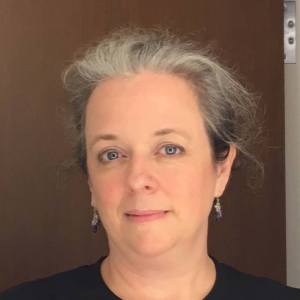
 Katey Zeh, M.Div is a strategist, writer, and educator who inspires communities to create a more just, compassionate world. She has written for outlets including Huffington Post, Sojourners, Religion Dispatches, Response magazine, the Good Mother Project, the Journal for Feminist Studies in Religion, and the United Methodist News Service. Her book Women Rise Up will be published by the FAR Press in March of 2018. Find her on Twitter at @kateyzeh or on her website kateyzeh.com.



 “I want you to see this new piece I wrote for our newsletter,” said Sister Ann.
 Feminism and Religion