A House for the Goddess by Annelinde Metzner

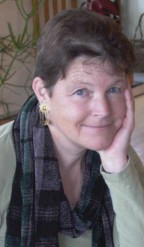
For the past few years I’ve been contributing to FAR as a poet.  So grateful for the opportunity to connect with you wise women!  This month I realize I should share with you another side of me, my music.

      On June 8th, I produced, directed and composed the music for “A House for the Goddess” in Asheville, North Carolina, featuring 29 performers including two sopranos, a cellist, myself and another pianist, two dancers, an MC and a women’s choir.  The concert, whose venue was offered generously by Land of the Sky United Church of Christ, was a sellout, and over three thousand dollars was raised for the Linda Norgrove Foundation for the women and children of Afghanistan (https://lindanorgrovefoundation.org.)

      My compositions, both choral pieces and solo art songs, always find their birth through the inspiration of poetry.  At this venue, the texts of the poetry were displayed on two screens overhead as the songs were sung.

Continue reading “A House for the Goddess by Annelinde Metzner”
From the Archives: Where Did the Gods Come From? by Barbara Ardinger

This was originally posted on June 10, 2012

A man in the group leaned forward and asked, “But how did the Goddess get overcome?” So I told him. Young “warrior heroes” came galloping out of the Russian steppes and the Caucasus Mountains, including Afghanistan, which no one (not even Alexander the so-called Great) has ever conquered. The boys were carrying their thunder-solar-sky gods with them.

Continue reading “From the Archives: Where Did the Gods Come From? by Barbara Ardinger”

A Winter Woman by Molly Remer

“When winter comes to a woman’s soul, she withdraws into her inner self, her deepest spaces. She refuses all connection, refutes all arguments that she should engage in the world. She may say she is resting, but she is more than resting: She is creating a new universe within herself, examining and breaking old patterns, destroying what should not be revived, feeding in secret what needs to thrive…

Look into her eyes, this winter woman. In their gray spaciousness you can see the future. Look out of your own winter eyes. You too can see the future.”

–Patricia Monaghan, Seasons of the Witch

When the wheel of the year turns to winter, I always feel the call to retreat, to cocoon, to pull away. I also feel the urge for significant de-cluttering—my eyes cast about the house for things to unload, get rid of, to cast away. I also search my calendar for those things which can be eliminated, trimmed down, cut back on. I think it is the inexorable approach of the winter holidays that prompts this desire to withdraw, as well as the natural rhythm of the earth which so clearly says: let things go, it is almost time to hibernate.

This shift toward winter is a time of discernment. A time to choose. A time to notice that which has not made it through the summer’s heat and thus needs to be pruned away. In this time of the year, we both recognize the harvest of our labors and that which needs to be released or even sacrificed as we sense the promise of the new year to come. Continue reading “A Winter Woman by Molly Remer”

Celebrating National Poetry Month by Elizabeth Cunningham

Elizabeth Cunningham headshot jpegOne of my morning practices is Lectio Divina, divine reading. Instead of reading scriptures, I read poems. The practice calls on me to be alert and contemplative. Recently, I have been reading The Shambhala Anthology of Women’s Spiritual Poetry, an extraordinarily diverse selection of poems from 2300 BCE to the late 20th century. I won’t be quoting from the collection, but I do recommend it to FAR readers as a sample of our literary, religious and feminist legacy.

Writing has always been one of the more accessible forms of expression for women. You don’t need expensive paints or canvas, clay or stone. To complete your work, you don’t need access to a theatre or an orchestra. Just a scrap of paper, a writing implement, a stolen moment, and, yes, the opportunity to be literate, not easily come by in many times and places for women or men. If you are literate, the act of writing itself does not require even Virginia Woolf’s much-to-be-desired room of one’s own. Jane Austen is said to have written at the dining room table surrounded by the chaos of family life. Continue reading “Celebrating National Poetry Month by Elizabeth Cunningham”

Brigit and Patricia: Comrade-Women by Elizabeth Cunningham

Brigit is my comrade-woman
Brigit is my maker of song
Brigit is my helping-woman
My choicest of women, my guide

Brigit, celebrated by pagans and Christians alike on February 1, is a goddess who knows how to incarnate. When Christianity came to Ireland, she became a saint without missing a beat and without giving up any of her reputation for healing, poetry, or smith crafting, for being the keeper of the sacred flames and wells. The verse above is one of my favorites from “The Blessing of Brigit,” several versions of which are recorded in Alexander Carmichael’s Carmina Gadelica, Hymns and Incantations Collected in the Highlands and Islands of Scotland in the Last Century (which is to say the nineteenth!)

I adapted the verse and sang it in memory of author, educator, priestess, and visionary activist Patricia Monaghan who died November 11, 2012. Dawn Work-Makinne offered a beautiful tribute to Patricia’s life and work. Today I want to reflect on Patricia in relation to Brigit, a goddess Patricia researched and celebrated (look for the forthcoming anthology she edited with her husband, Michael McDermott  Brigit: Sun of Womanhood)—and whose spirit she embodied as vigorously as the legendary Saint Brigit of Kildare. Continue reading “Brigit and Patricia: Comrade-Women by Elizabeth Cunningham”

In Memoriam Patricia Monaghan: The Goddess Community Remembers and Mourns by Dawn Work-MaKinne

Patricia Monaghan, scholar, author, poet, activist, artist, visionary and vice-president of the Association for the Study of Women and Mythology died early on November 11, 2012 after a two year journey with cancer. Patricia was one of the Founding Mothers of the Goddess Spirituality community in the United States, and her loss is a profound one for our spiritual and scholarly communities.

I was a very junior scholar when I first met Patricia in the 1990s. I had long admired her work, especially O Mother Sun!, her comprehensive study on sun goddesses. We were at a regional gathering, and Patricia had been deputed to lead a table of discussion devoted to Goddess scholarship. When we introduced ourselves, she simply said that she was Pat, from Chicago. Our discussion was rolling along when recognition hit. As I remember, I broke into the conversation. “You’re Patricia! From Chicago! “ I enthused. “Your work has been so important to me!” One of Patricia’s key characteristics was her generosity, especially with young and emerging scholars. I left that gathering with her email address, and I thought I was the richest young woman in the world. In the ensuing years, she encouraged me all the way through my doctorate. We had a long and joyous journey together. Continue reading “In Memoriam Patricia Monaghan: The Goddess Community Remembers and Mourns by Dawn Work-MaKinne”

Where Did the Gods Come From? by Barbara Ardinger

A man in the group leaned forward and asked, “But how did the Goddess get overcome?” So I told him. Young “warrior heroes” came galloping out of the Russian steppes and the Caucasus Mountains, including Afghanistan, which no one (not even Alexander the so-called Great) has ever conquered. The boys were carrying their thunder-solar-sky gods with them.

I attended a book club at a beautiful metaphysical bookstore a few weeks ago where we discussed the conquest of matrilineal civilizations by the patriarchy. A man in the group leaned forward and asked, “But how did the Goddess get overcome?” So I told him. As my friend Miriam Robbins Dexter writes in her essay in The Rule of Mars, young “warrior heroes” came galloping out of the Russian steppes and the Caucasus Mountains, including Afghanistan, which no one (not even Alexander the so-called Great) has ever conquered. The boys were carrying their thunder-solar-sky gods with them. Those gods included Jehovah, Zeus, Jupiter, and Ares. (Allah arrived later.) Some of these young “heroes” were outlaws “who live[d] at the edge of society and are connected in legend and myth to wolves, dogs, or other animals.”[1] Dexter does not use the term “biker gangs,” but that’s what they were. Testosterone-crazed invaders out to have a good time. They ran over every goddess and temple in their path, and to make themselves seem more legitimate, they “married” former Great Goddesses (like Hera) to their thunder gods (Zeus). Their gods are famous for hurling lightning bolts, enticing their generals to invade peaceful, Goddess-worshipping lands (like Canaan), and populating their new turf via rape, which is how the innumerable sons of Zeus were conceived. More recently, during the last two or three millennia, one of those gods has inspired his prophets and preachers to roar about sin and hell and idol-worship and punishment. The new gods and their carriers thus planted the seeds of warfare in society and its literature. I describe one such invasion in the prologue of Secret Lives, where after a horrific vision that causes her the blind herself, the shaman sends her people out into the world to escape the coming hooligans on their horses and become the secretive, dark “little people” of Europe. Continue reading “Where Did the Gods Come From? by Barbara Ardinger”