Can Feminist Christians Hasten the Advent of Reproductive Liberation? by Elizabeth M. Freese, PhD

Wikimedia Commons, Servite Church in Hungary

The collision of the 2023 Christian liturgical season of Advent with American reproductive politics has been jarring. Feminist religious critique and transformative activism are imperative.

With the Texas Supreme Court decision on a dire abortion case, alongside increasing criminalization of women having miscarriages, we are witnessing the principle of patriarchal dominance of female reproductive capacity and the denigration of women’s full, equal personhood pushed to the extreme. In part, this barbarity is perpetuated by Christianity. Even though this tradition often challenges social systems of injustice, and it does not actually support their hollow theology of “life at conception,” misogynist oppressors have plenty of Christian religiosity to stand on.

Continue reading “Can Feminist Christians Hasten the Advent of Reproductive Liberation? by Elizabeth M. Freese, PhD”
Persephone Rising, Part 2 by Sara Wright

Part 1, from last week, can be read here.

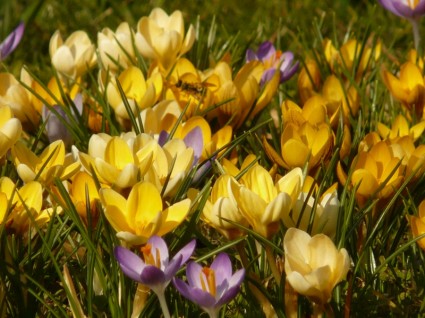
For those folks in the southern hemisphere who are entering fall as we the northern climates enter spring I offer this next personal narrative.

Every Autumn I buy a smooth skinned crimson pomegranate to celebrate the Fall Equinox. But until this fall I have never intentionally bought a pomegranate to acknowledge the Persephone in me although her cyclic journeys to the underworld have also been my own. I have resisted my alignment with Persephone because I have come to fear my own descents. In the last few years these periods of depression have become more severe.

The September I turned 70 on the last day of the ancient celebration of Persephone’s Eleusinian Mysteries. I spoke out loud as I set my birthday intention. I am aligning myself with Persephone. I held a pomegranate in the open palm of my hand, thinking of the fruit as a symbol of my willingness to take this step. I also saw the beautiful round fruit as the Earth, imagining the ruby –like seeds imbedded in the soft white flesh as Earth’s possibilities. As I surrendered and finally accepted my mythic identity/alignment with Persephone, I experienced a subtle energy shift. I thought about the maiden goddess who becomes Queen of the Dead, and the one who makes predictable cyclic descents into the Underworld. As I breathed through my body I experienced a palpable sense of relief… I recalled the recent dream that informed me that the “Way of the Goddess” was my way, and that I had to choose her again. Not surprisingly within a few days I once again entered a state of profound depression during which time I suddenly remembered my first encounter with a pomegranate…

Continue reading “Persephone Rising, Part 2 by Sara Wright”

Winter Stories by Sara Wright

Every November I begin to create stories inside. Except for going into the woods to tip balsam and making wreaths I never know what else I might decide to do, but by the time I have finished I know what the images are saying! This is a poem about the stories I created this year. With the silence of winter soothing me I begin this kind of play without awareness and without a goal…I love this idea of story being told through image.

Continue reading “Winter Stories by Sara Wright”

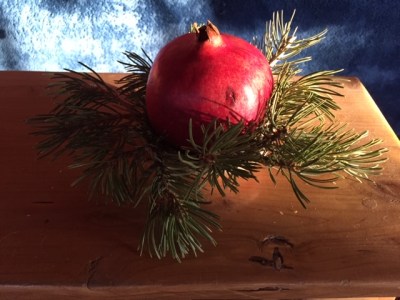
The Pomegranate by Sara Wright

It is mid November and shiny crimson Pomegranates catch the discerning eye in food markets; even Walmart carries them!

Why do these beautiful and very ancient fruits appear during this dark time of the year?

One answer to this question is that in the northern hemisphere the fruit of this deciduous shrub ripens anywhere from September to February. The reverse is true in the southern hemisphere when the fruits ripen during March, April and May. It is important to remember that in the southern hemisphere the seasons are reversed, so in both northern and southern parts of the globe these fruits appear in the fall, during the darkest months of the year.

Pomegranates are native from Iran to northern India and have been cultivated throughout the Middle East, Asia and the Mediterranean region for millennia. (Today they are also grown in California and Arizona, so they no longer need to be imported). The shrub was domesticated as early as the 5th millennium BC. Pomegranates were the first trees to be domesticated in the Mediterranean.

Continue reading “The Pomegranate by Sara Wright”