

Rosh Hashanah and the Goddess – redux – by Joyce Zonana

On our table, the crimson pomegranate seeds my mother had carefully separated from the skin glistened like jewels illumined from within; a pale green jam made from the grated flesh of a gourd, scented with rosewater and studded with thin slivers of blanched almonds, shone with a numinous, interior light. Bowls of black-eyed peas simmered with cinnamon and tomatoes were arrayed beside a delicately-flavored leek omelet, breaded and fried brains, roasted beets, fresh dates, apples, and—best of all—a previously untasted new fruit of the season: usually fresh fig or persimmon or prickly pear.

Joyce Zonana

When I was growing up in my Egyptian Jewish immigrant home, each of the High Holidays was imbued with sacredness, thanks largely to my mother’s efforts to create a meaningful gathering of family and friends. Around a long table, covered with an embroidered white cloth and set with sparkling silver and delicately fluted china, she served at each season the festive meal that made manifest for us the presence of the Divine.

My father, an Orthodox Jewish man, followed the tenets of his faith, praying each morning and attending synagogue each week. But it was my mother who brought to life the seasonal festivals that also characterize Judaism. As a child, I longed to pray with my father and I envied my brother and male cousins who studied and recited the ancient Hebrew; I resented having to polish silver and set the table. But today I’m grateful for my mother’s quiet teachings.

Passover had special meaning for us because our family’s departure from Egypt seemed a reenactment of the ancient Exodus. But Rosh Hashanah, that holy day without explanatory narrative, seemed even purer in its celebration of abundance and blessing, renewal and return.  Each year, I looked forward to the new moon in Tishrei that coincided with the arrival of autumn in New York and the beginning of the school year.

Continue reading “Rosh Hashanah and the Goddess – redux – by Joyce Zonana”

Making it Mine: An Un-Orthodox Passover by Joyce Zonana

Passover is a holiday of remembrance, of ritual re-enactment: this, we say, is what our ancestors experienced. This is what they felt and knew, what they tasted in their blood. The movement from slavery to liberation, from the soul’s winter to spring. We must never forget, we say, we must always remember, be thankful for our freedom, never take it for granted. “In each generation,” the Haggadah enjoins, “we should feel as if we personally had come out of Egypt.”

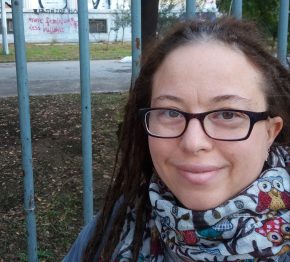
jz-headshotThis year, I celebrated the Jewish feast of Passover on March 31st–almost three weeks before the holiday’s official start on the evening of April 19th, the 15th of Nissan. It turned out to be my best Passover yet.
Because I’d been accepted for a residency at an artists’ colony beginning on April 17th, I had known since last Fall that I would not be home for the holiday. Given Passover’s importance for me–a Jew who left Egypt in her own lifetime, part of what some have called the “Second Exodus”–I had thought I might postpone the residency and even considered turning it down. But the colony could not change the dates, and, after much deliberation, I decided that my work as a fledgling translator was worth missing my usual gathering of family and friends. I told myself I could mark the arrival of Passover internally.

Continue reading “Making it Mine: An Un-Orthodox Passover by Joyce Zonana”

Home: A New Pesach Reflection by Ivy Helman

In ancient times, Pesach was one of three pilgrimage holidays, the others being Sukkot and Shavuot.  According to the the Torah, Israelite men were required to travel to Jerusalem to bring offerings to the temple. Supposedly, this reconnected these Israelites to their religion, to each other and to the deity.  Participating in these pilgrimages brought about a deeper sense of community. In short, three times a year, Jerusalem became a home away from home.

What an interesting and quite awful definition of home: a male-only community focused on slaughtering animals to atone for sins.  Did ancient Israelites think that this religious obligation actually created a better home than where they lived most of the year? Or, was it just a religious obligation?  Did anyone bemoan the massacre of the animals?  In a related fashion, was Pesach alienating for women and children? Did the ancient Israelite home become less important during these festivals? Did women and children feel left out of their own religious traditions if they didn’t live in Jerusalem?  What did they do for Pesach?  Continue reading “Home: A New Pesach Reflection by Ivy Helman”