The Echo Makers 25 by Sara Wright

Sunrise Crane Day. Nov 1, 2025

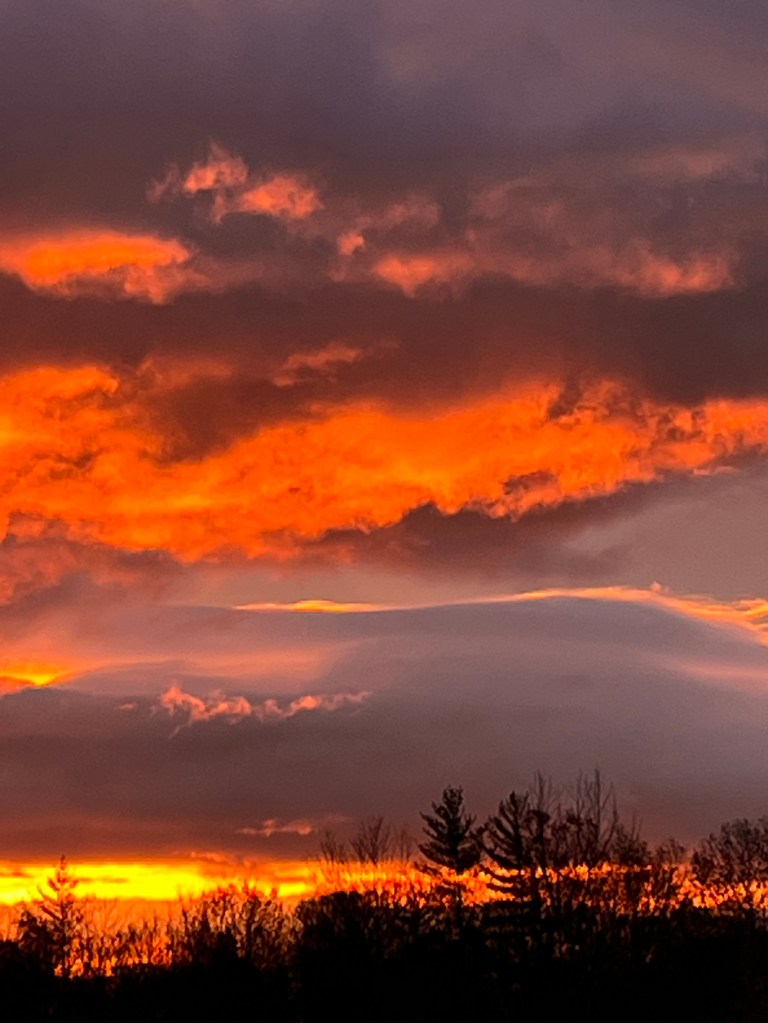
When I first heard the ‘trumpeting’ and ‘brrring’ it was less than an hour before dawn, but one aggregation was already on the wing headed west, away from the fields. Because their direction led away from the fields, I feared we would not see the Sandhills at all. It was All Saints Day, a time to give thanks to those creatures and people who have helped us along the way. (Sandhills have been been a beacon of Light in my own life). A bloody red sky turned deep rose as the sun shattered the charcoal outline of distant mountains, turning them carmen red. The wind was fierce as I walked up and down the sides of the open agricultural fields listening intently. Gunshots rang out and I wondered where these might be coming from. In Maine it is illegal to shoot migrating cranes. The sunrise was spectacular. Clouds spun themselves out of ruby, slate, and violet hues. Indescribable.

 Although snow buntings, red winged blackbirds and two harriers were scrying the skies around the fields after dawn I only had eyes for sandhill sightings!

Continue reading “The Echo Makers 25 by Sara Wright”
A Leaf Peeper’s Reflection by Sara Wright

Twice a year, once in May for a few days and during the first week of October I can’t leave home because I’ll miss the next moment of spring flowering or scarlet flames.

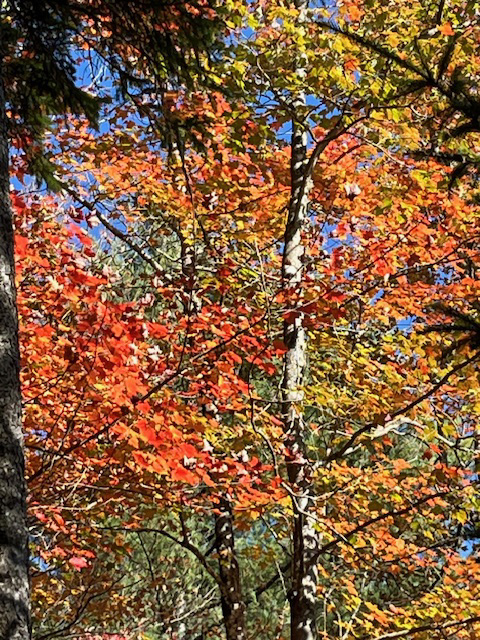
Last week I was captivated by how the golden morning light affects each deciduous leaf. For about five days I ran inside and out all morning to feast upon the astonishing leaf color changes as the sun rose higher. ‘Fire on the Mountain’, crimson, gold, seductive sultry salmon brilliance. In and out for hours. I drove my dogs crazy. Noting the bees on the blushing hydrangea, glad for dragonflies cruising around the house. Greeting little green frog framed against his log. Breathing in the Light. Infused by all too brief moments of swamp maple’s fierce fiery splendor.

Continue reading “A Leaf Peeper’s Reflection by Sara Wright”

The Natural History of Starlings by Sara Wright

Last week Sara wrote about her and her family’s personal connection to starling. You can read it here. 

Wikimedia Commons

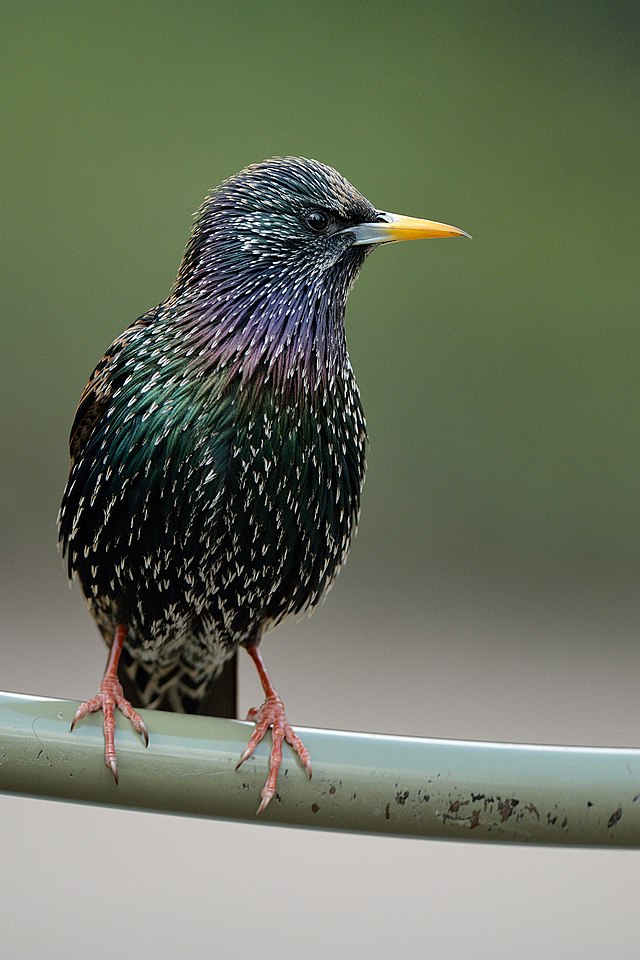
Amazingly, all the European starlings in this country descended from 100 birds that were deliberately set loose in New York’s Central Park in the 1890’s by colonists who wanted to see the birds they missed after immigrating to the US. Soon there were more than two million birds that ranged from Alaska to Mexico. All are closely related.  Sometimes if a female misses the first nesting she will try to lay an egg in other bird’s nests. They are wonderful mimics learning the calls of up to 20 species of birds like the pewee, killdeer, wood thrush, red tailed hawk and robin to mention a few.

Starlings turn from spotted and white to glossy and dark each year without shedding their feathers. The new feathers that grow in have white tips. These are the spots that disappear by spring as the feathers turn dark and glossy. These birds are incredibly strong fliers as is evidenced by the extraordinary starling murmurations that still occur throughout the fall and winter all over Europe.

Continue reading “The Natural History of Starlings by Sara Wright”

August: A Summer to Reflect, and a Time to Start Letting Go by Sara Wright

This has been an unusual summer. I can still listen to a roaring brook as I fall asleep at night. The flooding has been intense. The humidity is hardest to bare; I am grateful my cellar is finally free of water if not drying out. Our overall weather pattern remains the same; thundershowers almost every day; many clouds and thick morning fog. And tropical hurricane season is underway.

I am grateful for the moss and tall grasses that still glow lemony- lime emerald and sage green. My frog pond is empty except for snails; all the tadpoles have matured into tiny froglets that have disappeared into the dense foliage I have provided for them; ferns and anemones tower over others. A large toad only shows himself/herself  mostly at night when he hunts from the water dish I leave for him. Wild bee balm spikes are in bloom providing bees and hummingbirds with enough food for now. Some bee balm are ragged around the edges but the rain has brought in a second blooming cycle. My magic bean, the one I planted in March (in the house) has masses of deep orange flowers just outside my window. Grape leaves are climbing over the ground and visiting with the bean vine.

Continue reading “August: A Summer to Reflect, and a Time to Start Letting Go by Sara Wright”

Answering a Call by Sara Wright

“Shamans bridge the night flow…” the first lines from a poem I wrote long ago keep coming into my mind. Frustrated because I can no longer access the poem, I accept that the first line is what I need… ‘bridging the night flow’ of intrusive negative feelings/actions on the part of others (as well as myself) is precisely the edge I am on. Even smoke – filled rooms remind me that I need personal protection.

 An Indigenous healer and impeccable scientist and naturalist friend of mine reminds me of what I know, spiritual forces are moving. When I told him of my dream his response was to focus on protection, create the intention, and let it go… I tried to do this in my mind with limited success but apparently our discussion around this subject opened a door for me or we both did as I remembered how important it is for me to ground my intentions in something concrete. How had I forgotten?

Continue reading “Answering a Call by Sara Wright”

Liberation Lessons for Pesach by Ivy Helman

Each year we read the story of our exodus from Egypt during the Pesach seder. The story is one of human liberation from oppression. Yet, most of the imagery we encounter, the drama of the story so to speak, involves nature: a river that saves a baby, a burning bush, the plagues, the re(e)d sea, the wilderness, lack of food and water and the promised land itself. What does this mean?

In general, it means that human liberation is intimately connected to the liberation of all of creation.  In particular, the exodus story can teach us many lessons about environmental justice.  I’m going to explore five of them here: do not manipulate nature, use water wisely, form a connection to the land, imagine G-d differently and treat humans, animals and the land well.

Continue reading “Liberation Lessons for Pesach by Ivy Helman”