All That She Carried by Tiya Miles: Recovering the Untold Stories of Black Women in America, part 2 by Theresa Dintino

Part 1, appeared yesterday.

There are many women named Rose in the ledgers of unfree people in Charleston around 1850. The defining feature to find the Rose mentioned on this sack is that her daughter is named Ashley, not a common name for Black female children of the time. Miles finally locates a Rose and an Ashley in the inventory of Milberry Place Plantation, a country estate of a man named Robert Martin. When Martin died, his estate was liquidated and thus the mention of the sale of Ashley. 

“Ashley is listed among one hundred unfree people in the inventory of Martin’s enslaved property taken in the year 1853. Her attributed value of $300, in comparison to that of other women listed at $500 and $600 in the cotton boom decade of the 1850’s, suggests that she may have been a younger or relatively unskilled worker”(69).

Things were bad enough for unfree people but the disruption that came like a tsunami through their lives when an enslaver died and his property was sold was a fear most carried and trembled at the thought of. Unfree families were always being torn apart in the time that slavery was legal and allowed in this country, but when estates were being divided up, it became particularly excruciating and this is what came to pass for Rose and Ashley. 

Continue reading “All That She Carried by Tiya Miles: Recovering the Untold Stories of Black Women in America, part 2 by Theresa Dintino”

Legacy of Carol P. Christ: Susan B. Anthony’s Bargain with the Devil

Moderator’s Note: Some of Carol’s pieces are so important that we are reposting them for a 2nd time. This was first posted in November 2019 and reposted in November 2021

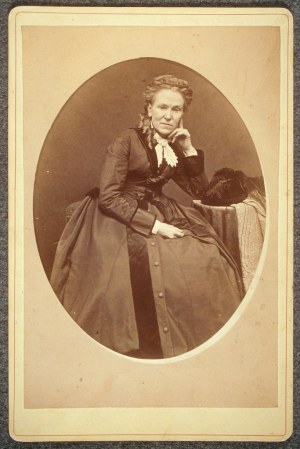
Matilda Joslyn Gage


[T]he most grievous wrong ever inflicted on woman has been in the Christian teaching that she was not created equal to man, and the consequent denial of her rightful place in Church and State. –Matilda Joslyn Gage, Woman, Church, and State, 1893, page 1

I do not approve of their [referring to Gage and Stanton] system of fighting the religious dogmas of people I am trying to convert to my doctrine of equal rights to women. –Susan B. Anthony to Olympia Brown, following the disputed merger of the radical National Women’s Suffrage Association with the conservative American Women’s Suffrage Association in 1889

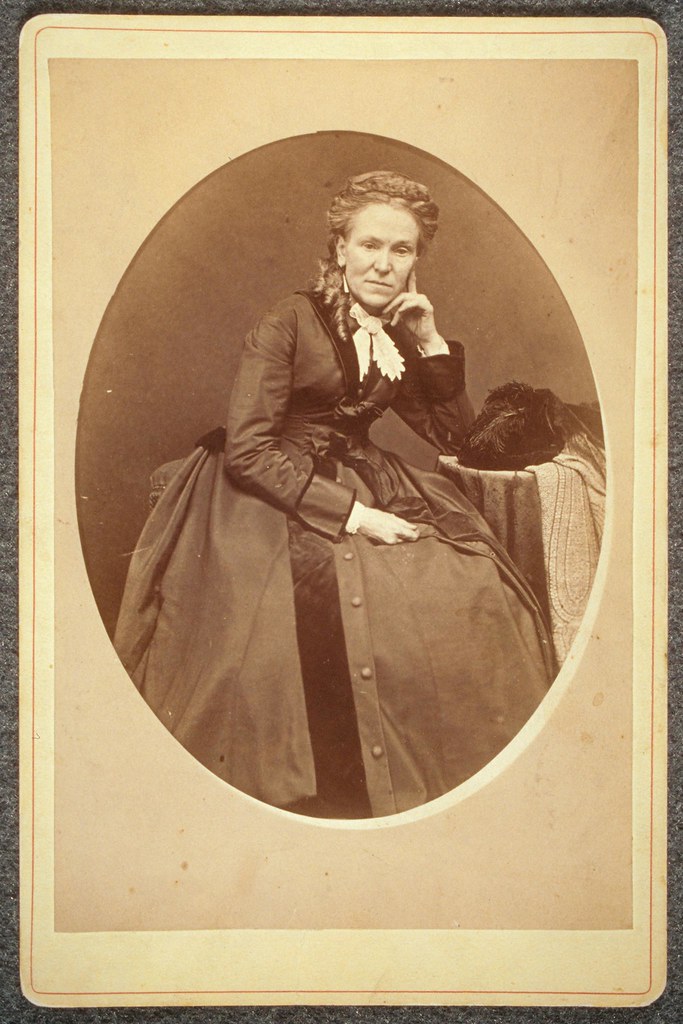
Most readers of Feminism and Religion know that Susan B. Anthony and Elizabeth Cady Stanton were leaders in the nineteenth century struggle for women’s rights. Fewer will know that Matilda Joslyn Gage was widely understood to be Stanton’s equal as a theorist and Anthony’s equal as an organizer. The fact that Gage’s contributions have been lost to history can be attributed to Susan B. Anthony’s bargain with the devil.

If Anthony’s bargain had affected only the reputation of Matilda Joslyn Gage, that would be bad enough. But Anthony’s decision to merge the NWSA with the AWSA signaled that the women’s rights movement would cease and desist from its policy of naming and indicting Christian dogma as the source and cause of women’s subordination in the law in Christian countries. This decision meant that feminists would no longer have a clear understanding of the forces they were reckoning with. Continue reading “Legacy of Carol P. Christ: Susan B. Anthony’s Bargain with the Devil”

The Connection between Matilda Joslyn Gage’s Woman, Church and State and L. Frank Baum’s The Wonderful Wizard of Oz by Mark I. West

My introduction to Matilda Joslyn Gage (1826-1898) goes back to my long-standing interest in her son-in-law, L. Frank Baum. I regularly teach Baum’s The Wonderful Wizard of Oz in my children’s literature courses, and I always point out the book’s feminist qualities. I mention, for example, that Dorothy Gale, the central character in the novel, is one of the first female characters in American literature to go on a bona fide quest.  When I first started teaching this book, I wondered what caused Baum, a male writing in the late nineteenth century, to write such a feminist book. One day, while preparing for class, I came across a reference to Gage. This reference stated that Gage was a leading suffragette during the second half of the nineteenth century and that she lived with Baum and his family in Chicago when Baum was launching his career as a children’s author. After reading more about Baum’s life, I realized that Gage played a major role in shaping his nontraditional views on gender roles. However, I was still not sure what role she played in the development of women’s rights.

Continue reading “The Connection between Matilda Joslyn Gage’s Woman, Church and State and L. Frank Baum’s The Wonderful Wizard of Oz by Mark I. West”

Herstory Profiles: Indian Royalty, Suffragette, Women’s Rights Activist by Anjeanette LeBoeuf

April is Sikh Awareness month which is incredibly important this year due to what is currently happening in the Punjab by the Indian Nation State. If you haven’t heard about the government shutdown largely targeting Sikhs, you can read here. To keep the focus on the Sikh Community, this post will be focused on the amazing royal turning fierce activist and suffragette – Sophia Duleep Singh.

Continue reading “Herstory Profiles: Indian Royalty, Suffragette, Women’s Rights Activist by Anjeanette LeBoeuf”

Carol P. Christ’s Legacy: Susan B. Anthony’s Bargain with the Devil

Moderator’s Note: We at FAR have been so fortunate to work along side Carol Christ for many years. She died in July this year from cancer. To honor her legacy as well as allow as many people as possible to read her thought-provoking and important blogs we are pleased to offer this new column to highlight her work. We will be picking out special blogs for reposting. This blog was originally posted November 25, 2019. You can find the original post here to see the original comments along with her responses.

Matilda Joslyn Gage

[T]he most grievous wrong ever inflicted on woman has been in the Christian teaching that she was not created equal to man, and the consequent denial of her rightful place in Church and State. –Matilda Joslyn Gage, Woman, Church, and State, 1893, page 1

I do not approve of their [referring to Gage and Stanton] system of fighting the religious dogmas of people I am trying to convert to my doctrine of equal rights to women. –Susan B. Anthony to Olympia Brown, following the disputed merger of the radical National Women’s Suffrage Association with the conservative American Women’s Suffrage Association in 1889

Continue reading “Carol P. Christ’s Legacy: Susan B. Anthony’s Bargain with the Devil”

Suffrage is Unfinished Business—On The 101 Anniversary of the 19th Amendment by Marie Cartier

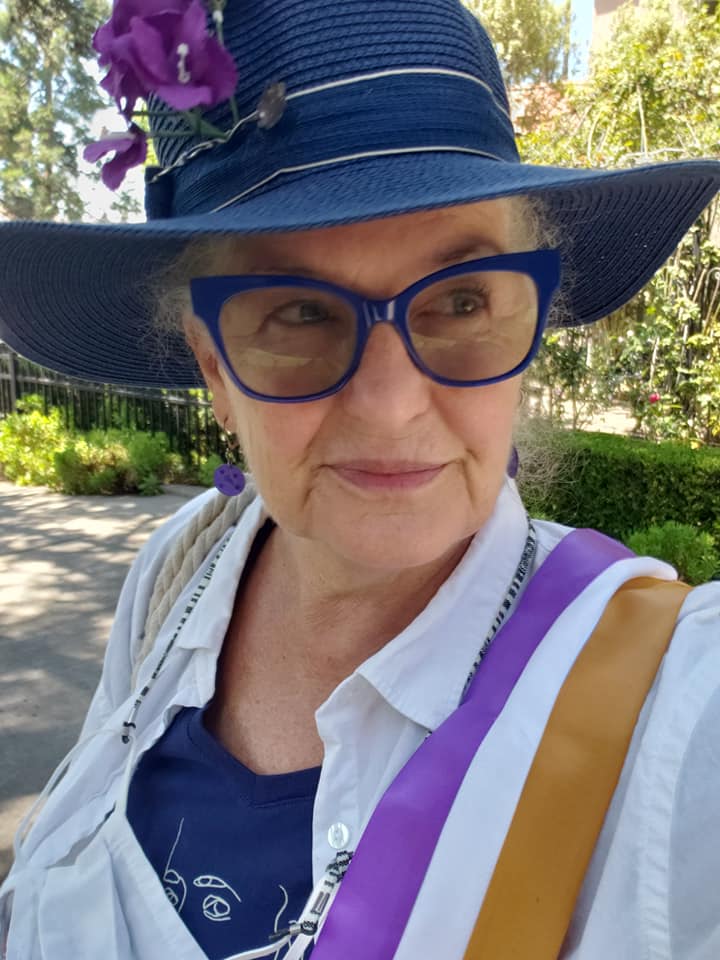
Dear FAR readers – please find photos from a celebration of the 101 anniversary of women’s suffrage, the 19th Amendment, that I attended August 26, 2021. That day marks the end of the 100th year of women having the right to vote.

I have been proud to be a part of, these past few years, a group calling themselves Suffrage in California – LBSuffrage100 Suffrage 100. We have met continuously in person and on line for two years now, stymied by the pandemic, but still pushing forward throughout this year with actions at the Democratic Convention, Long Beach Suffrage 100 celebrates in silence for centennial anniversary of the 19th Amendment – Press Telegram, standing in silence as the original suffragettes did outside the White House. We also of course marked the 100th anniversary of suffrage, and at that time switched focus during the election to lobby for the John Lewis Voting Rights Act, part of the “unfinished business” of suffrage.  Text – H.R.4 – 117th Congress (2021-2022): John R. Lewis Voting Rights Advancement Act of 2021 | Congress.gov | Library of Congress which seeks to expand federal ability to challenge discriminatory election rules.

Continue reading “Suffrage is Unfinished Business—On The 101 Anniversary of the 19th Amendment by Marie Cartier”

100 Years After Women’s Right to Vote, Our Feminist Struggle Continues by Gina Messina

The first time I called myself a feminist, I think I was twelve years old. Growing up in a traditional Sicilian Catholic household, misogyny was ever-present. There were clear expectations of me and my brother based on our gender and these ideas were grounded in our religion. I didn’t realize how problematic this was until much later; but by age twelve I was asking questions and knew that it wasn’t fair that my brother could be an altar server and I couldn’t…because I was a girl. 

A few years ago, I experienced a shift in my life. I am not sure how to explain it. Some might call it a midlife crisis; but I’m inclined to define it as an awakening, at least a partial awakening. I won’t foolishly claim that I am suddenly enlightened; however I began to question my own identity as a feminist. Continue reading “100 Years After Women’s Right to Vote, Our Feminist Struggle Continues by Gina Messina”

Susan B. Anthony’s Bargain with the Devil by Carol P. Christ

Matilda Joslyn Gage


[T]he most grievous wrong ever inflicted on woman has been in the Christian teaching that she was not created equal to man, and the consequent denial of her rightful place in Church and State. –Matilda Joslyn Gage, Woman, Church, and State, 1893, page 1

I do not approve of their [referring to Gage and Stanton] system of fighting the religious dogmas of people I am trying to convert to my doctrine of equal rights to women. –Susan B. Anthony to Olympia Brown, following the disputed merger of the radical National Women’s Suffrage Association with the conservative American Women’s Suffrage Association in 1889

Most readers of Feminism and Religion know that Susan B. Anthony and Elizabeth Cady Stanton were leaders in the nineteenth century struggle for women’s rights. Fewer will know that Matilda Joslyn Gage was widely understood to be Stanton’s equal as a theorist and Anthony’s equal as an organizer. The fact that Gage’s contributions have been lost to history can be attributed to Susan B. Anthony’s bargain with the devil.

If Anthony’s bargain had affected only the reputation of Matilda Joslyn Gage, that would be bad enough. But Anthony’s decision to merge the NWSA with the AWSA signaled that the women’s rights movement would cease and desist from its policy of naming and indicting Christian dogma as the source and cause of women’s subordination in the law in Christian countries. This decision meant that feminists would no longer have a clear understanding of the forces they were reckoning with. Continue reading “Susan B. Anthony’s Bargain with the Devil by Carol P. Christ”