

‘Four thousand years ago, in the ancient Near East, women were poets, drummers, scholars, dancers, healers, prophets and keepers of sacred space.’ In The Hebrew Priestess (2015), Rabbi Jill Hammer argues that as the Israelite cult became more centralised, leadership roles were restricted to men and women’s spiritual leadership was gradually repressed. Yet, as Hammer and co-author Taya Shere demonstrate, ‘the remnants of the priestesshood remain for those who seek them out.’ Combining a close reading of biblical and rabbinic texts, alongside other contemporary sources and archaeological evidence, Hammer has identified thirteen models or netivot of feminine Jewish leadership, which she argues persisted, albeit in altered and marginalised forms, into the medieval, early modern and even modern periods. My own research supports these conclusions, suggesting that Hammer’s netivot framework provides a useful lens by which to better understand Jewish women’s traditions that, in a patriarchal culture, have often been marginalised.
Continue reading “Priestesses of the Shtetl? The Jewish Women Spiritual Leaders of Eastern Europe by Annabel Gottfried Cohen”Author: Guest Contributor
Women’s Spirituality in the Film Classroom by Freia Serafina
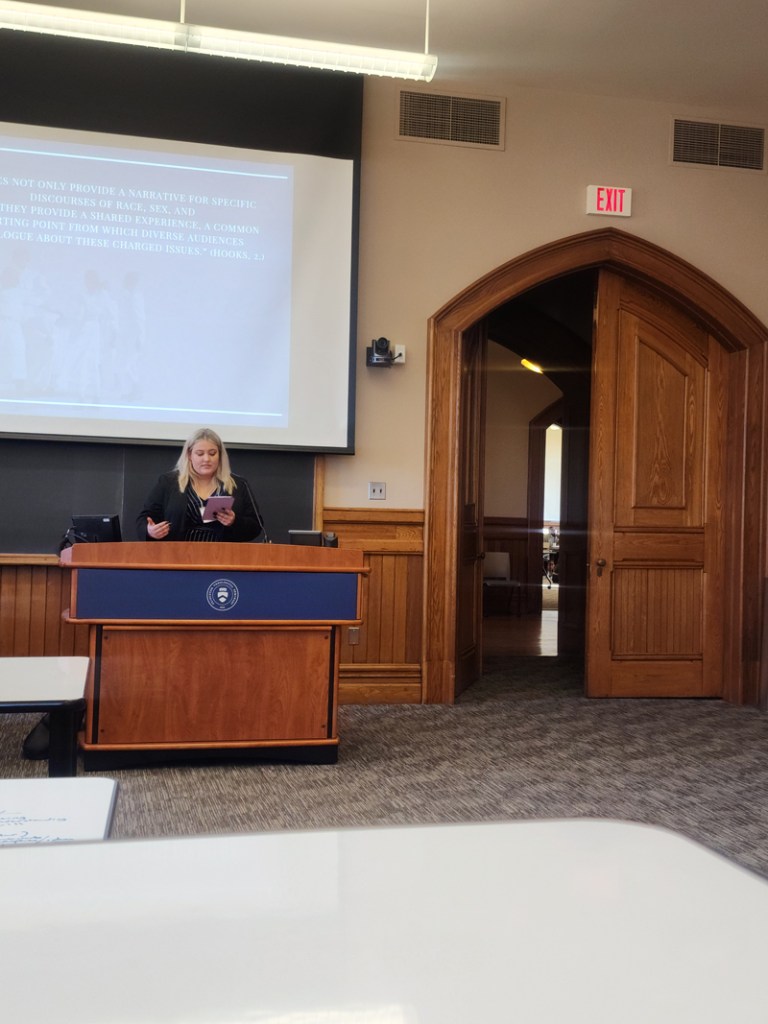
Recently tasked with the co-creation of a film ethics course, I thought extensively about what material would best serve film acting students in a New York City Conservatory. I wanted to include films that would focus on diversity, story inclusivity, and encourage them to wonder if what they saw on screen impacted or influenced their reality. In a course centered on ethics, religion and spirituality tend to enter the conversation. This entrance provided me with the opportunity to introduce a plethora of women’s visionary films that would be used to examine the spiritual lives of women and how religion and spirituality impact the film narrative. Women’s visionary films can be defined as films that are “written, directed, and/or produced primarily by women and share women’s vision of realities. The sacred themes of these films, in diverse cultural contexts, engage women’s self-reflective use of the arts to convey greater insight into the colors, shapes, emotions, and spirituality of women’s lives—women’s imagination, suffering, hopes, beliefs, and dreams.” (Mara Keller, 2018)
Continue reading “Women’s Spirituality in the Film Classroom by Freia Serafina”MATILDA JOSLYN GAGE: IN HER NAME, AMERICAN WOMAN WRITER AND ACTIVIST (1826-1898), part 2 by Maria Dintino
part 1 appeared yesterday
Leila Brammer in her book Excluded from Suffrage History: Matilda Joslyn Gage, Nineteenth-Century American Feminist, explains the long-term impact of the dismissal of Gage:
“The loss of Matlida Joslyn Gage from the history of the woman suffrage movement and her ideas from the intellectual history of feminism speaks to the influence of exclusionary processes in social movements as well as their unfortunate consequences…we must remember that Joslyn Gage was intricately involved in the movement, wrote in newspapers and magazines, and published a book, but all these activities and her significant feminist thought had to be re-created and rediscovered nearly a century later”(120).
Continue reading “MATILDA JOSLYN GAGE: IN HER NAME, AMERICAN WOMAN WRITER AND ACTIVIST (1826-1898), part 2 by Maria Dintino”MATILDA JOSLYN GAGE: IN HER NAME, AMERICAN WOMAN WRITER AND ACTIVIST (1826-1898), part 1 by Maria Dintino

Moderator’s Note: We are pleased to announce that we have formed a co-operation with The Nasty Women Writers Project, a site dedicated to highlighting and amplifying the voices and visions of powerful women. The site was founded by sisters Theresa and Maria Dintino. To quote Theresa, “by doing this work we are expanding our own writer’s web for nourishment and support.” This was originally posted on their site on January 5, 2021. You can see more of their posts here.
A few weeks back, I came upon a term I had not heard before, the ‘Matilda Effect’. It’s defined as: a bias against acknowledging the achievements of those women scientists whose work is attributed to their male colleagues (Wikipedia). This term was coined by science historian Margaret W. Rossiter in 1993, in her essay The Matthew Matilda Effect in Science.
The Matthew Effect, labeled in 1948 and credited to Robert K Merton, and later to Harriet Zuckerman as well, refers to the way that: eminent scientists will often get more credit than a comparatively unknown researcher, even if their work is similar; it also means that credit will usually be given to researchers who are already famous (Wikipedia).
Continue reading “MATILDA JOSLYN GAGE: IN HER NAME, AMERICAN WOMAN WRITER AND ACTIVIST (1826-1898), part 1 by Maria Dintino”Bible Believing Church Sign by Michelle Bodle
A dear colleague is retiring from ministry this year. As I often do at times of celebration, I think about the most meaningful conversations, questions, and impact that person has offered my life. As I was thinking of this colleague in particular, what came to mind was a statement that made to him that sparked a conversation that has been ongoing between us for almost a decade: “That church is not for me.”
My friend talked about driving his motorcycle down a well-traveled highway and seeing church after church. If you know churches, you know that church signs can be anywhere from enjoyable to problematic. Some church signs try to convey witty messages, but they often miss the mark. Other times, a church speaks of its beliefs or current sermon series, using insider churchy language that does not hit with those whom the sign may be trying to reach in the first place. But church signs do exist for a purpose – to catch the eyes of travelers, which was undoubtedly the case with my colleague.
“I was driving down this road, and the sign that caught my attention said, ‘Bible Believing Church,’ and I’ve been thinking about that repeatedly,” he stated. I replied that I didn’t need to think about that sign; I knew exactly what it was trying to convey—that I was not welcome there.
Continue reading “Bible Believing Church Sign by Michelle Bodle”Cymidei Cymeinfoll by Diane Finkle Perazzo
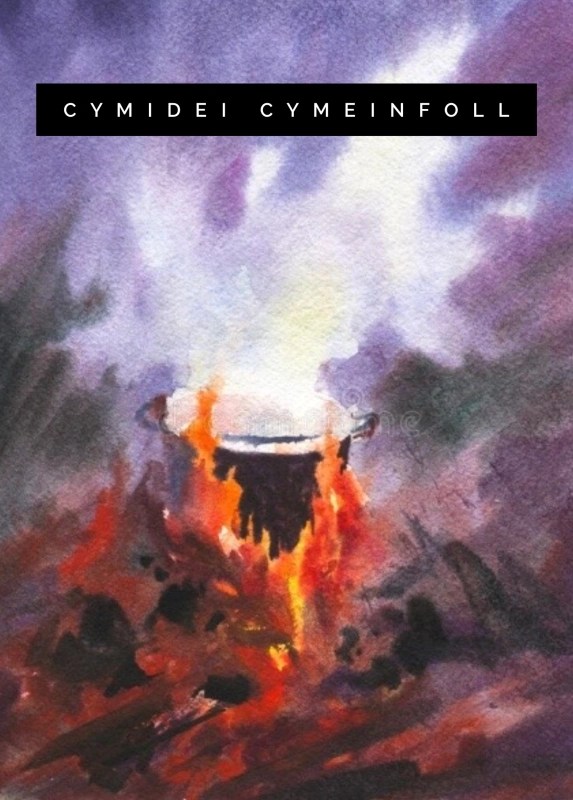
Carbon and quartz; granite and marble.
Her iron bones were forged in fire.
Her heavy body was carved from stone.
She rose up through black water and rocky soil,
up to the out and around, and born into
the green and growing ground.
As she walked, the ground rumbled and shook.
Rocks rolled and tumbled from the mountains
and Roman roads crumbled where she stepped.
She brought a gift they did not ask for; a vessel
forged in fire from the womb of the earth —
a life-giving cauldron of renewal and birth.
A Feminist Reading of Saint Wilgefortis by Sofia Meskhidze
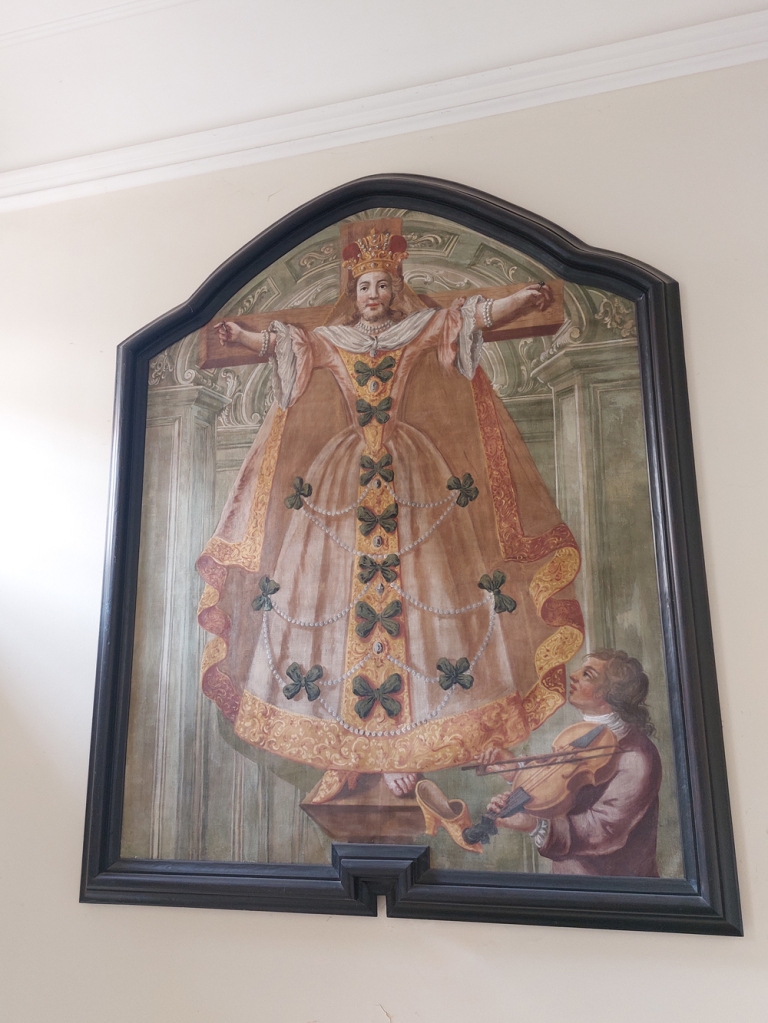
The legend of Saint Wilgefortis tells the story of a Christian woman who was martyred for her faith. While there are numerous women martyrs in the Christian tradition, Wilgefortis is distinguished by her gender non-conformity. She is often referred to as female Christ[1] and is almost always depicted with a beard, in a dress, and nailed to a cross. According to the legend, she was a Christian princess from Portugal whose father had promised her to the pagan king of Sicily. Wilgefortis, refusing to marry, prayed all night for God to make her unmarriable and as a result miraculously grew a beard, causing her father’s rage, after which he had her tortured and crucified[2]. The origin of the legend is thought to be the Volto Santo sculpture in Lucca, Italy, one of the most well-known examples of a clothed crucifix[3]. Misinterpretation or not, it is without doubt that the legend spread wide and Wilgefortis was in medieval times venerated almost as much as the Virgin Mary. In fact, this popularity displeased the Catholic Church, who actively discouraged it and even removed Wilgefortis from the official list of saints in 1969[4]. Here I argue for the importance of Wilgefortis to feminist theology, feminist and queer Christians, and her potential as a non-binary/gender non-conforming icon.
Continue reading “A Feminist Reading of Saint Wilgefortis by Sofia Meskhidze”Rhiannon as Midlife Queen Mother by Kelle BanDea
We tend to think of Rhiannon as the fairy maiden on the white horse who entices Pwyll, the King and her future husband, into the Otherworld. Or she is the young mother who is unfairly blamed for the death of her own child until he is restored to her. This is Rhiannon’s story as it is most well-known, and she has become a beloved figure due to it. The image of the beautiful fairy woman on the white horse has become equated, to modern neopagan folks and Goddess-women, with the ancient Celtic and Indo-European horse goddesses. Of all the women in the medieval Welsh lore that we know as the four story ‘branches’ of the Mabinogi, Rhiannon is perhaps the most beloved.
But this is only half of the story.
Continue reading “Rhiannon as Midlife Queen Mother by Kelle BanDea”FRANCESCA CACCINI (1587-1646): THE FIRST WOMAN TO COMPOSE AN OPERA by Maria Dintino
Moderator’s Note: We are pleased to announce that we are forming a co-operation with The Nasty Women Writers Project, a site dedicated to highlighting and amplifying the voices and visions of powerful women. The site was founded by sisters Theresa and Maria Dintino. To quote Theresa, “by doing this work we are expanding our own writer’s web for nourishment and support.” This was originally posted on their site on January 19, 2024. You can see more of their posts here.

I’ve always been an insomniac and of late I’ve become a regular listener of the app Calm’s sleep stories. One night I listened to an enchanting story called Songbird, written by Eurydice Da Silva and narrated by May Charters. Songbird is about Francesca Caccini, who is said to be the first woman to compose an opera, a musical genius and wonder. The next morning, I set out to learn more about her.
Continue reading “FRANCESCA CACCINI (1587-1646): THE FIRST WOMAN TO COMPOSE AN OPERA by Maria Dintino”Time to Heal the Ancestral Wounds From the Burning Times by Marilyn Nyborg
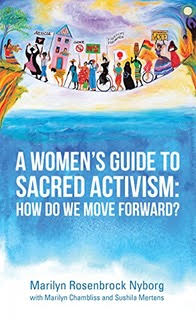
My work has been in the areas of social justice and the empowerment of women. Until somewhere in 1990, I saw a series of films from women in Canada on the Early Modern European Witchcraft trials which included “The Burning Times”. (Still available on You Tube.) The film talked about three centuries of Witch burnings. The narration and graphics really shocked me and awakened an interest. Intuitively I recognized the way in which women have embedded the limitations and pain of that era from centuries ago. I now know it to be called ancestral wounding.
Not to say the abuse of women began there. It didn’t. But the intensity of three centuries of extreme violence on women have impacted us and cultures through time: sowing the limitations and lack of respect for women into cultures globally.
Continue reading “Time to Heal the Ancestral Wounds From the Burning Times by Marilyn Nyborg” Feminism and Religion