Daughters of Witches By Julia Park Tracey

“We are the daughters of the witches you couldn’t burn.”

That’s a popular meme going around the internet these days, as we await the joyful coming of our savior, Kamala Harris, or the End Times, with the Mango Mussolini. I say that only slightly in jest, because I do believe we are in a fraught time. A woman president could set us up for incredible progressive movement, while a Trump/Vance win could mark the beginning of the end of women’s rights altogether.

There’s no way not to be political in an essay about feminism and religion, so if the current election is not of interest to you, I say, enjoy your privileges while you can and I hope the leopards don’t eat your face, as another meme goes. Regardless, the bodies of witches and the bodies of all our women, young and old, are still interconnected, both by virtue of our gender and of our position as political pawns (again? still? It is to weep).

Continue reading “Daughters of Witches By Julia Park Tracey”

Why Ritual in Turbulent Times? by Terry Folks

Nick Fewings, Unsplash

It is Autumnal Equinox. Five women gather equidistant apart beneath a giant avocado tree in the garden at Evi’s place near the village of Zaros. This little hamlet is under the watchful loving eye of Psiloritis (Mount Idi) on the Island of Crete in Greece. We leave the solitude of our individual cottages where we have been quarantined to co-create an Autumnal Equinox ritual I have initiated for this occasion. Since we are still testing positive for COVID, we maintain our distance. I have a nasty strain as I’m exhausted, foggy, my nose bleeds, and I’m coughing so much my head hurts. Still … this ritual is important as our morale seriously needs a boost. We are dubbed the five “Corona Sisters” or the “COVID Girls” whose Goddess Pilgrimage on Crete was cut short when we contracted the virus somewhere between our homes in Australia, Canada and the United States, and our arrival in Heraklion a few short days ago. We have renamed ourselves the “Avocado Sisterhood” to acknowledge the blessing of our togetherness, and we represent a quarter of the women participating in Carol Christ’s Goddess Pilgrimage to Crete in 2023.

Continue reading “Why Ritual in Turbulent Times? by Terry Folks”

The Place of All Possibility: Cultivating Creativity Through Ancient Jewish Wisdom by Rabbi Adina Allen

In her book Pentimento, author and playwright Lillian Hellman describes a phenomenon that often occurs when we return to a piece of art we once worked on after much time has passed: “Old paint on a canvas, as it ages, sometimes becomes transparent. When that happens it is possible, in some pictures, to see the original lines: a tree will show through a woman’s dress, a child makes way for a dog, a large boat is no longer on an open sea.” Hellman speaks of the way the aging paint allows for older layers to show through, offering an opportunity to see, in her words, “what was there for me once, what is there for me now.”

Like the painting Hellman describes, Torah, too, is a work in process. Layers and layers of interpretation have been added to it over time, according to the needs, desires, fears, and longings of those who devoted their lives to making meaning out of these sacred words. Some layers add to the beauty and power of the overall piece, strokes and shapes that bring the picture more clearly and compellingly into focus. And some accrue like varnish, making the painting hard and impenetrable. Each one of us is invited into this process of excavation, of peeling back layers of what we have been taught or what we think we know, and seeing, as Hellman writes, what is there for us now. And each of us is called to our creativity — to bring our brush back to the canvas anew, reencountering and reworking the stories, ideas, and images that lie at the very foundation of who we are and who we could be.

Continue reading “The Place of All Possibility: Cultivating Creativity Through Ancient Jewish Wisdom by Rabbi Adina Allen”

The Awakened Woman: Remembering and Reigniting Our Sacred Dreams by Woman Writer Dr. Tererai Trent by Maria Dintino

Moderator’s Note: This piece is in co-operation with The Nasty Women Writers Project, a site dedicated to highlighting and amplifying the voices and visions of powerful women. The site was founded by sisters Theresa and Maria Dintino. To quote Theresa, “by doing this work we are expanding our own writer’s web for nourishment and support.” This was originally posted on their site on January 14, 2020. You can see more of their posts here. 

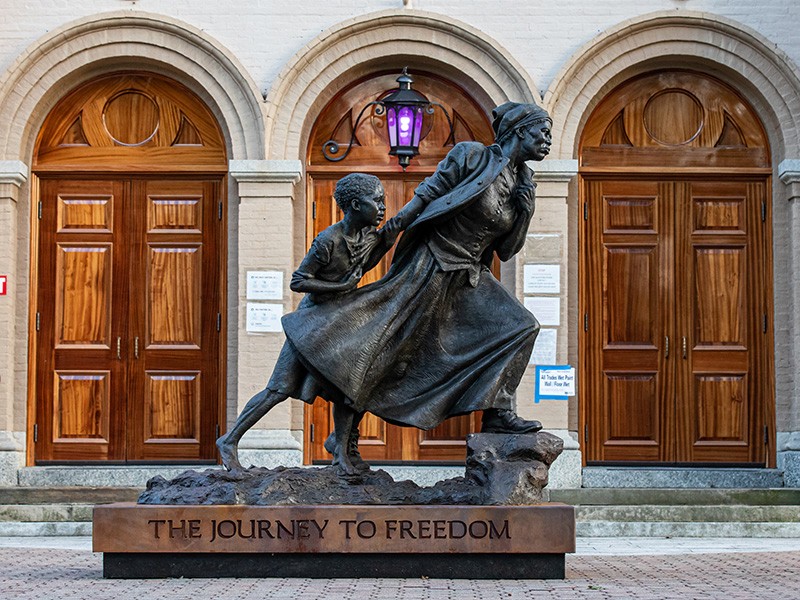
Breaking the Bronze Ceiling – Statues of Real Women in Public Spaces

I cannot imagine a woman more deserving than Dr. Tererai Trent, her likeness one of ten life-size bronze statues unveiled in New York City on Women’s Equality Day on August 26, 2019.

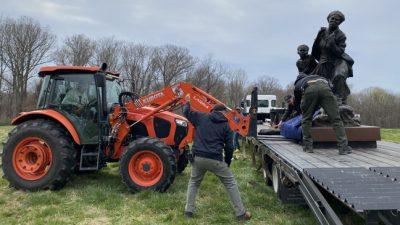
Australian global public artists and activists, Gillie and Marc Schattner, revealed the statues of these inspirational women on 6th Avenue (Avenue of the Americas) that glorious summer day! Their organization, Statues for Equality, is on a mission to achieve gender balance in public statues worldwide. In NYC prior to their unveiling, only 3% of the statues depicted females; this climbed to 10% on August 26.

Continue reading “The Awakened Woman: Remembering and Reigniting Our Sacred Dreams by Woman Writer Dr. Tererai Trent by Maria Dintino”

Cerridwen’s Brew; the Psychedelic Priestesses and the Theft of Indigenous Wisdom by Kelle Ban Dea

Katerina Shkribey, mushroom. Unsplash stock

Recently I wrote about how the story of Cerridwen and Taliesin is not a muse and hero tale but a tale of stealing from the goddess. Violating her priestesses and exploiting the land.

That is one reading of it. There is another though, which may have some grounding in historical fact and may be a warning to a particular issue gaining prominence today; the rise of the psychedelic industry.

Although neo-Druids, for whom this tale forms part of their core mythology, interpret the awen that Cerridwen brews in her cauldron as the ‘flowing spirit of inspiration,’ the original text makes it clear it is a potion. Cerridwen gathers ‘every kind of charm-bearing herb’ for the potion. Three drops of it turn the boy Gwion Bach into the shaman-bard Taliesin, but the rest is poison.

Continue reading “Cerridwen’s Brew; the Psychedelic Priestesses and the Theft of Indigenous Wisdom by Kelle Ban Dea”

Sing Anyway by Dr. Jamie Marich

I often find myself sitting in conservative Catholic spaces. My brother is a Roman Catholic priest in the Dominican order and I remain in support of his vocation. Every time, before a Mass officially starts, I’m overcome with a sense of: “You belong here…and you don’t.”

The part of me that has always felt at home in a Catholic setting is that love of the ritual and ceremony, the smell of the incense, the familiarity of the chants and songs. It was a Catholic priest, the late Fr. Ciaran O’Donnell, who taught me how to play the guitar and got me started with the healing practice of songwriting. When I sink into these associations, I feel connected to my Croatian ancestors and our Catholic faith. And there’s the other part of me—the queer feminist and an advocate for other queer and transgender people to live the fullest, most open expressions of themselves in all spaces of life, especially faith-based spaces. As a survivor of several forms of sexual assault and as a trauma specialist who has guided countless other survivors in their healing process over the years, I can’t sit in a Catholic Church and not feel uneasy about the legacy of abuse and silencing survivors within the church. Between my queer identity and dedication to supporting survivors, I feel that I don’t belong.

Continue reading “Sing Anyway by Dr. Jamie Marich”

Cerridwen’s Cauldron; Stealing from Old Mother Universe by Kelle ban Dea

Catherine Kay Greenup, blue well
Unsplash stock

The story of how Cerridwen, the witch goddess, brews a magic potion full of awen (inspiration) which is then accidentally imbibed by the boy Gwion Bach, is well loved across the Western world, especially by neo-Druids. Gwion Bach is then reborn as Taliesin, the greatest bard in Britain. It is a typical heroes tale, with Cerridwen as the muse and initiatrix.

Or is it? This tale has always left a funny taste in my mouth, and when I recently read The Broken Cauldron by Lorna Smithers, I understood why. In the oldest version we have of this tale, Gwion Bach doesn’t accidentally taste the awen. He steals it.

Continue reading “Cerridwen’s Cauldron; Stealing from Old Mother Universe by Kelle ban Dea”

She in Archetypes, Images, Energy… Emerging by Dale Allen

If it weren’t for my mother, I wouldn’t have gone to church on Saturday evening at 5pm.  It was a special trip made by me, my daughter and my 89-year-old mother who is visiting here in Connecticut from Ohio.  We are met at Holy Name of Jesus Church in Stamford, CT by one of my aunts, some cousins, one of my sisters, a brother-in-law, nieces and nephews – part of our big family.

Holy Name of Jesus Church is in walking distance from the house where my mother grew up: the house where her Polish-immigrant parents raised 8 children. My mother and her siblings attended Holy Name of Jesus Catholic School next to the church from 1st through 9th grade. The school is still there and now houses a daycare and learning center.

Continue reading “She in Archetypes, Images, Energy… Emerging by Dale Allen”

The Connection between Matilda Joslyn Gage’s Woman, Church and State and L. Frank Baum’s The Wonderful Wizard of Oz by Mark I. West

My introduction to Matilda Joslyn Gage (1826-1898) goes back to my long-standing interest in her son-in-law, L. Frank Baum. I regularly teach Baum’s The Wonderful Wizard of Oz in my children’s literature courses, and I always point out the book’s feminist qualities. I mention, for example, that Dorothy Gale, the central character in the novel, is one of the first female characters in American literature to go on a bona fide quest.  When I first started teaching this book, I wondered what caused Baum, a male writing in the late nineteenth century, to write such a feminist book. One day, while preparing for class, I came across a reference to Gage. This reference stated that Gage was a leading suffragette during the second half of the nineteenth century and that she lived with Baum and his family in Chicago when Baum was launching his career as a children’s author. After reading more about Baum’s life, I realized that Gage played a major role in shaping his nontraditional views on gender roles. However, I was still not sure what role she played in the development of women’s rights.

Continue reading “The Connection between Matilda Joslyn Gage’s Woman, Church and State and L. Frank Baum’s The Wonderful Wizard of Oz by Mark I. West”

How the Nineteenth-Century Spiritualist Movement Gave Voice to American Women -Part 2 by Theresa Dintino

Moderator’s Note: This post is presented as part of FAR’s co-operation with The Nasty Women Writers Project, a site dedicated to highlighting and amplifying the voices and visions of powerful women. The site was founded by sisters Theresa and Maria Dintino. Part 1 was posted yesterday

Spiritualism began with two young girls, the Fox sisters, hearing knocking sounds in their home near Rochester, N.Y . They determined the knocking to be coming from a man who was murdered and buried under their home. The knocking was soon categorized into an alphabet out of which seances began. In seances groups of people gathered and put their hands on a table while asking questions of ancestors who made themselves known by rapping and knocking in response. Next, mediums in the form of young women speaking the answers of the dead as the bereaved asked them questions, emerged. Instructions were disseminated on how to be a medium and how to run a seance. The movement took off.

The movement was largely white, northern Protestants but other ethnicities were  involved. The Black population may have influenced the arising of these practices with traditions brought with them from West Africa.

Continue reading “How the Nineteenth-Century Spiritualist Movement Gave Voice to American Women -Part 2 by Theresa Dintino”