Coexist or Contradict? How about Resist Instead by Katey Zeh

Version 2

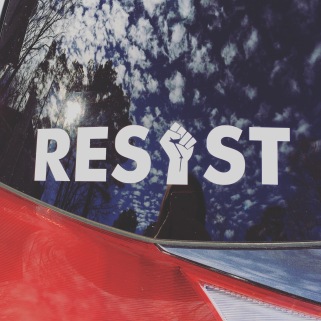
While stopped at a red light on my way home one day I noticed that the two cars immediately in front of me had the same “Coexist” bumper sticker. You’ve probably seen one like it. Each of the letters of is a symbol representing a major religious or spiritual ideology. For example, the “C” is a crescent moon symbolizing Islam, and the “X” is a Star of David symbolizing Judaism.

This was a particularly long traffic light, which gave me time to realize that I was mistaken. In actuality the bumper sticker on the car just ahead of me did not read “Coexist” but “Contradict.” Underneath that it read, “They can’t all be true-John 14:6.” Despite my early days of earnest scripture memorization I couldn’t recall this particular passage, but I had a hunch it was the verse in which Jesus said, “I am the way, the truth, and the life.” I was right.

I’ll admit my eyes rolled back in my head over this display of Christian moral superiority. Continue reading “Coexist or Contradict? How about Resist Instead by Katey Zeh”

Parenting and Politics: How I’m Showing Up by Katey Zeh

16143366_10101473904784794_642748390961867304_n

When I was ten weeks pregnant I gave an impassioned speech in front of the Supreme Court during the Hobby Lobby hearings about why universal access to contraception was part of my own religious understanding. I’d wanted to share about my own planned pregnancy, but at that point I wasn’t far enough along to feel comfortable telling that in a public way.

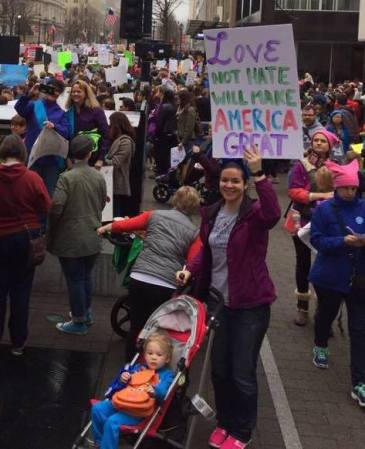
I didn’t know it at the time, but that would be my last protest for almost three years. After the birth of my daughter I cut my travel significantly. I spent most of my weekends in the cocoon–or what sometimes felt more like the prison–of our home rather than out in the public square.  As someone deeply ensconced in the activism world this turning inward felt like I was betraying the causes and the people for whom I cared deeply. How could I be an effective advocate if I couldn’t show up?

Over the last few months I’ve done a lot of reflecting on how parenting has shifted the way that I think about myself as an activist. Whether rooted in parental love, self-preservation, or some combination of these two, I’m less willing to put myself in harm’s way than I was before I became a mother. Continue reading “Parenting and Politics: How I’m Showing Up by Katey Zeh”

Encountering Spirit: A Ritual of Blessing for an Abortion Clinic by Katey Zeh

Diverseclergy.png
Photo Credit: Helen Parshall

For the last year I have had the honor of serving as Chair of the Board of Directors for the Religious Coalition for Reproductive Choice (RCRC). This leadership role often requires great personal and professional sacrifices and yet blesses me tenfold in return. At this moment in history I can think of no more important organization to offer my time and gifts than on behalf of RCRC.

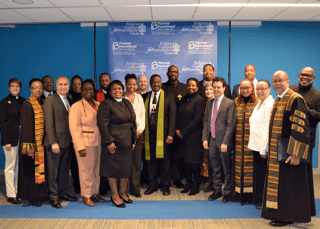
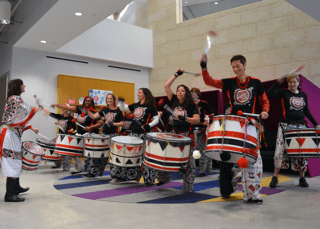
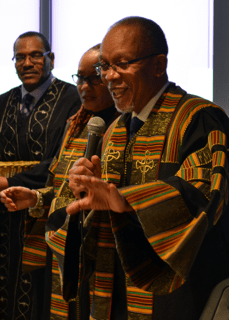
Last week RCRC partnered with Planned Parenthood of Metropolitan Washington (PPMW) to hold an Interfaith Unity Ceremony to honor their brand new health center in southeast D.C. I had the privilege of joining more than sixty clergy, justice leaders, and clinic staff as were led by the Reverend Doctors Dennis and Christine Wiley, co-pastors of the Covenant Baptist United Church of Christ, through an interfaith service of blessing. There was drumming from the all female percussion band Balatá, testimonies from providers and patients, poetry, liturgical dance, a Hindu chant, and a ritual of healing from the shame and stigma surrounding abortion.

Drumming.png
Photo Credit: Helen Parshall

At one point during the service a colleague of mine turned to me and whispered, “I’ve got goose bumps. Something is happening here, isn’t it?” I said, “Yes, Spirit is here.”

Many might find an encounter with the sacred at a Planned Parenthood surprising to say the least. It might have been for me had I not experienced something quite similar ten years ago. At the time I was a seminary student at Yale, and I had recently participated in RCRC’s pastoral care training on how to walk alongside women making decisions about their unplanned pregnancies. Before I offered any kind of counseling I wanted to see for myself what went on in abortion clinic. After taking a tour of the local Planned Parenthood health center I was so moved by the love and kindness of the doctors and support staff that I decided to volunteer on days when abortions were provided. Through that experience I felt the holy nudge to dedicate my ministry to supporting the work of abortion providers like Planned Parenthood and standing up for the rights and dignity of those who need access to safe, legal abortion care.

Now, almost a decade later, I found myself back in a health center. That time of being amongst my people, surrounded by words and sounds of truth affirming the sacred decisions of women about their bodies and lives, felt like I had tasted my first bite of food after a long, difficult fast. I didn’t realize how much over these last few months I had been starving for hope, love, and life-giving energy until that ritual of blessing held within the walls of the Planned Parenthood health center.

wileys
Photo Credit: Helen Parshall

Later that night on my drive back to the airport I found myself repeating the same simple prayer, “Thank you, thank you, thank you.” I felt an overwhelming sense of gratitude for the way that ritual had restored my spirit and affirmed my call to ministry. For the first time I felt prepared to take on the heavy burden of the next four years. I am ready. Are you?

Katey Zeh, M.Div is a thought leader, strategist, and connector who inspires intentionalKatey Headshot communities to create a more just, compassionate world through building connection, sacred truth telling, and striving for the common good.  She has written for outlets including Huffington Post, Sojourners, Religion Dispatches, Response magazine, the Good Mother Project, the Journal for Feminist Studies in Religion, and the United Methodist News Service. Her book Women Rising will be published by the FAR Press in 2017.  Find her on Twitter at @kateyzeh or on her website kateyzeh.com


Making Room for Joy this Advent by Katey Zeh

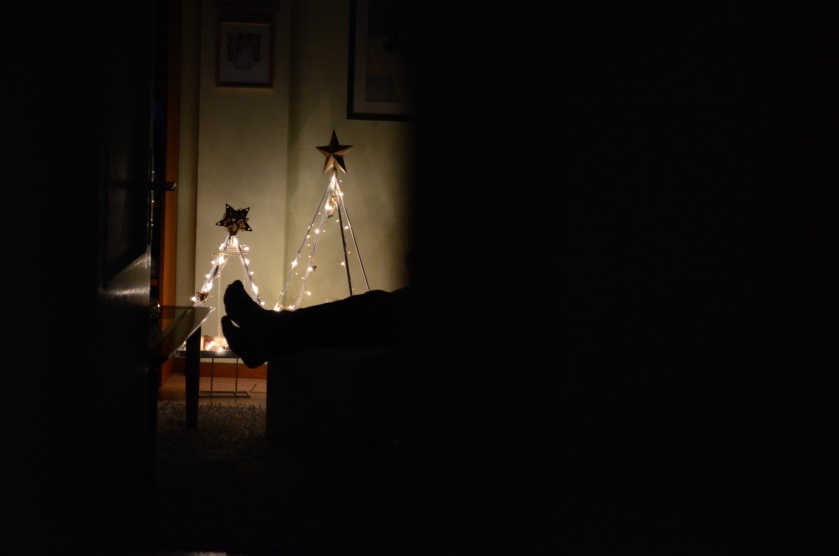
cwico_oeuis-nikola-jelenkovicDriving around my town in North Carolina, I have come across a handful of houses that had decorated their yards with an empty manger staged in front of an empty cross. This juxtaposition of Christian symbols struck me as peculiar, so I began asking some of my friends if they had ever come across a display like this.

My Catholic friends were helpful in understanding the empty manger, which I could recall having seen previously. Traditionally Catholics wait until the Christmas midnight mass to place the baby Jesus in the manger. If Advent is a season of expectation of the Christ child, this liturgical practice makes sense. But what about the cross behind it?

I believe this stark manager and cross scene was intended to emphasize a theology centered around atonement: Jesus was born, so that he could die and save humanity. These combined symbols are somber reminders to all who drive by of our own sinfulness and need for salvation. I’m intimately familiar with this particular understanding of Christianity, so this wasn’t surprising.

But still, I find myself deeply saddened by this display of the empty and isolated symbols. Continue reading “Making Room for Joy this Advent by Katey Zeh”

A Lament for My Daughter by Katey Zeh

I wrote this the morning after the Presidential Election. While there will be time for hard work, there must also be space for the sacred work of lament. This is mine. photo-1461733558461-ff6968a0ae80.jpeg

Last night I dressed you in the Hillary shirt I ordered the morning after the first Presidential debate.  As I placed you in your crib, I kissed your sweet face and turned on the noise machine to block out the celebratory cheers that I knew would be coming in a few hours. We wouldn’t want to wake you.

As you drifted off to sleep, downstairs in the kitchen your dad was cooking shells for taco salads. The champagne was chilling in the bottom of the fridge. The news was streaming, filling our home with words of “too close to call.”  I said, “Let’s mute it for now while we eat. Let’s enjoy.” I painstakingly created an “H” out of shredded cheese and snapped a picture to post on Instagram.

Last night I sported my “I voted” sticker on the collar of the white pant suit I’d proudly worn to the polls to cast my vote for the first woman President. White, the color of women’s suffrage. White, the color of supremacy and oppression, a legacy of racism that awards me and you undeserved, boundless privilege.

Through the night I watched in horror as these United States turned redder and redder. The color of rage, of blood. “Have another glass of wine, Katey. You’ll feel better.”

No, I need to feel this. Every ounce of this pain. The pain that I often choose to not see, now staring me in the face. I couldn’t look away.

I took as much as I could bear. At midnight we part ways with our guests. Take the champagne with you.

I swallowed one of the bitter yellow pills my doctor had prescribed me earlier that day when I told him I couldn’t block out the noise: the gun shots, the threats, the gleeful cheers of white supremacy and sexism and homophobia and Islamaphobia and transphobia, and the sinful silence from people like me in response to these horrors. The pill dragged me into dreamless sleep for a few short hours.

And then you woke up, singing sweet songs in your crib. Happily oblivious. Cocooned. I envied you. For the first time in your life I wished that I could pull you back inside of me and keep you there forever, the amniotic fluid muffling out the horrors of the world outside.

But instead I didn’t hide my red swollen eyes from you. I let you see my tears, even though you can’t yet understand their source. I want you to see. I won’t–can’t–shelter you from my pain, from my fear for you. For all our babies.

Today I feel my heart breaking open, wider and wider. Creating more excruciating pain, yes, but also creating exponentially more room within me for love.

Love wins. I do not know how. But love wins.

Katey Zeh, M.Div is a thought leader, strategist, and connector who inspires intentionalKatey Headshot communities to create a more just, compassionate world through building connection, sacred truth telling, and striving for the common good.  She has written for outlets including Huffington Post, Sojourners, Religion Dispatches, Response magazine, the Good Mother Project, the Journal for Feminist Studies in Religion, and the United Methodist News Service. Her book Women Rising will be published by the FAR Press in 2017.  Find her on Twitter at @kateyzeh or on her website kateyzeh.com


Opting In, Opting Out: Navigating Political Divisions “for the Sake of the World” by Katey Zeh

photo-1470115636492-6d2b56f9146d

Over a year ago I made the decision not to watch–not to consume the vitriol of this political disaster we in the U.S. have created for ourselves. It was a conscious choice in favor of my own self-preservation which I stand by. I had no idea at the time how important that decision would be for my own mental and spiritual health in the coming months.

Since then I’ve done a lot of opting out: not watching the Presidential debates (not in full anyway), not reading much political analysis (the article titles alone cause me rage), not discussing the election before bed. Late one night my husband mentioned some egregious thing that Donald Trump had said earlier that week, and I got so riled up over it that afterward I couldn’t sleep for hours. After that we had to establish a rule that no one could bring up politics after sitting down for dinner.

My way of coping this election cycle has been similar to how another person might react to a violent image on TV: I’ve kept my eyes shut, peeking every few moments to see if the worst has passed. This avoidance behavior has begun to feel uncomfortable, even unethical. As a person of faith, is it not my responsibility to call out abuses of power for what they are? If I do not offer my voice to the cacophony of political discourse, am I complicit in the hatred being spewed? I’ve thought often of Audre Lorde’s famous line, “Your silence will not protect you.” Continue reading “Opting In, Opting Out: Navigating Political Divisions “for the Sake of the World” by Katey Zeh”

The Restorative Act of the Rite-13 Ritual by Katey Zeh

carpeI had never heard of the Rite-13 Ritual until I saw it listed on my worship bulletin a few months ago. My first reaction was to become annoyed when I saw the additional program item and to begin to calculate the additional minutes we were going to be sitting in our pew. Our nearly two-year-old daughter had just had her weekly meltdown over being left in the nursery, and all I wanted was for this liturgical hour to be over so I could scoop her up in my arms and take her home.

Started by an Episcopal Church in the 1980s the Rite-13 Ritual is modeled on the Jewish bar and bat mitzvah and intends to recognize adolescence as a time of transition in a young person’s life. After the opening hymn, six gangly, slightly awkward teenagers and their slightly nervous parents made their way up to the front of the congregation. They began with a reading based on Psalm 139: “God, investigate my life, get all the facts firsthand.” Most of their voices were barely above a mumbled whisper, perhaps due to the sheer discomfort of being center stage at church. In between each passage the youth read, the congregation responded, “Your creation is wonderful, and we know it well!” I’m a strong advocate for participatory worship, but this kind of of responsive reading always feels a little odd to me.

The last portion of the ritual, however, caught me off guard and left me in tears. The youth knelt down as their parents prayed a blessing over them. We couldn’t hear what was said, but watching these parents lovingly speak words of affirmation and encouragement softly into their children’s ears was beautiful. Now that I’m a parent, I couldn’t help but imagine what it might be like to stand in their place one day and pray a blessing over my daughter. But I don’t think that’s what brought on the tears.

I had a flash of a memory of a similar scene. I was also thirteen standing at the front of my church with my mother and a group of other youth and parents. We were not there to receive a blessing or to be affirmed, however, but instead to proclaim our commitment to sexual purity until marriage. It was the late 1990s and the True Love Waits movement was just ramping up. I guess you could say my church was an early adopter.

Instead of reciting Psalm 139, we spoke these words instead: “Believing that true love waits, I make a commitment to God, myself, my family, my friends, my future mate and my future children to be sexually abstinent from this day until the day I enter a biblical marriage relationship.” In this evangelical church of my childhood the only readily available affirmation of me as a teenager was tied to an ill-informed, naïve promise I was pressured to make about sexual abstinence for the foreseeable future and beyond.

It was a perfect example of the contradictory theological messages I got constantly from my faith community: God created you, so you are good. But you are also sinful, so you are bad. I remember a church friend once jokingly said, “You totally suck. But Jesus is great through you.”

Twenty years have passed since that True Love Waits Sunday, but as Madeline L’Engle wrote, “I am still every age that I have been.” Over those two decades, I’ve internalized that message of earned and performative self-worth I got as a teenager. It shifted from worth rooted in sexual purity to one tied to academic achievement, transformed to professional success, and then on to marriage and parenthood and the illusive “balance” of doing all of it simultaneously. I still yearn to hear those words of acceptance that I needed then and need to this day.

As I see it, the heart of the Rite-13 Ritual is a commitment on the part of young people to seek divine wisdom throughout the journey of life and for the community of faith to pledge to be a place of unceasing support, friendship, and care for them. No strings attached. I’ve kept that bulletin insert, formerly a source of annoyance, on a prominent place on my desk. I turn to it on particularly hard days as a constant reminder of the truth of my own sacred worth that can’t be lost or earned. It simply is. “Your creation is wonderful, and we know it well!”

Katey Zeh, M.Div is a thought leader, strategiest, and connector who inspires intentionalKatey Headshot communities to create a more just, compassionate world through building connection, sacred truth telling, and striving for the common good.  She has written for outlets including Huffington Post, Sojourners, Religion Dispatches, Response magazine, the Good Mother Project, the Journal for Feminist Studies in Religion, and the United Methodist News Service. Her book Women Rising will be published by the FAR Press in 2017.  Find her on Twitter at @kateyzeh or on her website kateyzeh.com

Taking Risks to Heal Ourselves and Our World by Katey Zeh

Screenshot 2016-08-10 10.36.51

I was in New York having tea with a colleague whose prominence in our field has risen significantly over the last several years. I confessed half-jokingly that had we not known each other before this happened, we probably would not have been sitting there catching up in a coffee shop because I would’ve turned down the invitation. For as long as I can remember I’ve had an aversion to being in close proximity with even moderately well-known people, even if they are known only within our shared professional circles. Continue reading “Taking Risks to Heal Ourselves and Our World by Katey Zeh”

Get Compassion: Reflections on Childbirth and Privilege by Katey Zeh

hospital-840135_1920

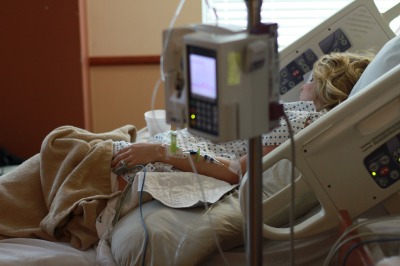
Jessi Klein wrote an Op-Ed in last Sunday’s New York Times entitled “Get the Epidural” in which she takes on the arguments for “natural” childbirth and makes an astute point about its premise: “It’s interesting that no one cares very much about women doing anything ‘naturally’ until it involves their being in excruciating pain.”

Thinking back to the months leading up to my daughter’s birth, I remember occasions similar to the one Klein describes in this article in which I was asked about my pre-natal care and plans for the birth, though admittedly they did not often come from strangers in the grocery store line. While Klein’s response was different from mine (I birthed without pain medication, and as you might have guessed from the title, she planned for an epidural), we each experienced feeling judged by others when they heard about our intended plans for birthing.

Klein alludes to this childbirth debate as symptomatic of our increasingly competitive culture around motherhood. I agree with her. But I worry about what happens when we talk about birth as primarily a parenting event rather than a physical one. When we divorce our intentions for our babies from what we desire for our bodies.

As with any piece having to do with childbirth, this article made the rounds on my Facebook feed and incited the usual divisiveness that all social media posts seem to do, splitting my friends and acquaintances into those who felt affirmed by Klein’s words and those who felt silenced by them. My reaction was to applaud that we have the ability to make different decisions about our health care, and that no matter how we plan our births—or how they turn out in the end—that is something to celebrate.

In my attempt to be diplomatic, I also quickly overlooked the assumptions of privilege at play in Klein’s piece and in my own response. Let’s start with the concept of a birth plan. A plan assumes that different options are available and acquirable. I’ve often written about how my pregnancy was one of the times when I felt my white, educated, middle-class privilege most acutely. I was able to have an intervention-free birth in large part because my family could afford to pay a doula on top of covering the costly medical fees related to the pregnancy and birth.

I wonder among my circles of privileged parents, why do we occupy so much of our time and expend so much of our energy arguing over which school of medically-sound thought regarding childbirth is best when there are so many people who bring life into world with inadequate or no health care at all?

Years before I got pregnant I began working with faith communities as an advocate for the full range of reproductive health care needs that people have throughout their lives, including safe and respectful childbirth. I’ve spent a lot of time reading and retelling the biblical stories of women giving birth and comparing them to the stories of global women today who face enormous challenges in their labor and deliveries. Tragically each year hundreds of thousands of women lose their lives as they bring new life into the world.

Pieces like Klein’s remind me of how easily people like me get caught up in our own spheres of experience and become blinded by the privilege that affords us the ability to fixate on details of our own lives rather than turning our gaze toward the world’s immense suffering.

As a faith-based advocate for gender justice, I’m currently working on a book with the FAR Press called Women Rising in which I look at the lives of ten biblical women through the lens of our current struggles for women and girl’s freedom and well being around the globe. One of my chapters focuses on the story from the book of Genesis in which Rachel dies in childbirth, and another looks at Mary’s delivery of Jesus as the miracle of maternal survival. My hope is that those of us who identify with the sacred stories of the Jewish and Christian scriptures will re-encounter them in a way that leads us back to a place of compassion for one another rather than judgment.

Katey Zeh, M.Div is a strategist, writer, and educator who inspires intentionalKatey Headshot communities to create a more just, compassionate world through building connection, sacred truth telling, and striving for the common good.  She has written for outlets including Huffington Post, Sojourners, Religion Dispatches, Response magazine, the Good Mother Project, the Journal for Feminist Studies in Religion, and the United Methodist News Service.  Find her on Twitter at @kateyzeh or on her website www.kateyzeh

What Will the Faith Response to Zika Be? by Katey Zeh

tiger-mosquito-49141_640

In the face of the Zika epidemic the World Health Organization (WHO) has issued new recommendations for individuals at risk of contracting the virus either through mosquito bites or through sexual contact with an infected person. If someone has traveled to an area where Zika is present, the WHO recommends abstinence or consistent condom use for at least eight weeks or up to six months if a partner shows symptoms. (Only 20% of people infected with the virus are symptomatic.) But for women of childbearing age living in areas affected by the virus, the WHO urges them to speak with their health providers about possibly delaying pregnancy, presumably indefinitely. The Zika virus has been linked to devastating birth defects including microcephaly.

After issuing the revised guidelines Nyka Alexander, spokesperson for the WHO, clarified that the purpose of them was not to discourage all at-risk couples from conceiving, but rather to ensure that they consider the Zika virus and its potential impacts on the timing of pregnancy. “Whether and when to become pregnant should be a personal choice made on the basis of information and access to affordable, quality health services,” said Alexander.

For pregnancy to be a personal choice, women and men must have access to the tools, information, and resources they need to prevent, delay, or plan it. Worldwide more than 220 million women want to avoid pregnancy but have an unmet need for reliable, safe contraceptive methods. The Zika virus has brought significant attention to what has been a public health crisis and an ethical tragedy for decades: that despite modern medical advances 85 million women experience unintended pregnancies each year. Continue reading “What Will the Faith Response to Zika Be? by Katey Zeh”