Review: Sara Maitland’s A Book of Silence, by Mary Sharratt


“What I want to do is live in as much silence as is possible at this point in our history.” – Sara Maitland, A Book of Silence


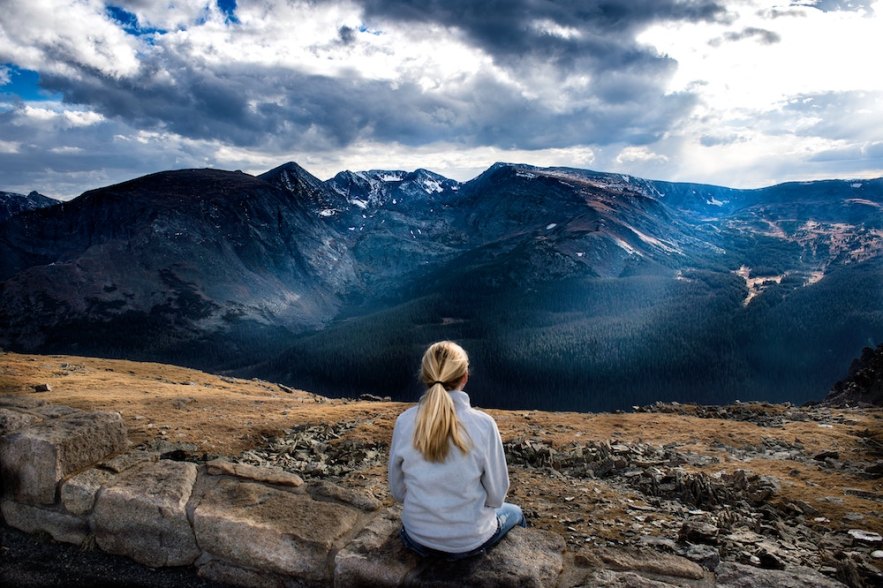
Scottish author Sara Maitland is an intriguing amalgamation of diverse and seemingly contradictory personas. Active in the 1970s Women’s Movement, she is regarded as one of the UK’s pioneering feminist novelists and attempted to create a new mode of narrative inclusive to female experience. She is at once a Roman Catholic convert, a divorcee, a mother, and an unrepentant cigarette smoker. But most uniquely of all, she is a modern-day mystic and hermit, a seeker of silence, solitude, and seclusion, all of which are rare commodities in our crowded, noisy, hyper-connected world.

Her fascinating and beautifully written memoir, A Book of Silence, describes how Maitland, born into a large, gregarious family, came to chose this life. She wasn’t always a hermit, but loved being a mother and wife and adored spirited dinner party conversation. Her “conversion” to silence began gradually, at menopause, after her marriage ended and her adult children moved away. Left on her own, she discovered that, far from being lonely, there was deep happiness and freedom in solitude. Trying to evoke an even deeper experience of this solitary life, she moved to a rural house in Weardale, Yorkshire, where she fell in love with the wild countryside and devoted more and more time to spiritual contemplation. In a most daring experiment, she rented an isolated cottage on the Isle of Skye where she spent a 40 day retreat all on her own, in the depths of winter, not speaking to another soul. Her description of this time makes for riveting reading as she reveals how deeply the solitude effected her psyche. She experienced a certain disinhibition–losing the desire to shower or groom herself because she had no human Other to keep up appearances for. She also experienced auditory hallucinations that intrigued rather than frightened her, including hearing a men’s choir singing plainchant in her bedroom. Though she experienced some negative side effects, what mattered to her far more was the deep bliss and peace that solitude brought her. Only in this kind of silence could she feel the deep spiritual connection to the Divine that she was seeking. Later Maitland made a another retreat deep into the silence of the Sinai desert.

But one thing Maitland discovered was that silence didn’t enhance her creative output as a writer in the way she hoped it would. Her self-chosen spiritual silence also silenced her voice as a novelist, although she reinvented herself as an author of nonfiction. She theorizes that there are two distinct modes of solitude and silence: that of spiritual seekers and that of artists and writers. This latter version she refers to as romanticism, as it evolved from the philosophy of Rousseau and the Romantic poets, such as Wordsworth, who sought romantic seclusion and splendid isolation in nature in order to write:

Religious or eremitc silence, not just in the Christian tradition but in Buddhism as well, is about inner emptiness–emptying the mind and the body of desires, being purged and therefore pure: a kind of blank, a tabula rasa, on which the divine can inscribe itself. It is a discipline of self-emptying, or, to use a theological term, of kenosis, self-outpouring. Whereas romanticism uses silence to exactly the opposite ends: to shore up and strengthen the boundaries of the self; to make a person less permeable to the Other; to assert the ego against the construction and expectations of society; to enable an individual to establish autonomous freedom and an authentic voice. Rather than self-emptying, it seeks full-fill-ment.

Maitland compares her own journey into silence to those of the early Christian desert hermits, to modern day Buddhist nuns who live in silent retreat. She compares and contrasts the experiences of those who seek silence and solitude for spiritual and creative reasons to those who stumble into silence as an occupational hazard–ie Arctic explorers or mountain climbers who become stranded in the wilderness. She also makes a crucial distinction between silence as a choice versus the brutal silencing of oppressed peoples and political prisoners.

For Maitland, after embracing silence, there was no way back. It became her vocation. She now lives alone in a self-built house on a remote farm in Galloway, Scotland, one of the least populated areas in Britain. She lives without television, radio, or close human neighbors, but does have internet and earns her living teaching creative writing via an online distance learning program for Lancaster University. In a 2014 interview with The Guardian, Maitland admits she sometimes struggles to control her time on the internet and that she is not quite alone, as she lives with her dog. But according to her book, she has never owned a mobile phone.

A Book of Silence was published in 2008, before smart phones became so ubiquitous. How much more challenging would it be to follow Maitland’s path into silence now? These days noise is everywhere. Even churches, temples, and libraries are no longer quiet places of contemplation. In the rare instances we are alone, we distract ourselves with our phones and headphones. With our exploding global human population, we live in a world where it’s increasingly difficult to find silence or even personal space. To claim a hermit’s seclusion might appear to many as self-indulgent or elitist escapism. Precisely for these reasons, I found Maitland’s book so radical and compelling.

“In the Middle Ages Christian scholastics argues that the devil’s basic strategy was to bring human beings to a point where they are never alone with their God, nor even attentively face to face with another human being,” Maitland writes. She also observes that “the overstimulation, of which noise is a major factor, of modern society has an addictive quality–the more stimulation and novelty you get, the more you feel you need.”

Although the reader may not necessarily identify with Maitland’s deeply Christian focus, this is an illuminating book that deserves to be regarded as a twenty-first century classic in Women’s Spirituality.

Mary Sharratt is on a mission to write overlooked women back into history. Her novel, Ecstasy, about composer and life artist Alma Mahler is new from Houghton Mifflin Harcourt. Visit her website.
Time’s Up for Bullies by Mary Sharratt

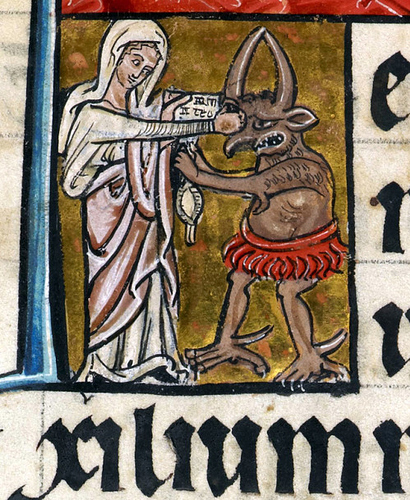
The Virgin Mary says #Time’s Up for Bullies: illumination from a 13th century manuscript

Bullying is rife in our society and it’s not just school kids who have to deal with it. Bullies flourish in the work place, in academia, in spiritual and religious communities, and, of course, on social media. Although female bullies exist, women, from my experience, are more likely to experience the most severe forms of bullying at the hands of entitled males. I would even argue that female-on-female bullying is a direct symptom of patriarchy’s attempts to divide and conquer us.

Just as #Me Too and #Time’s Up blew the whistle on sexual assault and workplace harassment, I believe we are in desperate need of a #Time’s Up for Bullies movement. One thing is certain–our current methods of dealing with bullies seem agonizingly ineffectual, to say the least. Continue reading “Time’s Up for Bullies by Mary Sharratt”

Rest as a Radical Act by Mary Sharratt


This summer I committed an act of radical and deeply liberating change. I started taking Sundays off, a new thing for me. As a writer, I had come to regard Sunday as just another working day, part of the same old workaholic grind.

And by taking Sunday off, I mean that in the most literal sense–I went offline and pulled the plug on my internet for 24 hours. Without the distraction of my smart phone, email, or social media, I suddenly seemed to have so much time and so much peace. It was like being on retreat except I could do it here and now, in my own home. In this hallowed time out of time, I now spend my Sundays meditating, reading real books with paper pages, going on long horse rides or hikes, and enjoying deep communion with family and friends.

Continue reading “Rest as a Radical Act by Mary Sharratt”

All Hallows Tide in Old Lancashire by Mary Sharratt


My 2010 video docudrama about the Pendle Witches. Fun fact: my Welsh pony makes a guest appearance here.


Come Halloween, the popular imagination turns to witches. Especially in Pendle Witch Country where I have lived since 2002. This rugged Pennine landscape surrounding Pendle Hill was once home to twelve individuals arrested for witchcraft in 1612. The most notorious was Elizabeth Southerns, alias Old Demdike, cunning woman of long-standing repute and the heroine of my novel Daughters of the Witching Hill.

How did these historical cunning folk celebrate All Hallows Eve?

All Hallows has its roots in the ancient feast of Samhain, which marked the end of the pastoral year and was considered particularly numinous, a time when the faery folk and the spirits of the dead roved abroad. Many of these beliefs were preserved in the Christian feast of All Hallows, which had developed into a spectacular affair by the late Middle Ages, with church bells ringing all night to comfort the souls thought to be in purgatory. Did this custom have its origin in much older rites of ancestor veneration? This threshold feast opening the season of cold and darkness allowed people to confront their deepest fears—that of death and what lay beyond. And their deepest longings—reunion with their cherished departed.

Continue reading “All Hallows Tide in Old Lancashire by Mary Sharratt”

Three More Herstorical Divas to Die For by Mary Sharratt

Last month I blogged about Three Herstorical Divas to Die For. But since herstory is teeming with heroines whose praise needs to be sung and whose legacies deserve to be remembered, I now present three more Herstorical Divas to inspire us.

The Urban Dictionary defines a diva as a woman who exudes great style and confidence and expresses her unique personality without letting others define who she should be. In my mind, a diva is a woman who stands in her sovereignty and blazes a trail for other women. We all need to claim our inner diva to truly dance in our power.

Continue reading “Three More Herstorical Divas to Die For by Mary Sharratt”

Three Herstorical Divas to Die For by Mary Sharratt

The Urban Dictionary defines a diva as a woman who exudes great style and confidence and expresses her unique personality without letting others define who she should be. In my mind, a diva is a woman who stands in her sovereignty and blazes a trail for other women. We all need to claim our inner diva to truly dance in our power. And if you’re looking for inspiration, I present three herstorical divas to die for.


Pompei-Sappho.nocrop.w840.h1330.2x

  1. Sappho ca. 630 – 580 BCE


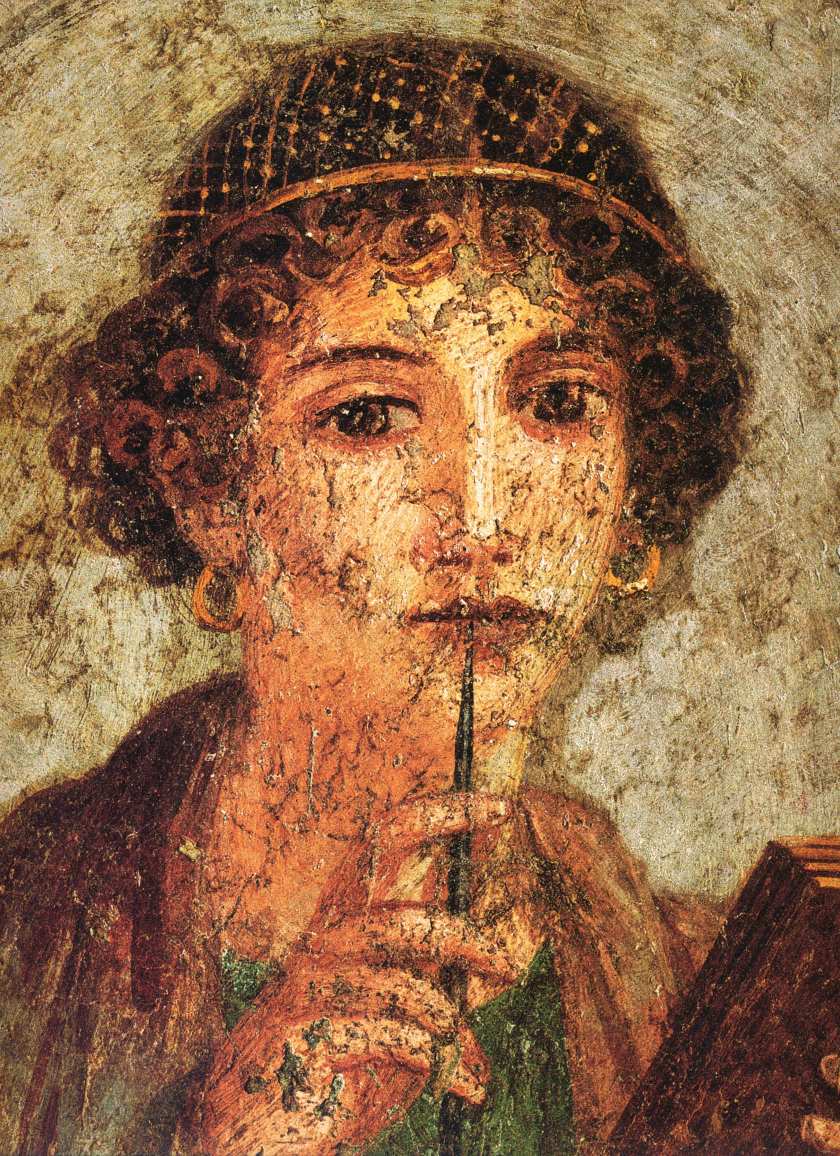
Sappho of Lesbos wrote the book on love. Literally. Her searing love poetry addressed to other women gave us the word lesbian. She was the first—and the best!—to describe passion as a visceral experience, in which we are seized and transfixed by Aphrodite, Goddess of love. Though much of her work was destroyed by the patriarchal fun police, the fragments of her poetry that survive are timeless, haunting, and utterly true.

What we must remember is that Sappho’s poetry wasn’t just romantic or erotic–it was sacred, each poem a holy offering to Goddess Aphrodite.

Continue reading “Three Herstorical Divas to Die For by Mary Sharratt”

Forgotten Female Surrealists by Mary Sharratt

While Frida Kahlo is arguably the world’s most famous woman artist, most women in the surrealist movement have been overlooked. But Frida’s sister surrealists now seem to be experiencing a long overdue resurgence, with recent international exhibitions showcasing Leonora Carrington, Meret Oppenheim, and Dora Maar. The 2017 documentary film, Out of the Shadows, focuses on Penny Slinger. (For more on Slinger and her work, check out her spookily accurate Dakini Oracle.) American art photographer Lee Miller is the subject of The Age of Light, Whitney Scharer’s boldly feminist debut novel which sold to Little Brown and Company for seven figures, following a fierce bidding war.
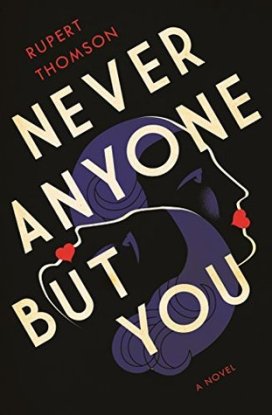
far never anyoneThough I was familiar with these artists, Rupert Thomson’s novel, Never Anyone But You, reveals two extraordinary women I’d never heard of—Lucie Schwob aka Claude Cahun (1894 – 1954) and Suzanne Malherbe aka Marcel Moore (1892 – 1972). They met as teenagers and fell irrevocably in love, beginning a passionate relationship which would endure until Cahun’s death. In a twist of fate no novelist could invent, Moore’s widowed mother married Cahun’s divorced father and the two secret lovers became stepsisters, enabling them to live together without suspicion in an age when lesbian relationships were taboo. Moving to Paris in the 1920s, they adopted androgynous pseudonyms and became involved in the newly fledged surrealist movement. In 1937 they left Paris for Jersey. Later, when the Germans occupied the island, the women created an anti-Nazi propaganda campaign. They were arrested and sentenced to death, but the war ended before their executions could be carried out. Continue reading “Forgotten Female Surrealists by Mary Sharratt”

A Short History of Maligned Women by Mary Sharratt


Women who stand out and dare to seize their power have been maligned throughout history. Even today many people are uncomfortable about the very idea of a powerful woman. Witness how Hillary Clinton was demonized in the 2016 presidential campaign. What other U.S. presidential candidate has been called “nasty” by their opponent or had their opponent literally looming over them during a live televised debate? Even women who would never dream of running for political office face every day misogyny and threats of violence for daring to speak out on the internet. It doesn’t matter what the woman has to say—the fact that she has spoken out at all has made her a target.  

I certainly encountered the “such a nasty woman” phenomenon while researching Alma Schindler Mahler, the protagonist of my new novel Ecstasy. Born in Vienna in 1879, Alma Maria Schindler was an accomplished pianist and aspiring composer who gave up her own music as a condition for her marriage to the great composer, Gustav Mahler. Later, after a marital crisis, she returned to composing and published three collections of her songs. She was married to—or had affairs with—some of the greatest creative geniuses of her time, including Gustav Klimt, Walter Gropius, Oskar Kokoschka, and Franz Werfel. She was also a pioneer in the field we now call artistic management and her networking skills benefited the men she loved. But one would hardly know about her talents and gifts to read the biographies written about her.

Continue reading “A Short History of Maligned Women by Mary Sharratt”

My Heroine’s Journey: Writing Women Back in History by Mary Sharratt

Alma Maria Schindler

We have been lost to each other for so long. My name means nothing to you. My memory is dust.             

This is not your fault or mine. The chain connecting mother to daughter was broken and the word passed into the keeping of men, who had no way of knowing. That is why I became a footnote, my story a brief detour between the well-known history of my father and the celebrated chronicle of my brother.

Anita Diamant, The Red Tent

I am an expat author. My home is everywhere and nowhere. A wanderer, I have lived in many different places, from Minnesota, my birthplace, with its rustling marshes haunted by the cries of redwing blackbirds, to Bavaria with its dark forests and dazzling meadows and pure streams where otter still live, to my present home in the haunted moorlands of Pendle Witch country in Lancashire, England. My entire adult life has been a literal journey of finding myself in the great world.

For as long as I remember, I longed to be a writer. As a novelist I am on a mission to write women back into history. To tell the neglected, unwritten stories of women like my pioneering foremothers who emigrated from Bohemia (now the Czech Republic) in the 1860s to break the prairie soil of southern Minnesota.

To a large extent, women have been written out of history. Their lives and deeds have become lost to us. To uncover their buried truths, we must act as detectives, studying the sparse clues that have been handed down to us. We must learn to read between the lines and fill in the blanks. My heroine’s journey, in other words, is about reclaiming the lost heroines of history. My quest is to give voice to ancestral memory of that lost motherline.

Continue reading “My Heroine’s Journey: Writing Women Back in History by Mary Sharratt”

In the footprints of Machig Lapdron by Mary Sharratt


Machig Labdrön with Padampasangye

Machig Lapdron, female Tantric Buddhist mystic and lineage founder

I’ve just returned from an illuminating trip to Bhutan, high in the Himalayas. Bhutan is a Buddhist kingdom and the world’s youngest democracy.

On our last full day in this enchanting land, my husband and I drove with our guide over the nearly 4000 meter pass of Chelela and into the Haa Valley which doesn’t see that many tourists. Our goal was the Hermitage of Juneydrak, where Machig Lapdron (1055-1145 CE), the famous female Tantric mystic, master, and lineage founder, once meditated.

Continue reading “In the footprints of Machig Lapdron by Mary Sharratt”