

 Last month, my column focused on the importance of intersectionality within the feminist movement by highlighting the revolutionary work of Sojourner Truth, an escaped slave, abolitionist, and women’s rights activist. I’d like to continue to press the importance of intersectionality, particularly given our current political state. Of late, I’ve received a little criticism that some of my recent Holy Women Icons are too political, particularly with reference to Mothers of Black Lives Matter, Dolores Huerta, and the Midwives of Standing Rock. As a woman artist, and particularly a queer woman artist, the personal is always political. Feminists taught us this decades ago. Since the lives, loves, and bodies of LGBTQs, women, refugees, immigrants, people of color, Muslims, Jews, those who are differently abled, and the poor continue to be legislated, violated, excluded, and oppressed, I’d contend that writing about, painting about, and working for liberation for all of these intersectional identities is paramount, especially for those who profess faith in a homeless refugee liberator from the Middle East (that would be Jesus, of course). Needless to say, I believe these recent works in the Holy Women Icons Project fit in quite nicely with the over seventy revolutionaries—political and otherwise—that I’ve painted and written about in the past.
These critiques combined with the current climate of the United States, new legislation passed, proposed, and promised that attacks the lives of the aforementioned marginalized groups. So, I took to canvas and, for the first time, I did not pen the poetry scrawled across the holy woman’s heart. Instead, I relied on the words of Jewish American poet, Emma Lazarus (1849-1877). Most famous for the portion of her sonnet, “The New Colossus,” that graces the pedestal of the Statue of Liberty, I wanted Lady Liberty and Lazarus’ timely words to become my newest Holy Woman Icon. In its entirety, “The New Colossus” reads: Continue reading “Painting the Mother of Exiles by Angela Yarber”
 I’ve long held that feminism, in order to be true and engaged and practical, must be intersectional. Such is also the case, I believe, for LGBTQ rights. The work of justice for women and LGBTQs people must also include justice for other marginalized groups. Because many LGBTQ people are also women, people of color, people with disabilities, Muslims, immigrants, and others marginalized for identities other than their sexuality. Paying attention to these intersections—of sexuality, gender, race, class, ability, religion—and acknowledging that many people have multiple intersecting identities for which they are oppressed is vital to the work of justice.
 Lilith has been a misunderstood, appropriated, and redeemed woman throughout the ages. Many feminists claim her as an empowering figure in Jewish mythology, her story reclaimed by contemporary artists such as Sarah McLachlan, who created the all-women music tour, “Lilith Fair.” Some queer scholars have surmised that Lilith had a romantic relationship with Eve. Others have claimed that Lilith was a demon who seduced men and strangled children in the night. Quite a disparity, isn’t it?
 I always felt curiously distant from the figure of Mary. I always sensed that there is so much there and yet, I could never connect to it emotionally.
 There’s nothing like the holiday season to bring out everyone’s least feminist self. In one of the courses that I teach—Gender, Food, and the Body in Popular Culture—students are assigned to examine gender roles throughout the holiday season through the lens intersectional ecofeminism. Inevitably, almost every student returns from holiday break with the same assessment: mom, grandma, and a kitchen full of women prepare, cook, and clean every family meal; women do the holiday shopping; men in the family watch sports.
 Max Dashu’s
  The world at large might view artists and writers as free spirits rocking la vie bohème, but creative people know that it’s much more complicated than that, especially if we’re striving to earn even a modest living from our work. As a writer, I often fall into the trap of measuring my success or failure on factors completely beyond my control, such as the ups and downs of a fickle book buying market.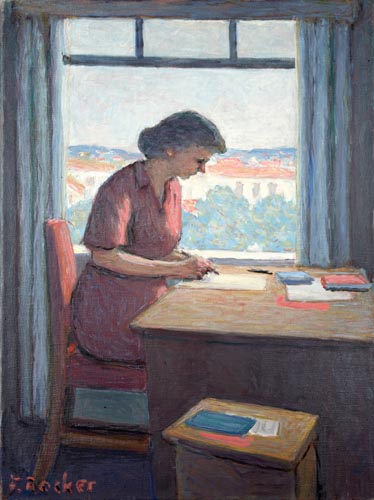
 Feminism and Religion