Legacy of Carol P. Christ: We Could Have Been Canadians and Other Thoughts about My New England Colonial Heritage

This was originally posted on Sept 1, 2014

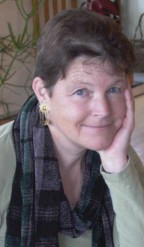
carol mitzi sarah

My 2x great-grandparents Nathaniel Searing and Louisa Caroline Martin were pioneers who cleared the land and built a log cabin in Lyons, Michigan in 1840. They were descended from English Puritan Colonial settlers in New England. At least two of my ancestors are recognized by the Sons and Daughters of the American Revolutions. Other members of my family who were Quakers proudly refused to take part in the Revolutionary War.

My great-grandfather James Augustus married a woman of German descent, his daughter Lena Marie married a Swede, and my mother married a man who was German, Irish, and Scottish. As the descendants of Nathaniel Searing and Louisa Caroline Martin moved around the United States and married into the families of newer immigrants, the succeeding generations also lost touch with their history. Our family’s connections to the New England Colonists were not even mentioned at Thanksgiving!

Continue reading “Legacy of Carol P. Christ: We Could Have Been Canadians and Other Thoughts about My New England Colonial Heritage”

From the Archives: I Believe Anita! by Marie Cartier

Moderator’s Note: This has been posted on FAR twice, originally on April 7th, 2014 and then again on July 15, 2022. We are posting this a third time because of its importance. It is a piece of history that helps to illustrate how we got to where we finds ourselves today.

Marie Cartier

During the past week I attended a Los Angeles premiere of a new documentary Anita: Speaking Truth to Power (Dir: Freida Lee Mock USA, 2013). The screening was sold out and I had great seats saved for me– sitting with a friend who works at Samuel Goldwyn, the distributor of this fine film.

In 1991, Anita Hill provided testimony she hoped would serve to dissemble the nomination of Clarence Thomas as a Supreme Court justice. Although the vote would end up being close (52-48) Hill’s testimony did not serve to dissuade the decision — Clarence Thomas’ nomination was confirmed and he was appointed to a life term on the Supreme Court four days after Hill’s testimony concluded. Here is an outline of the debate.

Continue reading “From the Archives: I Believe Anita! by Marie Cartier”

Did We Ask for a King? by Esther Nelson

Northrop Frye (1912-1991), a Canadian literary critic, is probably best known for his book THE GREAT CODE: THE BIBLE AND LITERATURE (1983). In it, he demonstrates how the Bible is foundational for our understanding of Western literature, a body of work replete with Biblical allusions. 

Today, most of us are not familiar enough with the Bible to appreciate where many literary themes take root. We fail to see how its stories—gathered over centuries—relate to us. Not only does Western literature mine from Biblical text, our lives as we experience them mirror much of Biblical story and narrative.   

I was raised on the Protestant Bible. To this day, I experience the world through Biblical story. There is nothing sacrosanct (to me) about the familiar text. The Bible is not unique. 

Continue reading “Did We Ask for a King? by Esther Nelson”

From the Archives: Forgive Me My Ancestor(s) by Elizabeth Cunningham

This was originally posted on January 19. 2020. An ‘Update Note’ has been added at the end of the post.

Elizabeth Cunningham

When I was a child in the 1950s we often played cowboys and Indians. There is a photograph of my brother and me in no doubt inauthentic costume complete with feathered headdress. In kindergarten I named myself Morning Star. (I just googled and see that I must have gotten the name from the 50s television series Brave Eagle, the first with an indigenous main character. Morning Star is the female lead.)

When I was a teenager, my aunt came across a privately printed book The Gentleman on the Plains about second sons of English aristocracy hunting buffalo in western Iowa. My great grandfather accompanied them as their clergyman. I wish I could find that book now to see how this enterprise was presented. In my adolescent mind these “gentlemen” looked like the local foxhunters in full regalia. On opening morning of foxhunt season an Episcopal clergyman (like my father) was on hand in ecclesiastical dress to bless the hunt and then invited to a boozy breakfast.

Continue reading “From the Archives: Forgive Me My Ancestor(s) by Elizabeth Cunningham”

Thanksgiving by Beth Bartlett

When I offered to write the FAR post for Thanksgiving a month ago, I had no idea how difficult I would find that task to be. I suppose I had a different vision of what these days would be like.  I had no idea how heartsick and wordless I would become in the wake of a second and even more bizarre and dangerous Trump presidency.  It hardly feels like a time for celebrating a national holiday. 

Thanksgiving in the United States and the colonies before has gone through several iterations – from the mythologized feast of the Puritan colonists in Plymouth, Massachusetts with the indigenous Wampanoag following the successful corn harvest – corn the Wampanoag had taught the Puritans how to plant after half of them had starved to death the previous winter; to George Washington’s Thanksgiving proclamation giving thanks for the successful ratification of the US Constitution; to Abraham Lincoln in 1863 acceding to Sarah Josepha Hale’s 36-year quest to establish Thanksgiving  as a national holiday — “to heal the wounds of the nation.” Goddess knows we could use that now, but it seems farther out of reach than ever.

Lesser known is the proclamation of a day of thanksgiving by the Massachusetts Bay Company to celebrate their defeat of the Pequot nation following the Pequot Wars of 1636-1638 in which most of the Pequot peoples were killed or enslaved, giving rise to many indigenous peoples observing Thanksgiving as a National Day of Mourning.

Continue reading “Thanksgiving by Beth Bartlett”

From the Archives: A Ritual for Thanksgiving, by Molly Remer

This was originally posted Nov. 22, 2022

Find some pine trees
and a wide rock in the sun.
Settle down and feel gratitude
curl around your shoulders.
Listen to the wind
sense that there is sorrow too
in this place,
deep and old,
threaded through the
lines of sun
slices of shadows.
It tells of what has been lost,
what has been stolen,
of silenced stories,
and of fracturing.
Make a vow,
silent and sacred,
to do what you can,
to rebuild the web
to reweave the fabric.
Lie on your back in the pine needles,
feel your body soften into the ground
and become still.
Allow yourself to feel held,
heavy bones and soft skin
becoming part of the land.
Wonder how many of your
ancestors kept other people
from becoming ancestors themselves.
Watch the sunlight making tiny rainbows
through your eyelashes and pines.
Find a pretty rock.
Don’t take it.
Leave it where it belongs,
on the land that gave it birth.
Go home.
Keep your promise.

Continue reading “From the Archives: A Ritual for Thanksgiving, by Molly Remer”

From the Archives: Archy and Mehitabel by Barbara Ardinger

This was originally posted on December 1, 2019

Archy the Cockroach and Mehitabel the Cat were introduced to the world in 1916 by Don Marquis, a columnist for the New York Evening Sun. Marquis was more than a mere columnist; he was a social commentator and satirist admired by nearly every famous writer of the first quarter of the 20th century. Franklin P. Adams, for example, said Marquis was “far closer to Mark Twain than anybody I know” (see note).

Continue reading “From the Archives: Archy and Mehitabel by Barbara Ardinger”

A Ritual for Thanksgiving, by Molly Remer

Find some pine trees
and a wide rock in the sun.
Settle down and feel gratitude
curl around your shoulders.
Listen to the wind
sense that there is sorrow too
in this place,
deep and old,
threaded through the
lines of sun
slices of shadows.
It tells of what has been lost,
what has been stolen,
of silenced stories,
and of fracturing.
Make a vow,
silent and sacred,
to do what you can,
to rebuild the web
to reweave the fabric.
Lie on your back in the pine needles,
feel your body soften into the ground
and become still.
Allow yourself to feel held,
heavy bones and soft skin
becoming part of the land.
Wonder how many of your
ancestors kept other people
from becoming ancestors themselves.
Watch the sunlight making tiny rainbows
through your eyelashes and pines.
Find a pretty rock.
Don’t take it.
Leave it where it belongs,
on the land that gave it birth.
Go home.
Keep your promise.

Continue reading “A Ritual for Thanksgiving, by Molly Remer”

From the Archives: I Believe Anita! by Marie Cartier

This was originally posted on April 7, 2014

During the past week I attended a Los Angeles premiere of a new documentary Anita: Speaking Truth to Power (Dir: Freida Lee Mock USA, 2013). The screening was sold out and I had great seats saved for me– sitting with a friend who works at Samuel Goldwyn, the distributor of this fine film.

In 1991, Anita Hill provided testimony she hoped would serve to dissemble the nomination of Clarence Thomas as a Supreme Court justice. Although the vote would end up being close (52-48) Hill’s testimony did not serve to dissuade the decision — Clarence Thomas’ nomination was confirmed and he was appointed to a life term on the Supreme Court four days after Hill’s testimony concluded. Here is an outline of the debate.

anita-580x857

I remember watching the hearings in 1991 at a friend’s house in Sacramento, CA where I was couch-surfing with another friend while we were in Sacramento from Los Angeles to protest for gay rights—to speak our truth to power. I remember being amazed that she was doing this—and that it was being televised. We were glued to the set before we went off to the protest we were attending.

Continue reading “From the Archives: I Believe Anita! by Marie Cartier”

From the Archives: Preserving the Complete History: Remembering Japanese Internment Camps

This was originally posted on May 28, 2017

A couple of months ago I did a day trip to visit the historical site of one of the 10 internment camps which were formed due to Executive Order 9066 issued on February 19, 1942. Manzanar Relocation Camp is located between the Sierra Nevadas and the Owens Valley. Manzanar held over 11,070 Japanese Americans from 1942–1945. EO 9066 forced 120,000 American citizens to leave everything and become in all accounts prisoners; two-thirds of those were native-born American citizens. This executive order largely focused on people living on the West Coast of the United States to eliminate the possible threat of a secondary attack. They were relocated far inland and the majority of the camps were outside of the West Coast. While this was done in the 1940s, our current climate is looming to make it seem like there are forces in this world that are attempting to perform different forms of subjugation and confinement.

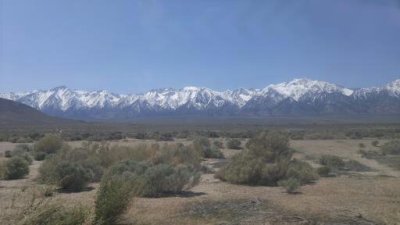
Manzanar, in the middle of nowhere California (and I mean nowhere—it takes over three hours to drive the more than 230 miles from Los Angeles and it is not directly accessible from Central California), is divided by the great Sierra Nevadas. This is one of the things that struck me when I arrived at Manzanar—the stark beauty and ruggedness of the mountains, the immense flat lines of the valley, and the complete isolation. Due to being so close to the Nevadas and the desert valley conditions, the weather can be extreme. Many of the detainees documented the harshness of the weather conditions, from the high winds to the stark cold at night, and the barely adequate buildings to shelter them from it.

Continue reading “From the Archives: Preserving the Complete History: Remembering Japanese Internment Camps”