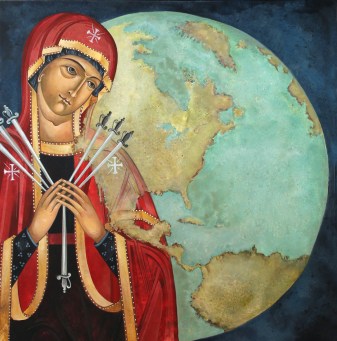
Celibacy Is the Lynch-Pin of Male Dominance according to Matilda Joslyn Gage by Carol P. Christ

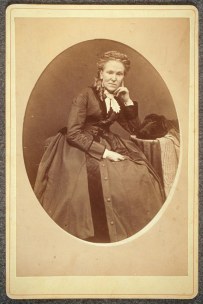
Matilda Joslyn Gage

Matilda Joslyn Gage was an activist in the nineteenth century struggle for women’s rights equal to Susan B. Anthony, and a writer and theorist equal to Elizabeth Cady Stanton. That she is not remembered is due in large part to Susan B. Anthony’s efforts to write her out of history.

Matilda Joslyn Gage was also a scholar of women’s history unrivaled in her time. In Woman Church, and State, Gage argued that “the most grievous wrong ever inflicted upon women was in the Christian teaching that she was not created equal with man.” (page 1) From this it follows that feminists must never lose sight of the role Christian teachings have played and continue to play in the unequal treatment of women.

According to Gage, women’s position in church and state did not improve in the Christian era. To the contrary it declined! Gage proved this thesis in chapters titled: The Matriarchate, Celibacy, Canon Law, Marquette, Witchcraft, Wives, Polygamy, Woman and Work, and The Church of Today. Continue reading “Celibacy Is the Lynch-Pin of Male Dominance according to Matilda Joslyn Gage by Carol P. Christ”

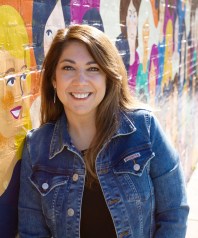
Where’s the Love by Gina Messina

In a recent post I wrote about finding God in music. I confess, I cannot remember the last time I set foot in a church. As a woman, I continually grapple with the foundational messages of Jesus and Catholic Social Teaching and the disconnect with the power structures that seek to control the ways we love and find justice. I long to participate in the culture I grew up in, but cannot support the weaponization of the tradition. 

Lately, I’ve come to realize that the messages I connect to I find in music. There are particular songs that offer me the guidance, philosophy, and ideas around meaning and purpose that I resonate with. One of those is “Where’s the Love?” by the Black Eyed Peas.  

I’ve been listening to it on repeat lately because it is the sermon I need to hear; it speaks to me and even though it was recorded quite a while ago, it is still relevant. I think it is fair to say that in our current socio-political culture, people are “acting like they got no mamas.”  And by the way, I include myself in that statement. Like anyone, I sometimes get so caught up in believing that my way is the only way, I forget to listen to what others have to say.

We are in the midst of a political civil war and are so busy yelling past each other, we’ve forgotten how critical unity is to shaping a healthy government that serves its purpose – caring for the people. Continue reading “Where’s the Love by Gina Messina”

It’s Time for Nuns on the Bus to take to the Road Again: Getting Beyond Being “Pro-Birth” to Protecting all at the Margins by Dawn Webster

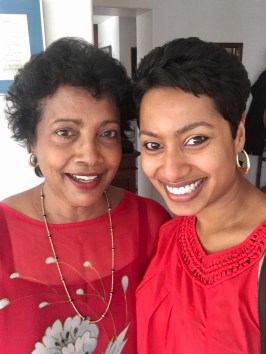
Author and daughter, Dr. Sheela Jane Menon, Assistant Professor at Dickinson College, PA

The country desperately needs to see the Nuns on the Bus on the road again. I just watched Radical Grace, nearly three years after my daughter and son-in-law gave it to me as a Christmas gift. My tardiness made me feel guilty, but despite the passage of time, the film still feels very timely.  Three years after the cancer that is 45 entered the White House; three years after the corruption and cruelty he unleashed has metastasized into key branches of government; three years after Catholics  have witnessed the heart of the Gospels ripped out the way children have been ripped from the arms of their parents at the southern border, this documentary about how a few nuns risked their place in the church to fight for justice tells me we need the leadership of the nuns more than ever.

Catholic voters from the heartland gave 45 the keys to the White House.—60 percent of them voted for him. Many justified voting for a man with Donald Trump’s appalling sexual, business, and racist history by pointing to his supposedly “pro-life” stance. Continue reading “It’s Time for Nuns on the Bus to take to the Road Again: Getting Beyond Being “Pro-Birth” to Protecting all at the Margins by Dawn Webster”

May is the Month of Mary by Mary Jane Miller

 Mary Icons

There are three classic prototypes of Mary Icons, their collective messages point toward a new contemporary kind of trinity. Perhaps the concept of Mary is still undeveloped, as our society has changed her message is still provocative and meaningful. It has been through contemplating her image, and painting icons of her that I have come to realize a deeper mystical message. Her popular iconography may have the keys to how we are to care for creation and one another in the world.

Mary Icon of the Panagia

Mary looks directly at the viewer, beckoning us towards poised stillness and constant prayer with palms extended outward in total surrender to what she receives. She contains the Creator of the Universe in her womb.

Mary Icons of the Theotokos

She is the feminine energy which tenderly nurtures Jesus to become a teacher, rabbi, master and lord. She is the icon which reminds us to love one another, to love life, and to love creation.

Mary Icons of the Hodegitria

Mary becomes a mystical location where we can be taught to give ourselves to God and one another. There, held by the church tradition, we like Mary are called to release to the world what we most love and cherish.

Continue reading “May is the Month of Mary by Mary Jane Miller”

A Moment of Change in Our Church by Janice Poss

On September 12, 2018, Roman Catholic Bishop David O’Connell helped move the Episcopate into a new day. A healing Mass at Our Lady of the Assumption Church in Claremont, California was celebrated for the victims of clergy sex abuse. They were humanized, spoken about reverently, prayed about to heal, to sacredly be acknowledged in their pain, to be known how priests and bishops were guilty and had their direct part in the hurtful abuse of children. This Mass was said in the hope of healing our collective wounds, I believe it has helped turn a new chapter in our church.
The service did not stop at the end of the mass: Bishop O’Donnell had an open Q&A with the people in the pews who came, many attending had been abused, not all by priests, but others. Among them were a man abused by a woman when he was four years old, a woman whose sister was abused by a priest, a woman abused from six years old until twelve by a male.  The victims were all a part of the prayers said for this healing mass dedicated to the victims of clergy sexual abuse, particularly from the recent revelations of sex abuse by the Grand Jury in the Pennsylvania dioceses. Continue reading “A Moment of Change in Our Church by Janice Poss”

Clerical Male Mess! by Janice L. Poss

“I am sorry!” “I am guilty of sex abuse” “I have hurt many young children!” “I have ruined lives!” “We are sorry for hiding sex abuse in the Church!” “We are criminals!” “We want to make amends!” We, in the pews, have yet to hear true contrition, instead we hear how the Church needs healing. True, but where is remorse from those who perpetrated and covered-up the crimes? To heal, we must hear from them.

Remorse, a contrite heart, admitting grave sin, deceitfulness, criminal behavior, the global Catholic Church has not yet confessed this loud enough. Why? Why is male clerical privilege so deeply ingrained in the construct of In Persona Christi that none of these guilty perpetrators of crime are able to directly tell Catholics worldwide that they truly, in their hearts grieve for our church and grieve for what they have done to our children? Where is their sensitivity for children? Continue reading “Clerical Male Mess! by Janice L. Poss”

In the Shadow of Santa Rosa by Sara Wright

Last night I had a nightmare.

I am dressed in a white cloak that obscures all but my face. The robe is splattered with paint and blood. I am awash in every color of the rainbow and dripping paint. I have been raped by strangers and no one is accountable.

This morning I could not get this frightful image out of mind but I had the strong sense that it had an impersonal aspect that had nothing to do with me.

This weekend at the Pueblo of Abiquiu the community celebrates the feast day of the first official saint of the Americas, Santa Rosa, and I planned to attend…

The people of Abiquiu call themselves Genizaros. Representing Apache, Navajo, Comanche, Kiowa, Pawnee, Ute and Wichita, detribalized Native peoples from the Plains that were captured and traded during the Indian wars of 18-19th centuries, and sold to New Mexicans as slaves and servants where they were stripped of their identity, instructed in Hispanic ways, and baptized as Christians. The People survived by incorporating Hispanic and Christian cultural practices into a distinct Genizaro consciousness, one that is distinct from the Indigenous Tewa speaking peoples (descendants of the Anasazi) who also live here in six pueblos along the Rio Grande. Continue reading “In the Shadow of Santa Rosa by Sara Wright”

Open Letter to the Pope and all the King’s Men by Natalie Weaver

Dear Sirs,

It breaks me down.  My anger, my revulsion, my powerlessness.   I have been searching for the way since I was a child old enough to remember my mind.  For a time, I thought Jesus was a white guy knocking on my door after having seen a religious pamphlet placed under our windshield wiper.  I’m not sure he has blond hair anymore, but I still feel him knocking.  I have been in love with him for as long as I have been a self, so much so that I baptized myself as a little girl.

Somewhere along the way, I figured my little, lonely way wasn’t good enough, and I wanted a church home.  I finished a doctoral dissertation trying to find some place I could hang my hat.  I picked the Roman Catholic Church, despite what I knew of it and what I had to defend about its patriarchy and history to family and friends.  I loved the conversation, the so-called “Catholic Intellectual Tradition.”  I always felt myself to be a covert, a conversa, a definitive outsider, and someone not to be trusted entirely as a cradle Catholic might be trusted, yet I tried to be family. I’ve been bringing up my kids in the Church, volunteering, working in Catholic education, paying the boys’ tuition.  I do work-arounds, making excuses for the exclusion of women, defying the Church’s stance on sexuality with a critical repertoire of cross-disciplinary scholarship.  Lord, I even had to help my Seventh-Day Adventist mom with a hostile annulment process that was dropped on her unsuspecting by a horrendously insensitive marriage tribunal.  It wounded us all. Yet, here I have sat, until this.

Continue reading “Open Letter to the Pope and all the King’s Men by Natalie Weaver”

Forgive Me, Mother, For I Have Sinned: Earth, Ancestors, and the Role of Confession by Tallessyn Zawn Grenfell-Lee

Ah, confession. I admit I never really much understood the Catholic practice of confession to a priest; as a United Methodist growing up, the idea of confession – while challenging – nonetheless seemed to belong squarely between myself and the (supposedly male) God that (apparently) loves and forgives us while still calling us to live into a more perfect vision of our individual selves and of the kin-dom. But to confess things to a minister? In a little booth? The very idea gave me the heebie-jeebies. Probably even more so since my father and/or stepmother were usually said minister. Well, that wasn’t a common Catholic thing either, I suppose.

I took confession very seriously, however. I firmly believed that we have all sinned and fallen short, and that we can and must do better – for our own lives and wellbeing, for our loved ones, for humanity, and for the whole Creation. Confession was like the first step toward healing – like a diagnosis; without admitting what was going wrong – or what was inadequate – how could we take steps toward what was right?

Continue reading “Forgive Me, Mother, For I Have Sinned: Earth, Ancestors, and the Role of Confession by Tallessyn Zawn Grenfell-Lee”

On Belief and Action by Ivy Helman

29662350_10155723099993089_8391051315166448776_oMy birthday was last Wednesday.  Perhaps more than any other time of the year (yes, even more than Rosh Hashanah and Yom Kippur), the days and weeks leading up to my birthday are filled with personal reflection.  Not that religious and secular new years don’t give me pause to reflect, but I think the lack of buzz around this personal event seems to offer me more space and time to think.

This year more than past years, I’ve been thinking about beliefs: what I believe in; how ideas and concepts that were important to me last year are less so this year and vice versa; how beliefs motivate me to act or not; what role belief plays in my life; why some beliefs demand solid resolve and others not so much; and so on.  I wanted to share with you some of my personal reflection. Continue reading “On Belief and Action by Ivy Helman”