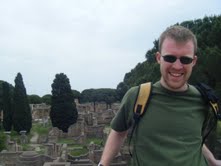
The Scars Were Not Me: Gilligan and Self-Care By Drew Baker

This post is written in conjunction with the Feminist Ethics Course Dialogue project sponsored by Claremont School of Theology in the Claremont Lincoln University Consortium,  Claremont Graduate University, and directed by Grace Yia-Hei Kao.

Drew Baker is a feminist Buddhist-Christian PhD student in Religion, Ethics and Society at Claremont School of Theology. His work engages the interconnections between trauma theory, religious ethics and ghost narratives.

[DISCLAIMER: Sexual violence is contained in the post below]

When I was a freshman in college, I drastically misread Carol Gilligan’s In a Different Voice. I read her book then, and (wrongly) saw a mirror of my own ideals. Selfless care above all else. I see a more complicated and beautiful portrait in her book today. Something changed.

I was raised Buddhist. Like many Buddhists, I learned about the doctrine of no-self and the moral value of compassion. I came to wed the concepts in my mind. Selfless care. There were no virtues in the world beyond the mantra: ‘love others no matter the cost to the self.’

Kenosis can be quite pragmatically valuable to cultivate as a spiritual discipline for those with power. As a white straight man, honestly, there were few instances in my life growing up that should have called this personal virtue into question. Continue reading “The Scars Were Not Me: Gilligan and Self-Care By Drew Baker”

Feminist Imaginings in the Contemporary Kabbalah Movement By Amy Levin

Amy Levin is a graduate student in Religious Studies at New York University with an interdisciplinary focus on American religion, gender and queer theory, secularization, spirituality, and consumption. She is a regular contributor to The Revealer and a practicing feminist.

If Kabbalah has frequented the media’s gaze in the past decade, the name Madonna has most likely infused the headlines, along with perhaps Mick Jagger, Britney Spears, and “A-Rod,” among others. Unsurprisingly, most of the media coverage on Kabbalah and its famed celebrities tends to conceal its central teachings, focusing on only one contemporary Kabbalah movement: The Kabbalah Centre. Valorized as one of the most financially successful movements of its day, The Kabbalah Centre began in the early 1970s by Rabbi Philip Berg and his wife Karen Berg. The movement exists alongside many of the contemporary groups that seek to renew and reinvigorate an ancient Jewish tradition.

Kabbalah, which literally means, “to receive,” is an umbrella term for a particular set of ancient Jewish mystical practices and ideas, dating as far back as 13th century Spain, and possibly even farther. It is commonly noted that Kabbalah was an esoteric, and thus exclusive practice, studied by only highly educated Jewish men over the age of forty. Like most religious categories, the limits and boundaries of its definition of Kabbalah differ in the various historical and geographical contexts in which it flourished. Jody Myers, author of Kabbalah and the Spiritual Quest: The Kabbalah Centre in America, notes that one of the central tenants of the Kabbalah Centre is that while Kabbalah is useful for anyone and everyone, one should not be coerced into belief or practice, and it is solely up to the individual to choose it as his or her personal path. Another tenant in Berg’s teachings is a central belief that God is a form of energy, called “the Light.” This loving and spiritual light fills infinite space, and seeks to share its positive energy with anyone who desires it.  Berg’s noncoercive model is part of an overarching egalitarian structure that posits religion as authoritarian and conformist, and spirituality as individual and liberating. Continue reading “Feminist Imaginings in the Contemporary Kabbalah Movement By Amy Levin”

Be-ing in the Church By Xochitl Alvizo

Sometimes it is difficult to make sense of the peculiar paths our religious lives take, much more so to make sense of one another’s paths which can be so different from our own.

I was raised in a Mexican American family and grew up in Los Angeles, California(my parents say I was “made in Mexico, assembled in the U.S.”). And I grew up going to Spanish-speaking Catholic mass. I have often said that the God I know in Spanish is so different from the God I came to know in English when I began to roam Protestant circles in undergrad. Growing up, the Spanish speaking God I knew was  as assumed and as basic as the air that kept us alive: always available and always with us in the good, the bad, and the ugly. God was a constant without which we could not exist.  But in undergrad, my Protestant friends seemed to have a completely different understanding of God than the one I had grown up with. Theirs was a God that required obedience, a God of very specific expectations, and a jealous God at that! It was a very confusing time for me and my engagement with Christianity wavered.

Then in graduate school, eight years after undergrad, something happened that revolutionized my life – I discovered radical feminists! As ironic as this might seem, radical feminists provided me with a way to make sense of Christianity. They gave me a language and the tools to both critique and engage Christianity and the church. I have often said that if it wasn’t for Mary Daly, I wouldn’t be able to call myself a Christian(!). Continue reading “Be-ing in the Church By Xochitl Alvizo”

Is the Prophetic Vision of Social and Ecojustice the Fruit of the Poisonous Tree? By Carol P. Christ

Carol P. Christ earned her BA from Stanford University and her Ph.D. from Yale University.  She is a founding mother in the study of women and religion, feminist theology, women’s spirituality, and the Goddess movement and work has revolutionized the field of feminism and religion.  She has been active in anti-racist, anti-war, feminist, and anti-nuclear causes for many years.  Since 2001 she has been working with Friends of Green Lesbos to save the wetlands of her home island.  She drafted a massive complaint to the European Commission charging failure to protect Natura wetlands in Lesbos.  In 2010 she ran for office in Lesbos and helped to elect the first Green Party representative to the Regional Council of the North Aegean.  She helped to organize Lesbos Go Green, which is working on recycling in Lesbos.

My hope for the new blog on Feminism and Religion is that it can become a place for real discussion with mutual respect of feminist issues in religion and spirituality.

I agree with Rosemary Radford Ruether who argued in a recent blog “The Biblical Vision of Ecojustice” that the prophets viewed the covenant with Israel and Judah as inclusive of nature. Indeed in my senior thesis at Stanford University on “Nature Imagery in Hosea and Second Isaiah,” in which I worked with the Hebrew texts, I argued that too. I also agree that the dualism Rosemary has so accurately diagnosed as one of the main sources of sexism and other forms of domination comes from the Greeks not the Hebrews. I agree that Carolyn Merchant is right that nature was viewed as a living being in Christian thought up until the modern scientific revolution. I agree with Rosemary that it is a good thing for Christians to use sources within tradition to create an ecojustice ethic. I am happy that there are Christians like Rosemary who are working to transform Christianity.  Finally, I am pleased to admit that I have learned a great deal from her.

Continue reading “Is the Prophetic Vision of Social and Ecojustice the Fruit of the Poisonous Tree? By Carol P. Christ”

Hearing Each Other to Speech in the Academy By Xochitl Alvizo

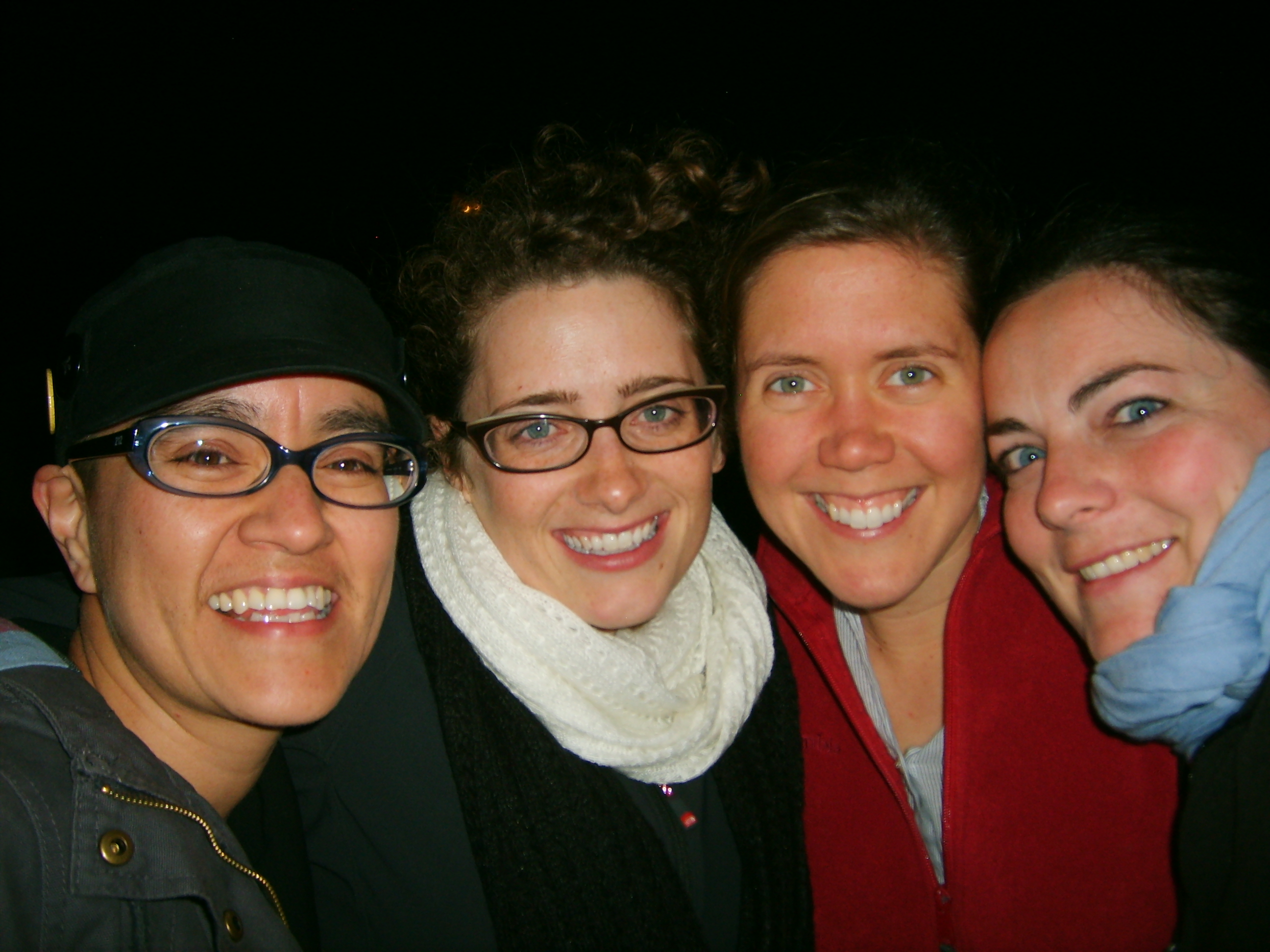
Sometimes when I write, especially when I am writing an academic paper but even when I am writing for this blog, I imagine that I am writing it to my feminist peer-group.  I am part of a group of four feminist women who have intentionally decided to stay involved in our religious traditions.  We are Unitarian Universalist, American Baptist, Presbyterian, and Disciples of Christ, and we started our peer-group in order to enCourage, support, and inspire each other as we participate in our churches with our full feminism selves. We get together regularly and we listen deeply to each other, we celebrate, we cry, we mourn, we rage, we laugh, and, of course, we eat together. On many occasions we have each expressed that we are better versions of ourselves because we are part of each others lives.

One of the reasons it is easier for me to write to my peer-group instead of my academic audience is because I know that my peer-group is invested in my empowerment, my liberation, and my continual be-coming – they understand that my well-being contributes to theirs, and vice versa. Thus, when I write for them, I do not fear; I trust that my peer-group will truly hear me and encourage me, and that when they raise questions and point out weaknesses in my writing, they do so not in an attempt to tear down my work but in order to strengthen it and build on it.

My peer-group

My peer-group, while being able to point out the blind spots and shortcomings on my work, never fail to recognize, honor, and express appreciation for my contribution as well. They hear me to speech and understand the importance of that for bringing out my academic best. Continue reading “Hearing Each Other to Speech in the Academy By Xochitl Alvizo”

Do White Feminists Have Ancestors? By Carol P. Christ

Carol P. Christ is a founding mother in the study of women and religion, feminist theology, women’s spirituality, and the Goddess movement.  She teaches in the Women’s Spirituality program at CIIS and through Ariadne Institute offers Goddess Pilgrimages to Crete. Her books include She Who Changes and Rebirth of the Goddess and the widely used anthologies Womanspirit Rising and Weaving the Visions.

Some years ago when I was speaking on ecofeminism, womanist theologian Karen Baker-Fletcher posed a question that went something like this:  What I am missing in your presentation is reference to ancestors.  For black women, this issue is critical.

Baker-Fletcher’s question provoked a process of thinking that continues to this day.  For example, I began to notice that when black women spoke at the American Academy of Religion, they often began by thanking their foremothers Delores Williams and Katie Cannon for beginning the womanist dialogue.  It is far rarer to hear a white woman thank Valerie Saiving, Mary Daly, Rosemary Radford Ruether, or Marija Gimbutas before her talk.

To the contrary, many white women take great pains to distance themselves from feminist foresisters.  I once heard a white woman Biblical scholar tell women students to do work on women in the Bible or other areas of religion without using the word feminist or placing their work in a female or feminist train of thought– if they wanted to get it published.  She was very proud that she had used this method and succeeded.  In other words, she was following in the footsteps of Mary Daly, Phyllis Trible, and Elisabeth Schüssler Fiorenza but acting as if she had invented the study of women and the Bible herself.  The reason for this, she freely admitted, was that male scholars who held power in her field would not respect her work if she used the “f” word. Continue reading “Do White Feminists Have Ancestors? By Carol P. Christ”

Love, Loss and Longing: The Rebooting of a Feminist Heart By Cynthia Garrity-Bond

It has been said time heals all wounds, I do not agree.  The wounds remain, in time the mind, protecting its sanity, covers them with scar tissue and the pain lessens, but it is never gone.  Rose Kennedy

 This past Saturday, August 6, would have been my 34th wedding anniversary.  Next Saturday, August 13 will be the wedding of my once fiancé.  The former lasted 20 years, the latter 10.  I have recently begun the delicate dance of getting to know another man; continuing to second-guess myself as if I’m a schoolgirl with her first crush, only I’m not.  I’m a woman drawing upon 30 years of the good, the bad, and the ugly.    Without sounding like Carrie Bradshaw from Sex and The City, I am asking myself what does a feminist relationship look like as it unfolds?  How do I trust another with a heart that is held together by Elmer’s glue?  And more importantly, how do I make myself present to another without past wounds surfacing and then projected onto the innocent?

In a recent post, XochitlAlvizo wrote on the difference, as she understands it, between sacrifice and love. All too often, argues Xochitl, we confuse the two, believing our sacrifice is what redeems us and others, when in reality, it is always love.  The distinction, while at times difficult to discern, is what can bring life to a healthy, loving relationship.  I can’t imagine not being steeped in a committed relationship without some sacrifice on my part.  But when does this practice of sacrifice become the support system for sustaining love?  How do I hold the balance of love and at times sacrifice for another without losing love of self? Continue reading “Love, Loss and Longing: The Rebooting of a Feminist Heart By Cynthia Garrity-Bond”

Feminism and Process Theology By Jeremy Fackenthal

The following is a guest post written by Jeremy Fackenthal, Ph.D. candidate in the philosophy of religion program at Claremont Graduate University.  His work focuses on process theology and philosophy, critical theory, and post-Holocaust thought.

One of my good friends taught an undergrad course on feminism in religion several years ago and assigned a book of John Cobb’s.  The class read it, loved it, and began a conversation about whether or not men could be feminists.  They decided that they could and that John Cobb surely must be a feminist.  And so they sent him one of the “This is what a feminist looks like” t-shirts, which he happily received and reportedly still has to this day.  I tell this story not only to demonstrate that John Cobb is a feminist and cares deeply about feminist issues, but also as a way of pointing out that the process theology that Cobb has been so instrumental in developing and that has become his academic trademark is itself strongly supportive of and compatible with feminist thought.

Continue reading “Feminism and Process Theology By Jeremy Fackenthal”

Exciting New Research on Matriarchal Societies By Carol P. Christ

The following is a guest post written by Carol Christ, Ph.D., a pioneer and founding mother of the Goddess, women’s spirituality, and feminist theology movements, and director of the Ariadne Institute.  She is also the author of multiple books including Rebirth of the Goddess.

Although there are some of us who disagree, the “party line” in the fields of Religious Studies and Archaeology—even among feminists– is that there never were any matriarchies and that claims about peaceful, matrifocal, sedentary, agricultural, Goddess-worshipping societies in Old Europe or elsewhere have been manufactured out of utopian longing.

I myself and most other English-speaking scholars defending Marija Gimbutas’s theories about Old Europe have studiously avoided the word “matriarchy” (speaking rather of “matrifocal, matrilineal, and matrilocal” societies) because the very word “matriarchy” conjures up the image of female-dominated societies where women ruled, waged wars, held men as slaves, and raped and abused men and boys. In fact, this fantasy tells us far more about patriarchy than about it does about matriarchy. Continue reading “Exciting New Research on Matriarchal Societies By Carol P. Christ”

“I’m in love with Judas”: Names and Taboos within the Scholarly Arena of Religion and Biblical Studies By Michele Stopera Freyhauf

Names provoke opinions, responses, and even controversy.  Lady Gaga’s song “Judas” is a perfect example of this.   Before this song was released, the title “Judas” stirred controversy throughout the nation just because of its name.  If one takes the time to read the lyrics, you find a human struggle summed up with the phrase, “Jesus is my virtue but Judas is the demon I cling to.”   To look beyond the name, a deep theological fight that is relevant to every one of us emerges; struggling between what you know is right but being drawn to what you know is wrong.  Within this song lays a fundamental dichotomy of betrayal and forgiveness that is overlooked because of a name, Judas, or what Mary Elizabeth Williams calls a “Christian taboo.”

The word “taboo” refers to something that is inappropriate or unacceptable by society , and can also indicate ostracizing.  It seems strange to apply this word to female scholars in the field of Religion and Biblical Studies; but it fits.  Scholarship that is identifiably authored as female brings about scrutiny and opinions of inferior quality or lack of creditability; after all “what does a woman know?”  Women and scholarship, especially in the male-dominated fields of Religion, Biblical Studies, and Archaeology, are in fact “taboo;” unaccepted, improper, ignored, and shunned.  This issue was first brought to my attention at a Women’s Luncheon at the annual meeting of the Society of Biblical Literature (“SBL”) in 2008.  Carol Meyers, a professor of Religion at Duke University, was being honored for her mentorship to women in the field of biblical studies.  Amy-Jill Levine, an earlier recipient of this award, introduced Meyers. Continue reading ““I’m in love with Judas”: Names and Taboos within the Scholarly Arena of Religion and Biblical Studies By Michele Stopera Freyhauf”