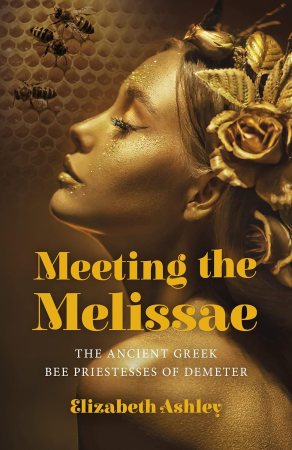
Meeting the Melissae: The Ancient Greek Bee Priestesses of Demeter by Elizabeth Ashley, Book Review by Carolyn Lee Boyd

The Mysteries at Eleusis, a nine-day festival in ancient Greece based on the myth of Demeter and Persephone, has fascinated and baffled us for millennia. Here thousands of people from all over Greece and beyond came to understand, in the words of Plutarch, “an undoubted truth our soul is incorruptible and immortal” (277). Producing this festival was the task of the Melissae, the bee priestesses of Demeter, powerful and honored women in a society in which women had few rights, famous in their own time but almost unknown in ours.

In Meeting the Melissae: The Ancient Greek Bee Priestesses of Demeter, Elizabeth Ashley offers us not only facts about the Melissae and other ancient Greek priestesses gleaned from archaeology, art and literature from the period, and modern academic research but her own glimmerings of their deepest spiritual life. She explores what is known about the priestesses and their everyday lives, the goddesses whose temples they presided over, and bees themselves. An aromatherapy researcher, she began her journey to discovering the secrets of the Melissae when she kept reading references to them in ancient botanicals about the herb lemon balm (Melissa officinalis) but nothing more. (The connection between lemon balm and bee priestesses? Pheromones. That’s all I’m going to say).

Continue reading “Meeting the Melissae: The Ancient Greek Bee Priestesses of Demeter by Elizabeth Ashley, Book Review by Carolyn Lee Boyd”
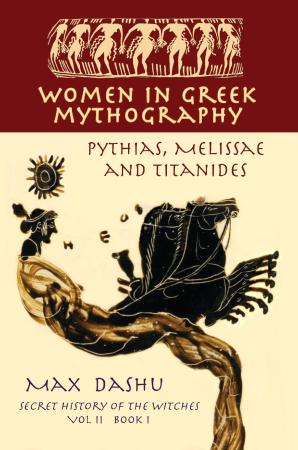
Women in Greek Mythography: Pythias, Melissae and Titanides by Max Dashu, Book Review by Carolyn Lee Boyd

Cover photo: Eos, titanis of Dawn, Black-figure lekythos attributed to the Sappho Painter, Athens, circa 500 bce (Public Domain, courtesy of New York Metropolitan Museum)

Demeter and Persephone, Hera, Athena, Medusa, Artemis are often the first, sometimes only, goddesses modern women experience, and they have profoundly influenced our 21st century attitudes about gender, violence, and more. Yet, as Max Dashu says in her new book, Women in Greek Mythography, Greek history has “served as a template for supremacy, from male domination and Hellenic colonization, to modern Eurocentric ideologies about history” (xi). While most Greek scholarship generally glosses over these malevolent influences and ignores women’s lives, Dashu focuses on “female spheres of power, priestesses, witches, and of course systemic patriarchy” (xi) in order to “map realities of women’s lives, both their spiritual authority and their subjugation; the spaces they carved out, their ceremonies, and the stories they wove into their tapestries” (xi).

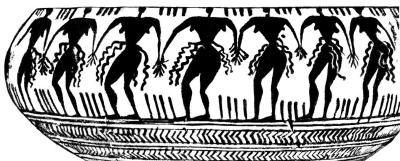
Women dancing in leafy belts: not the Greece we were shown. © 2022 Max Dashu.

Women in Greek Mythography is not only a fascinating historical story of Greek myth and religion to be read cover-to-cover, but a rich sourcebook full of meticulously documented facts. She draws from scholarly works of history and mythography, as well as analyzing images on vases, friezes, sculpture and more. She has carefully rendered 270 drawings of these images so that readers can judge their meaning themselves. She delves into language, seeking out the origins of words that may indicate where goddesses and myths originated and their relationships to one another. She demonstrates that goddess mythologies often had many variations, sometimes conflicting, with many “countless regional deities that were subsumed under Olympian names, the local origin myths, ceremonies, and customs” (xiv).  

Continue reading “Women in Greek Mythography: Pythias, Melissae and Titanides by Max Dashu, Book Review by Carolyn Lee Boyd”

Imagine a World of Beauty for Beauty’s Sake by Carolyn Lee Boyd

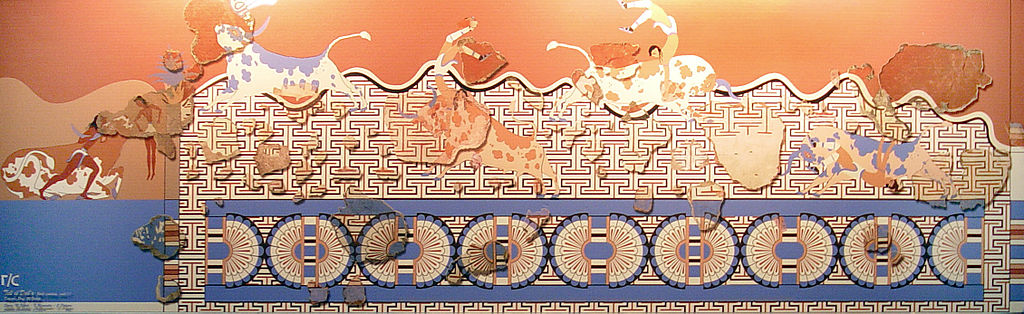
Reconstructed Minoan Frescoe: Martin Dürrschnabel, CC BY-SA 2.5 <https://creativecommons.org/licenses/by-sa/2.5&gt;, via Wikimedia Commons

Imagine a world where beauty is revered just for bringing pleasure and joy; where buildings abound in graceful, naturalistic, lively renderings of animals and plants; where the human body is magnificent art; where everyday objects for all are ornamented with complex, graceful imagery. Imagine a world where “beauty” is not a narrowly defined style of attractiveness or an attribute of works created by a small elite, but a revelation of life’s joy created by all, an expression of delight in the Earth, and a bridge to the worlds within us. If we look back across human history, we will find all these expressions of “beauty for beauty’s sake,”

From our earliest millennia, “where you find humans, you will find art,” says pre-historian Jean Clottes (Marchant). People carved zig zags in shells 500,000 years ago (Handwerk). About 164,000 years ago, people left behind in South African caves ochre and pierced shells, perhaps for jewelry (Marchant). Artists created the oldest cave paintings yet found, stunning in their realism and movement, in Spain 65,000 years ago (Handwerk).

Continue reading “Imagine a World of Beauty for Beauty’s Sake by Carolyn Lee Boyd”

Jonnet Lies Under the Thorn Tree, 1634 by Carolyn Lee Boyd

While researching my family tree, I discovered the Survey of Scottish Witchcraft of the University of Edinburgh, an amazing database listing those who were accused of witchcraft in Scotland between 1563 and 1736 and what happened to them. I found a woman named Jonnet who had an unusual last name that closely matched one of my ancestors, who happened to come from a small town very close to where my ancestor had been born, and who had several children. Jonnet would have been of the previous generation or maybe two generations earlier than my ancestor. I was not able to trace my ancestor’s line back any farther than her birth, so I wondered if Jonnet had perhaps been the mother or grandmother of my ancestor, or maybe a more distant relative. 

Continue reading “Jonnet Lies Under the Thorn Tree, 1634 by Carolyn Lee Boyd”

Once Upon a Time Women Storytellers Spun the World by Carolyn Lee Boyd

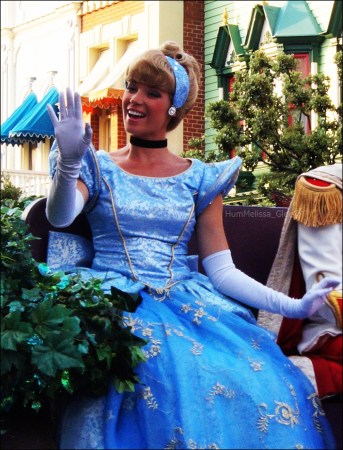
Cinderella-Magic on Parade: By HumMelissa_Glee – Cinderella – Magic On Parade, CC BY 2.0

Cinderella helped make me a pint-sized feminist. Well, of course my strong and rebellious mother and grandmothers were my primary influences, but at age five, Cinderella was definitely up there. I learned in my own little girl way from Disney’s Cinderella that women could forge their own destiny (of sorts), older women can be powerful for good and evil, magic pervades the universe, and whether other women support you is key to success. I completely missed the message about marrying Prince Charming.  How did this story get from its origins millennia ago to a little suburban American girl in the 1960s?

Once upon a time, all over the globe, women practiced the inspiring, transformative art of storytelling. In Europe, as their world was overtaken by more patriarchal cultures, they kept alive fairy tales that spoke of their traditional world infused with magical energy and spirit beings and shared with each other new tales of their lives and troubles. In many western cultures from ancient times till very recently, however, storytelling was strictly segregated by gender, with men gathering in taverns or homes to hear epic hero tales while women gathered to sing or tell stories to each other of supernatural beings, local events, and their lives while doing tasks like spinning (hence, “spinning a yarn”) and weaving. Not surprisingly, male folklore scholars have for decades overlooked women storytellers who were also often devalued and denigrated in their own communities. More recently, largely female folklore scholars have brought to light a rich and important tradition of European women storytellers.

Continue reading “Once Upon a Time Women Storytellers Spun the World by Carolyn Lee Boyd”

It’s Alive!!!!: Mary Shelley Has a Word to Say about Mother’s Day by Carolyn Lee Boyd

The monster and Elizabeth from movie Frankenstein, 1931, Universal Studios, Public Domain

As Mother’s Day beckons, Mary Shelley would like to have a word, or rather a novel’s worth of words. Her novel 200-year-old Frankenstein Or a Modern Prometheus has much to say today about the essential matristic values of nurturing and life-giving, women’s reproductive and other rights, parenthood and child care, and more. The novel’s two centuries of play, film, and book adaptations, most recently Kris Waldherr’s excellent Unnatural Creatures: A Novel of the Frankenstein Women, attest to Frankenstein’s continuing relevance to profound aspects of human experience.

First, let’s look at what might have influenced the writing of Frankenstein. Mary Shelley was the daughter of Mary Wollstonecraft, author of A Vindication of the Rights of Women which in 1792 championed educational and employment opportunities for women. She advocated for women to be treated as full human beings rather than as mere objects of beauty whose inherent “hysteria” made rational thought impossible. Wollstonecraft cited the benefits to society of mothers who can properly educate their children. Wollstonecraft died soon after giving birth to Shelley and was vilified for a previous illegitimate daughter. 

Continue reading “It’s Alive!!!!: Mary Shelley Has a Word to Say about Mother’s Day by Carolyn Lee Boyd”

Peace Weaving: A Task for Our Time by Carolyn Lee Boyd

MaestraPeace (“Woman Teacher of Peace”) mural on San Francisco Women’s Building

Throughout centuries and across continents, women peace weavers have intertwined the threads of diplomacy and connection to make of their societies a harmonious whole amid war, violence, and seemingly endless conflict. James Rupert of the US Institute for Peace notes that, in our time, “Over a decade in countries facing warfare, women have organized more nonviolent campaigns for peace agreements than any other group.” Yet, women are outrageously under-represented in formal, higher-resourced, male-dominated institutions, with only 4% of negotiating positions in the United Nations and governmental organizations held by women. According to the Kroc School of Peace Studies, women-led peacemaking efforts are grievously underfunded and put women peace makers at risk of gender-based violence and online harassment.

Yet, if we look to the past, peace making has traditionally been an honored sphere of influence in which women have used the power of the esteem in which they were held, their ability to envision peaceful ways of being, and their skills as communicators, consensus builders, and relationship makers to bring concord from conflict and positively transform their societies. 

Continue reading “Peace Weaving: A Task for Our Time by Carolyn Lee Boyd”

From the Archives: Awakening to the Mystery of Absolute Beginnings by Carolyn Lee Boyd

This was originally posted on February 1, 2013

As I rise at 5:30 each morning, my spirit reawakens in a between-the-worlds realm of absolute beginnings. For those few minutes of quiet and slowly revealing dawn light, I revel in mystical newness, endless possibility, a horizon that is only the future.  By 7 am, when I can hear cars on the road and see television screens through windows as I walk to work, normal, plodding space-time has taken over, leaving just a shimmer to linger in my memory.

I remember living all day with this feeling of being at the very beginning of my world when I was a young child and everything that I did and thought was for the first time. I believed this sense was lost forever when I was later taught by society, as so many of us are, that I was only the tiniest, most ordinary mite in a world already built many eons ago by people with a much brighter genius than me. 

And then, on my 25th birthday, I heard Merlin Stone speak about When God Was a Woman As I truly envisioned the Divine with a female face for the first time in my life, I felt a joyful excitement as if I had been transported back to that first second in human history when the insight dawned that a sacred presence exists within ourselves and all of creation that is unseen, but real, and that it can be expressed and shared. Because I had never been taught about Goddess or how to interact with Her, I was able to discover and act on what I knew intuitively within myself about Her in a way that was completely my own. With great fervor I began my own individual journey of the spirit and found that this exhilarating profound newness never left me because the territory I was exploring was completely unfamiliar to me in my own experience.

Continue reading “From the Archives: Awakening to the Mystery of Absolute Beginnings by Carolyn Lee Boyd”

From the Archives: Sacred Food for Body and Soul by Carolyn Lee Boyd

This was originally posted on Jan 29, 2022.

Today is Wives’ Feast Day, a holiday celebrated in Ireland and northern England on February 2, the same day as Imbolc, Candlemas, and St. Bridget’s Feast Day. On this holiday, women (in Old English, “wife” meant simply woman) would gather together and enjoy making and sharing delicious foods with each other, honoring themselves and their work providing nourishment and other aspects of making a “home.”

When you think about it, this delightful tradition is quite remarkable. Feast days are generally associated with saints, so, in a way, this feast day recognizes the sacredness of all women and also their daily labor. This echoes to me Old European cultures that connected women’s baking and weaving to divinity by placing workshops in goddess temples and associating goddesses with these tasks. Today, women work in many jobs not directly associated with food production, but still labor to make our communities and planet better “homes” in many other ways. 

Continue reading “From the Archives: Sacred Food for Body and Soul by Carolyn Lee Boyd”

Unsung Heroines: Mary Moody Emerson, Foremother of Transcendentalism by Carolyn Lee Boyd

Transcendentalism is a philosophical, literary, and spiritual movement begun in 19th century America whose founders centered being guided by your own inner voice, the immanence of divinity in all beings, the sacredness of nature, and the importance of social reform, among other aspects. Its influence is still felt today in the environmental movement, civil rights, literature, spirituality celebrating nature, and more. Ralph Waldo Emerson, Henry David Thoreau, Margaret Fuller and others are often considered to be its originators, but before them all was Mary Moody Emerson.

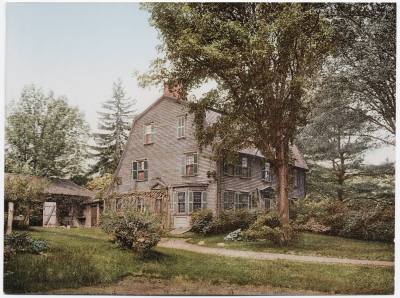
The Old Manse, Concord, Massachusetts, where Mary Moody Emerson was born and lived periodically, as did various minister ancestors and Ralph Waldo Emerson.

Mary Moody Emerson was born in 1774 in Concord, Massachusetts into a family of ministers and philosophers, including her nephew, Ralph Waldo Emerson. Her literary legacy includes a few published pieces, but is primarily the mountain of letters and journals which she called her “Almanacks.” She circulated these among friends and family, including many transcendentalists, especially Ralph Waldo Emerson. They featured many revolutionary ideas that made their way into his books and lectures, in particular, especially foreshadowing his book Nature, which launched transcendentalism. She also held influential conversations with Henry David Thoreau as he was writing Walden and with many other prominent thinkers over decades. Ralph Waldo Emerson praised her “Genius always new, subtle, frolicsome, musical, unpredictable” (Cole, 262). Almost entirely self-educated through books given or lent by family, friends, and local libraries, her sagacity was the well-spring of a movement that has been instrumental in making her world and ours. 

Continue reading “Unsung Heroines: Mary Moody Emerson, Foremother of Transcendentalism by Carolyn Lee Boyd”