I am the holy place somewhere in the stars of eternity, someone’s daughter who seeks reprieve somewhere.
Yetta changed her name to Mary. She tried to erase her past, not as a Jew, well maybe some of that, but more as a Jew molested by her father—a frum[1],“Monster”, his daughters called him.
On my altar sits my tallit alongside a Menorah with seven brass holders. No stars of David—before or after the decimation of Gaza. Can rose water sweeten our hearts? We pour it graciously in our hands, hoping the lost petals heal our guts and brighten our thoughts. She searches hungrily for hope in glass bottles adorned with Farsi, that cost $4.29 each.
Accounts and allegations of sexual harassment, assault, and abuse perpetrated by mostly straight white men in power have flooded the U.S. news cycle for months. Each new revelation confirms that sexual violence is an epidemic fueled by systems of unchecked power and authority, including patriarchy, white supremacy, and Christian supremacy.
After TheWashington Post published the story of Leigh Corfman who recounted the sexual abuse she suffered as a teenager at the hands of Roy Moore, Alabama State Auditor Jim Zeigler came to hisdefense and argued that this would have no political impact since Moore “never had sexual intercourse with any of these girls.”
We all ought know by now that such allegations of sexual abuse, even when the perpetrator admits to them, bear little weight on the electability of white male politicians (see: November 8, 2016). Even so, I was stunned by a poll that revealed that 29% of Alabama voters answered that they are now more likely to vote for Roy Moore since allegations were made against him.
Child abuse does not have to be physical or sexual. The most widespread forms of child abuse are psychological, and therefore harder to see, acknowledge, and eradicate. As abused children, we unconsciously pass on patterns of abuse visited on us to children, and to others we have power over including students, employees, and even friends and lovers.
The recent visit of a friend who is suffering greatly in a “battle” with her own “demons” reminded me of the important work of Alice Miller. My friend’s “demons” take the form of a persistent self-criticism laced with the feeling that “if only” she did or didn’t do certain things, her world would fall into place. My “demons” generally take a different form, telling me that I am helpless and that there is nothing I can do to ease my suffering.
Such “demons” were not implanted in my friend and me by the devil. They took root in interactions with our own parents, who were not themselves any different from most of the parents of their time and place. Recognizing that our parents were not “bad” people should not blind us to the great harm they did to us. However, when abused children speak of their abuse, the statement that their parents did not intend to harm them usually functions to deflect attention away from child abuse that really did occur. What happened to my friend and me was something like this. In many small and perhaps also a few traumatic interactions, we learned that our feelings do not count. “Don’t talk now, your father is tired.” “Stop making so much noise, your father has a headache.” “Don’t ask your mother for attention, can’t you see that she has more than enough to do with your younger brother.” Harmless in themselves, such messages, when repeated over and over, lead the child to believe that there must be something wrong with the feelings she has.
I can’t even save myself. I make bad decisions just like the ones in the world – bombs and wars and the industrial revolution with chains of greed. But then I go on and, without even knowing any part of the story, want to save others. Carol Christ’s post yesterday on family brought me to tears and I instantly had to write a poem. First, it made me think of the memory of my own mother telling me to wait for my dad to get a belt and him saying it will hurt him more than it does me.
Except when I told my mom this, she said it never happened, so I don’t understand the vivid visions in my head that I have being little and hearing the words and being afraid, and why the sight of men’s work belts make me nauseous. I believe my mother. It doesn’t matter either way, I guess, now, in my opinion about my own experience. What I mean by that is I don’t want to do the work of being suspicious or thinking about what is at stake at the moment. I’m okay with shelving it. Let’s just say I believe and don’t feel like trying to explain those visions. I suppose everyone will have an opinion about my decision and perspective on this. Feel free to voice it if it makes you feel better. Continue reading “Longing to Heal Family in our Differences and Distances by Elisabeth Schilling”
My mother spent a good deal of her life defending my father to me and my brother. “Your father didn’t mean it,” she would say. “Your father loves you—he just doesn’t know how to show it.” “Your father never cried when his mother died—that is why he is so angry now.”
Shortly after my mother died, my brother said to me: “I finally realized that the only way I could get along with Dad was if he decided on that particular day that he was going to get along with me.” My brother’s words hit me like a ton of bricks. At the age of forty-six, I was still trying to get along with my father. I had years of therapy to help me understand our relationship. My brother saw the truth without the benefit of therapy.
About six months after my mother’s death, I had the most amazing dream. Though I have alluded to it in my writing, I promised myself not to speak of it directly it while my father was still alive.
I had accompanied friends to the Greek Saturday night Easter service in their village. At the stroke of midnight we lit candles saying “Christ is risen, he truly is,” before embracing and kissing each other on the cheeks. I was sleeping in a guest room in my friends’ house. The dream occurred shortly before dawn. Though I rarely remember my dreams, I awoke with a clear memory of this one.
In it my mother spoke to me in Greek. She told me that now that she was no longer living, she had a clearer perspective on the way our father treated me and my brother. She explained that she had loved my father so much that she had not wanted to see that he had been cruel to us and to recognize the ways he had harmed us. She said she was very sorry that she had not protected us. Her final words before the dream ended were: “Don’t ever love anyone so much that you become blind.”
To this day I do not know why my mother spoke to me in Greek–perhaps it was a way of distancing herself from my father and indicating that she was on my side now. It seemed deeply appropriate that she appeared to me at the time when the Greeks were celebrating the resurrection of “life from the grave.” My mother’s words were a healing balm: healing the breach that her siding with my father a crucial junctures in our relationship had created in my relationship with her, and healing an even deeper would in my psyche.
About that time I was reading Alice Miller’s discussion of the poisonous pedagogy of control. Miller says that the most important words abused children need to hear are: What happened to you was wrong. This should not happen to you or to any child. In the dream my mother spoke the words she had been unable to speak while she was alive. She told me that she finally understood that there was no excuse for the way my father treated me and my brother.
I came to realize that the words my mother spoke when she was living, words intended to absolve my father and assuage my pain, had confused me about the nature of love. From my mother, I learned to imagine that people–especially men–who treated me badly loved me deep down but could not show it. No wonder I always ended up feeling hurt and abandoned.
My mother’s ability to acknowledge the truth about my father when she came to me in my dream was a revelation. The blinders that had clouded all my relationships fell away. I could now begin to see all of my relationships more clearly and to recognize which relationships were healing me and which were harming me. Before the dream I literally did not have a clue, because my mother had taught me love is a magical feeling that has no relationship to actual behavior. After the dream I learned that love manifests in both word and deed. My life has been different from that day to this.
Though I never doubted the healing power of this dream, I had some difficulty in squaring it with my belief that death is the end of individual life. If my mother was not living heaven or somewhere else, then how could she speak to me after she had died? In the ensuing years I have come to understand that the ancestors live in us. The words my mother spoke to me when she was alive became part of my cellular memory. The mother-daughter relationship is so profound that there are times when the mother-daughter boundary is blurred. As I recognize how deeply this is true, it no longer seems important to know if “my mother” appeared to me in my dream or if “my mother as she lives in my me” appeared in my dream. Her appearance transformed my relationship with her and my relationship with my self. And that is what matters.
In memory of Janet Claire Bergman Christ, August 11, 1919-December 7, 1991.
Accounts and allegations of sexual harassment, assault, and abuse perpetrated by mostly straight white men in power have flooded the U.S. news cycle for months. Each new revelation confirms that sexual violence is an epidemic fueled by systems of unchecked power and authority, including patriarchy, white supremacy, and Christian supremacy.
When it comes to my family, I’ve always felt different. One of my earliest memories from when I was really young was being told that I felt things too passionately—that I felt too much. What was never said but was implied was that I felt dissent too much, too often, too vocally. It made people uncomfortable. It made my family uncomfortable. When it came to understanding my faith/religious path, my family and I started diverging early on, never really meeting again—at least not for now.
When I was about five, I remember asking why women could not be priests. My mother brushed it aside and said we could be nuns. She was blind to the inherent misogyny behind the same Church that so many of her female family members had built (we come from a long line of nuns and Jesuits). I thought maybe someday I could be a woman priest. I would change it all. I would be Pope Joan.
When I was thirteen, I started noticing the wealth involved in the Roman Catholic Church, the opulence of the lived Catholic life. When I asked my parents why the Church did not lead in example and live in poverty using its wealth to actively live the gospel, I was told, “ This wealth is a gift to humanity. It is there for all of us, a patrimony to those who open their hearts.” I wasn’t talking about art, I was talking about the RCC’s gold assets—valued in the billions —but it didn’t matter. I’ve seen my family donate to Church building funds my entire life—buildings that were then sold off to pay for the Church’s offenses later on. Still, I thought if I became more involved, with the “right kind of Catholics”, I would be able to change the Church from within. Continue reading “You Are What You Read by Martha Cecilia Ovadia”
This year I want to resolve to help more and worry less.
This is the number one thing I worry about most right now:
Children and hunger.
Right now in the United States approximately 20-30% of children go to bed hungry. Twenty percent or more of the child population in 37 states and D.C. live in what are called “food insecure households.” New Mexico (30.6%) and the District of Columbia (30.0%) have the highest rates where children live without consistent access to food.
How often do we say “I’m starving?” What we mean is we are hungry. It’s true some of us don’t take care of ourselves all that well and maybe we realize—God, it’s dinner time and I didn’t eat all day—I need to resolve to eat better throughout the day. I totally agree with that resolution.
At the same time—we are not starving. I’m going out on a limb here and saying most of you reading this blog are not starving. (However, and this is something I worry about—many of you might be anorexic…and starving, most definitely—which would be another column.)
Poverty is the principle cause of hunger. Children who are malnourished lose about 160 days of illness a year. That’s almost five months! How are you going to get an education and go to school if you are missing almost 5 months of it?
Malnutrition can also stunt your growth. Stunted growth because of malnutrition affects almost one third of children in developing countries.
In many of these cases, this story begins with a malnourished mother. In many developing countries where the mother has not had adequate nutrition…the baby is born with stunted growth and at risk for among other things blindness and premature death.
Here’s what I worry about:
We have enough food to feed everybody. And we aren’t doing it.
The hungry in the world total 870 million people. That number is equivalent to the combined populations of the United States, Canada and the European Union.
Where are the hungry people? Mostly in Asia and Africa: east, central and southern Africa. However, the share of the hungry in urban areas is rising.
No one want to think about images of starving children…especially after Christmas or whatever variant of winter holiday you are celebrating. What we might be worrying about at this time is how much we actually did eat/indulged in over the holidays.
Be that as it may. Children are starving. Children go to bed hungry in every city in the United States every night. So, although this is a time of year when many among us worry about over-indulging in food, it is also the time that a quarter to a third of the population feels want most keenly, to quote a line from A Christmas Carol, when the men come to see Scrooge and try to get him to give to the poor. And he responds, “Are there no workhouses?”
There is a quiz on the Feeding America site to test your knowledge about hunger. You can take it here:
I’ll give you a few of the answers—1 in 6 Americans are hungry. Hunger is in homes where there is at least one working adult (almost 40% of them); and that same percentage is also true for hungry families who have folks in them who have a college education (almost 40%)—but they are still going to bed hungry. Among other things, hunger means that hungry children will not perform as well in school as those who are fed. And also hunger exists just as much in people with homes as in those who are homeless.
In the parable of the loaves and the fishes, Jesus says (John 6:1-14) don’t waste anything. Gather everything up. He feeds 5,000 people with the five barley loaves and two fishes that a small boy in the crowd has. But many folks forget that Jesus did not just perform the miracle that generated enough food for those 5,000 present. He also gathered up all that was left over—twelve baskets worth “so that nothing would be wasted.”
Why do we have enough and we are wasting so much? Why are children going to bed hungry? Why is there a surplus that is not being gathered up and distributed?
I don’t have the answers to really much of this–just my questions and my worries. However, many food kitchens for the homeless and those in need name themselves after this parable. They are not questioning the miracle or pondering the answers. They are practicing faith by works. There is one in San Jose, CA, The Loaves and Fishes Kitchen.
Also, when we talk about those who are hungry, and I have been talking about children here—there is another thing I worry about—the elderly and hunger. In my home state of California—47% of the elderly cannot afford basic needs. That is almost half of the population of the elderly in California!
The Loaves and Fishes Kitchen is the only provider of hot food for low income and homeless people in eastern Santa Clara/ San Jose, CA area. They describe their mission as one of providing some sense of “food security” to needy people /families. Food security—I have never heard of hunger and its abatement as not just as eating but as providing “food security,” before doing some basic research for this blog. I’m sure many of us have heard of the phrase, “worrying where the next meal will come from,” but food security means not just getting the next meal and feeling full. Food security means stopping having to worry about where the next meal will come from.
In Los Angeles where I live according to a recent Los Angeles Times article—there has been no let up in “food insecurity.” In fact, things are getting worse. According to this article, many folks have to decide between eating and paying rent, or eating and getting medicine.
Almost ten percent of Californians are out of work. This means more folks are hungry. Another worry: while this is happening house Republicans want to slash the food stamp budget by another 40 billion over the next decade “to prove fiscal responsibility.” The myth of the American Dream—where if you just work hard enough you will be OK, is what fuels the myth that cutting food programs, public welfare money– helps people “work harder.” When in fact, there are no jobs; people are paid less for working more—and the wealth in the country is owned by the elusive 1%.
There’s a great blog that recently went viral by a woman, Linda Tirado. She talks about the decisions that poor people make because they are the best decisions they can make then. I understand a lot of them because I was brought up lower middle class. If you looked away from your hamburger in my house one of the many siblings might snatch it off your plate. We did not have excess protein. However, I was not starving. I ate. Did we always eat healthy? No. But we ate.
Ms. Tirado’s piece helps us understand why slashing the budget that provides some relief to those on subsistence incomes, many living in motels with no stove, and working two jobs already…is not going to help those folks buck up and work harder. The poor are already some of the hardest working Americans there are, and some of the hardest working citizens of the world in any country.
Although there are many other things I worry about, such as:
–the torture of animals and that I still eat meat.
–The torture of dairy farm animals and that I still eat cheese and drink milk and have a daily cappuccino.
–I worry about the pollution of the ocean and that we, humans, represent such a small part of Earth—we are less than 29% of earth and the ocean in 71% of it and we’re screwing up the ocean. It is a variant of the 1% amassing the resources and hurting the 99% on a horrifically magnified scale.
Yes, there are many other things I worry about. I could go on here and talk about all the things I worry about. Sometimes I lie in bed and I can’t help thinking—somewhere a child is being hurt, or starving, a woman is being beaten. This might be happening somewhere close to me…maybe within walking distance. Somewhere in the great cities I have lived in…somewhere someone is almost always being hurt…and it is often a child.
I’m not sure if other folks worry like this. I know I do. And through the course of my life I have done work in various communities—social justice work that hopes to address and change these worries.
I could add to this list of current worries.
But, as I said right now I am very concerned with children and hunger—20 to 30% of American children going to bed hungry. And that is not even addressing the majority of the hungry in the world which do not even live in the U.S.
Children are dying, and their growth being stunted. Perhaps also on a small side note, because I am a teacher I am really concerned about the absolute unfairness of going to school with others who are well-fed when you are not and having to compete for the same grades. It worries me. As a professor who just finished grading over 200 finals—if I knew that some of these students were finishing their final work without enough food to fuel them, would I grade grade them differently? Should I? And maybe more importantly—should I know that they are hungry? Doesn’t it seem grossly unfair to apply the same grade to those who are hungry as to those who are well fed?
This blog does not mean that I could not list so many things I am also truly grateful for. I am—truly grateful. I had a book published this year. My wife and I performed an amazing balancing act of loans in order to purchase our first home. I am so grateful for this forum, this feminism and religion blog and the women who maintain it.
Yes, there are wonderful things in the world. Yes, it is a wonderful life. Or it can be. But, just as in the movie a wonderful life does not happen when people are hungry, when others want more than their share. What is our fair share? And how is it corporations become more important than the people who make them up? This is so much “food” for thought.
But, today I am writing about actual food. Not food for thought. I am thinking about resolutions, and I wanted to share mine. Children and hunger. I can’t resolve to stop worrying, but I can resolve to give money to the local mission (for me that is most likely to Catholic Charities or the Long Beach Mission, which I give to occasionally/regularly—but which I want to give to just regularly and on a schedule. There is also a food pantry at St. Luke’s in Long Beach that I will donate to with either time or money or both.)
I don’t know how much I’ll give—if it will be every month, four times a year or something else; if I will go work at the food bank or not. I want to do all of those things and I am realistic to admit I may not do them all but I will do something, in terms of a workable resolution by the first of the year.
I resolve to stop worrying about children and hunger so much. It doesn’t put food in a child’s belly—my worry. Faith by works.
I resolve to pick up the loaves and fishes of my life and work whatever miracle I can with them.
And you…what are your resolutions/ revolutions?
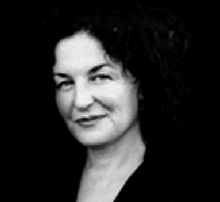
Marie Cartieris a teacher, poet, writer, healer, artist, and scholar. She holds a BA in Communications from the University of New Hampshire; an MA in English/Poetry from Colorado State University; an MFA in Theatre Arts (Playwriting) from UCLA; an MFA in Film and TV (Screenwriting) from UCLA; and an MFA in Visual Art (Painting/Sculpture) from Claremont Graduate University. She is also a first degree black belt in karate, Shorin-Ryu Shi-Do-Kan Kobayashi style. Ms. Cartier has a Ph.D. in Religion with an emphasis on Women and Religion from Claremont Graduate University.
Child abuse does not have to be physical or sexual. The most widespread forms of child abuse are psychological, and therefore harder to see, acknowledge, and eradicate. As abused children, we unconsciously pass on patterns of abuse visited on us to children, and to others we have power over including students, employees, and even friends and lovers.
The recent visit of a friend who is suffering greatly in a “battle” with her own “demons” reminded me of the important work of Alice Miller. My friend’s “demons” take the form of a persistent self-criticism laced with the feeling that “if only” she did or didn’t do certain things, her world would fall into place. My “demons” generally take a different form, telling me that I am helpless and that there is nothing I can do to ease my suffering.
Such “demons” were not implanted in my friend and me by the devil. They took root in interactions with our own parents, who were not themselves any different from most of the parents of their time and place. Recognizing that our parents were not “bad” people should not blind us to the great harm they did to us. However, when abused children speak of their abuse, the statement that their parents did not intend to harm them usually functions to deflect attention away from child abuse that really did occur. Continue reading “Are Most of Us Abused Children? And is Child Abuse the Root of Evil? by Carol P. Christ”



 I can’t even save myself. I make bad decisions just like the ones in the world – bombs and wars and the industrial revolution with chains of greed. But then I go on and, without even knowing any part of the story, want to save others.
  My mother spent a good deal of her life defending


 Feminism and Religion