Higher Self and Ego by Vanessa Soriano

I have this morning ritual that goes like this: press snooze 8 times, finally turn off the alarm, oversleep, get up, drink lemon water + celery juice, and then I’m supposed to meditate.  What I really want to do is go directly to the coffee pot, drink the entire thing, and eat a bagel.  When it is meditation time, even after years and years of doing it, I still resist the practice.  My ego convinces me that I have better things to do than to sit on my arse and go within for 20 loooong minutes.  My higher self, on the other hand, gently (yet firmly) reminds me that if I want a slice of peace, an understanding of my feelings (the good, bad, and ugly), and a connection to Loving Guidance, then I better sit my bum down and carve only 20 minutes out of my day to get that medicine.

The yogis have a Sanskrit term called atman which means the inner self/soul.  The atman is inextricably linked to Brahman which is essentially the Divine.  Brahman is all pervasive and transcends notions of masculine/feminine deities because Its’ true nature is infinite, eternal, bliss.  In the Western world, Brahman is usually identified as “Universe” or “Divine” or “Love.”  I assert that most of us need to dissect this huge concept of the Divine into deities/figures that are relatable and accessible which can range from Jesus to Kali to bodhisattvas.  Depending on your spiritual/religious flavor, in meditation, you open the doorway into the Divine of your understanding.  Your higher self (atman) takes the leads into the omniscient, ever-loving presence of Spirit (Brahman).  Along the way, you encounter everything from your deepest fears to your deepest joys. Continue reading “Higher Self and Ego by Vanessa Soriano”

“Don’t break the bucket” by Oxana Poberejnaia

oxanaVictor Pelevin is a prominent contemporary Russian author, with books translated into a multitude of languages. To me, his novels act as a series of Dhamma talks (Buddhist sermons, if you will).

I have also always thought that Pelevin’s novels can be broadly divided into two groups: “This is how to do it” and “This is how not to do it” groups. For instance, “The Clay Machine Gun” and “The Sacred Book of the Werewolf” are “How to do it” stories, with the protagonists reaching his and her (respectively) destinations. “Babylon”, on the other hand, is the “How not to do it” story, as the protagonist ends up enslaved by the world he has created.

Victor Pelevin
Victor Pelevin

One of my favourite novels by Pelevin is “Life of Insects”, which tells the tales of a number of characters, all of them “How not to do it” stories bar one. One of the most interesting quotes from the positive story for me is “Don’t break the bucket”.

Continue reading ““Don’t break the bucket” by Oxana Poberejnaia”

Happy International Women’s Day, Men and Women of the World by Oxana Poberejnaia

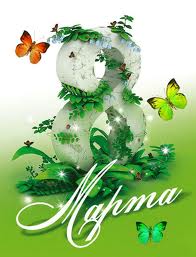
oxanaI am writing this on International Women’s Day. I know from living in three different countries what different faces this day can have. And I can see how these different perceptions are informed by each country’s history and political situation. This is a Buddhist principle of dependent co-arising: nothing exists in separation from anything else, all phenomena arise in dependence on everything else.

8 Marta - 8 March Russian card
8 Marta – 8 March Russian card

For instance, the Soviet 8th March was a public holiday and culturally it was a day to celebrate femininity, and – separately but connected – awakening of nature in spring. In the US, International Women’s Day was next to non-existing when I lived there in mid-1990s, apart from for hardcore Communists and Socialists, who celebrated it as a milestone on the road to Socialist equality. In the UK nowadays, International Women’s Day takes on a shape of a women-only day, a statement of women’s independence and very often celebration of same-sex love between women.

Continue reading “Happy International Women’s Day, Men and Women of the World by Oxana Poberejnaia”

Why a Kippah Reminds Me that Rationality Should Not Be Our Only Imago Dei By Ivy Helman

Neil Gilman in his book Sacred Fragments writes, “Since our faculty of reason is G-d-given, since it is the quality that distinguishes us from the rest of creation, and since all human beings share that same innate faculty, what better way to establish the veracity of a religious tradition than by demonstrating its inherent rationality?”  To be fair, Gilman is not the only and definitely not the first to support this position.  Many theologians, especially those influenced by various Greek philosophers like Socrates, Plato and Aristotle, have said the same thing.  In the Roman Catholic tradition, Thomas Aquinas is adamant that rationality is humanity’s imago dei, how we are made in the image of God – what the beginning of Bereshit (Genesis) suggests.  Descartes argues, “I think therefore I am.

Patriarchy emphasizes rationality as divinely given over and above other attributes that humans share with non-human life – like instinct, growth and maturity, life and death, memory, caring, empathy, dependence, interconnectedness, relationality, and communication (in all its forms, not just speech).  Continue reading “Why a Kippah Reminds Me that Rationality Should Not Be Our Only Imago Dei By Ivy Helman”