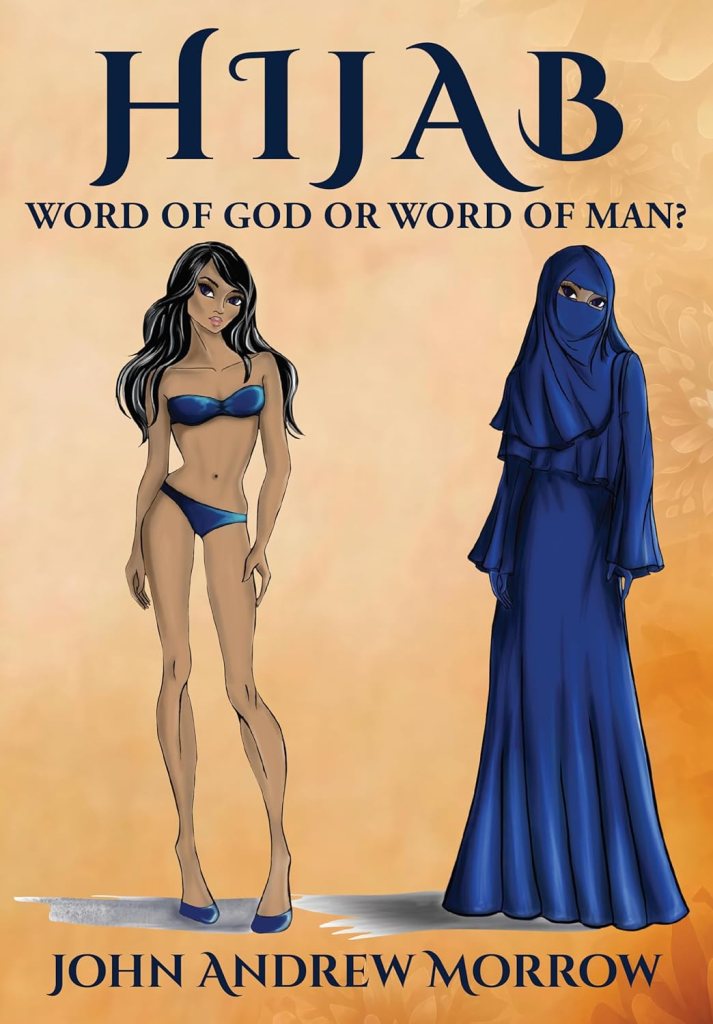
Hijab: Word of God or Word of Man? By John Andrew Morrow: BOOK REVIEW by Esther Nelson

Dr. Morrow’s book is a treasure chest of facts that also includes a wide variety of scholarly opinions regarding hijab.  His meticulous scholarship, laser-like vision, and accessible writing style clearly differentiate between what the Qur’an requires of women’s dress and what the jurists (overwhelmingly male) have enforced.  Morrow’s book would be an invaluable addition to Islamic Studies curricula in the academy, yet it’s comprehensible enough to a lay person interested in learning about hijab.

I thoroughly enjoyed reading this substantial volume.  I got a fuller picture of the meaning of hijab over time.  Dr. Morrow is clear—women ought not to be forced (legally or socially) to wear hijab.  Muslims are fond of saying: There is no priesthood in Islam.  There is no mediator between an individual and Allah.  Yet, many Muslim clergy enforce a patriarchal bent (that social system absorbed from their culture and society) to their juristic rulings that constrict women from making a free choice.

Continue reading “Hijab: Word of God or Word of Man? By John Andrew Morrow: BOOK REVIEW by Esther Nelson”

For Mahsa by Lori Stewart

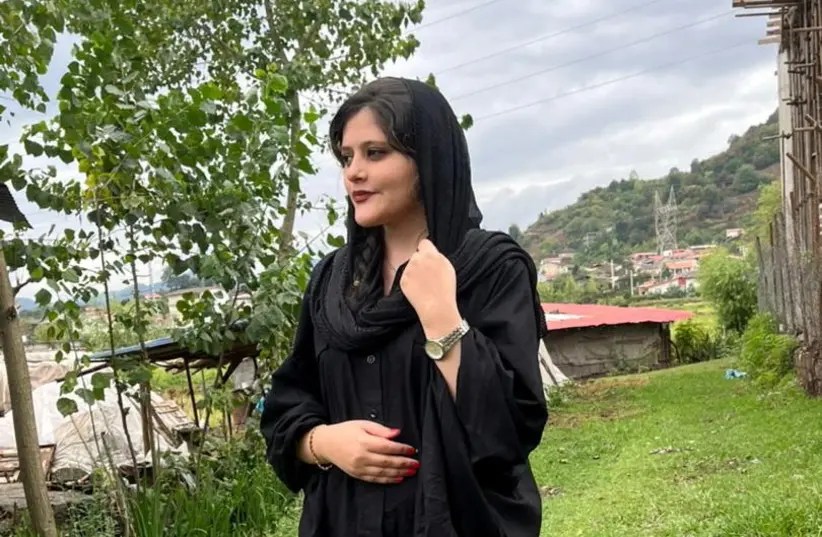
On Friday, September 16, 2022 Mahsa Amini died in a Tehran hospital having been arrested by Iranian morality police on September 13 for wearing “inappropriate attire”. She was 22. Mahsa’s family claims she had bruises to her head and limbs from being beaten. The Iranian police dispute that claim saying Mahsa died from a pre-existing health condition.

Mahsa’s death sparked major protests against the Islamic Republic in Iran and protests of support are occurring around the world. Women are burning their hijabs, which they are mandated by Iranian law to wear, chanting, “Women, life, freedom”. They are cutting their hair which is a longstanding symbol of protest and loss in Iran’s history. This action harkens back to the epic Persian poem “Shahnameh” by Ferdowsi in which hair is a theme and the cutting of hair a symbol of mourning. Around the world, people have followed suit by cutting their hair in solidarity with the protesters in Iran. A recent chant by the protesters is “it’s the beginning of the end” as they challenge their theocratic government.

Continue reading “For Mahsa by Lori Stewart”

We the People by Joyce Zonana

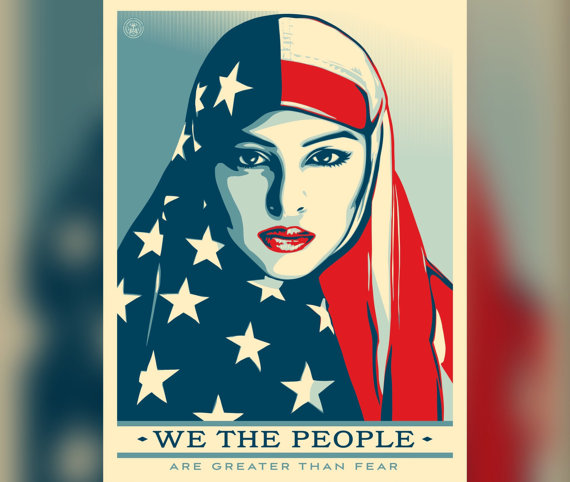
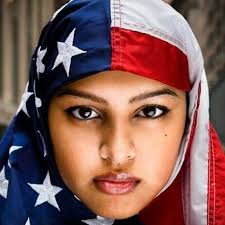
jz-headshotDuring the January 21st Women’s March in New York City, I was inspired and delighted by so many of the signs women and men had crafted to express their opposition to the current disastrous regime in the United States: “Grab America Back,” “Support Your Mom,” “Sad!,” “Miss Uterus Strikes Back.”  But one image stood out, mesmerizing me:  that of a woman proudly wearing an American flag as hijab, with a message below—“We The People Are Greater Than Fear.”  For several blocks as we made our way up Fifth Avenue, I walked beside a woman carrying that sign, and it became, for me, the most powerful symbol of the resistance we must all wage during the dark time ahead.
il_570xn-1174082361_2sxw
Poster by Shepard Fairey

images-1
Munira Ahmed photo by Ridwan Adhami

The image, based on a photograph of Munira Ahmed by Ridwan Adhami, was created for the Women’s March by graphic artist Shepard Fairey (who also designed the iconic image of Barack Obama, “Hope”).  It offers a striking visual challenge to a long-held orthodoxy, now brought to the fore by Donald Trump and his gang:  that Western-style liberal democracy (epitomized by the United States) is incompatible with Islam.  And, perhaps even more specifically, that Islam is incompatible with feminism.

Many Western women—including feminists—are still bound by the Orientalist worldview that encumbered our liberal feminist foremothers.   Continue reading “We the People by Joyce Zonana”

Mr. Big Man by Jameelah Medina

Jameelah Medina

This past week, I have discussed with college students the time I was wrongly arrested and harassed by an Islamophobic Sheriff Deputy several years ago, which led to a successful court case against my county spearheaded by the ACLU. I opened up the discussion with the following religiously feminist spoken word piece I wrote:


Mr. Big Man

You told me what to write, word for word for word for word in my statement,

To get me caught up in your trickery is what you meant,
Acting like you were my friend,
Just so that you could win,

Me over and dictate the stroke of my pen,

But then Continue reading “Mr. Big Man by Jameelah Medina”

Waking up Muslim on 9/11 by Jameelah Medina

I have often stated that I went to sleep as an African American woman on September 10, 2011 and woke up Muslim on 9/11. It may seem odd to say this since I am a third-generation Muslim; however, my reason for doing so is that my life as an American Muslim now has two main eras: 1) pre-9/11 and 2) post-9/11.

In the pre-9/11 era of my life, I felt more black than Muslim because my color was a point of conflict and controversy throughout my life. I grew up in two areas as a child—an urban area with majority Latinos/as and then in a very rural area with majority whites. In both areas, being black was not so popular. I was called “mayate,”which is a bug but also the Mexican term for “nigger.” I was also called, “tar baby,” “nigger,” “African booty scratcher,” and a host of other hurtful names as a young black child.

In the post-9/11 era of my life, the main part of my identity that people focus on is my religion instead of my color. On 9/11, I went from being a nigger to being a “towel head,” from being a tar baby to being a “terrorist,” and from being the stereotype of an unruly and angry, loudmouthed black woman to being the stereotypically seen-but-not heard, oppressed Muslim woman in need of saving. As a Muslim, I suddenly was a potential threat and un-American, while as a Muslim woman I was also pitied and looked down on as misfortunate for being in a religion that oppresses me. In my life, white privilege and white monoculturalism have turned into Christian privilege and Christian monoculturalism. Continue reading “Waking up Muslim on 9/11 by Jameelah Medina”