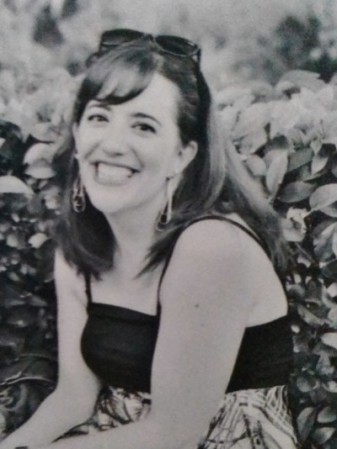
Herstory Profiles: Bletchley Park, the 6888th, and Communication by Anjeanette LeBoeuf

There is so much going on in our current state of affairs, that I found myself reaching for some sort of touchstone, centering agent, even some sort of calming force. As a scholar, as someone drawn to the humanities, I knew the path forward had to include our histories. This post will look at three examples of extraordinary women during WWII and beyond: the 6888th Unit, the women of Bletchley Park, and Julie Moore.

All three were introduced to me through popular culture, storytelling, and our dedication to preserving whole histories. At a time where we are seeing an active attack on our histories, humanities, arts, and our education systems it is even more vital that we continue to tell the stories, remember their names, and continue to walk the paths they have forged.

Continue reading “Herstory Profiles: Bletchley Park, the 6888th, and Communication by Anjeanette LeBoeuf”
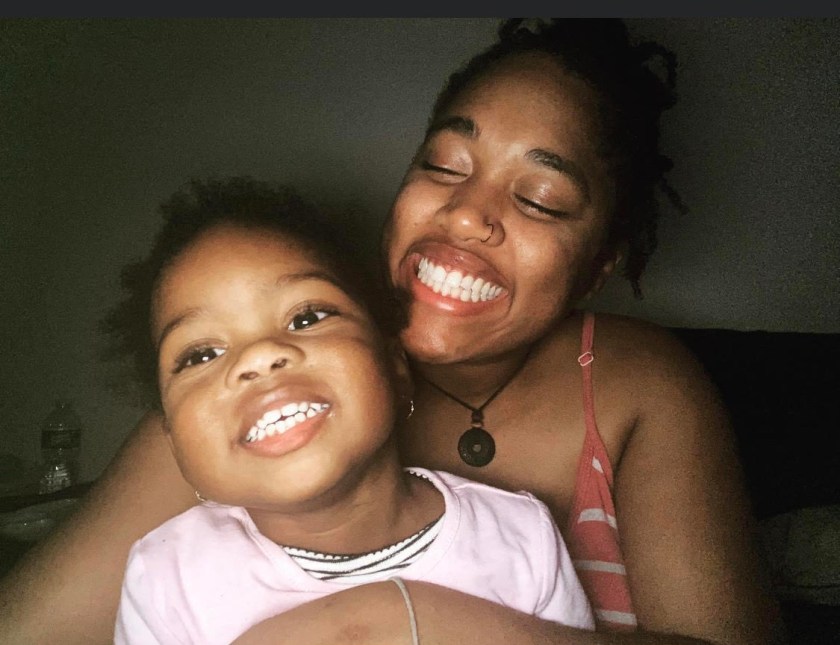
Gardens Bloom Between our Wombs by Chaz J.

For years, I have dedicated my life to empowering and uplifting all women in all ways. I have loved women as mothers, aunties, sisters, friends, cousins, teachers, mentors, daughters, God, and most recently myself. The depth of sweetness and emotion for women runs as deep as my life’s work. My life’s work centers and finds a deep well of inspiration in women and women’s lived experiences. My feelings concerning women were confusing for a long time and for a long time I have loved women in every way, except two: sexually and romantically. Giving myself permission to love women in every way has been one of the most liberating personal experiences of my life. It is one of my most radical revolutions. It is self-acceptance and self love in totality. 

The object of my desires is fluid and delicate. She is intuitive  and evasive. She is real and ethereal. She is Wombman. She created and is the fundamental elements that constantly gives birth to the world around us. She has given birth to all of us. She is fire and fury. She is Mother Gaia. She is the winds of change. She is water’s depth and grace. She is the sunlight after a storm. She IS the storm purging impurities. She is a creator and she is destruction. She simply IS…

Continue reading “Gardens Bloom Between our Wombs by Chaz J.”

Herstory Profiles: Persistence and Endurance by Anjeanette LeBoeuf

I do not know how else to endure these past few weeks except to continue the fight, to continue to resist, and to continue to speak truth into power. We must once again look to our ancestors, our foremothers, our pillars of human rights, dignity, and compassion. This month’s Herstory Profiles looks at two courageous and unwavering women involved in U.S. politics; Susan Shown Harjo and Patsy Takemoto Mink.

Suzan Shown Harjo (1945-)

Suzan is a Cheyenne Citizen, Cheyenne & Arapaho Tribes, and Hotvlkvlke Mvskokvlke, Nuyakv and a Native American Activist. She is a poet, writer, speaker, policy advocate, and curator. She helped to recover and reclaim more than one million acres of Native Lands. Suzan served as the Congressional Liaison for Indian Affairs for President Jimmy Carter. She held the Presidency of the National Council of American Indians. She is active in the Morning Star Institute that advocates for sports teams to drop names and mascots that contain negative stereotypes towards Native Americans. She received the Presidential Medal of Freedom in 2014 from President Obama. In 2022 Suzan was inducted into the American Philosophical Society.

Continue reading “Herstory Profiles: Persistence and Endurance by Anjeanette LeBoeuf”

Queering Herstory Profiles by Anjeanette LeBoeuf

We are back with a new volume of uncovering and focusing on extraordinary persons. We start our first post of Volume II with 4 figures who in many ways throw history, narrative, and the status quo off their axis. All 4, if alive in 2024, would find solidarity and kinship with the Queer Community. So let us being.

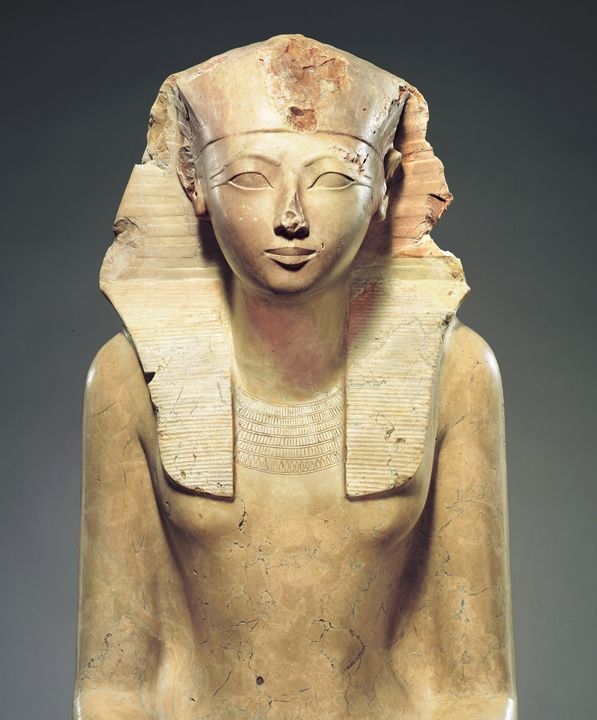
Hatshepsut (1508-1458 BCE) Egyptian Pharaoh.

Hatshepsut was the daughter of Thutmose I, wife to Thutmose II, and stepmother to Thutmose III. Her husband died while his heir was too young to ascend the throne. Hatshepsut became not only the acting regent but full fledge ruler. She would reign for 21 years as the 5th Ruler of the 18th Dynasty of Egypt. Her reign was prosperous including funding for art, statues, and monuments that have stood the test of time and active destruction. Deir –el-Bahari became a significant temple for Hatshepsut.

Continue reading “Queering Herstory Profiles by Anjeanette LeBoeuf”

Herstory Profiles: Indian Royalty, Suffragette, Women’s Rights Activist by Anjeanette LeBoeuf

April is Sikh Awareness month which is incredibly important this year due to what is currently happening in the Punjab by the Indian Nation State. If you haven’t heard about the government shutdown largely targeting Sikhs, you can read here. To keep the focus on the Sikh Community, this post will be focused on the amazing royal turning fierce activist and suffragette – Sophia Duleep Singh.

Continue reading “Herstory Profiles: Indian Royalty, Suffragette, Women’s Rights Activist by Anjeanette LeBoeuf”

From the Archives: Preserving the Complete History: Remembering Japanese Internment Camps

This was originally posted on May 28, 2017

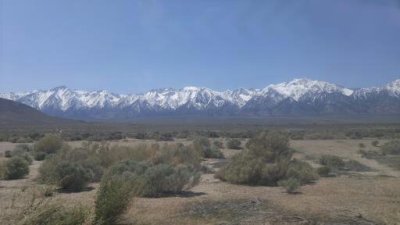
A couple of months ago I did a day trip to visit the historical site of one of the 10 internment camps which were formed due to Executive Order 9066 issued on February 19, 1942. Manzanar Relocation Camp is located between the Sierra Nevadas and the Owens Valley. Manzanar held over 11,070 Japanese Americans from 1942–1945. EO 9066 forced 120,000 American citizens to leave everything and become in all accounts prisoners; two-thirds of those were native-born American citizens. This executive order largely focused on people living on the West Coast of the United States to eliminate the possible threat of a secondary attack. They were relocated far inland and the majority of the camps were outside of the West Coast. While this was done in the 1940s, our current climate is looming to make it seem like there are forces in this world that are attempting to perform different forms of subjugation and confinement.

Manzanar, in the middle of nowhere California (and I mean nowhere—it takes over three hours to drive the more than 230 miles from Los Angeles and it is not directly accessible from Central California), is divided by the great Sierra Nevadas. This is one of the things that struck me when I arrived at Manzanar—the stark beauty and ruggedness of the mountains, the immense flat lines of the valley, and the complete isolation. Due to being so close to the Nevadas and the desert valley conditions, the weather can be extreme. Many of the detainees documented the harshness of the weather conditions, from the high winds to the stark cold at night, and the barely adequate buildings to shelter them from it.

Continue reading “From the Archives: Preserving the Complete History: Remembering Japanese Internment Camps”

How Can Change Happen If We Can’t Imagine It First? by Darla Graves Palmer

More than one hundred years ago, a small group of women joined together and decided to create their own village, one rooted in relationship and guided by spirit. They weren’t the first such women-led town in the country – there was a web of sister villages throughout America, some formed as early as the seventeenth century – but Chantilly Lace was unique. Rising out of the dust of an abandoned Gold Rush era in the Rocky Mountains of Colorado, a time when many women were abandoned by men seeking further adventures or widowed when husbands lost their lives in the mines, this mostly female community determined its own fate. Now the modern women (and a minority of men) faced new challenges in the twenty-first century: how would they adapt and thrive?

If this had been true, how might things be different now for all of us?

The above sets the stage for a fictional series of books I’ve been writing (the first book is complete). The locale was always going to be a small town in the Rockies (because I’ve lived there), but the broader ideas about the town’s development have been evolving steadily, especially since the last presidential election. I keep asking myself how a culture based upon principles of peace and values of belonging, established firmly upon a spiritual core, might function in our capitalist patriarchy.

How can change happen in real life if we can’t imagine it in fiction? I’m challenging myself to make it happen.

Continue reading “How Can Change Happen If We Can’t Imagine It First? by Darla Graves Palmer”

Missing from History: Women Composers by Mary Sharratt


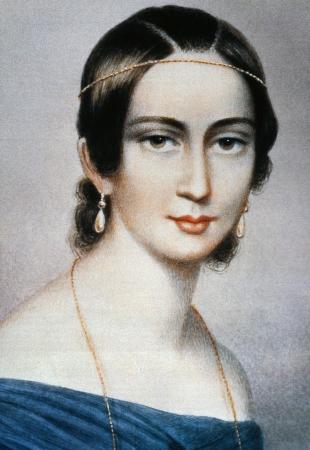
Clara Schumann


To a large extent, women have been written out of history. Any surviving record of female accomplishment is often trivialized or dismissed. This seems especially true in the male-dominated world of classical music. When asked to name a single female composer, many people draw a blank. This isn’t because they’re ignorant, but because women’s music has been buried and neglected for far too long. Even pioneering women composers themselves lived and worked in ignorance of their foremothers.

Clara Wieck Schumann, wife of Robert Schumann, composed her first piano concerto at the age of fourteen and wrote a significant body of work in her early life. Mother of eight children and family breadwinner, she became the foremost concert pianist of 19th century Europe. In her sixty-one-year performance career, she interpreted the work of contemporary composers such as Robert Schumann and Johannes Brahms. Yet when it came to establishing herself as a composer in her own right, she was crippled with self-doubt. “I once believed that I had creative talent, but I have given up this idea,” she wrote in her diary in 1839. “A woman must not wish to compose—there never was one able to do it.” She was only twenty when she wrote these words that condemned her music to obscurity. Continue reading “Missing from History: Women Composers by Mary Sharratt”

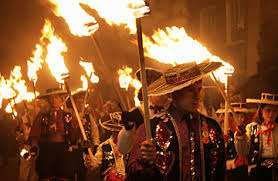
Tonight Is Guy Fawkes Night by Barbara Ardinger

Mark Twain is reported to have said that while history does not repeat itself, it often rhymes. Let’s see what rhymes we can find in Tudor and Jacobean England and Trumpean America. Here’s the history lesson. What has changed in 400 years?

After about a thousand years of Roman Catholicism in the British Isles (with a few thrusts toward reform, like the 14th century theologian John Wycliffe, who translated the Bible into medieval English), it is Henry VIII who is usually given credit for “reforming” the English church, i.e., declaring his independence from the Roman church and the pope in 1534. While Henry still called himself a good Catholic (and even condemned Martin Luther), it was the Tudors and their advisors that thrust a militant and puritanical Protestantism on the people.

The Tudor dynasty, which lasted just over a century, began with the victory of Henry Tudor (who became Henry VII) over Richard III at Bosworth Field in 1485. (Shakespeare turned Richard’s story into a Tudor propaganda play. In real life, Richard was a good king.) Henry’s second son, Henry VIII, was a tyrant who is best known today for his six wives. He was also more interested in luxury (in his day synonymous with vice) and self-aggrandizement than anything else.

Continue reading “Tonight Is Guy Fawkes Night by Barbara Ardinger”

Preserving the Complete History: Remembering Japanese Internment Camps By Anjeanette LeBoeuf

A couple of months ago I did a day trip to visit the historical site of one of the 10 internment camps which were formed due to Executive Order 9066 issued on February 19, 1942. Manzanar Relocation Camp is located between the Sierra Nevadas and the Owens Valley. Manzanar held over 11,070 Japanese Americans from 1942–1945. EO 9066 forced 120,000 American citizens to leave everything and become in all accounts prisoners; two-thirds of those were native-born American citizens. This executive order largely focused on people living on the West Coast of the United States to eliminate the possible threat of a secondary attack. They were relocated far inland and the majority of the camps were outside of the West Coast. While this was done in the 1940s, our current climate is looming to make it seem like there are forces in this world that are attempting to perform different forms of subjugation and confinement. Continue reading “Preserving the Complete History: Remembering Japanese Internment Camps By Anjeanette LeBoeuf”