
Legacy of Carol P. Christ: “The Divine Mystery”?

carol-christ

This post was originally published on Nov. 11th, 2013

“The mystery of God in feminist theological discourse” is the subtitle of Elizabeth Johnson’s widely read She Who Is. The notion that God is “a mystery” is rarely questioned in feminist theologies. But maybe it should be.

Although it is true that the finite cannot encompass the infinite, and that all knowledge is rooted in particular standpoints, I do not agree that the first and last thing to be said about the divine power is that it is “a mystery.” Indeed as I will argue here, speaking about God as “a mystery” obscures more than it “reveals.”

christina's loveThe notion that Goddess or God is “a mystery” is rooted in notions of “a God out there” that most spiritual feminists reject. Goddess or God “in” the world is, I suggest, not unknown, but known, not hidden, but revealed–in the beauty of the world and in ordinary acts of love and generosity.

The notion that God is “a mystery” is a well-worn trope in Roman Catholic theology. Protestants make similar claims when they speak of  the hiddenness of God Continue reading “Legacy of Carol P. Christ: “The Divine Mystery”?”
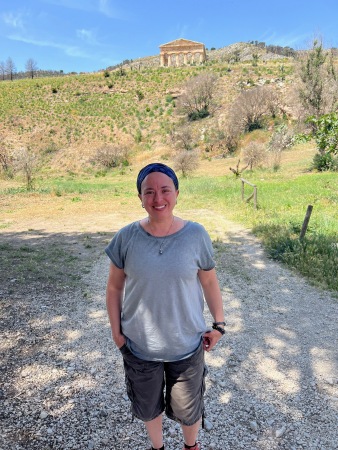
On Terumah: (Eco)Feminist Reflections on the Tent of Meeting.

The Torah portion for March 1, 2025 is Terumah, consisting of Exodus 25:1-27:19. Terumah in Hebrew means contribution, and the parshah begins with the deity requesting donations from the willing hearts of men (yes, only men) of precious metals and stones as well as dyes, linens, wools, and skins.  Terumah then provides the instructions for how to build the Tent of Meeting and all of its components.  In this post, I want to focus on four aspects of the post from the perspective of ecofeminism and feminism: beauty; the misuse of nature, the concept of home, and the indwelling or immanence of the divine.

Continue reading “On Terumah: (Eco)Feminist Reflections on the Tent of Meeting.”

Legacy of Carol P. Christ: “THE DIVINE MYSTERY”?

This was originally posted on November 11, 2013

christina's love

“The mystery of God in feminist theological discourse” is the subtitle of Elizabeth Johnson’s widely read She Who Is. The notion that God is “a mystery” is rarely questioned in feminist theologies. But maybe it should be.

Although it is true that the finite cannot encompass the infinite, and that all knowledge is rooted in particular standpoints, I do not agree that the first and last thing to be said about the divine power is that it is “a mystery.” Indeed as I will argue here, speaking about God as “a mystery” obscures more than it “reveals.”

Continue reading “Legacy of Carol P. Christ: “THE DIVINE MYSTERY”?”

Legacy of Carol P. Christ: Transcendence, Immanence, and the Sixth Great Extinction

This was originally posted August 4, 2014

In my recent blog “The Flourishing of Life and Feminist Theology” I discussed Grace Jantzen’s view that theology should focus on “natality” or birth and life, rather than life after death or life apart from this world. This week Tikkun magazine published its summer issue with a feature called “Thinking Anew about God.” In it two male thinkers, one Buddhist and one Christian, argue for a similar turn toward the world in their traditions. Their calls for religions to focus on this world were published the same week scientists warned that the world stands on the brink of the sixth great extinction.

I have come to believe that any religion espousing cosmological dualism (devaluing this world in favor of a superior reality such as heaven) and individual salvation (the idea that what ultimately happens to me is disconnected from what ultimately happens to you) is contributing to our world’s problems rather than offering a solution. … [Religions should] stop emphasizing the hereafter and focus instead on how to overcome the illusion that we are separate from this precious, endangered earth. –David Loy, Buddhist, writing in Tikkun Summer 2014

Continue reading “Legacy of Carol P. Christ: Transcendence, Immanence, and the Sixth Great Extinction”

Seeking Moments of Beauty in a Crazy World by Mary Sharratt

Black Swan by Anna Marija Bulka


Our world seems to get crazier by the day. We live increasingly accelerated lives. Our downtime seems to shrink by the second. If I don’t watch myself, I get mired in tunnel-vision, doggedly chasing deadline after deadline without taking any time out for myself or my loved ones. Add Trump, Brexit, the coronavirus, invasive social media, and climate change to the mix, and it gets darker still. Our democracies and even our privacy are up for grabs.

How can we hang on to any sense of inner peace amid all this chaos? Continue reading “Seeking Moments of Beauty in a Crazy World by Mary Sharratt”

Intellectual Curiosity as Holy Devotion by Chris Ash

IMG_0754A significant part of my spiritual practice involves exploring the tension of opposites  – learning to create and grow in the space between polarities without feeling obligated to choose one over the other as my truth. Immanent or transcendent? Both. Embodied or abstract? Depends on the context. Intellectual or spiritual? Yes, please.

My panentheistic view of divinity means that I find truth, wisdom, and spiritual insight in the manifest universe, how it works, and the principles that underlie its transformation. This makes my spiritual worldview embodied, in the sense that the divine is found in my body, in the bodies of those I meet, and in the cosmos as the body of God. It also brings sacred meaning to intellectual pursuit and development. Continue reading “Intellectual Curiosity as Holy Devotion by Chris Ash”

Transcendence, Immanence, and the Sixth Great Extinction by Carol P. Christ

carol christIn my recent blog “The Flourishing of Life and Feminist Theology” I discussed Grace Jantzen’s view that theology should focus on “natality” or birth and life, rather than life after death or life apart from this world. This week Tikkun magazine published its summer issue with a feature called “Thinking Anew about God.” In it two male thinkers, one Buddhist and one Christian, argue for a similar turn toward the world in their traditions. Their calls for religions to focus on this world were published the same week scientists warned that the world stands on the brink of the sixth great extinction.

I have come to believe that any religion espousing cosmological dualism (devaluing this world in favor of a superior reality such as heaven) and individual salvation (the idea that what ultimately happens to me is disconnected from what ultimately happens to you) is contributing to our world’s problems rather than offering a solution. … [Religions should] stop emphasizing the hereafter and focus instead on how to overcome the illusion that we are separate from this precious, endangered earth. –David Loy, Buddhist, writing in Tikkun Summer 2014

My aim in this regard is to reawaken in each of us an emotionally felt and primordial sense of spiritual belonging within the wider natural world. In turn, my hope is that this deep sense of belonging to the earth — to God’s body, as it were — will en-flame our hearts and empower our wills to commit us to healing and saving the earth.—Mark I. Wallace, Christian, writing in Tikkun Summer 2014 Continue reading “Transcendence, Immanence, and the Sixth Great Extinction by Carol P. Christ”

“THE DIVINE MYSTERY”? by Carol P. Christ

carol-christ“The mystery of God in feminist theological discourse” is the subtitle of Elizabeth Johnson’s widely read She Who Is. The notion that God is “a mystery” is rarely questioned in feminist theologies. But maybe it should be.

Although it is true that the finite cannot encompass the infinite, and that all knowledge is rooted in particular standpoints, I do not agree that the first and last thing to be said about the divine power is that it is “a mystery.” Indeed as I will argue here, speaking about God as “a mystery” obscures more than it “reveals.”

christina's loveThe notion that Goddess or God is “a mystery” is rooted in notions of “a God out there” that most spiritual feminists reject. Goddess or God “in” the world is, I suggest, not unknown, but known, not hidden, but revealed–in the beauty of the world and in ordinary acts of love and generosity.

The notion that God is “a mystery” is a well-worn trope in Roman Catholic theology. Protestants make similar claims when they speak of  the hiddenness of God Continue reading ““THE DIVINE MYSTERY”? by Carol P. Christ”