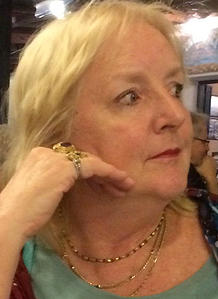
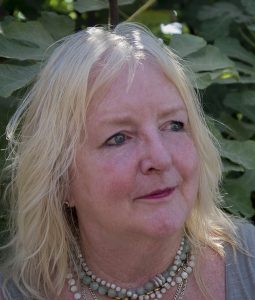
Legacy of Carol P. Christ: “Immanent Inclusive Monotheism” with a Multiplicity of Symbols Affirming All the Diversity and Difference in the World

carol-christ

This post was originally published on March 10th, 2014.

In recent years monotheism has been attacked as a “totalizing discourse” that justifies the domination of others in the name of a universal truth. In addition, from the Bible to the present day some have used their own definitions of “exclusive monotheism” to disparage the religions of others. Moreover, feminists have come to recognize that monotheism as we know it has been a “male monotheism” that for the most part excludes female symbols and metaphors for God.  With all of this going against monotheism, who would want to affirm it?

In response to some or all of the above critiques, many modern pagans define themselves as polytheists, affirming at minimum, the Goddess and the God, and at maximum a vast pantheon of individual deities, both female and male, from a single culture or from many, including divinities with animal characteristics.  Other pagans define themselves as animists, affirming a plurality of spirits in the natural world. A group of Christian feminists have argued that the Christian Trinity, the notion of God Three-in-One, provides a multiple and relational understanding of divinity.

While also rejecting exclusive monotheism and male monotheism, Jewish poet, ritualist, and theologian Marcia Falk provided a definition of inclusive monotheism that I find compelling.

Monotheism means that, with all our differences, I am more like you than unlike you. It means that we all share the same source, and that one principle of justice must govern us equally.  . . Continue reading “Legacy of Carol P. Christ: “Immanent Inclusive Monotheism” with a Multiplicity of Symbols Affirming All the Diversity and Difference in the World”

Legacy of Carol P. Christ: Deciding To Leave the Religion of Your Birth–Or Not

This was originally posted on April 29, 2013

What factors are most important in the decisions of spiritual feminists to leave or to stay affiliated with traditional religions? My friend Jewish feminist theologian Judith Plaskow and I discuss these questions in our forthcoming book, Goddess and God in the World. In this excerpt I speak to Judith about our different choices.

For me no longer identifying with Christian tradition had a great deal to do with belief. At some point I came to the conclusion that I did not believe in Christianity’s “core doctrines” of Trinity, incarnation, and salvation through Christ. Yet these doctrines are expressed in the Nicene Creed, which is accepted by all Christians. In an interview at a Christian seminary early on in my career, I was asked to define and defend my Christology or theory of salvation through Jesus Christ. My answer that feminism had put a question mark over all doctrines for me was not considered acceptable.

Continue reading “Legacy of Carol P. Christ: Deciding To Leave the Religion of Your Birth–Or Not”

Lilith: Evil Demon or Feminist Role Model?

Today, we celebrate Simchat Torah (the Joy of the Torah) which marks the end of a cycle of Torah readings and the beginning of a new one.  Therefore, the Torah portion for October 14, 2023 is Bereshit (Genesis 1:1-6:8), the first parshah of the Torah.  This parshah is most known for its myths surrounding the beginning of the world, including, within it, two creation stories, the first one running from 1:1 to 2:3 and the second from 2:4 to 2:25.  These accounts of creation are followed by a story about Adam, Eve, a snake, and the Tree of the Knowledge of Good and Evil.  The parshah concludes with the happenings of Cain and Abel, the descendants of Adam and Eve, and Noah, a man who found divine favor.

I wrote briefly about this parshah in the midst of the pandemic.  The writing there mirrors the chaotic and often difficult nature of that time.  Thus, I want to revisit the parshah now.  Interestly, I am drawn to comment on the same topic: Lilith. 

Continue reading “Lilith: Evil Demon or Feminist Role Model?”

Legacy of Carol P. Christ: “God is Not a Man, God Is Not a White Man”

This was originally posted February 1, 2016

“The pictures that line the halls speak volumes about the history of racism and sexism and they shape the future in powerful ways.”–Simon Timm

The author of these words recently posted a short video on Youtube entitled “Mirror Mirror on the Wall: The Legacies of Sexism and White Supremacy at Yale Divinity School.”* The video begins with a catchy little ditty with the words, “God is not a man, God is not a white man.” It tracks paintings and photographs of professors and other luminaries in the field of theology on the walls of the Yale Divinity School. By Timm’s count: 99 white males, 6 women, and 3 blacks. The single black woman is counted in both categories.

Continue reading “Legacy of Carol P. Christ: “God is Not a Man, God Is Not a White Man””

Legacy of Carol P. Christ: Gender, Friendship, Collaboration, and Unacknowledged Authorship

This was originally posted on April 20, 2015 and was updated by Carol on August 23, 2019

In recent weeks Judith Plaskow and I have been revising the manuscript of our new book Goddess and God in the World in preparation for sending it to the publisher. Yes, we have a publisher. We signed a contract with Fortress Press a short time ago. The book should be out in 2016.

We have been hard—and I mean very hard—at work revising the four chapters in the book that are jointly written. The versions have been going back and forth and forth and back as we revision what we want to say and revise each other’s revisions of the drafts we have. We both want the final manuscript to say things just right and it is very hard not to make one more set of (alleged) improvements.

In the process we have realized that while we often disagree on words and wording, we have come to think alike on a wide variety of issues to the point that it becomes hard to say who had the ideas first. In addition we have both become so familiar with each other’s positions that we can each easily articulate both sides of our dialogue on the issues on which we disagree.

Continue reading “Legacy of Carol P. Christ: Gender, Friendship, Collaboration, and Unacknowledged Authorship”

Carol P. Christ: Weaver of Visions by Beth Bartlett

Author’s Note: Today’s post is the 4000th FAR blog post!  I first became aware of the Feminism and Religion blog when participating in a symposium honoring the life and work of Carol P. Christ in October 2021. I was inspired to write a piece on Christ’s contribution to ecofeminism, that was posted in the FAR blog a year ago today. I wanted to post another piece on Christ on the anniversary of that first post. I’m delighted that it is the 4000th, and so fitting that it is written in honor of Carol Christ, who was such an important part of the FAR blog.

A while ago, a friend asked me what spiritual reading I’d been doing lately. I told him that I’d been revisiting classics from the past. When he asked me who specifically, the first name I mentioned was Carol Christ. Even though he was a minister, he had never heard of her. Sadly, I suspect the same would be true for the vast majority of ministers, priests, rabbis, theologians, and other religious leaders. Yet, I can think of no one who has had a greater influence on my religious and spiritual thought and beliefs.

Continue reading “Carol P. Christ: Weaver of Visions by Beth Bartlett”

Legacy of Carol P. Christ:“Ursula Niebuhr, Ursula Niebuhr”: Unacknowledged Co-author of Great Works of Theology?

This was originally posted on August 26, 2019. It fits in with our new project of Unsung Heroines.

A few days ago while watching the movie The Wife, I kept hearing the words “Ursula Niebuhr, Ursula Niebuhr,” in my mind. I knew the reason was Ursula’s unacknowledged collaboration on the work of Reinhold Niebuhr, which I discovered while writing an earlier blog on uncredited co-authors.

I had not been particularly interested in seeing The Wife because I assumed it was the familiar story of the woman who gives up her career interests when she marries. Want to become a rabbi? Marry one. Want to become an artist? Live with him and become his muse. This is a very old story, and for me, not a very interesting one.

Continue reading “Legacy of Carol P. Christ:“Ursula Niebuhr, Ursula Niebuhr”: Unacknowledged Co-author of Great Works of Theology?”

Carol P Christ’s Legacy: Gratitude and Sharing: Two Fundamental Principles of Goddess Spirituality

Moderator’s Note: Carol Christ died from cancer in July, 2021. Her work continues through her non-profit foundation, the Ariadne Institute for the Study of Myth and Ritual and the Goddess Pilgrimage to Crete. This blog was originally posted February 4 2013. You can read it along with its original comments here.

The more I practice the spirituality of the Goddess, the more I understand that earth-based spiritualities are rooted in two fundamental principles:  gratitude and sharing.  We give thanks to the earth for the gift of life. As we recognize our interdependence and interconnection in the web of life, we are moved to share what has been given to us with others. *

When I first began to lead Goddess Pilgrimages in Crete, I was inspired by a line in Homer to begin a pilgrimage tradition of pouring libations of milk, honey, water, and wine on ancient stones. At first I knew the form, but not its deeper meaning.  It gradually dawned on me as I thought about the large number of pouring vessels in the museums, the altar stones, and the Procession Fresco from Knossos, that an important part of Minoan rituals involved processions in which people offered first fruits back to the Mother whose body had produced them, and poured libations on altars.

Continue reading “Carol P Christ’s Legacy: Gratitude and Sharing: Two Fundamental Principles of Goddess Spirituality”

Be Strong and Resolute by Judith Plaskow

January 29, 2021

Dear President Biden, Vice President Harris, and Members of the 117th Congress,

At a crucial moment of leadership transition in the history of ancient Israel, the Israelites were about to cross the Jordan River without Moses at their head. As Moses passed on the mantle of authority to Joshua, he enjoined his successor and the assembled community, “Be strong and resolute” (Deuteronomy 31:8).  The challenges before the people were multiple and daunting, but Moses urged them not to be afraid or dismayed. His powerful words, which are repeated three times in Deuteronomy 31 (vv. 6, 7, 23), contain a bracing message for the new administration and new Congress as you confront multiple crises facing our divided nation. Continue reading “Be Strong and Resolute by Judith Plaskow”

Write on Lilith! (Write on Eve!) by Ivy Helman

Over the past few months, I’ve been struggling to write posts.  This month is no different.  I am currently sitting with four different half-drafts on three semi-related topics, none of which I seem to be able to complete.  I’ve gone back to each of them numerous times.  I write.  I erase.  I rewrite.  I copy bits of one into another to save for some other time.  I’m left with one sentence:  this week’s Torah parshah is Bereshit (Genesis 1:1-6:8).  Great.  Glad to know that.  Now what?  

When writing, I often find myself in one of two camps given the current state of the world.  Either, I have so much to say that I have no clear idea where to start, so I write three pages of more or less nonsense.  Or, I find myself just so inundated with information that I don’t know where my opinion begins and another’s ends.  I write another 3 pages of completely different nonsense.  I get fed up with both.  I start praying better thoughts will just write themselves.  They don’t.  

Continue reading “Write on Lilith! (Write on Eve!) by Ivy Helman”