
From the Archives: The Found Goddesses of Good Eats by Barbara Ardinger

This was originally posted on August 1, 2013. We usually do Carol Christ’s legacy posts on Mondays. Given the closeness of Lughnasadh, it felt appropriate to share the work of one of our other long-time writers today. Carol’s legacy posts will be back next week.

Lughnasadh (pronounced LOON-us-uh) or Lammas—is the first of the three traditional harvest festivals of the traditional Celtic calendar that most pagans follow today. And what naturally follows harvest? Feasting, fairs, and festivals. To help us celebrate the season, here are two Found Goddesses of good eating. The term “found goddesses” was created in 1987 by Morgan Grey and Julia Penelope, authors of a hilarious book titled Found Goddesses. After reading this book and having never met a pun I didn’t instantly love and being of a naturally satirical state of mind, I started Finding—i.e., inventing—my own goddesses shortly before the turn of the century. After I found a hundred of them, they were published in 2003 in my book, Finding New Goddesses.

Continue reading “From the Archives: The Found Goddesses of Good Eats by Barbara Ardinger”
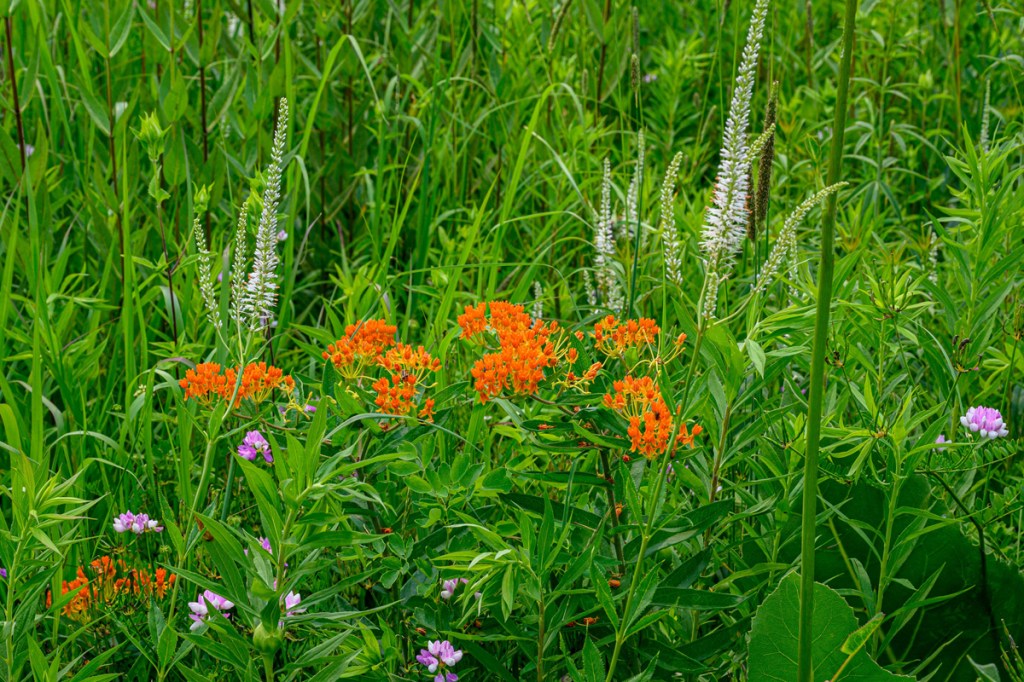
Celebrating Lammas in Troubled Times by Nan Lundeen

Tallgrass Prairie at Fernwood Botanical Garden, Niles, MI
credit: Ron DeKett

Lammas, that Celtic Earth-based spiritual tradition, has long been dear to me. Having grown up on an Iowa farm in the 1950s, I am accustomed to living close to the rhythms of the land. Gratitude for Earth’s first fruits comes naturally. The tradition calls for ritually baking a loaf from the first-harvested grain of the season, usually corn, and blessing it. It is a harvest festival and a time of gratitude and joy.

Continue reading “Celebrating Lammas in Troubled Times by Nan Lundeen”

Lammas after Lockdown by Laura Shannon


Today, August 1, 2020, is Lammas, the Celtic festival of late summer, the ‘feast of bread’, time of harvest and of golden grain. Here in the UK, Lammas arrives just as we are emerging from our coronavirus lockdown. It’s hard to feel a personal sense of ‘harvest’ when most people’s lives have been on hold since the spring.

Confined to our homes, many people could throw themselves into tending their own gardens (if they had one), but most of us could not cultivate the symbolic gardens of our lives and work in the way that we wanted. Many have faced deep loss, the withering of seeds planted in the past which could not now come to fruition.

Despite the tragic times, the earth continues to dance to the sacred rhythms of sun and moon. The trees are full of fruit, the fields are full of grain. Although I too have had my share of sorrow and grief in recent months, today I feel moved by the season to look at what we can harvest from our experience of the coronavirus pandemic.

Continue reading “Lammas after Lockdown by Laura Shannon”

As We Bless the Source of Life in Midsummer by Carol P. Christ

August 1 is the Neo-pagan and Wiccan holiday known as Lammas. For many witches and pagans this is the time when the young male God identified with the harvest of the seasonal wheat crop is sacrificed in the interest of the larger cycles of birth, death, and renewal. Here in Greece August 15 is a major holiday celebrating the Dormition and Assumption (death and rebirth) of the Panagia, She Who Is All Holy.

In her ground-breaking book The Spiral Dance: A Rebirth of the Ancient Religion of the Goddess, Starhawk identified the ancient religion of the great Goddess with Wiccan tradition defined by the Englishman Gerald Gardner and transmitted to her through her initiation into the Faery (or Feri) tradition of the Americans Victor and Cora Anderson. In her vision, the ancient religion of the great Goddess is understood to be a magical tradition in which spells play a prominent role. Continue reading “As We Bless the Source of Life in Midsummer by Carol P. Christ”

The Found Goddesses of Good Eats by Barbara Ardinger

August 1—Lughnasadh (pronounced LOON-us-uh) or Lammas—is the first of the three traditional harvest festivals of the traditional Celtic calendar that most pagans follow today. And what naturally follows harvest? Feasting, fairs, and festivals. To help us celebrate the season, here are two Found Goddesses of good eating. The term “found goddesses” was created in 1987 by Morgan Grey and Julia Penelope, authors of a hilarious book titled Found Goddesses. After reading this book and having never met a pun I didn’t instantly love and being of a naturally satirical state of mind, I started Finding—i.e., inventing—my own goddesses shortly before the turn of the century. After I found a hundred of them, they were published in 2003 in my book, Finding New Goddesses.

When Xochitl Alvizo wrote here about the philosophy of vegetarianism and veganism in late June, I was inspired to contribute to the conversation. Although I understand the philosophy of not eating meat, I’m still a meat eater. (Though I don’t go quite as far as the so-called paleo diet.) Yes, it’s an issue of consciousness. I admit it. I just refuse to think about cows and sheep and chickens when I’m eating. But I refuse to eat lobster (because they’re cooked alive) or veal (because of how the calves are treated). I guess I’m not very consistent, and I suspect I’ve just settled for the hungry coward’s way out of the diet dilemma. Continue reading “The Found Goddesses of Good Eats by Barbara Ardinger”

Aine, Summer Goddess of Love, Light and Fertility by Judith Shaw

judith Shaw photoAine, (pronounced AW-neh), was originally worshipped as a Sun Goddess. Like so many goddesses and gods, Aine has assumed many other roles over the years, being seen as a Moon Goddess, a Goddess of Love, a Fertility Goddess, a Healing Goddess, and a Sovereignty Goddess. Aine is also known as a Faery Queen. She is often called Aine, Goddess of Love, Light, and Fertility.  Her name means “brightness, glow, joy, radiance; splendor, glory, fame” and she is associated with the abundance of summer.

Continue reading “Aine, Summer Goddess of Love, Light and Fertility by Judith Shaw”

Tailtiu, Primal Earth Goddess for this Season by Deanne Quarrie

Deanne QuarrieWe are approaching the season of Lughnasadh, also known as Lammas.  This is the first of three harvest festivals.  This one focuses on what we call the “first fruits”, those fruits, vegetables and grains ripening early in the season. The other two are Mabon and Samhain, one celebrating the harvest of the last crops and the next that of the herd animals sacrificed to feed the tribes. Continue reading “Tailtiu, Primal Earth Goddess for this Season by Deanne Quarrie”