

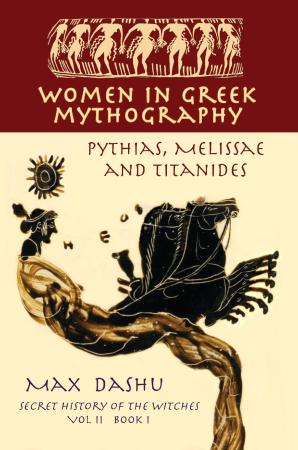
Demeter and Persephone, Hera, Athena, Medusa, Artemis are often the first, sometimes only, goddesses modern women experience, and they have profoundly influenced our 21st century attitudes about gender, violence, and more. Yet, as Max Dashu says in her new book, Women in Greek Mythography, Greek history has “served as a template for supremacy, from male domination and Hellenic colonization, to modern Eurocentric ideologies about history” (xi). While most Greek scholarship generally glosses over these malevolent influences and ignores women’s lives, Dashu focuses on “female spheres of power, priestesses, witches, and of course systemic patriarchy” (xi) in order to “map realities of women’s lives, both their spiritual authority and their subjugation; the spaces they carved out, their ceremonies, and the stories they wove into their tapestries” (xi).
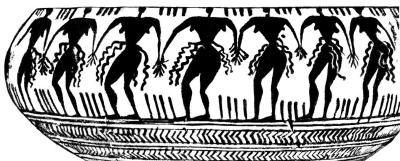
Women in Greek Mythography is not only a fascinating historical story of Greek myth and religion to be read cover-to-cover, but a rich sourcebook full of meticulously documented facts. She draws from scholarly works of history and mythography, as well as analyzing images on vases, friezes, sculpture and more. She has carefully rendered 270 drawings of these images so that readers can judge their meaning themselves. She delves into language, seeking out the origins of words that may indicate where goddesses and myths originated and their relationships to one another. She demonstrates that goddess mythologies often had many variations, sometimes conflicting, with many “countless regional deities that were subsumed under Olympian names, the local origin myths, ceremonies, and customs” (xiv).
Continue reading “Women in Greek Mythography: Pythias, Melissae and Titanides by Max Dashu, Book Review by Carolyn Lee Boyd”






 Feminism and Religion