I have not been in this room for three years- except to run in and out -the pandemic made me claustrophobic and anyway I usually need a coffee shop environment to write and we were in lock down so my wife and I transformed our living room to a coffeeshop, Fig and Hillary’s- so named for the huge Hillary poster on the wall and the fig trees in the backyard. My office became a storage room piled high with—what? Stuff.
Then, finally… it seemed the pandemic –at least in terms of dire death prediction—was perhaps over. It took most of this post pandemic year to get up out of the living room where I had encamped to come back to here—my actual office. To put the bookshelves back and—to turn my desk around so I am not facing the door but facing the window.
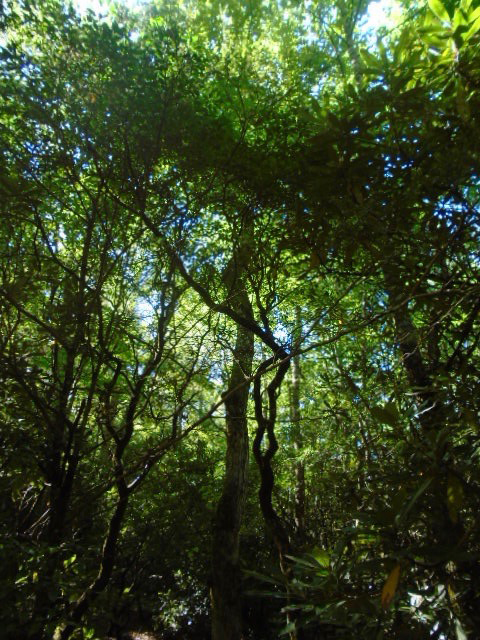
Part of what poetry does is to give us the world around us seen with a clear eye, without judgement or preconceptions. You are stating just what is, but always with a foot in both worlds, always seeing the mundane in its place in the universal. In “The Earthen Cloak,” I was blessed with the hospitality of a Quaker friend who guided me through a hidden graveyard deep in the woods, where Friends had chosen to be buried under trees and amid rhododendrons, leaving a legacy of their own love of the Earth. (It’s legal to be buried “straight into the ground” in North Carolina, without a casket but often with a shroud.)
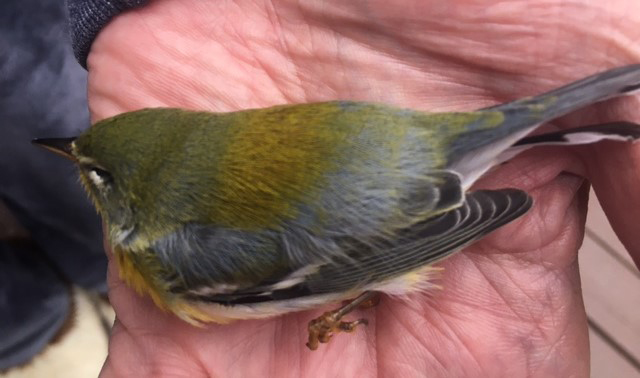
Small, perfect, magnificent! The creature lay in Mark’s hand, unmoving. Stunned or dead—we couldn’t tell. Some birds recover from impact with our sliding glass door and some do not. This was a hard hit—I could hear it from another room—and as I gazed at the beauty of this bird—a blue-winged warbler Mark said, I felt pretty sure the Goddess would call home it soon.
As I write this, fall equinox—Mabon to some of us—is two days away. Already here in Maine the days are noticeably shorter. The dark times are upon us now. Daylight will diminish minute by minute until winter solstice when the sun will grace us with nine whole hours of light before the Wheel of the Year turns and the days begin to lengthen, almost imperceptibly. The anniversary of my first husband’s death is a few days after equinox so this is always a hard time of year for me as I face into the darkness and the inevitably of death.
Apple trees have always been dear to my heart and of course, they are associated with the goddess. What follows is a little story where the goddess is made manifest.
Torn Apple Heart
Three years ago I had a beloved apple pruned – I do not normally prune trees, believing that to do so may harm them, but because I once trusted a young boy who also loved trees, I allowed him to make a few cuts that spring.
Last year my apple struggled and dropped her apples too soon.
I worried.
This year rain has been scarce except for monsoons that first drown the trees, leave roots barren, with most of the moisture rushing down the hill to the brook. When I noticed so many many apples on too thin young branches I became uneasy….
It’s almost mid August; since mid July we have experienced the hottest summer I have ever endured.
I have long struggled with winter. I grew in Minnesota where winters were long and brutally cold. I remember hauling myself through hip-deep snowdrifts on my walk to elementary school and that was in the suburbs! The North of England, where I lived for nearly twenty years, has a much milder climate. But being so far north, I was plunged into infernal darkness from Halloween to Candlemas. It started getting dark at 3:30 in the afternoon and by 4:00 it was pitch dark. Remember those horror movies where it’s dark ALL THE TIME?? That’s Lancashire in midwinter. I felt I was trapped inside some brooding gothic novel.
Now that I’ve moved to the Silver Coast of Portugal, I get a lot more daylight in winter, but also storm winds and torrential rain. My Welsh pony was not impressed and her companion, a Lusitano gelding who came up from Southern Portugal, was so grumpy that he looked like he wanted to jump on the next horse trailer back to the Alentejo!
Yet no matter where I’ve lived geographically, I have always faced the same struggle. I find I just can’t get as much done in winter as I do in the summer. Winter’s short days and long nights seem to drain my energy and drive. While summer is expansive with so many sun-filled hours to fill, in winter everything seems to shrink to the size of a single candleflame. Every year I fought tooth and nail against that contraction. But winter always won.
This winter, curled up by the fireplace on a stormy night, I plunged into Katherine May’s highly recommended book, Wintering: The Power of Rest and Retreat in Difficult Times. In her book, she refers to winter not just as a season in the year, but any fallow or difficult period in our life when we must withdraw, lick our wounds, and replenish ourselves. Our personal winter might be an illness, a relationship break-up, the death of a loved one, a feeling of spiritual dryness, or a time of burnout when we just have to stop and rest.
In Nature, darkness and winter are absolutely necessary for life’s regeneration. May adds that our personal winters, though we would never seek them out, are likewise regenerating and ultimately healing if we can be present with them, as scary and painful as they seem, without seeing them as some personal failure we brought upon ourselves for not being strong enough to resist the natural cycles of death, dissolution, and fallowness.
We live in a culture deep in denial about winter and wintering, where we’re supposed to be “on” all the time, as if we existed in a perpetual summer, full of summer’s buzz, energy, and busy-ness. But if we try to doggedly maintain this level of intense activity during winter when all the elements, as well as our internal rhythms, are telling us to slow down and rest, we get ill, we get burn out, we get depressed.
“Plants and animals don’t fight the winter,” May reminds us. “They don’t pretend it’s not happening and attempt to carry on living the same lives they lived in summer. . . . They adapt.” She adds that once we stop fighting the winter, it can be a most blessed season of reflection and recuperation. In an age when even getting enough sleep and rest feels like a radical act, May teaches us to invite the winter in.
Artwork by Jessica Boehman
May’s book taught me the importance of welcoming the most wintery aspects of my own psyche, all the shadowy stuff I like to repress. Winter is a time of welcoming the shadows. No part of myself needs to be left out in the cold. Anger, doubt, sadness, and uncertainty are not flaws that need to be “fixed.” Just stay present with them in compassionate awareness.
Those of us in the Northern Hemisphere finds ourselves nearly at the threshold of the Spring Equinox. Yet we are still deep in the collective winter of the Covid pandemic, a winter that’s dragged on for over a year. All of us are hitting the pandemic wall. How much more of this can we take? It’s not so easy to rest and regenerate if you’re a mother working remotely while simultaneously trying to homeschool your kids. The pandemic has hit women and girls especially hard, as they carry the brunt of domestic tasks. Girls’ schoolwork is suffering as they take on more and more housework during lockdown. Family violence rates are soaring across the world. In this pandemic winter we meet not only our personal shadows, but the horrors that were lurking in the collective that we can no longer afford to ignore.
If we go through a personal or a collective winter, we need a refuge. A mature spirituality that meets us where we are, that’s robust enough to carry us through the Dark Night of the Soul. Spiritual bypassing and trite tropes like “everything happens for a reason” have no place here. A good litmus test for mature spirituality is to see how spiritual spokespeople from this tradition have responded to the pandemic. Unfortunately, I’ve heard several variations of “God/dess is punishing us for climate change.” While climate change is real and undoubtedly the biggest crisis we face today, I don’t think this punitive imagining of the divine is a helpful or enlightening paradigm for anyone. Life under Covid is hard enough without being told we’re being punished for our sins.
Mature spirituality gives us the courage us look deep into the darkness without flinching. Without seeing it as evil or as punishment but as the deep, compelling, beautiful mystery that surrounds the divine. The fertile darkness. May we all find rest and regeneration here.
Mary Sharratt is on a mission to write women back into history. Her acclaimed novel Illuminations, drawn from the dramatic life of Hildegard von Bingen, is published by Mariner.Her new novelRevelations, about the globe-trotting mystic and rabble-rouser, Margery Kempe, will be published in April 2021. Visit her website.





 Feminism and Religion