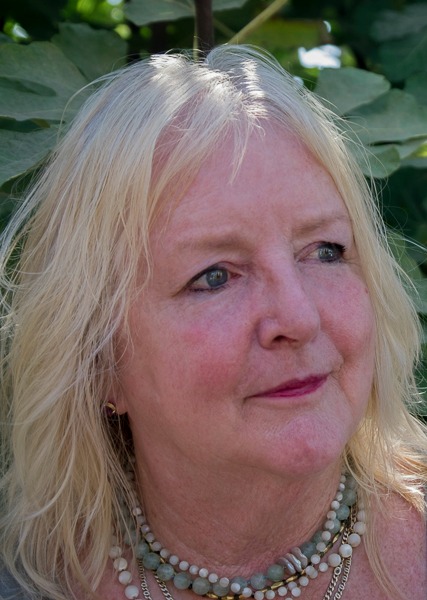
If I am The Mother* by Rebecca Rogerson

If I am The Mother

then I am holy. Made of moonbeams and shadows, darkness and light, questioned and answered, lost and retrieved;

discovered remains

If I am The Mother

then I am a reflection, a depiction, an inflexion of a cosmos in bliss and chaos, birth and destitution; a primordial sound unleashed to form planet, life, and

  you and me

If I am The Mother

then I am fermented in humanity, and sour the illusions of precipices we’re told that

we cannot cross

Cross the trinity of three’s and return to

the magic of all

Continue reading “If I am The Mother* by Rebecca Rogerson”

Legacy of Carol P. Christ: His Terror

Moderator’s Note: This was originally posted on March 25, 2019. AND the issues are still with us and as vivid as ever.

The first two parts of Susan Griffin’s Woman and Nature, “MATTER” and “SEPARATION,” are written in the authoritative voice of western philosophy and science that declares matter to be dead and the body an impediment to thought, and proceeds to separate the mind from the body. All of this, Griffin suggests, is based in the fear of death.

As Griffin notes, in this equation woman is identified with the body and her voice is silenced. Re-reading these parts of Woman and Nature for the umpteenth time for a class I am teaching felt even more painful than it had before. I was reliving parts of my own story.

I was brought up in the tract home suburbs of post-war Los Angeles in a world of women. Both of my grandmothers played central roles in my upbringing, introducing me to nature and the spirit of life they experienced as we explored trails the Los Angeles County arboretum before it was fenced or when we frolicked in the waves and picked up sand dollars at the seashore south of San Francisco. When I was ten years old my family moved to a new neighborhood that was almost entirely made up of families like ours with small children, fathers who worked, and mothers who stayed home.

Continue reading “Legacy of Carol P. Christ: His Terror”

Legacy of Carol P. Christ: Tree-Hugging Is About Trees and So Much More Than Trees

This was originally posted March 11, 2019

Not too long ago I heard someone deride members of a seminar who were building labyrinths in the olive groves of Greece as “a bunch of tree-huggers.”  I bristled! I probably first heard of the Chipko tree-hugging movement which is led by women in the 1970s and 1980s. Because I love nature, I naturally assumed hugging trees is a good thing. Originally, I had no idea that the tree-hugging movement was about much more than saving trees from being felled in the interests of short-term profit.

I did not know that the deeper purpose of the movement is to save a way of life based on forest-culture that is being threatened by the imposition of western ideas and practices promoted by colonialism and its successor, the green revolution. Nor did I know that the traditional forest-culture of India is the provenance of women: more than 4000 years of observing and experimenting created a “women’s knowledge” passed down from mother to daughter.

Continue reading “Legacy of Carol P. Christ: Tree-Hugging Is About Trees and So Much More Than Trees”

Legacy of Carol P. Christ: “Calling All Women” to Save the Earth, signed and shared by Carol P. Christ

This was originally posted on April 1, 2019

I contend therefore that we have allowed these chemicals to be used with little or no advanced investigation of their effect on soil, water, wildlife and man himself. Future generations are unlikely to condone our lack of prudent concern for the integrity of the natural world that supports all life. Rachel Carson, Silent Spring

Today we are faced with a challenge that calls for a shift in our thinking, so that humanity stops threatening its life-support system. We are called to assist the Earth to heal her wounds and in the process heal our own – indeed to embrace the whole of creation in all its diversity, beauty and wonder. Wangari Maathai

I want you to feel the fear I feel every day. And then I want you to act. Greta Thunberg
We are calling all women and our allies to come together to save the earth that sustains us all. Is it any wonder that from Rachel Carson to Wangari Maathai to the emerging young leader Greta Thunberg, women have been in the forefront of environmental movements for a century? As daughters, sisters, mothers, grandmothers, and aunts, we have long cared and advocated for the most vulnerable among us, the very young, the very old, the disabled, those who are the first to suffer the consequences of climate catastrophe and the many kinds of pollution that are poisoning the earth we share.

Continue reading “Legacy of Carol P. Christ: “Calling All Women” to Save the Earth, signed and shared by Carol P. Christ”

“Calling All Women” to Save the Earth, signed and shared by Carol P. Christ

I contend therefore that we have allowed these chemicals to be used with little or no advanced investigation of their effect on soil, water, wildlife and man himself. Future generations are unlikely to condone our lack of prudent concern for the integrity of the natural world that supports all life. Rachel Carson, Silent Spring

Today we are faced with a challenge that calls for a shift in our thinking, so that humanity stops threatening its life-support system. We are called to assist the Earth to heal her wounds and in the process heal our own – indeed to embrace the whole of creation in all its diversity, beauty and wonder. Wangari Maathai

I want you to feel the fear I feel every day. And then I want you to act. Greta Thunberg

We are calling all women and our allies to come together to save the earth that sustains us all. Is it any wonder that from Rachel Carson to Wangari Maathai to the emerging young leader Greta Thunberg, women have been in the forefront of environmental movements for a century? As daughters, sisters, mothers, grandmothers, and aunts, we have long cared and advocated for the most vulnerable among us, the very young, the very old, the disabled, those who are the first to suffer the consequences of climate catastrophe and the many kinds of pollution that are poisoning the earth we share.

As cooks, gardeners, and small farmers providing sustenance for our families throughout the world, we speak for the soil and the water, the air and the crops that feed us. As Congresswomen, diplomats, lawyers, doctors, CEOs, artists and scientists we are calling for fair and equitable public policies that address the crises we are facing together. As those who create homes and maintain households, we are speaking out for our first and only home, the planet earth we share.

Today as never before we are witnessing the destruction of the intricate and delicate balance, the miraculous conditions on earth on which all life depends. At this moment as a drastically changing climate and a deluge of poisonous substances, from plastic to coal to pesticides threaten the habitats of living creatures world wide, we are confronted by unprecedented loss of species, what some are calling “the sixth extinction,” a tragic loss reflected in the epidemic of disease in our families and communities.

Like indigenous communities and people of color, because women are so often marginalized, as outsiders we have a crucial perspective including valuable insights into what has caused the frightening and destructive events we are witnessing. We see a world too often governed by ruthless attempts to dominate and win, placing profit above every other value, framed by a world view that describes nature as inferior, lacking in intelligence or the inviolable integrity that all living beings possess. In response we call for an ethic of peaceful cooperation with nature and between nations.

Faced with the consequences of heedless, ignorant and ultimately violent policies that threaten our lives and all we love, wild fires burning our forests and homes, floods and mudslides destroying our towns, fierce storms battering our coastline, lakes and rivers becoming too toxic to drink, as our oceans and the fish that swim in them are choked with plastic, as our air becomes heavy with particles that threaten human health, we are calling for women to unite in an effort to recognize and respond to the failures of political, economic and moral vision behind these crises.

As nurses, teachers, waitresses, secretaries, wives, partners, those who respect and nurture life, we understand we are all dependent on each other and every other living being on earth. And we know too that together we have the creative vision to stop the advance of climate change and the sixth extinction, to put an end to the poisoning of our earth, to build societies that, taking inspiration from indigenous cultures, respect nature’s rights and learn from nature’s wisdom. In this light we urge you now to speak out, organize, rally, protest and step up in every way you can to protect the future of life on earth.

Susan Griffin, Vandana Shiva, Alice Walker, Alice Waters, Vijaya Nagarajan, Maxine Hong Kingston, Deirdre English, Ayelet Waldman, Jane Hirshfield, Arlie Hochschild, Joanna Macy, Jodie Evans, Medea Benjamin, Claire Greensfelder, Belvie Rooks, Jennifer Berezan, Ruth Rosen, Elizabeth Rosner, Joyce Jenkins, Nancy Shelby, Anita Barrows, Rebecca Foust, Joan Miura, Carol P. Christ

Here are some actions you can take and organizations you can join and support:

Learn about the environmental issues in your own neighborhood. Educate your community and organize to while demanding an end to pollution and the emission of CO2 in every form. Work to empower our communities to allow us to make decisions that protect the environment and our families and all lives Ask your senators and representatives to support The Green New Deal. Call for and support public transportation. Ask the businesses in your communities and chains such as Trader Joe’s to adopt practices that support the environment and cease those that are destructive, such as the use of plastic. Take action to ban poisons such as Glyphosate found in Monsanto’s Round Up from our communities. Boycott Monsanto and companies that fail to adopt green policies. Ask your governments to stop exporting environmental destruction, in every form including dumping waste, mining, drilling for oil, selling pesticides, altering and patenting seeds, internationally. Oppose war and investments in warfare. As the largest source of pollution on the planet, armed conflict and the manufacture and storage of weapons cause irreparable and vast damage all over the earth.

Below is a list just a few of the organizations working to save our planet that can support your efforts and which you can join and support.

350.org, Bioneers, Black Belt Citizens, Greenpeace, Mothers out Front, Rain Forest Action, Seed Sovereignty, The Nature Conservancy, The Southern Environmental Law Center, Women Earth and Climate Action Network (WECAN), Women’s Environmental Network (WEN), Women’s Environmental Action, Women’s Voices for the Earth, Collaborative on Health and the Environment, CODEPINK.

Call: written by Susan Griffin with Vandana Shiva

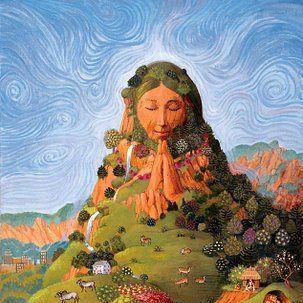
Painting: Mother Earth by Jennifer Cortez-Perlmutter

Note from Carol P. Christ: “Women’s knowledge” that we are part of the earth stems from women’s work: caring for the weak and the vulnerable in all cultures and caring for plants and trees in horticultural and forest-cultural societies. This knowledge is available to men as well but only if they are willing to challenge long-standing cultural assumptions about “manhood” based in the separation of men from women and nature.


Carol P. Christ is an internationally known feminist writer, activist, and educator living in Lasithi, Crete. Carol’s recent book written with Judith Plaskow, Goddess and God in the World: Conversations in Embodied Theology, is on Amazon. A Serpentine Path: Mysteries of the Goddess is on sale for $9.99 on Amazon. Carol  has been leading Goddess Pilgrimage to Crete for over twenty years: join her in Crete. Carol’s photo by Michael Honneger.

Listen to Carol’s a-mazing interview with Mary Hynes on CBC’s Tapestry recorded in conjunction with her keynote address to the Parliament of World’s Religions.

 

His Terror by Carol P. Christ

The first two parts of Susan Griffin’s Woman and Nature, “MATTER” and “SEPARATION,” are written in the authoritative voice of western philosophy and science that declares matter to be dead and the body an impediment to thought, and proceeds to separate the mind from the body. All of this, Griffin suggests, is based in the fear of death.

As Griffin notes, in this equation woman is identified with the body and her voice is silenced. Re-reading these parts of Woman and Nature for the umpteenth time for a class I am teaching felt even more painful than it had before. I was reliving parts of my own story. Continue reading “His Terror by Carol P. Christ”

Tree-Hugging Is About Trees and So Much More Than Trees by Carol P. Christ

Not too long ago I heard someone deride members of a seminar who were building labyrinths in the olive groves of Greece as “a bunch of tree-huggers.”  I bristled! I probably first heard of the Chipko tree-hugging movement which is led by women in the 1970s and 1980s. Because I love nature, I naturally assumed hugging trees is a good thing. Originally, I had no idea that the tree-hugging movement was about much more than saving trees from being felled in the interests of short-term profit.

I did not know that the deeper purpose of the movement is to save a way of life based on forest-culture that is being threatened by the imposition of western ideas and practices promoted by colonialism and its successor, the green revolution. Nor did I know that the traditional forest-culture of India is the provenance of women: more than 4000 years of observing and experimenting created a “women’s knowledge” passed down from mother to daughter. Continue reading “Tree-Hugging Is About Trees and So Much More Than Trees by Carol P. Christ”

A Prophet in Our Midst: Vandana Shiva by Carol P. Christ

She is not crying in the wilderness. She is not railing in the streets.


She sits quietly and speaks softly and with absolute clarity and certainty.

To let all the water systems and food systems and planetary climate systems get destroyed. That is the stupidity which rules us today.

No fire and brimstone, no angry God.

I do not think the planet will die. I think the earth is too powerful.

A simple truth.

We need to protect our home.

Men have lost the way.

Going to war and killing was considered important. Making profits at the cost of others was considered important.

Women must lead.

The values we need are in the knowledge of how to live with nature. That’s what women’s knowledge is. We need knowledge of how to care. That’s knowledge: it’s … called emotional intelligence now. We need knowledge of how to share.

We are part of the earth.

Working with our hands is not a degradation.

Could it really be as simple as that?

Some gender scholars will protest. “This is essentialism,” they will say. “This will keep women in the home where they have always been,” they will say.

If they say this, they will miss the point. This is not gender essentialism. The situation Shiva describes is a product of history. A history in which powerful men determined that war, killing, and profit are the highest values. It may or may not be in women’s nature to know how to live with nature, to care, and to share. These values are part of “women’s knowledge”* because they derive from the work women have been doing while men were making war and making profit on the backs of others.

Shiva is not telling women to stay in the home. She is telling women to confront “deceitful, dishonest, brutal power.”  She is telling women to teach those who rule the world how to live with nature, how to share, how to care.

If women are can teach what they know, how to live with nature, how to care, how to share, women’s knowledge will become human knowledge once again and we may be able to save our home.

If not,

. . . we are dispensable. She’ll find a way.

A prophet is speaking. listen to her words. Etch them on your heart. And save the world.

*Shiva has stated that women do most of the farming in the world. Women who are not farmers care and share and may tend gardens. Women’s knowledge is a relative term. Some women in industrialized countries place ambition, competiton, and profit above caring and sharing. Even in this situation, women generally care for children. See Shiva’s Staying Alive: Women, Ecology, and Development.

Carol P. Christ is an internationally known feminist writer, activist, and educator currently living in Lasithi Prefecture, Crete. Carol’s recent book written with Judith Plaskow, Goddess and God in the World: Conversations in Embodied Theology, is on Amazon. A Serpentine Path: Mysteries of the Goddess is on sale for $9.99 on Amazon. Carol  has been leading Goddess Pilgrimage to Crete for over twenty years: join her in Crete. Carol’s photo by Michael Bakas. Carol will be speaking at the 25th Anniversary Celebration of the Re-Imagining Conference at Hamline University in St. Paul Minnesota on November 1 and 3 and at the Parliament of World Religions in Toronto, Canada on November 5.