September: Holy Month by Barbara Ardinger

The Venerable Bede (673–735), a Christian scholar and historian of Anglo-Saxon England who lived 200 years before Beowulf was written, describes the heathen beliefs and customs of his time. Because his interest is in converting the pagans, however, he says that Haligmonath is called “holy month” because that’s when “the heathens pay tribute to their devil.” The real reason the month is holy probably lies in the harvest and the thanksgiving feasts celebrated in honor of the gods and goddesses of the earth. Harvest Home (the final harvest) was celebrated in September in England and other lands.

Goddess Ceres-Demeter PlaqThe Angles, Saxons, and Jutes were pre-Christian tribes who lived in northern Germany and the Baltic lands. The most famous leaders of the Jutes were Hengist and Horsa, whose names roughly translate as “horse” and “mare.” These Germanic tribes were invading and settling in Britain about the time King Arthur (or whoever the tribal chief was who was amalgamated into the medieval legends of Arthur) might have lived. This was during the fifth and sixth centuries, about the same time as the Merovingians (of Holy Blood Holy Grail fame) were ruling the Franks of Germany and France and St. Brigit (also the goddess Brigid) was founding her abbey in Cill Dara (known today as Kildare) in Ireland. Starting with Edward Gibbon’s History of the Decline and Fall of the Roman Empire (published ca. 1776), historians have been calling the centuries following the fall of the Rome the Dark Ages. This is when civilization somehow came to a halt, they say, and barbarian tribes galloped around looting and pillaging and destroying cities. Peter S. Wells disagrees. Continue reading “September: Holy Month by Barbara Ardinger”
The Found Goddesses of Good Eats by Barbara Ardinger

August 1—Lughnasadh (pronounced LOON-us-uh) or Lammas—is the first of the three traditional harvest festivals of the traditional Celtic calendar that most pagans follow today. And what naturally follows harvest? Feasting, fairs, and festivals. To help us celebrate the season, here are two Found Goddesses of good eating. The term “found goddesses” was created in 1987 by Morgan Grey and Julia Penelope, authors of a hilarious book titled Found Goddesses. After reading this book and having never met a pun I didn’t instantly love and being of a naturally satirical state of mind, I started Finding—i.e., inventing—my own goddesses shortly before the turn of the century. After I found a hundred of them, they were published in 2003 in my book, Finding New Goddesses.

When Xochitl Alvizo wrote here about the philosophy of vegetarianism and veganism in late June, I was inspired to contribute to the conversation. Although I understand the philosophy of not eating meat, I’m still a meat eater. (Though I don’t go quite as far as the so-called paleo diet.) Yes, it’s an issue of consciousness. I admit it. I just refuse to think about cows and sheep and chickens when I’m eating. But I refuse to eat lobster (because they’re cooked alive) or veal (because of how the calves are treated). I guess I’m not very consistent, and I suspect I’ve just settled for the hungry coward’s way out of the diet dilemma. Continue reading “The Found Goddesses of Good Eats by Barbara Ardinger”

Where Does Poetry Come From? By Barbara Ardinger

Poetry is a gift from our ever-creating goddess, but you know what? She also has a major sense of humor. Nearly every night, I go to bed, pet the cats awhile, and think I’m going to go right to sleep. And what happens? Words happen. Beginnings of blogs. (This one. Last night.) Lines of dialogue or description that will end up in my revisionist fairy tales. First lines of poems. Most nights, I “talk” myself to sleep.

 Because the Goddess is endlessly, continuously creative and her art is our blessed planet, so are all her children creative, and so am I also creative and kinda artsy, too. I learned to embroider when I was about seven years old. I learned to sew, I learned to knit, I learned to crochet. For years I crocheted granny-square afghans, but I ran out of people to give them to about ten years ago. As a child, I sat on my father’s workbench and learned to work a little with wood. I started taking piano lessons the day after my sixth birthday. Although my mother and my brother were artists, I missed out on that talent, but made up for it by taking a right-brain drawing class and doing a magnificent contour drawing of a brussels sprout. I don’t remember when I couldn’t read, and I’m told that I started writing fiction when I saw seven years old and wrote a story for my daddy. Along the way, of course, I’ve also learned a lot of very practical creative skills, of course, like touch typing. Continue reading “Where Does Poetry Come From? By Barbara Ardinger”

June—a Month Ruled by Feminine Principles by Barbara Ardinger

Let’s celebrate the Matronalia in the 21st century by demanding money from our male relatives, our male religious leaders, and the men in our local, state, and federal governments to support causes that help women—young girls, married women, new mothers, poor and oppressed and abused women, artists and actors and other performers, philosophers and scholars…all of us. Let us seek out and use Juno’s powers to improve the lives of modern women.

June, Juno, Hera, Barbara Ardinger, marriage, honeymoon, Rome, Hellenistic Period, MatronaliaJust as each Roman man had his genius, or guardian spirit of masculinity, so did each woman have her juno, or guardian spirit of femininity. Juno rules every woman’s entire life and every feminine occasion. In fact, it’s because she’s in charge, so to speak, of married life that we have our June weddings and our honeymoons. Our modern “honeymoon” dates perhaps back to the fifth century and is based on the custom that the newly married couple sweetening the beginning of their life together by drinking a lot of mead (which is made with honey) and making merry. (Honey is sometimes considered to be an aphrodisiac.) Continue reading “June—a Month Ruled by Feminine Principles by Barbara Ardinger”

The Language of Flowers by Barbara Ardinger

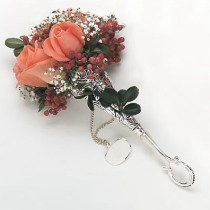
Instead of sending a billet-doux to your honey, present a tussie-mussie, a small bouquet wrapped in a lace doily or a fancier holder. Say you have a friend having a birthday and he already has too many neckties and she already has too many kitchen gadgets. Give them flowers or potted plants. The white camellia signifies “unpretending excellence.” Ivy, “with its clinging habit, is a feminine symbol” (sic., p. 53). The lily means purity. The peony symbolizes abundance. The primrose is a token of affection and respect. Get the idea? Your friends will be delighted by the flowery language.

William Shakespeare, The Winter’s Tale
A fancy tussie-mussie

     Here’s flowers for you:
Hot lavender, mints, savory, marjoram,
The marigold, that goes to bed wi’ the sun,
And with him rises weeping: these are flowers
Of middle summer….
          —William Shakespeare, The Winter’s Tale Continue reading “The Language of Flowers by Barbara Ardinger”

The Green Man By Barbara Ardinger

The Green Man’s message about rebirth is why he is so popular today. He’s come to symbolize the green movement. He’s a friend of the earth who is whispering to us to wake up and grow up, to march and dance with him in celebration of our relationship with nature. What green thing can we do today?

The Green Man’s message about rebirth is why he is so popular today. He’s come to symbolize the green movement. He’s a friend of the earth who is whispering to us to wake up and grow up, to march and dance with him in celebration of our relationship with nature. What green thing can we do today?
The Green Man

Spring has, as they say, has  sprung, and we who live in the Northern Hemisphere are witnessing the annual greening of the earth. Grasses and grains are growing, trees are leafing, flowers are budding. I like to imagine the goddesses who rule the springtime—Anna Perenna (classical Roman, probably Etruscan), Butterfly Maiden (Hopi), Freya (Norse), Hu-Tu (Chinese), the Rusalky (Russian), and others—calling their worshippers and gatheringthem on the village green to dance and celebrate the revival of the earth. Continue reading “The Green Man By Barbara Ardinger”

The Child of the Bog (continued) By Barbara Ardinger

The story so far. In the ancient land beside the river, the God-King lies in what appears to be death. No one can awaken him. In the house of a court Magician, the peasant girl Ubastet is dusting and conversing with a magical stork when two minor miracles occur. The Magician consults the Hierophant, but they cannot explain the miracles. Now the Queen has come into the room. She is determined to figure out what’s going on. (Where do they fly to? Romania, another land of great enchantment.)

Before the sun set that day, the Queen of the golden land called a convention of priests and wizards and magicians and astrologers and seers and prophets and physicians. When they had all assembled in the throne room, she set the matter before them. Day after day, the learned ones debated, night after night, they performed their high magics and gorgeous rituals. In their secret places, the animals gathered together as well and performed their own rituals. But the mirror, whose thousand pieces had been gathered up and cleansed and set back into the frame in a sublime mosaic, the mirror refused to speak again. The golden beetle remained cold and silent.

child of the bog, barbara ardinger
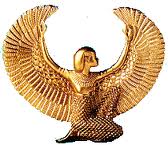
Isis

Continue reading “The Child of the Bog (continued) By Barbara Ardinger”

The Child of the Bog By Barbara Ardinger

Isis, She of Ten Thousand Names, was worshipped in ancient days for longer than any other deity. What is sometimes called her cult (remember, if it’s ours it’s a true religion; if it’s theirs, it’s only a cult) can be traced back six thousand years. Her worship spread throughout the lands around the Mediterranean and the Roman Empire, going as far north as London. The last temple of Isis was razed by fanatical Christians in the 6th century. But Isis did not die! As we can see in any representation of the Madonna and Child, the iconography of Isis—a mother nursing her son—was adopted by the early Christian church. Worship of Isis was reborn in the 20th century with the establishment in 1976 of the Fellowship of Isis to renew worship of the Great Goddess in modern times. Another temple of Isis, established in 1996, is located at the Isis Oasis in Geyserville, California. It is a legally recognized religion in California.

The name Isis is the Hellenized version of her Egyptian name, approximately Auset. If you want to know more, read The Golden Ass by the Roman author Apuleius (translated by Robert Graves) and Plutarch’s Of Isis and Osiris.

The story below is partly based on the myths of Isis and Osiris and partly on European fairy tales (which almost never have fairies in them) and comes from my imagination, although the motifs are, of course, common ones. Talking animals and miraculous births are common in fairy tales, and the animal gods of Egypt are well known, and storks and other birds are held to be sacred by many cultures. 

Continue reading “The Child of the Bog By Barbara Ardinger”

Gods of War by Barbara Ardinger

Let’s talk about Mars and Ares. It’s common to think the Greek and Roman pantheons were identical and the gods and goddesses just had alternate names. This is not true. The Roman gods and goddesses personified civic virtues, whereas Greek mythology was largely philosophical.

I’ve been thinking about Carol Christ’s two excellent blogs about patriarchy and its connection to war and our so-called heroes. We read or watch the news today and learn about “our heroes” serving in the Middle East, about warriors who’ve come home and are suffering from deep wounds both physical and emotional. Yes, these men and women do indeed deserve our support…but, still, I ask, Why are people who are trained to kill other people called heroes? It’s a very thorny problem, and I must set it aside as I write this blog. Continue reading “Gods of War by Barbara Ardinger”

A Meditation on the Shamrock By Barbara Ardinger

With the eyes of your imagination, see our bright goddess standing tall and fine at her anvil. Her holy and wholly unquenchable fire is burning in the forge. See her holding her hammer and tongs. Perhaps she’s beating a sword, for we sometimes need to defend ourselves, or perhaps she’s beating a sword into a plowshare, for we also need to feed the hungry.

February 2 is the pagan sabbat, or holy day, devoted to the great Celtic triple goddess Brigid (pronounced “Breed”). Brigid is the goddess of poetry, fire, and smithcraft. We’re told that she was converted to Christianity by St. Patrick and later canonized. Her temple was located at Cill Dara (better known as Kildare), where a holy fire was maintained for a thousand years. It was put out during the Dissolution of the Monasteries under Henry VIII when that British king left the Roman church. The fire was relit, but extinguished again in the 18th or 19th century. Today there is an order of Irish nuns that keeps Brigid and her fire alive. As you read the following meditation, imagine that you’re hearing the voice of an elderly priestess. Continue reading “A Meditation on the Shamrock By Barbara Ardinger”