In Search of the Light by Beth Bartlett

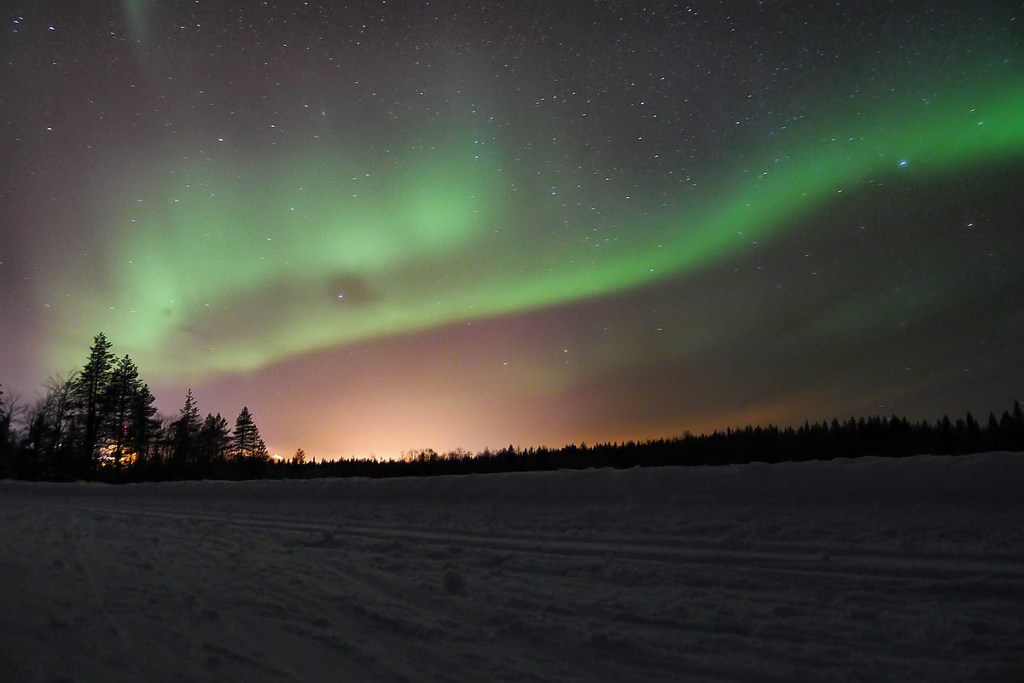
The approaching winter has felt darker than usual.  Here in the north, where usually we are blanketed with snow this time of year, this year we have none.  All around town people are putting up Christmas lights, but without the snow to reflect the light, the beams and sparkles of light do not carry. Without the softening effect of billows of snow, they can even seem a bit garish.

But it is not just the lack of snow that renders these days darker. With the wars raging in the Ukraine, Gaza, Yemen, Sudan and smaller conflicts around the world; the rise of hate crimes against both Jews and Palestinians in this country; the alarming possibility of a misogynist fascist man – who, echoing Hitler labels his political opponents “vermin” – becoming President of this country again; the ongoing climate crisis — these can seem dark days indeed, rendering our attempts at holiday cheer a bit garish as well.

Continue reading “In Search of the Light by Beth Bartlett”

Miigwech – Thank You by Beth Bartlett

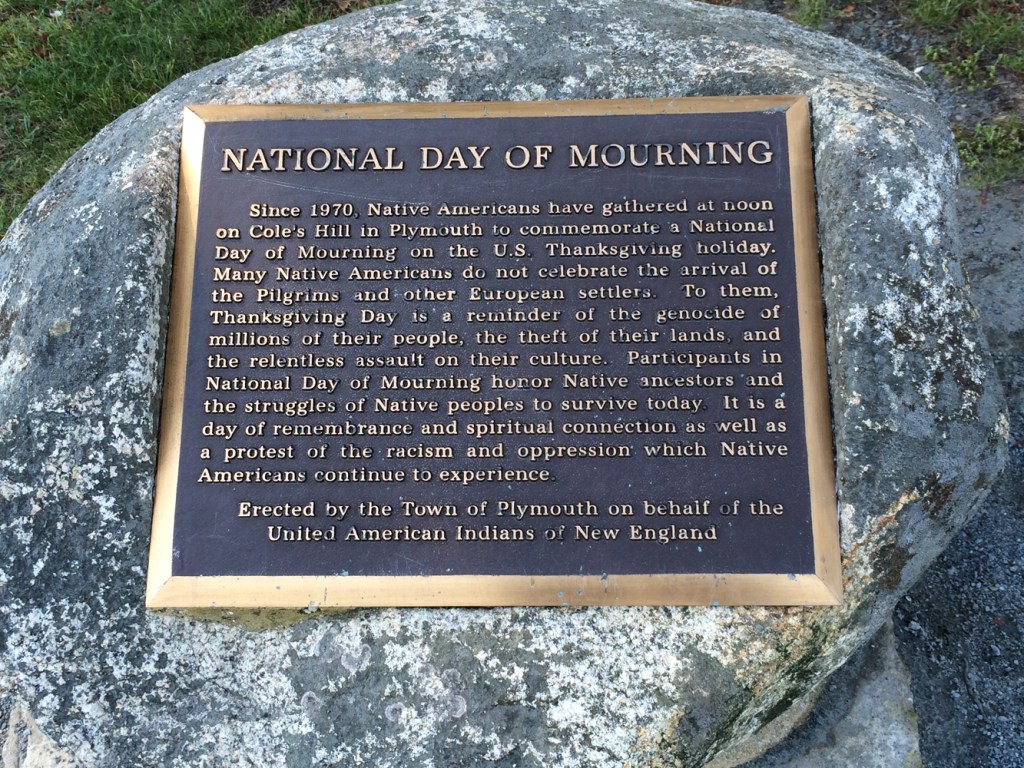
Thanksgiving is a complicated holiday. As a child, it was simple – a happy day of family and feasting.  I would awake at dawn to help my mother stuff the turkey that would roast all day in the oven, and while she prepared all the rest of the meal, the younger of my brothers and I would head downtown with my nextdoor neighbor to delight in the Christmas displays in the department store windows. Our home would be filled – my older siblings returned from college and their adult lives, with a roommate, or girlfriend, and in later years, spouses and children.  We would stuff ourselves with turkey, stuffing, and cranberry jelly, mashed potatoes and gravy, black cherry Jello, squash with mini marshmallows, and as my mother would always say, “corn for the Indians.”  That would be the only mention of Native Americans on this day celebrating what has become a romanticized version of a harvest feast, shared by a few of the Waumpanoag people and the English settlers who owed their survival to their generosity.

Continue reading “Miigwech – Thank You by Beth Bartlett”

To See Ourselves in Others: Part Two by Beth Bartlett

Part 1 was posted yesterday. You can read it here.

Patriarchy is a system of male dominance, rooted in the ethos of war which legitimates violence, sanctified by religious symbols, in which men dominate women through the control of female sexuality, with the intent of passing property to male heirs, and in which men who are heroes of war are told to kill men, and are permitted to rape women, to seize land and treasures, to exploit resources, and to own or otherwise dominate conquered people.[i]Carol Christ

In Part I, I urged against the distancing that intellectual analysis can bring to situations that require us to respond from the depths of our being, and yet, how can one be a reader of this blog and not examine the intertwining strands of patriarchy, religion, women, and war in this current conflict.

Continue reading “To See Ourselves in Others: Part Two by Beth Bartlett”

To See Ourselves In Others: Part One by Beth Bartlett

I have felt both a responsibility and a reluctance to write about the escalating conflict in the Middle East.  The situation is so complex and such an unspeakable tragedy – acts of such terror and violence on the part of Hamas toward civilian populations met with even greater violence and repressive measures on the part of Israel toward the people of Gaza. It is a perplexity of the human condition that a people with such a deep history of being displaced and oppressed rather than refusing to oppress in turn, instead engage in the displacement and oppression of others that then erupts into more violence. Both are traumatized peoples acting out of deep pain and woundedness. Thousands have died, more are wounded and displaced, all will carry more trauma into generations to come. The very earth bears the scars of war. In the face of such unspeakable suffering, any kind of analysis feels distancing at a time when what we most need is to let the suffering move us to our depths.

Continue reading “To See Ourselves In Others: Part One by Beth Bartlett”

Women’s Sovereignty and Body Autonomy Beyond Roe v. Wade: Book Review by Beth Bartlett

A Girl God Anthology Edited by Arlene Bailey, Pat Daly, Sharon Smith and Trista Hendren

Women’s Sovereignty and Body Autonomy Beyond Roe v. Wade was not what I was expecting.  Given the title, I thought it would be similar to Robin Marty’s New Handbook for a Post-Roe America – a practical guide for ways to gain access to reproductive care in the wake of the overturning of Roe v. Wade.  Instead, I found, in contributor Mary Saracino’s words, “the howl of ages” – a deeply passionate and spiritual collection of poetry, prose, and visual art expressing  women’s outrage, grief, resistance, and empowerment in response to the U.S. Supreme Court decision of June 2022 denying women the right to abortion care that had been settled law in the U.S. for nearly fifty years.

Continue reading “Women’s Sovereignty and Body Autonomy Beyond Roe v. Wade: Book Review by Beth Bartlett”

Moon Worshippers by Beth Bartlett

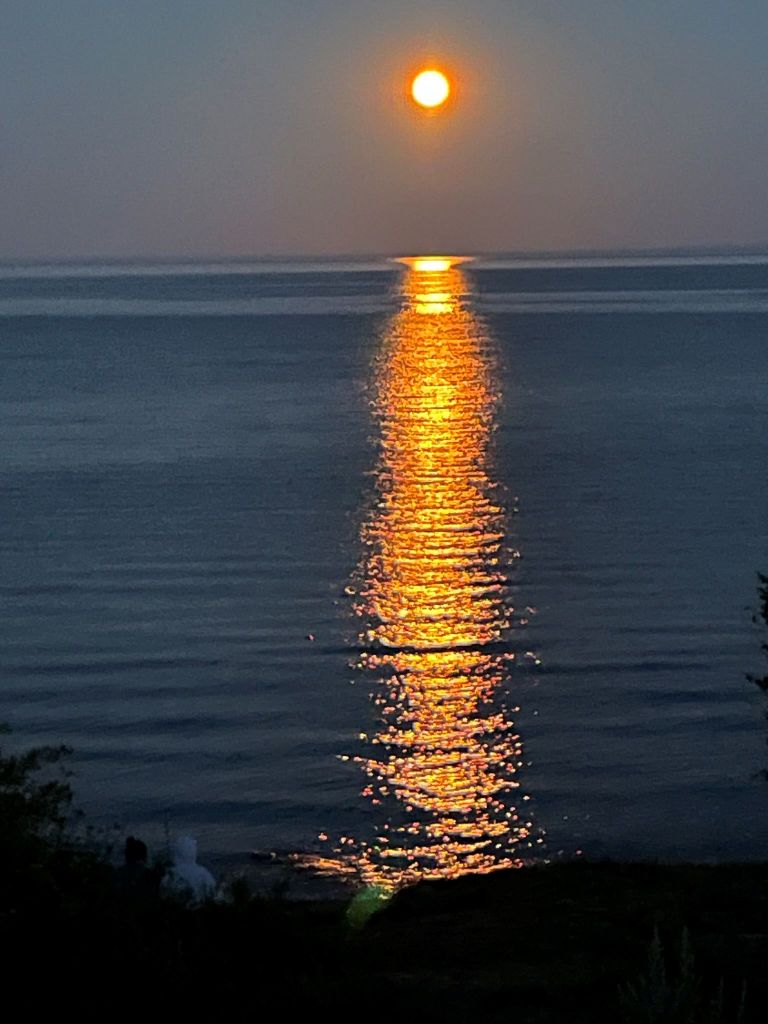
You’d have thought it was the 4th of July the way people were gathering on the shore of the great lake, Gitchee Gumee – some with coolers and lawn chairs, kids and dogs in tow, each claiming their spot — waiting for the viewing as if waiting for the fireworks.  But what we awaited was far more spectacular – the “once in a very blue moon,”[i]  the second full moon in a calendar month, but also a “super moon” – so named because at this time when it is closest to the earth in its orbit it appears larger than usual. Super moons happen a few times a year and blue moons happen every two to three years, but super blue moons are rare. This one was probably the last in my lifetime since the next one will occur fourteen years from now in 2037.

My husband, dog, and our son’s dog, aptly named Luna, made our way to the lake, finding our spot on the ancient rocks, joining the other moon gazers. A feeling of community celebration arose with the moon as we strangers to each other together watched the first light of rising moon with shared anticipation and appreciation. The “blue moon” in fact appeared red as it came up through the hazy atmosphere, but as it rose higher in the sky, just as in the lyrics to the song, “Blue Moon,” the moon turned to gold, casting its golden glow across the waters.  As it rose, it seemed to grow even larger, rounder, brighter.

Continue reading “Moon Worshippers by Beth Bartlett”

Curiosity by Beth Bartlett

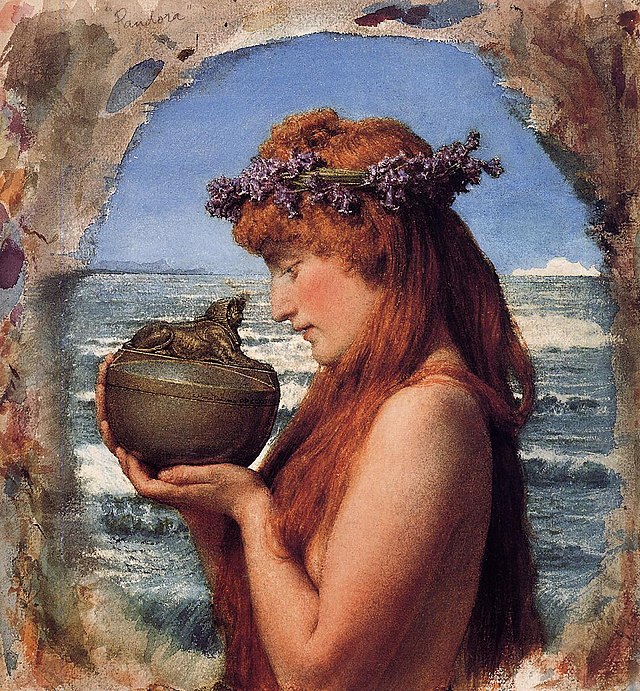
In my last post I mentioned the tale of Prometheus who stole fire from the gods.  Zeus’s punishment of eternal torture was not enough to avenge the offense.[i]  In addition, Zeus punished the entire human race by sending the first woman, Pandora.  Pandora is a woman of “all gifts,” one of which is the curiosity that drives Pandora to open the forbidden jar, unleashing evils and miseries into the world.  Woman as punishment, as the bringer of evil and misery — these themes have shaped the western view of women for millennia.

Continue reading “Curiosity by Beth Bartlett”

Fire by Beth Bartlett

The nature and meaning of fire have been appearing in several disparate aspects of my life lately – in the fire of Celtic spring rituals; in books I’ve been reading[i]; in the fireflies of summer nights and the fireworks of the 4th of July; even as a clue in a game; and most ubiquitous of all – the smoke from Canadian wildfires. So persistent a theme begs pondering.  It first appeared in a Rewilding course as the sacred element of spring in the Celtic wheel of the year. Spring is the time of new beginnings, of the sunrise – the element of fire in the sacred direction of east, of the fires of passion and creativity, and the celebration of Beltane.

Continue reading “Fire by Beth Bartlett”

Durga Rising: Feminism as Fierce Compassion By Beth Bartlett

In her FAR post earlier this year,[i] “Why Feminism Needs the Fierce Goddesses,” Susan Foster argues that a “flagging” feminist movement needs the revitalizing energy of the “fierce goddesses” of ancient times to challenge the patriarchal forces that seem to be on the rise as increasingly we find women’s lives and freedoms constrained. She writes, “the dark goddesses of ancient times have been submerged in our psyches, but they serve as a repository of fierce energy, of female rage against injustice.”  She continues, “It’s important and healthy for us as women to reclaim our anger, using it to protect ourselves and fight for our rights in systems that are oppressive.”

Reading this, I immediately thought of Beverly Wildung Harrison’s, “The Power of Anger in the Work of Love,” and China Galland’s, The Bond Between Women: A Journey to Fierce Compassion. Anger as the work of love; fierce compassion.  In this time of mass shootings, insurrection, the ongoing assault on women, LGBTQ, and BIPOC peoples, when rage seems so easily fueled by hate, envy, and greed, it is the rage based in love and compassion that is most needed.  This is the rage of the fierce dark goddesses who are moved to act against injustice, the rage of the feminism I love. With its source in love and compassion, it is a rage that rebels in the best sense of the word – that at once refuses injustice and affirms dignity and respect, that speaks truth to power, that is grounded in solidarity and friendship, and values the immanence of the earth, the water, the body, and the divine spark in all beings.[ii] 

Continue reading “Durga Rising: Feminism as Fierce Compassion By Beth Bartlett”

Common Ground: Part Two:  On Enclosure, the Commons, and Awe by Beth Bartlett

Can we rise to ourselves and see what is in the nature of the soul to see – that we exist on this common ground together?” – Susan Griffin

The ideology, discussed in Part One, that land that is not being cultivated, mined, lumbered, or otherwise used to create goods and capital is ‘waste” continues its devastating effects to this day in mountaintop removal, destruction of old growth forests, fracking and drilling and mining of once pristine lands, plowing the plains into dust and spreading herbicides and pesticides over the land. Devastate – from the Latin devastare, meaning to “lay waste, ravage, make desolate.” Devastate – to de-vast – is to destroy the vastness. And so has the vastness of lands around the world been plundered, laid waste, so as not to “waste” it.

Continue reading “Common Ground: Part Two:  On Enclosure, the Commons, and Awe by Beth Bartlett”