Approach the Taking of Life with Great Restraint by Carol P. Christ

Nurture life.

Walk in love and beauty.

Trust the knowledge that comes through the body.

Speak the truth about conflict, pain, and suffering.

Take only what you need.

Think about the consequences of your actions for seven generations.

Approach the taking of life with great restraint.

Practice great generosity.

Repair the web
In Rebirth of the Goddess, I offered Nine Touchstones of Goddess Spirituality as an alternative to the Ten Commandments. The Nine Touchstones are intended to inform all our relationships, whether personal, communal, social, or political.

The seventh touchstone asks us to approach the taking of life with great restraint.

Continue reading “Approach the Taking of Life with Great Restraint by Carol P. Christ”

Think About the Consequences of Your Actions for Seven Generations by Carol P. Christ

Nurture life.

Walk in love and beauty.

Trust the knowledge that comes through the body.

Speak the truth about conflict, pain, and suffering.

Take only what you need.

Think about the consequences of your actions for seven generations.

Approach the taking of life with great restraint.

Practice great generosity.

Repair the web

In Rebirth of the Goddess, I offered Nine Touchstones of Goddess Spirituality as an alternative to the Ten Commandments. The Nine Touchstones are intended to inform all our relationships, whether personal, communal, social, or political. Continue reading “Think About the Consequences of Your Actions for Seven Generations by Carol P. Christ”

Take Only What You Need: Can We? by Carol P. Christ

Nurture life.

Walk in love and beauty.

Trust the knowledge that comes through the body.

Speak the truth about conflict, pain, and suffering.

Take only what you need.

Think about the consequences of your actions for seven generations.

Approach the taking of life with great restraint.

Practice great generosity.

Repair the web


In Rebirth of the Goddess, I offered Nine Touchstones of Goddess Spirituality as an alternative to the Ten Commandments. The Nine Touchstones are intended to inform all our relationships, whether personal, communal, social, or political.

The fifth touchstone, “Take only what you need” may be the most difficult one for modern human beings to follow. Those of us not living in traditional un-modernized villages have more things, from cars to big houses, to clothes to electronic devices, than we really need. Those of us in the middle and upper classes have so much more than we need, that the mind boggles when we begin to think about whether we need everything we have or want to have.

In capitalist societies, advertising is geared to cause us to want things we don’t really need, whether it be a new pair of shoes when we already have than we can wear to the most up-to-date ipad or smart phone when the one we have still works just fine. For many of us “shopping therapy” is our first response to boredom, anxiety, or depression. Buying something brings an adrenaline rush that temporarily makes us feel better.

In some indigenous cultures, the notion of taking only what you need is rooted in a deep feeling for and understanding of the interdependence of life. These cultures teach the young that taking from the web of life always has a cost. Yes, you can pick the plants you need to eat and the others you need as herbal remedies. But when you do, you thank the plant whose life you have taken, by leaving a gift. You would learn never to pick all of the plants in a particular area because you always leave some for others and some to die and go to seed so there will be the same plants in the same place the next year. You would never throw food away because you would not have taken or prepared more than you needed, and if you had something left over, you would offer it to a neighbor.

If you grew and picked flax or sheared wool and spun it into thread and then wove the fabric that would become your sheets and blankets and clothing, you would learn to treasure what you have as the work of your own or your mother’s or grandmother’s hands, and you would not consider these precious items to be disposable. In fact you might feel sad when something wore out, knowing that you would never have the joy of using or wearing it again and knowing that you cannot replace the tangible memories associated with it.

How far we have come from this mentality, for many of us, in only a few generations. We are always looking for the newest and so ready to throw out or replace anything that we ourselves or others might consider dated or old-fashioned.

We are destroying ecosystems and using up the world’s resources to meet our needs. The notion that the world should be our resource is part of the problem. If we do not curb our need and our greed, species will continue to go extinct and the generations that come after us will struggle to survive. This is a political, not only a personal issue. We must move towards a green sustainable energy and green sustainable economies.

It is not likely that anyone reading this blog—myself included—will ever reach the state of being where we consistently take only what we need. But we can try little by little to appreciate what we have and not to keep wanting and then buying the things we do not need. We can live with so much less than we think we can. If we could stop having to have what we think we want, we might find that there is more than enough to go around. We might be able to create a world where no one has to go without and where everyone can experience the joy and grace of life.

Also see: Ethics of Goddess Religion: Healing the World , Nurture Life: Ethics of Goddess Spirituality,  Walk in Love and Beauty: A Touchstone for Healing,  Trust the Knowledge that Comes through the Body: Heal Yourself, Heal the World, and Speak the Truth About Conflict, Pain, and Suffering


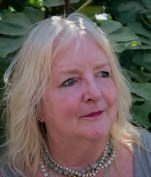
Carol P. Christ is an internationally known feminist writer, activist, and educator currently living in Lasithi Prefecture, Crete. Carol’s recent book written with Judith Plaskow, Goddess and God in the World: Conversations in Embodied Theology, is on Amazon. A Serpentine Path: Mysteries of the Goddess is on sale for $10.98 on Amazon. Carol  has been leading Goddess Pilgrimage to Crete for over twenty years: join her in Crete. Carol’s photo by Michael Bakas.

 

Speak the Truth about Conflict, Pain, and Suffering: It Is Not All Love and Light by Carol P. Christ

Nurture life.

Walk in love and beauty.

Trust the knowledge that comes through the body.

Speak the truth about conflict, pain, and suffering.

Take only what you need.

Think about the consequences of your actions for seven generations.

Approach the taking of life with great restraint.

Practice great generosity.

Repair the web


In Rebirth of the Goddess, I offered Nine Touchstones of Goddess Spirituality as an alternative to the Ten Commandments. The Nine Touchstones are intended to inform all our relationships, whether personal, communal, social, or political.

Ours is a broken world. We must speak the truth. Spirituality is not only about “love and light.” Goddess Spirituality, which I often call Goddess feminism, grew out of the feminist movement, which was born in the recognition that all is not well in the world. A central insight of Goddess feminism is that women need the Goddess because when we picture God as exclusively male, we create a world in which boys and men believe they are like God, while girls and women believe they are less than men and God.

In this world in which rape is an ordinary part of war, women are paid less than men for the same work, sexual harassment and sexual aggression are tolerated in workplaces, one in three women will suffer physical or sexual violence from an intimate partner and many of them will be murdered by an intimate partner. Feminism was born when women began to speak up about these injustices and many others. Continue reading “Speak the Truth about Conflict, Pain, and Suffering: It Is Not All Love and Light by Carol P. Christ”

Trust the Knowledge that Comes through the Body: Heal Yourself, Heal the World by Carol P. Christ

Nurture life.

Walk in love and beauty.

Trust the knowledge that comes through the body.

Speak the truth about conflict, pain, and suffering.

Take only what you need.

Think about the consequences of your actions for seven generations.

Approach the taking of life with great restraint.

Practice great generosity.

Repair the web


In Rebirth of the Goddess, I offered Nine Touchstones of Goddess Spirituality as an alternative to the Ten Commandments. The Nine Touchstones are intended to inform all our relationships, whether personal, communal, social, or political.

Though several of the touchstones are influenced by indigenous teachings, the third touchstone, “trust the knowledge that comes through the body,” is a response to the separation of mind and body common in western cultures. In the Symposium, Socrates taught that the journey of the soul begins in the appreciation of physical beauty, but ends in the contemplation of unchanging transcendental beauty. Christian ascetics believed that the body must be disciplined and subdued in order for the mind to commune with divinity. Up through the present day, Christians are taught that the pleasures of the body are a temptation because we are destined for something “higher.” Continue reading “Trust the Knowledge that Comes through the Body: Heal Yourself, Heal the World by Carol P. Christ”

Walk in Love and Beauty: A Touchstone for Healing by Carol P. Christ

Nurture life.

Walk in love and beauty.

Trust the knowledge that comes through the body.

Speak the truth about conflict, pain, and suffering.

Take only what you need.

Think about the consequences of your actions for seven generations.

Approach the taking of life with great restraint.

Practice great generosity.

Repair the web


In Rebirth of the Goddess, I offered Nine Touchstones of Goddess Spirituality as an alternative to the Ten Commandments. The Nine Touchstones are intended to inform all our relationships, whether personal, communal, social, or political.

The second touchstone, “Walk in love and beauty,” derives from the insight that love and beauty are the great gifts of bounteous earth. Just recently at a meeting of the Green Party Greece, one of our representatives in Parliament, Giorgos Dimaras, said to me, “It all begins with love.” He understands that our Green Party principles of environmental sustainability, social justice, no violence, and participatory democracy are rooted in the prior value of love. If we do not love nature, then why would we care about saving it? If we do not love others, why would we care about injustice and suffering? If we do not love the world, why would we care about creating peace on earth? If we do love others, why would we care about creating ways to ensure that everyone’s voice is heard in our families, communities, and societies? Continue reading “Walk in Love and Beauty: A Touchstone for Healing by Carol P. Christ”

Nurture Life: Ethics of Goddess Spirituality by Carol P. Christ

Nurture life.

Walk in love and beauty.

Trust the knowledge that comes through the body.

Speak the truth about conflict, pain, and suffering.

Take only what you need.

Think about the consequences of your actions for seven generations.

Approach the taking of life with great restraint.

Practice great generosity.

Repair the web


In Rebirth of the Goddess, I offered Nine Touchstones of Goddess Spirituality as an alternative to the Ten Commandments. The touchstones are not commandments delivered from outside the world, nor are they accompanied by the promise of reward in heaven or the threat of punishment in hell. Rather, the Nine Touchstones are based upon observation of the world and rooted in the insight that human and other beings are connected in the web of life. They are intended to inform all our relationships, whether personal, communal, social, or political.

As I review the Nine Touchstones two decades after I first intuited and reflected on them, I marvel at my younger self. When I write, I often enter into a kind of trance in which words emerge from a place in myself that lies deeper than my conscious rational mind. I do not know that I know something until the words take shape on the page, and even then, their meaning unfolds over time. Something like this must have happened with the Nine Touchstones. I was drawn to the Native American teachings expressed in several of the touchstones even though I did not fully understand their context or meaning at the time. I was drawn to maternal values without knowing that they are the basis of ethics in egalitarian matriarchal cultures. Continue reading “Nurture Life: Ethics of Goddess Spirituality by Carol P. Christ”

Ethics of Goddess Religion: Healing the World by Carol P. Christ

Nurture life.

Walk in love and beauty.

Trust the knowledge that comes through the body.

Speak the truth about conflict, pain, and suffering.

Take only what you need.

Think about the consequences of your actions for seven generations.

Approach the taking of life with great restraint.

Practice great generosity.

Repair the web.


In a recent interview on Voices of the Sacred Feminine on “Gratitude and Sharing: Principles of Goddess Spirituality,” Karen Tate asked me to review the “Nine Touchstones” of Goddess religion I offered in Rebirth of the Goddess as an alternative to the Ten Commandments. Tate expressed concern about the lack of social and political ethics in New Age spirituality and in some parts of the Neo-pagan movement at a time when ethical discernment and action is more necessary than ever.
Before discussing the ethical principles of Goddess feminism, it is necessary to dispel a common assumption that there can be no ethics in Goddess religion because ethics stem from a transcendent principle of justice that stands outside the world. Christian liberation theologians usually identify this transcendent principle with the commanding “Word of God” in the prophetic traditions of the Bible. They often assume that this word comes from outside ourselves and outside nature and as such is the only firm basis for ethics. Continue reading “Ethics of Goddess Religion: Healing the World by Carol P. Christ”

A Question about “Egalitarian Matriarchy” in West Sumatra by Carol P. Christ

Following up on my recent blogs on the roles of women in the Neolithic revolution and on “egalitarian matriarchy,” I have been re-reading Peggy Reeves Sanday’s ground-breaking book, Women at the Center, about the survival of the “adat matriarchaat” (the principles of matriarchy) among the more than four million Minangkabau people of Indonesia.

According to Sanday, the customs of the matriarchaat (the Dutch word has been adopted by the Minangkabau people)—including matrilineal descent, matrilocal marriage, and ownership of the land by the mother clan—have survived accommodation with Islam. This is in no small part due to the fact that one of the principle values of the matriachaat is to conjugate (to come together) rather than to dominate. Rather than viewing Islam as an opposing force, the Minangkabau emphasize the aspects of Islam–such as love and compassion for the weak–that are compatible with their traditional worldview. Through this clever maneuver, the Minangkabau manage to practice Islam while maintaining their traditional egalitarian matriarchy. Continue reading “A Question about “Egalitarian Matriarchy” in West Sumatra by Carol P. Christ”

Women and Men in “Egalitarian Matriarchy” by Carol P. Christ

When the word “matriarchy” is spoken, the first question that comes up is: what about men? Most people imagine that matriarchy must oppress men—just as patriarchy oppresses women. Sadly, concern about the oppression of women in patriarchy is less automatic.

In the classical dualisms (stemming from Plato) that structure much of western thought up to the present day, nature is associated with finitude and death, which are viewed as limitations. Men are said to be able to transcend finitude and death through their rational capacities, while women are said to be tied to the body and less capable of transcending it. This becomes a justification for the subordination and domination of women.

While western thought disparages nature, the egalitarian matriarchal Minangkabau people of western Sumatra, base their worldview on the principle of growth in nature. The Minangkabau say that they “take the good in nature” and “throw away the bad.” While they recognize chaos and violence within nature, they choose to focus on the good: the powers of birth and growth.

The Minangkabau believe that women who nurture growth in children and rice exemplify the good within nature. Continue reading “Women and Men in “Egalitarian Matriarchy” by Carol P. Christ”